Yes, long-standing or poorly controlled high blood pressure can damage the kidneys. Excess pressure within small blood vessels can gradually affect the kidneys’ filtering structures, reduce kidney function and contribute to chronic kidney disease (CKD).
The relationship also works in the opposite direction: kidney disease can make blood pressure more difficult to control.
Early kidney damage often causes no noticeable symptoms. Blood pressure monitoring, serum creatinine, estimated glomerular filtration rate (eGFR) and urine albumin testing help identify abnormalities and assess kidney health.
How Does High Blood Pressure Affect the Kidneys?
The kidneys contain small filtering units called nephrons. Each nephron includes a glomerulus, a network of tiny blood vessels that helps remove waste products and excess fluid from the blood.
Persistent high blood pressure can damage the blood vessels and filtering structures in the kidneys.
Over time, this may result in:
Thickening and narrowing of small kidney blood vessels.
Reduced blood flow to kidney tissue.
Damage to the glomeruli.
Leakage of albumin or other proteins into urine.
Gradual loss of kidney filtration function.
Kidney damage related to long-standing hypertension is sometimes described as hypertensive kidney disease or hypertensive nephrosclerosis.
Not everyone with hypertension develops kidney disease. Individual risk depends on several factors, including blood pressure control, diabetes, age, cardiovascular health and existing kidney conditions.
Can High Blood Pressure Cause Kidney Disease Without Symptoms?
Yes. Both high blood pressure and early chronic kidney disease may be present without noticeable symptoms.
A person may feel well even when urine albumin levels are increased or kidney filtration has started to decline.
Symptoms generally become more likely as kidney disease progresses, although their presence and severity vary.
For this reason, people with hypertension should not rely on symptoms alone to determine whether their kidneys are healthy.
Regular blood pressure assessment and appropriate kidney testing can help identify changes that might otherwise go unnoticed.
What Are the Warning Signs of Kidney Damage From High Blood Pressure?
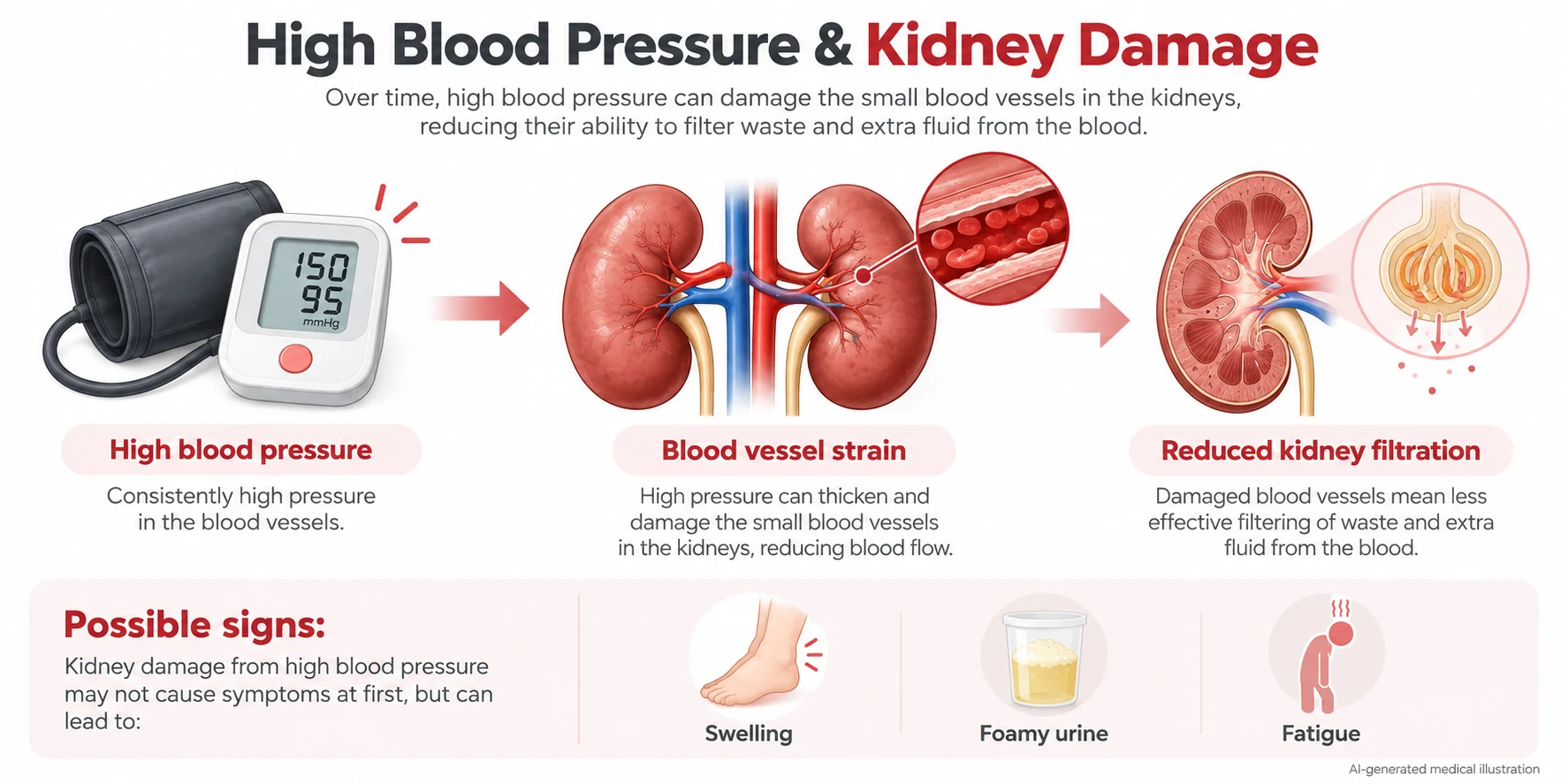
Possible symptoms of kidney dysfunction include the following.
1. Swelling in the Feet, Ankles or Face
When kidney function becomes impaired, the body may retain excess sodium and fluid.
This can contribute to swelling, particularly around the ankles, feet or sometimes the face.
However, swelling can also result from heart, liver or other medical conditions.
2. Foamy or Frothy Urine
Persistent foamy urine may sometimes indicate protein leakage.
Protein or albumin in urine can be associated with kidney damage, although foam alone is not sufficient for diagnosis.
3. Changes in Urination
Some people notice increased nighttime urination or changes in urine volume.
These changes can have several causes, including urinary disorders, medications and blood glucose abnormalities.
4. Persistent Fatigue
Reduced kidney function can contribute to tiredness, particularly when associated complications such as anaemia develop.
Fatigue is not specific to kidney disease.
5. Difficult-to-Control Blood Pressure
Kidney dysfunction may affect the body’s ability to regulate sodium, fluid and blood pressure.
Blood pressure that remains high despite prescribed treatment may require further evaluation.
6. Reduced Appetite or Nausea
Poor appetite, nausea and changes in taste may occur in more advanced kidney disease.
These symptoms require medical assessment because they can also be caused by conditions unrelated to the kidneys.
Important: Early kidney damage often causes no symptoms. None of these findings confirms kidney disease on its own.
For more information, read Early Signs of Chronic Kidney Disease.
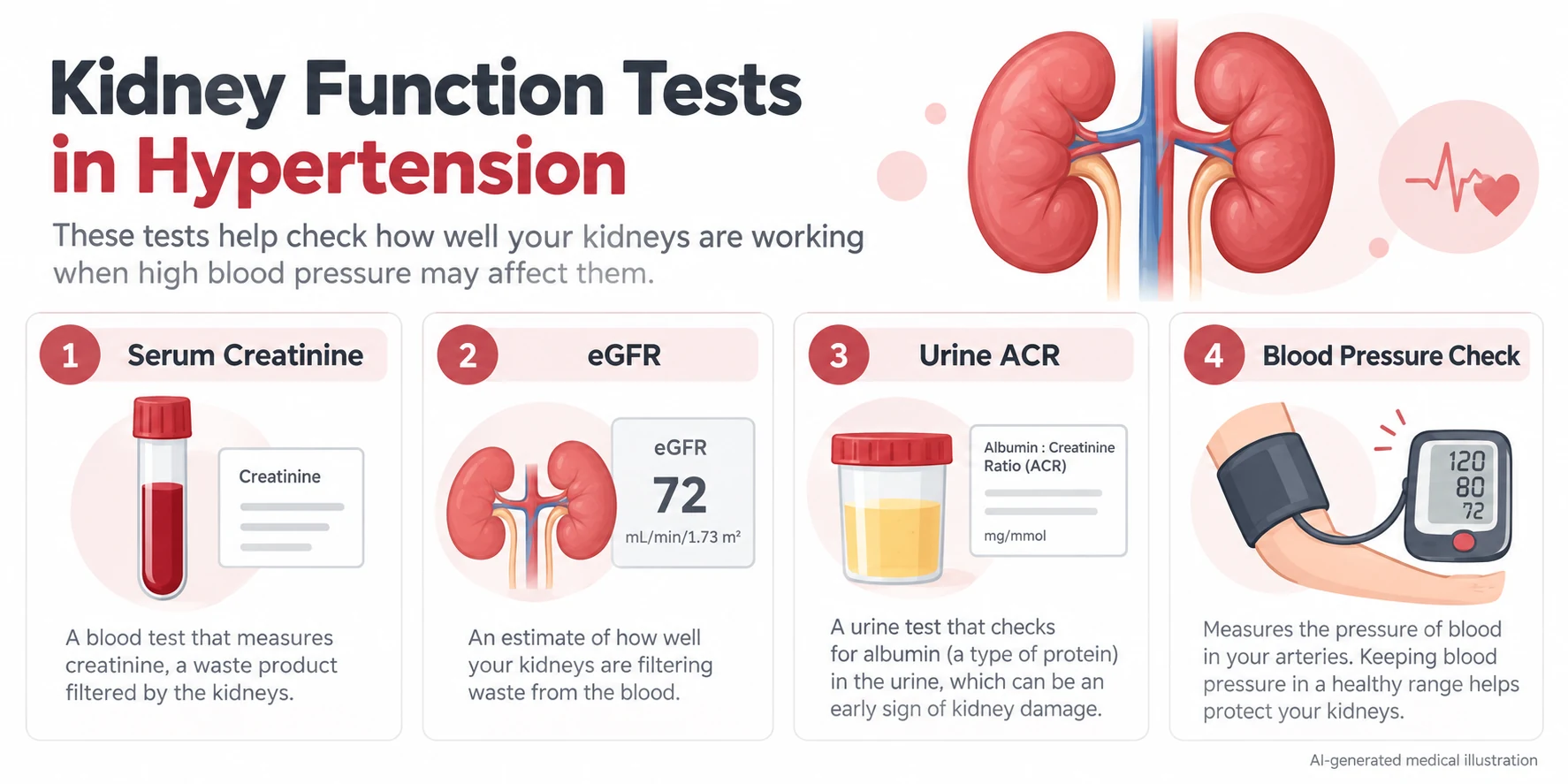
Which Tests Detect Kidney Damage Caused by High Blood Pressure?
A healthcare professional may recommend blood and urine tests to evaluate kidney function.
1. Serum Creatinine Test
Creatinine is a waste product produced during normal muscle activity.
The kidneys remove creatinine from the bloodstream. When kidney filtration declines, creatinine levels may rise.
However, creatinine is influenced by factors such as muscle mass, diet, certain medicines and hydration status.
An abnormal creatinine result should therefore be interpreted alongside other findings.
Learn more about What Causes High Creatinine.
2. Estimated Glomerular Filtration Rate (eGFR)
eGFR is an estimate of how effectively the kidneys filter blood.
It is commonly calculated using serum creatinine, age and sex.
A persistently reduced eGFR may indicate chronic kidney disease.
An eGFR below 60 mL/min/1.73 m² for at least three months meets one of the diagnostic criteria for CKD.
However, a single low eGFR result does not always indicate chronic kidney disease.
Learn more about the eGFR Kidney Function Test.
3. Urine Albumin-to-Creatinine Ratio (uACR)
Urine ACR measures albumin relative to creatinine in a urine sample.
Albumin is a protein normally retained in the bloodstream. An increased urine albumin level may suggest kidney damage.
Urine ACR is particularly useful because albumin leakage may occur before a substantial decline in eGFR.
4. Blood Pressure Measurement
Accurate blood pressure measurement is important when assessing hypertension.
Clinicians may recommend repeated clinic measurements or home blood pressure monitoring to better understand blood pressure patterns.
5. Other Investigations
Depending on the clinical findings, additional tests may include:
Urinalysis for blood, protein or infection.
Blood electrolyte measurements.
Blood glucose or HbA1c testing.
Kidney ultrasound when clinically indicated.
Not every patient requires all these investigations.
Understanding eGFR and Urine ACR Results
Both eGFR and urine ACR provide useful information when evaluating possible kidney damage.
| Test | Result | General interpretation |
|---|---|---|
| eGFR | 90 or above | Normal or high filtration |
| eGFR | 60–89 | Mildly decreased filtration |
| eGFR | 45–59 | Mildly to moderately decreased filtration |
| eGFR | 30–44 | Moderately to severely decreased filtration |
| eGFR | 15–29 | Severely decreased filtration |
| eGFR | Below 15 | Kidney failure range |
| Urine ACR | Below 30 mg/g | Normal to mildly increased |
| Urine ACR | 30–299 mg/g | Moderately increased albuminuria |
| Urine ACR | 300 mg/g or above | Severely increased albuminuria |
eGFR values of 60 or higher do not establish CKD without other evidence of kidney damage.
Chronic kidney disease generally involves abnormalities persisting for at least three months. Kidney disease is classified using its cause, eGFR category and albuminuria category.
Can High Blood Pressure Cause Kidney Failure?
Yes. Persistent uncontrolled hypertension can contribute to progressive kidney damage and, in some individuals, kidney failure.
However, kidney disease does not progress at the same rate in everyone.
The likelihood of progression depends on blood pressure, the degree of albuminuria, existing kidney function, diabetes, cardiovascular disease and other medical factors.
Appropriate treatment and monitoring can reduce the risk of further damage in many patients, although progression cannot always be prevented.
Does Kidney Failure Always Require Dialysis?
No. Kidney failure is evaluated using symptoms, laboratory findings and overall clinical condition.
Dialysis may be considered when advanced kidney dysfunction causes complications that cannot be adequately managed with other treatment.
Examples include severe fluid overload, dangerous electrolyte abnormalities or symptoms caused by the accumulation of waste products.
An eGFR result alone does not determine when dialysis must begin.
Can Kidney Damage From High Blood Pressure Be Reversed?
Some kidney function changes may improve when an underlying reversible problem is identified and treated.
However, long-standing scarring and established chronic kidney damage are often not fully reversible.
Blood pressure management and treatment of associated conditions may slow further deterioration and reduce cardiovascular complications.
There is no single treatment that guarantees complete kidney recovery.
How Can People With High Blood Pressure Reduce the Risk of Kidney Damage?
Several evidence-based measures may help protect kidney health.
1. Maintain Appropriate Blood Pressure Control
Blood pressure management is central to reducing kidney and cardiovascular risk.
Blood pressure targets vary according to age, medical conditions, kidney function, treatment tolerance and the method used to measure blood pressure.
People with CKD may require individualised targets based on clinical recommendations.
2. Reduce Excess Sodium Intake
High sodium intake can contribute to elevated blood pressure and fluid retention.
Reducing excessive salt intake may help improve blood pressure control.
Dietary recommendations should be individualised, particularly for people with advanced kidney disease or electrolyte abnormalities.
3. Stay Physically Active
Regular physical activity can support blood pressure management and cardiovascular health.
The appropriate type and amount of exercise depend on a person’s physical condition and medical history.
4. Maintain a Healthy Weight
Weight management may improve blood pressure and reduce associated metabolic risks.
Individual recommendations should consider existing medical conditions and nutritional requirements.
5. Avoid Tobacco Use
Smoking increases cardiovascular risk and may contribute to worsening kidney health.
Avoiding tobacco is an important part of cardiovascular and kidney risk reduction.
6. Take Prescribed Medicines as Directed
Blood pressure medicines help manage hypertension.
Certain medicines, including angiotensin-converting enzyme (ACE) inhibitors and angiotensin receptor blockers (ARBs), may provide additional kidney protection in selected patients, particularly when albuminuria is present.
However, these medicines are not appropriate for everyone. They may require monitoring of kidney function and potassium levels.
Do not start, stop or change prescribed medicines without medical guidance.
7. Monitor Kidney Function When Indicated
People with hypertension may require kidney function testing, including eGFR and urine ACR.
The frequency of testing depends on blood pressure control, other risk factors and whether kidney abnormalities have already been identified.
How Often Should Kidney Function Be Checked if You Have High Blood Pressure?
There is no single testing interval that is appropriate for everyone with hypertension.
People with high blood pressure should discuss kidney screening with their healthcare professional, particularly if they also have:
Diabetes.
Cardiovascular disease.
A family history of kidney failure.
Abnormal previous kidney tests.
Difficult-to-control blood pressure.
Known chronic kidney disease.
Patients with established kidney disease may require more frequent testing according to their eGFR, albuminuria and clinical condition.
When Is Nephrology Evaluation Recommended?
A nephrology assessment may be appropriate when a person has:
Persistently abnormal kidney function tests.
A progressively declining eGFR.
Significant or increasing albuminuria.
Unexplained blood in urine.
Difficult-to-control hypertension with suspected kidney involvement.
Suspected advanced chronic kidney disease.
Electrolyte abnormalities associated with impaired kidney function.
Urgent medical evaluation is important if very high blood pressure occurs with chest pain, severe breathlessness, confusion, sudden weakness, visual changes or other signs of acute organ injury.
These situations should not be managed through routine online enquiries.
Frequently Asked Questions About High Blood Pressure and Kidney Damage
1. Can high blood pressure damage the kidneys?
Yes. Long-standing high blood pressure can damage kidney blood vessels and filtering structures, increasing the risk of chronic kidney disease.
2. What are the early signs of kidney damage from hypertension?
Early kidney disease may cause no symptoms. Increased urine albumin or reduced eGFR may be detected through laboratory tests before symptoms develop.
3. Can high blood pressure cause kidney damage even when creatinine is normal?
Yes. Urine albumin levels may be increased even when serum creatinine remains within the laboratory reference range.
4. What is the best test for kidney damage caused by high blood pressure?
eGFR and urine ACR are important complementary tests. Doctors may also assess blood pressure, serum creatinine and other clinical findings.
5. Can kidney damage from high blood pressure be reversed?
Some reversible kidney function changes may improve with appropriate treatment. Established chronic kidney scarring is often not fully reversible.
6. Does every person with hypertension develop kidney disease?
No. Not everyone with hypertension develops kidney disease. Risk varies according to blood pressure control, duration of hypertension and other health conditions.
7. Can controlling blood pressure prevent kidney failure?
Appropriate blood pressure management can reduce the risk of kidney disease progression, but it cannot guarantee that kidney failure will be prevented.
8. How often should kidney function be tested in people with hypertension?
Testing frequency depends on individual risk factors, existing kidney function, urine albumin levels and clinical recommendations.
Frequently Asked Questions
Can high blood pressure cause kidney failure?
Yes. Uncontrolled hypertension damages the tiny blood vessels in the kidneys, leading to scarring, reduced filtration, and eventually end‑stage renal disease if not treated.
What lab test shows early kidney damage from hypertension?
The urine albumin‑to‑creatinine ratio (ACR) and a slight rise in serum creatinine are the earliest indicators, often before eGFR drops significantly.
How low does eGFR need to be before dialysis is considered?
Dialysis is usually recommended when eGFR falls below 15 mL/min/1.73 m², especially if symptoms of uremia or fluid overload are present.
Are ACE inhibitors safe for people with high blood pressure and kidney disease?
ACE inhibitors are first‑line because they lower blood pressure and reduce protein loss in urine, slowing kidney damage in most patients.
What is a Permacath and when is it used?
A Permacath is a tunneled dialysis catheter placed in a large vein for long‑term hemodialysis access, often used when a fistula is not yet mature.
How often should I have kidney function tests if I have hypertension?
At least twice a year, or more frequently if blood pressure is hard to control or you have other risk factors like diabetes.
Conclusion
High blood pressure can gradually damage the kidneys by affecting the blood vessels and filtering structures responsible for removing waste and excess fluid.Because early kidney damage often develops without symptoms, laboratory investigations such as serum creatinine, eGFR and urine ACR are important for detecting abnormalities. Blood pressure management, appropriate medication, lifestyle measures and regular kidney monitoring may help reduce the risk of further kidney damage. Individual testing and treatment decisions should be based on clinical assessment.
Medical References
Medical Information: Dr. Jyoti Bansode | MBBS, MD Medicine, DM Nephrology | Medical Registration No.: 2011/06/1863 | Maharashtra Medical Council (MMC).
Disclaimer:Website content and visuals are for general informational, educational and representational purposes only, may not reflect individual patient conditions or outcomes, and do not replace personalised medical advice, diagnosis or clinical assessment.