
Chronic kidney disease (CKD) often develops without noticeable symptoms in its early stages. Some people may experience fatigue, swelling, foamy urine or changes in urination, but these symptoms are not specific to kidney disease. Blood and urine tests are important for identifying kidney abnormalities, sometimes before symptoms appear.
People with diabetes, high blood pressure, cardiovascular disease or a family history of kidney failure may have an increased risk of CKD. Regular screening, when clinically appropriate, can help identify changes in kidney health.
Chronic kidney disease is a long-term condition involving abnormalities in kidney structure or function that persist for at least three months and have implications for health.
The kidneys remove waste products from the blood, regulate fluid and electrolyte balance, help control blood pressure and support red blood cell production.
CKD may develop because of diabetes, hypertension, glomerular diseases, inherited kidney conditions or certain urinary tract abnormalities.
Understanding the causes and progression of Acute & Chronic Kidney Diseases can help explain how kidney function changes over time.
Early CKD frequently causes no obvious symptoms. When symptoms occur, their severity and type depend on the underlying condition, kidney function and other medical factors.
Feeling unusually tired may occur in people with kidney disease, particularly when complications such as anaemia develop.
However, fatigue is common in many other conditions, including sleep disorders and nutritional deficiencies. It cannot establish a CKD diagnosis by itself.
Persistently foamy urine may sometimes be associated with protein leakage into the urine, known as proteinuria.
Protein in urine can be a marker of kidney damage. However, urine may appear foamy for other reasons, and laboratory testing is needed to determine whether protein levels are abnormal.
Some kidney conditions affect the body’s ability to regulate sodium and fluid balance. This can contribute to swelling, particularly in the legs, feet and around the eyes.
Swelling can also occur due to heart, liver, venous or other medical conditions. It requires interpretation alongside other findings.
Some people notice increased urination at night, changes in urinary frequency or differences in urine appearance.
These symptoms may occur in kidney disease but can also be associated with urinary infections, diabetes, prostate conditions or other causes.
High blood pressure is both a possible cause and consequence of chronic kidney disease.
Over time, elevated blood pressure can damage blood vessels within the kidneys. Reduced kidney function may also make blood pressure more difficult to control.
Loss of appetite, nausea and changes in taste may develop as kidney disease progresses.
These symptoms are generally more common in advanced kidney dysfunction and have many possible causes unrelated to CKD.
Persistent itching may occur in people with more advanced CKD, sometimes in association with complications involving mineral balance.
Dry or itchy skin alone is not a reliable indicator of kidney disease.
Muscle cramps and sleep difficulties can occur in people with chronic kidney disease, particularly when associated medical complications develop.
Because these symptoms are nonspecific, doctors consider them alongside kidney function tests and the patient’s overall medical history.
Important: Symptoms alone cannot confirm or exclude CKD. Some people have kidney abnormalities despite feeling completely well.
Yes. Early chronic kidney disease may be present without noticeable symptoms.
A person may have a relatively preserved estimated glomerular filtration rate (eGFR) while urine testing shows persistent albumin leakage.
Similarly, a gradual reduction in kidney filtration may be detected through blood testing before significant physical symptoms appear.
According to the National Institute of Diabetes and Digestive and Kidney Diseases (NIDDK), blood and urine investigations are important for evaluating chronic kidney disease.
CKD is classified using the cause of kidney disease, eGFR category and urine albumin category.
The following GFR categories describe levels of estimated kidney filtration.
| GFR category | eGFR (mL/min/1.73 m²) | Interpretation |
|---|---|---|
| G1 | 90 or above | Normal or high |
| G2 | 60–89 | Mildly decreased |
| G3a | 45–59 | Mildly to moderately decreased |
| G3b | 30–44 | Moderately to severely decreased |
| G4 | 15–29 | Severely decreased |
| G5 | Below 15 | Kidney failure range |
An eGFR of 60 or above does not exclude kidney disease when other markers of kidney damage are present.
Conversely, G1 and G2 categories do not establish CKD without additional evidence of kidney abnormalities.
A single abnormal eGFR result also does not automatically confirm CKD. Doctors generally evaluate whether abnormalities have persisted for at least three months.
Medical reference: KDIGO Clinical Practice Guideline for CKD Evaluation and Management.
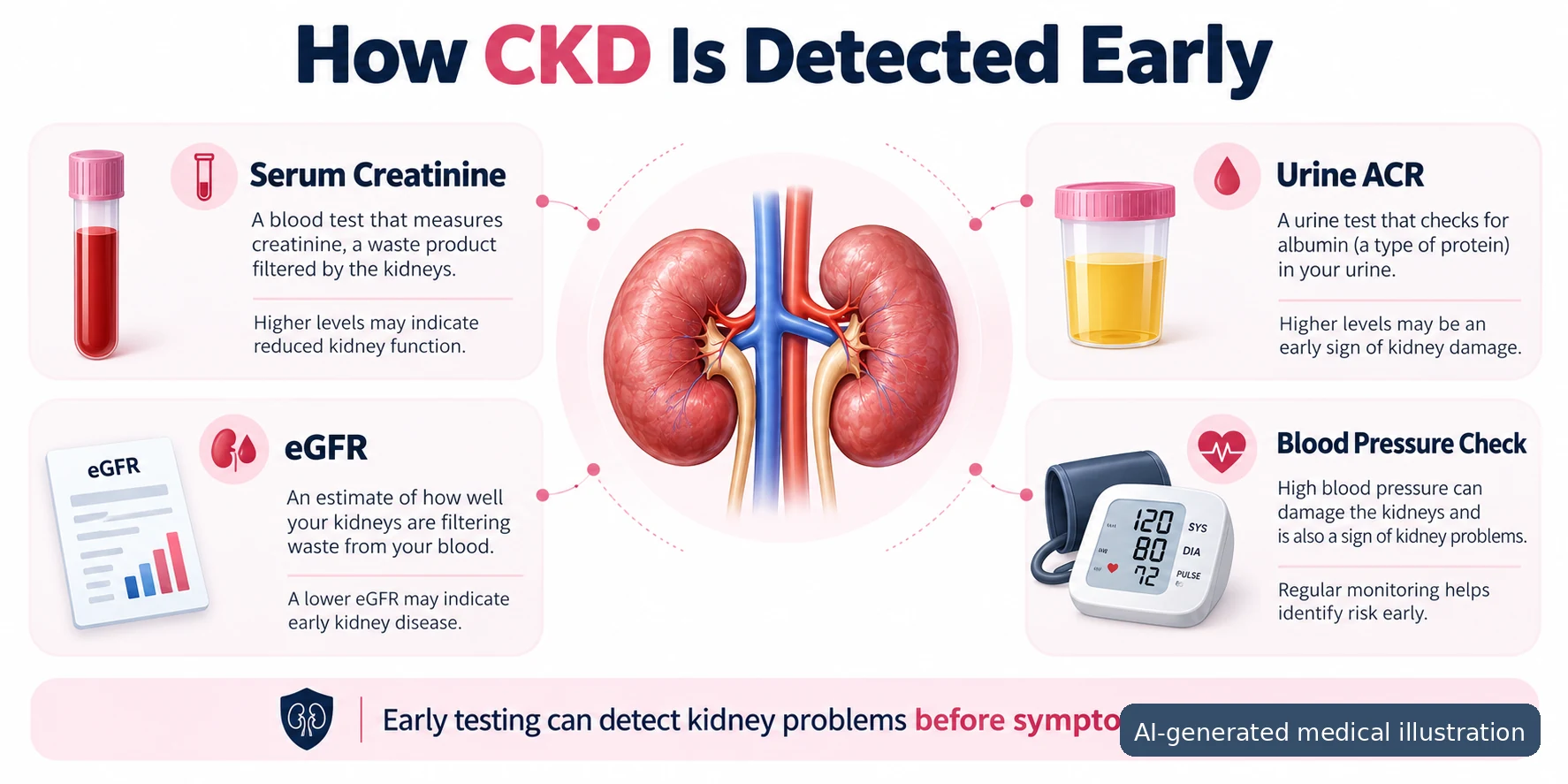
Laboratory tests are important because chronic kidney disease may not produce noticeable early symptoms.
Serum creatinine is a blood marker commonly used to estimate kidney filtration.
eGFR provides an estimate of how effectively the kidneys filter blood. Results are interpreted alongside previous measurements, medical history and other investigations.
The urine ACR test measures albumin relative to creatinine in a urine sample.
A uACR of 30 mg/g or above is generally considered increased. Temporary factors can affect albumin levels, so abnormal results may require confirmation.
Learn more about the Urine ACR Test and its role in evaluating kidney damage.
Urinalysis can identify abnormalities such as protein, blood or signs of infection in urine.
The results help determine whether additional testing is necessary.
High blood pressure can contribute to kidney damage. Regular measurement is particularly relevant for people with diabetes, known hypertension or existing kidney abnormalities.
A kidney ultrasound may be recommended to assess kidney size, structure or possible urinary tract obstruction.
Not every person requires imaging. The decision depends on symptoms, laboratory results and clinical findings.
Some medical conditions and personal risk factors increase the likelihood of CKD.
These include:
Diabetes mellitus.
High blood pressure.
Cardiovascular disease.
Family history of kidney failure.
Previous acute kidney injury.
Known structural kidney abnormalities.
Persistent albumin or blood in urine.
Certain inherited kidney disorders.
People with these risk factors may benefit from periodic kidney function testing based on medical advice.
Screening recommendations vary depending on the underlying condition and individual risk.
Yes. Diabetes is an important cause of chronic kidney disease.
Over time, elevated blood glucose can damage the small blood vessels involved in kidney filtration.
Diabetic kidney disease may develop without early symptoms. Testing with eGFR and urine ACR can help identify abnormalities.
Not every person with diabetes develops kidney disease, and abnormal kidney tests may have causes unrelated to diabetes.
Early detection can help identify the underlying cause and support appropriate medical management.
Depending on the diagnosis, care may include:
Managing blood pressure.
Controlling blood glucose when relevant.
Reviewing medicines that may affect kidney function.
Monitoring urine albumin and eGFR.
Providing individualised dietary advice.
Treating associated medical conditions.
Some treatments can reduce the risk of CKD progression in suitable patients, but outcomes vary.
Established chronic kidney damage is not always reversible, and no treatment can guarantee prevention of kidney failure.
Medical assessment may be appropriate when a person has persistent urinary abnormalities, unexplained swelling, high creatinine, reduced eGFR or risk factors associated with kidney disease.
A healthcare professional may review previous reports, medicines, blood pressure and additional laboratory findings before recommending further investigations.
People with diabetes and abnormal kidney tests may also require evaluation for Diabetes & Kidney Diseases.
Seek urgent medical attention for severe breathlessness, chest pain, confusion, very low or absent urine output, or rapidly worsening symptoms.
Early CKD often causes no noticeable symptoms. Abnormal eGFR, creatinine or urine albumin may sometimes reveal kidney problems before symptoms develop.
Yes. Many people with early chronic kidney disease feel well because symptoms may not develop until kidney function has declined further.
Persistently foamy urine can sometimes result from protein in the urine, which may indicate kidney damage. A urine test can help determine the cause.
A persistently reduced or declining eGFR should be discussed with a healthcare professional. Nephrology assessment may be appropriate depending on the level, trend and associated findings.
Testing frequency depends on factors such as diabetes, hypertension, previous results and CKD severity. A clinician can recommend an appropriate monitoring schedule.
Chronic kidney disease may progress without noticeable symptoms, particularly in its early stages. Changes such as fatigue, swelling, foamy urine and altered urination can occur, but none of these symptoms alone confirms CKD.
Blood and urine investigations, including eGFR and urine ACR, can help identify kidney abnormalities and support appropriate medical evaluation.
Recognising individual risk factors and discussing suitable screening with a healthcare professional are important aspects of kidney health.
Medical Review: Dr. Jyoti Bansode, MBBS, MD Medicine, DM Nephrology. Doctor review and approval pending before publication.
Disclaimer: Website content and visuals are for general informational, educational and representational purposes only, may not reflect individual patient conditions or outcomes, and do not replace personalised medical advice, diagnosis or clinical assessment.
Plot no 70, Moreshwar Heritage, Sector 5, Ulwe, Navi Mumbai, Maharashtra 410206
For Booking: +91 8591009591
Chat With Us
Mini Sea Shore Road, Juhu Nagar, Sector 10A, Vashi, Navi Mumbai, Maharashtra 400703
Chat With Us