
High creatinine can occur when the kidneys are not filtering waste products effectively, but an elevated creatinine result does not always indicate kidney disease or kidney failure. Dehydration, intense exercise, certain medicines, muscle-related factors and dietary habits may also influence blood creatinine levels.
Doctors assess high creatinine using estimated glomerular filtration rate (eGFR), urine tests, previous laboratory reports and clinical findings. Persistently elevated or rapidly increasing creatinine requires appropriate medical evaluation.
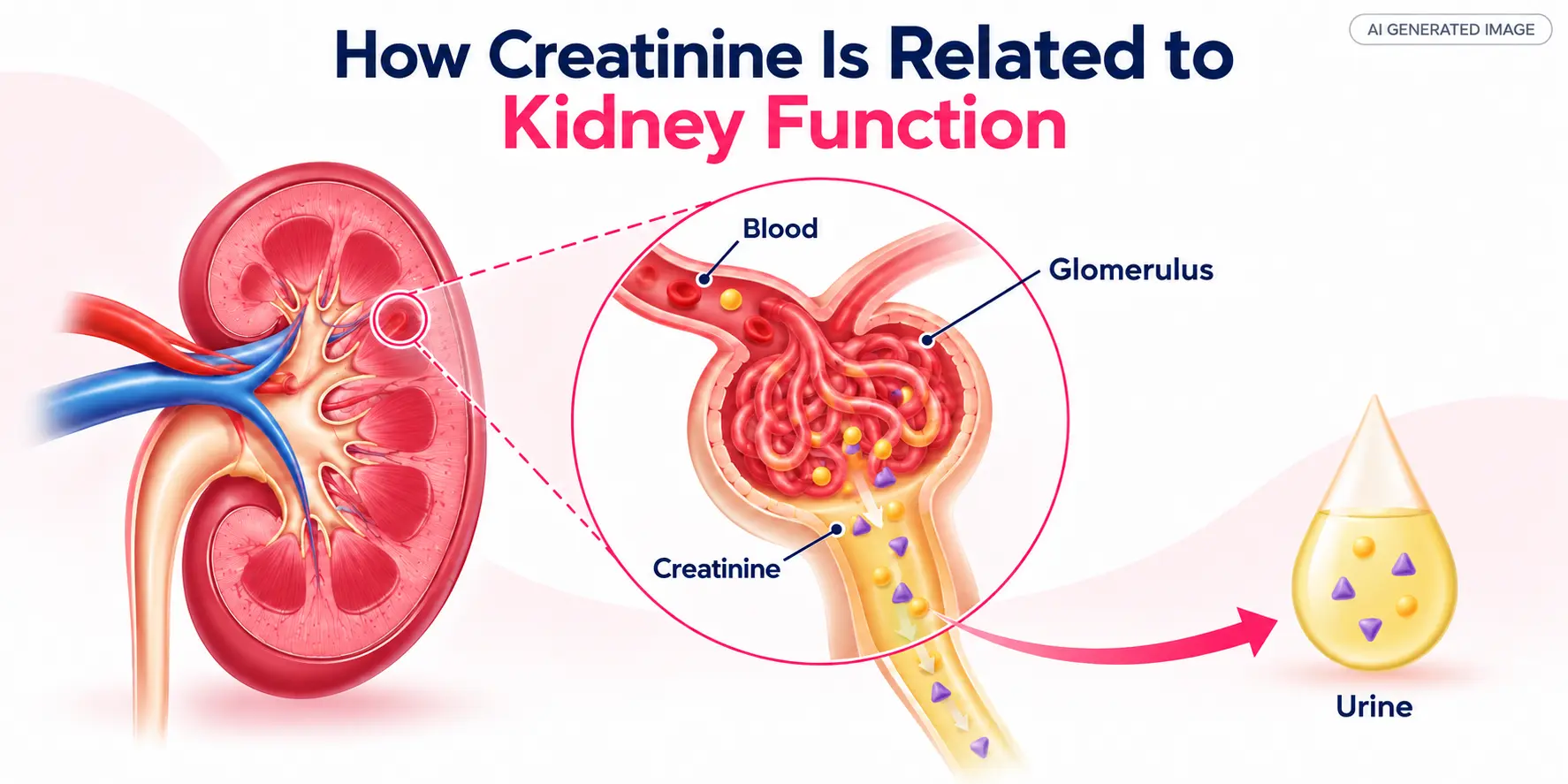
Creatinine is a waste product produced during normal muscle metabolism. It enters the bloodstream and is removed mainly by the kidneys through urine.
The serum creatinine test measures the concentration of creatinine in blood. It is commonly used to help assess kidney function.
However, creatinine levels can be influenced by factors such as:
Age and muscle mass
Kidney filtration function
Recent intense physical activity
Dietary intake, particularly cooked meat
Certain medicines and supplements
Hydration and underlying medical conditions
A single creatinine result cannot confirm or exclude kidney disease.
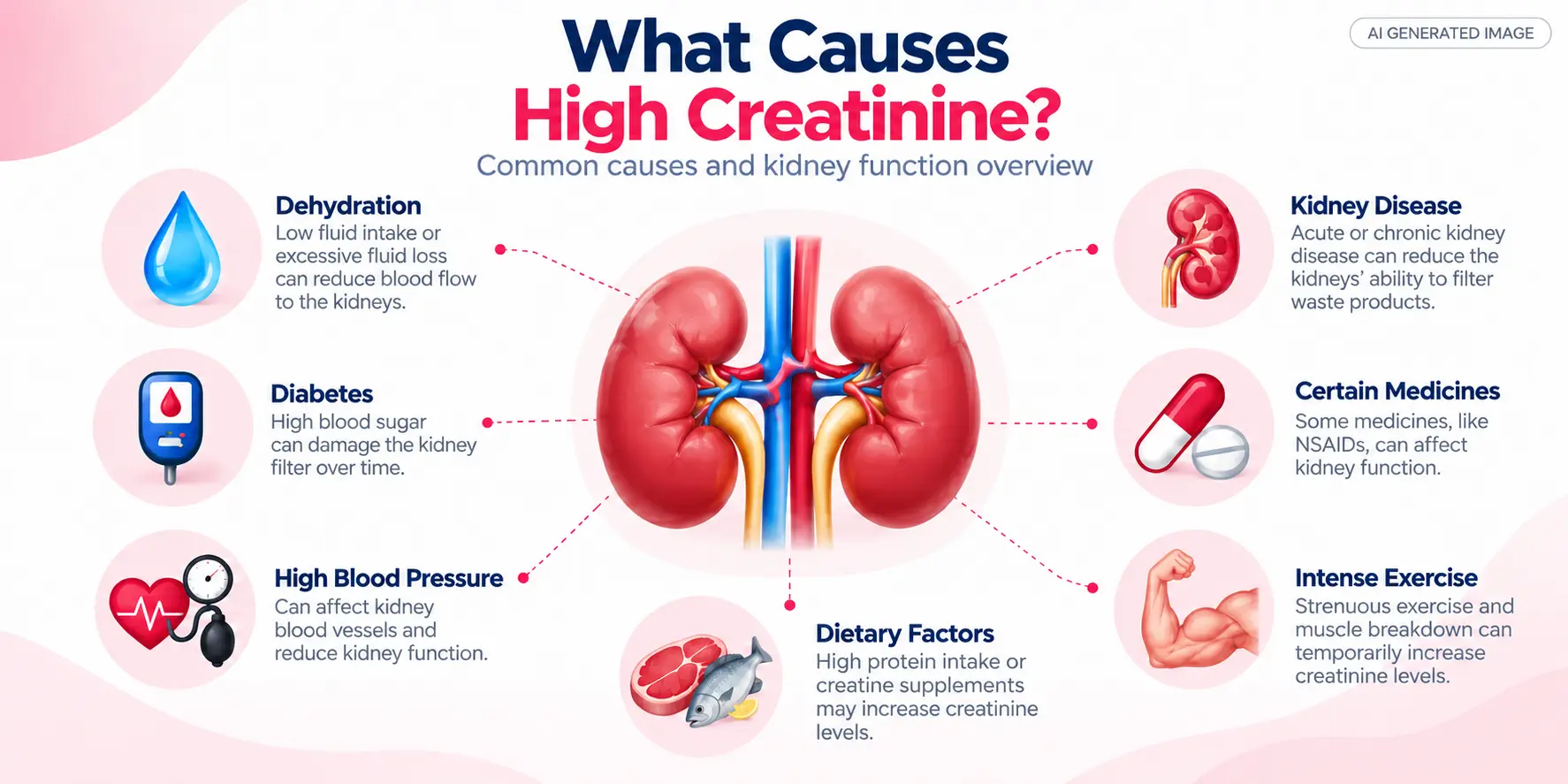
High creatinine may result from temporary changes, reduced kidney filtration or underlying medical conditions.
Dehydration occurs when the body loses more fluid than it receives.
Severe vomiting, diarrhoea, fever, excessive sweating or inadequate fluid intake can sometimes reduce blood flow to the kidneys.
This may cause creatinine levels to increase. Significant dehydration can also contribute to acute kidney injury.
Mildly elevated creatinine does not automatically mean that dehydration is the cause.
Acute kidney injury is a sudden decrease in kidney function, often occurring over hours or days.
Possible causes include severe infections, reduced blood pressure, dehydration, certain medicines and urinary obstruction.
Acute kidney injury may develop rapidly and sometimes requires hospital-based medical assessment.
Learn more about Acute and Chronic Kidney Diseases.
Chronic kidney disease involves changes in kidney structure or function that persist for at least three months and have implications for health.
As kidney filtration decreases, creatinine may accumulate in the bloodstream.
However, early chronic kidney disease may occur without a noticeable rise in serum creatinine.
Blood and urine investigations are therefore important when assessing kidney health.
Diabetes is an important risk factor for kidney disease.
Persistently elevated blood glucose can damage the small filtering structures of the kidneys over time.
Diabetic kidney disease may cause increased albumin in urine, reduced eGFR and eventually changes in creatinine levels.
Normal creatinine does not always exclude early diabetic kidney disease.
Read more about Diabetes and Kidney Diseases.
Uncontrolled high blood pressure can gradually damage small blood vessels in the kidneys.
This may affect kidney filtration and contribute to chronic kidney disease.
Kidney disease can also cause or worsen high blood pressure.
Blood pressure measurements, kidney function tests and urine investigations may help assess this relationship.
Some medicines may affect kidney function, while others can increase the measured creatinine level without necessarily damaging the kidneys.
For example, non-steroidal anti-inflammatory drugs (NSAIDs) can contribute to kidney injury in susceptible individuals.
Certain other medicines may temporarily affect creatinine measurements through changes in how creatinine is handled by the body.
Medicine-related changes must be assessed in the context of the patient’s medical condition.
Do not stop or change prescribed medicines without consulting a qualified healthcare professional.
Strenuous exercise may temporarily raise creatinine levels.
Muscle injury and increased muscle breakdown can also affect creatinine measurements.
People with greater muscle mass may naturally have higher serum creatinine values than those with lower muscle mass.
The laboratory result should therefore be interpreted alongside the individual’s physical characteristics and clinical findings.
Consuming a large amount of cooked meat before a blood test may temporarily increase serum creatinine.
Creatine supplements can also affect blood creatinine measurements.
These changes do not necessarily indicate kidney injury.
Individuals should inform their healthcare professional about recent dietary changes, supplements and strenuous physical activity.
Urinary obstruction occurs when the normal flow of urine is partially or completely blocked.
Possible causes include:
Kidney or urinary tract stones
Prostate enlargement
Urinary tract narrowing
Certain other obstructive conditions
A significant blockage can interfere with kidney function and cause creatinine to rise.
Some cases require urgent medical assessment.
High creatinine is a laboratory finding rather than a disease, and it may not cause symptoms by itself.
Symptoms, when present, usually relate to the underlying medical condition.
Possible signs include:
Swelling of the feet, ankles or face
Reduced urine output
Persistent tiredness
Nausea or reduced appetite
Changes in urination
Difficulty controlling blood pressure
Breathlessness in some cases
These symptoms may also occur in conditions unrelated to kidney disease.
A healthcare professional can determine whether further investigation is necessary.
Normal creatinine levels vary depending on age, sex, muscle mass, laboratory methods and other clinical factors.
Many laboratories report serum creatinine in mg/dL, although some use µmol/L.
There is no single reference value that applies to everyone.
A person with a creatinine result within the laboratory reference range may still have kidney abnormalities, while someone with a mildly elevated result may have factors affecting creatinine that are unrelated to kidney damage.
For this reason, medical professionals commonly assess creatinine together with eGFR, urine findings and previous test results.
| Question | General information |
|---|---|
| Does high creatinine always mean kidney failure? | No |
| Can dehydration increase creatinine? | Yes, in some circumstances |
| Can intense exercise affect creatinine? | Yes |
| Can diabetes affect kidney function? | Yes |
| Is creatinine alone enough to diagnose kidney disease? | No |
| Can a normal creatinine result rule out kidney disease? | No |
| What other tests may help? | eGFR, urine ACR, urinalysis and other appropriate investigations |
| Should rapidly rising creatinine be evaluated? | Yes, promptly |
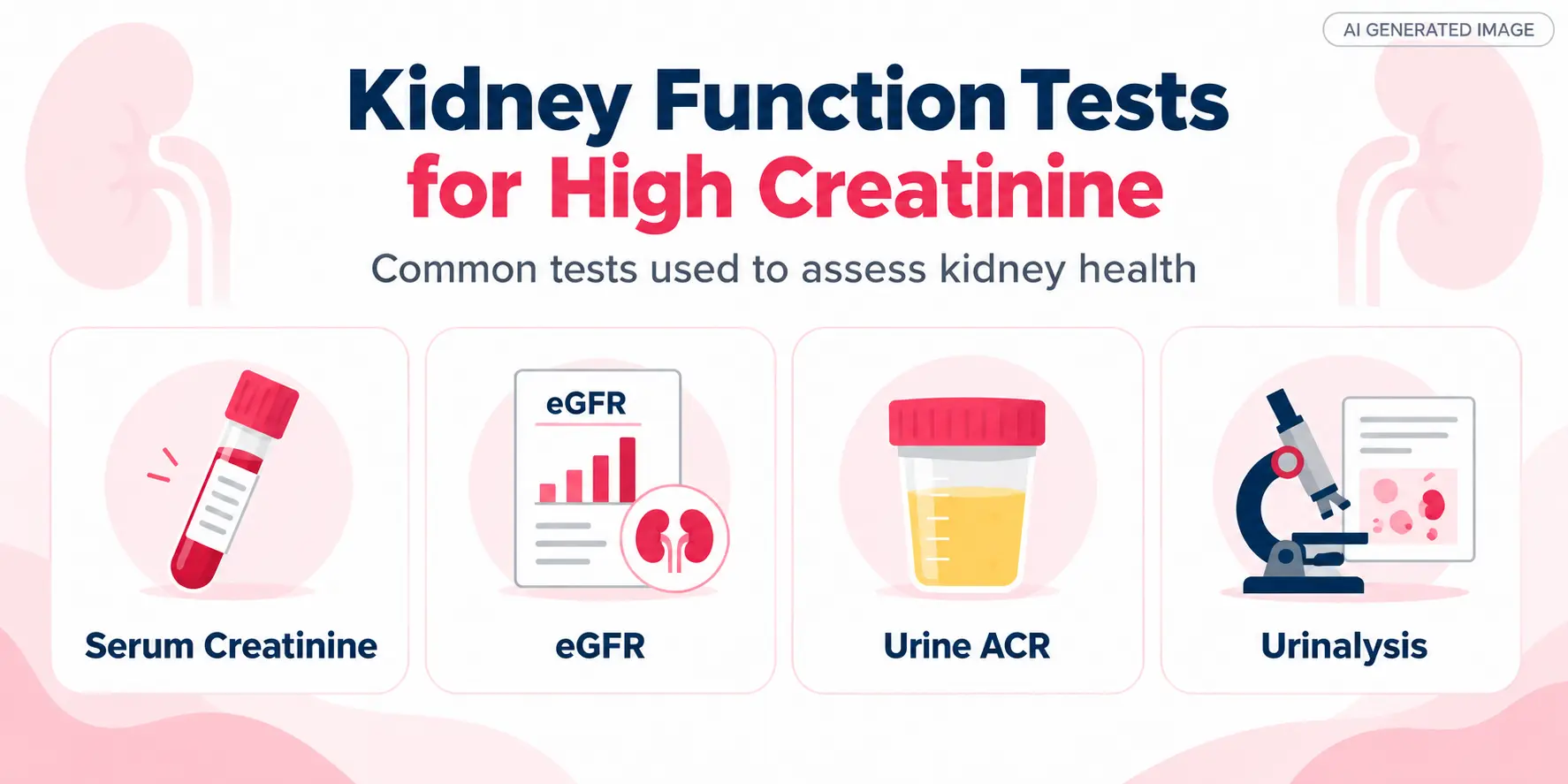
Healthcare professionals investigate high creatinine by reviewing medical history, symptoms and relevant laboratory findings.
The evaluation may include the following tests.
Measures the concentration of creatinine in blood.
Repeat measurements may help identify whether the level is stable, increasing or decreasing.
eGFR estimates how effectively the kidneys filter blood.
It is commonly calculated using serum creatinine together with factors such as age and sex.
Because creatinine can be influenced by muscle mass and other factors, eGFR also has limitations.
The urine ACR test measures the amount of albumin relative to creatinine in a urine sample.
Increased urine albumin may indicate kidney damage, particularly in people with diabetes or high blood pressure.
Learn more about the Urine ACR Test.
Urinalysis may detect blood, protein and other abnormalities in urine.
Blood tests may assess potassium, sodium, bicarbonate and other substances affected by kidney function.
Ultrasound imaging may be considered when a doctor needs to evaluate kidney structure or possible urinary obstruction.
Not every person with high creatinine requires all these investigations. Test selection depends on the individual’s medical history and findings.
Creatinine and eGFR are related, but they provide different information.
| Serum Creatinine | eGFR |
|---|---|
| Measures a waste product in blood | Estimates kidney filtration |
| Can be influenced by muscle mass and diet | Often calculated using creatinine, age and sex |
| May rise when kidney filtration decreases | May decrease when kidney filtration decreases |
| Not sufficient alone to diagnose kidney disease | Interpreted alongside urine tests and clinical history |
In some circumstances, cystatin C testing may help provide additional information about kidney filtration.
Creatinine levels may improve if the underlying cause is temporary or reversible.
For example, changes related to dehydration, certain medicines or some cases of acute kidney injury may improve after appropriate clinical management.
However, chronic kidney disease can cause persistent reductions in kidney function.
Recovery varies between individuals and depends on the underlying cause, severity and response to medical care.
There is no single medicine, food or home remedy that reliably normalises creatinine in every person.
Management focuses on identifying and addressing the underlying cause rather than reducing the laboratory number alone.
Depending on the clinical findings, medical care may involve:
Assessing fluid balance and dehydration
Reviewing medicines that may affect kidney function
Evaluating diabetes and high blood pressure
Investigating infection or urinary obstruction
Monitoring creatinine and eGFR over time
Assessing urinary protein or albumin
Managing diagnosed acute or chronic kidney disease
Some patients may require additional investigations or hospital-based care.
Treatment decisions must be individualised.
Drinking fluids may help when dehydration contributes to elevated creatinine.
However, excessive water intake does not treat every cause of high creatinine.
Some people with kidney disease, heart failure or fluid retention may require specific fluid restrictions.
Therefore, fluid intake should be guided by individual medical circumstances.
Dietary recommendations depend on the underlying medical condition and kidney function.
People with kidney disease may receive advice about sodium, protein, potassium or phosphorus intake when clinically appropriate.
There is no universal food plan suitable for everyone with elevated creatinine.
Unnecessary dietary restrictions may lead to nutritional problems.
Individuals should avoid extreme diets and unverified supplements intended to reduce creatinine without appropriate medical advice.
Medical evaluation may be appropriate when:
Creatinine remains elevated on repeat testing.
Creatinine rises suddenly or unexpectedly.
eGFR is persistently reduced.
Urine testing shows protein or blood.
Diabetes or high blood pressure is associated with abnormal kidney tests.
Symptoms suggest possible kidney dysfunction.
Previous test reports show deterioration in kidney function.
A qualified healthcare professional can evaluate the findings and determine whether further testing or specialist assessment is required.
Seek urgent medical attention if kidney-related concerns are associated with:
Very little or no urine
Severe breathlessness
Chest pain
Confusion or reduced consciousness
Rapidly worsening symptoms
Sudden severe illness with suspected acute kidney injury
An online article cannot determine the urgency of an individual’s medical condition.
No. High creatinine may result from reduced kidney filtration, dehydration, muscle-related factors, medicines or other conditions. A doctor must interpret the result alongside eGFR and other investigations.
Yes. Significant dehydration may reduce blood flow to the kidneys and increase creatinine. Severe dehydration can sometimes cause acute kidney injury.
It may return towards the expected range when the cause is temporary or reversible. Recovery depends on the underlying condition.
Yes. Diabetes can damage kidney filtering structures over time and may eventually affect creatinine and eGFR results.
Not necessarily. Drinking excessive water does not treat every cause of high creatinine and may be unsafe for some patients with kidney or heart conditions.
Yes. Intense exercise or muscle injury may increase creatinine. Medical interpretation depends on symptoms and other laboratory findings.
Yes. Some people may have elevated creatinine without obvious urine abnormalities. Further evaluation depends on eGFR, previous results and clinical factors.
High creatinine is a laboratory finding that requires appropriate interpretation. It may occur due to temporary factors or kidney-related medical conditions.Serum creatinine, eGFR, urine investigations, medical history and changes over time help healthcare professionals evaluate kidney function.Persistently elevated or rapidly rising creatinine should be assessed by a qualified medical professional.
Medical Information: Dr. Jyoti Bansode, MBBS, MD Medicine, DM Nephrology | Medical Registration No.: 2011/06/1863 | Maharashtra Medical Council (MMC).
Disclaimer: Website content and visuals are for general informational, educational and representational purposes only, may not reflect individual patient conditions or outcomes, and do not replace personalised medical advice, diagnosis or clinical assessment.
Plot no 70, Moreshwar Heritage, Sector 5, Ulwe, Navi Mumbai, Maharashtra 410206
For Booking: +91 8591009591
Chat With Us
Mini Sea Shore Road, Juhu Nagar, Sector 10A, Vashi, Navi Mumbai, Maharashtra 400703
Chat With Us