
Diabetes can damage the kidneys without causing noticeable symptoms in the early stages. High blood glucose over time can affect the kidneys’ filtering structures, allowing albumin (a protein) to leak into urine or reducing kidney filtration. Blood tests for eGFR and urine tests for albumin can help detect these changes.
Kidney damage associated with diabetes is commonly called diabetic kidney disease (DKD). Early detection and appropriate medical management may help reduce the risk of further kidney damage, although individual outcomes vary.
The kidneys contain millions of tiny filtering units called nephrons. Within these units, structures known as glomeruli filter waste products and excess fluid from the blood.
Over time, diabetes can damage the small blood vessels and filtering structures within the kidneys. High blood pressure may also contribute to this damage.
As kidney disease develops, albumin may begin leaking into urine, and kidney filtration may gradually decline. However, diabetic kidney disease does not follow the same pattern in every person.
For further information, read about Diabetes & Kidney Diseases.
Early diabetic kidney disease frequently has no noticeable symptoms. Some kidney abnormalities may be detected through laboratory testing before a person experiences any physical changes.
As kidney disease progresses, possible symptoms include:
Persistent foam in urine may sometimes indicate protein leakage, although foamy urine can have other causes.
A urine albumin-to-creatinine ratio test can help identify abnormal albumin levels.
Kidney dysfunction may contribute to fluid retention, causing swelling in different parts of the body.
Swelling can also occur because of heart, liver or other medical conditions.
Some people with kidney disease experience tiredness or weakness, particularly when complications such as anaemia develop.
Fatigue is not specific to kidney disease and may have several other explanations.
Changes in urination frequency, particularly increased nighttime urination, may occur in some people.
These changes can also be caused by high blood glucose, urinary infections or other conditions.
High blood pressure can contribute to kidney damage, while reduced kidney function can make blood pressure more difficult to manage.
Poor appetite, nausea and changes in taste may occur as kidney disease becomes more advanced.
Important: These symptoms do not confirm diabetic kidney disease. Many people have no symptoms, making laboratory screening particularly important.
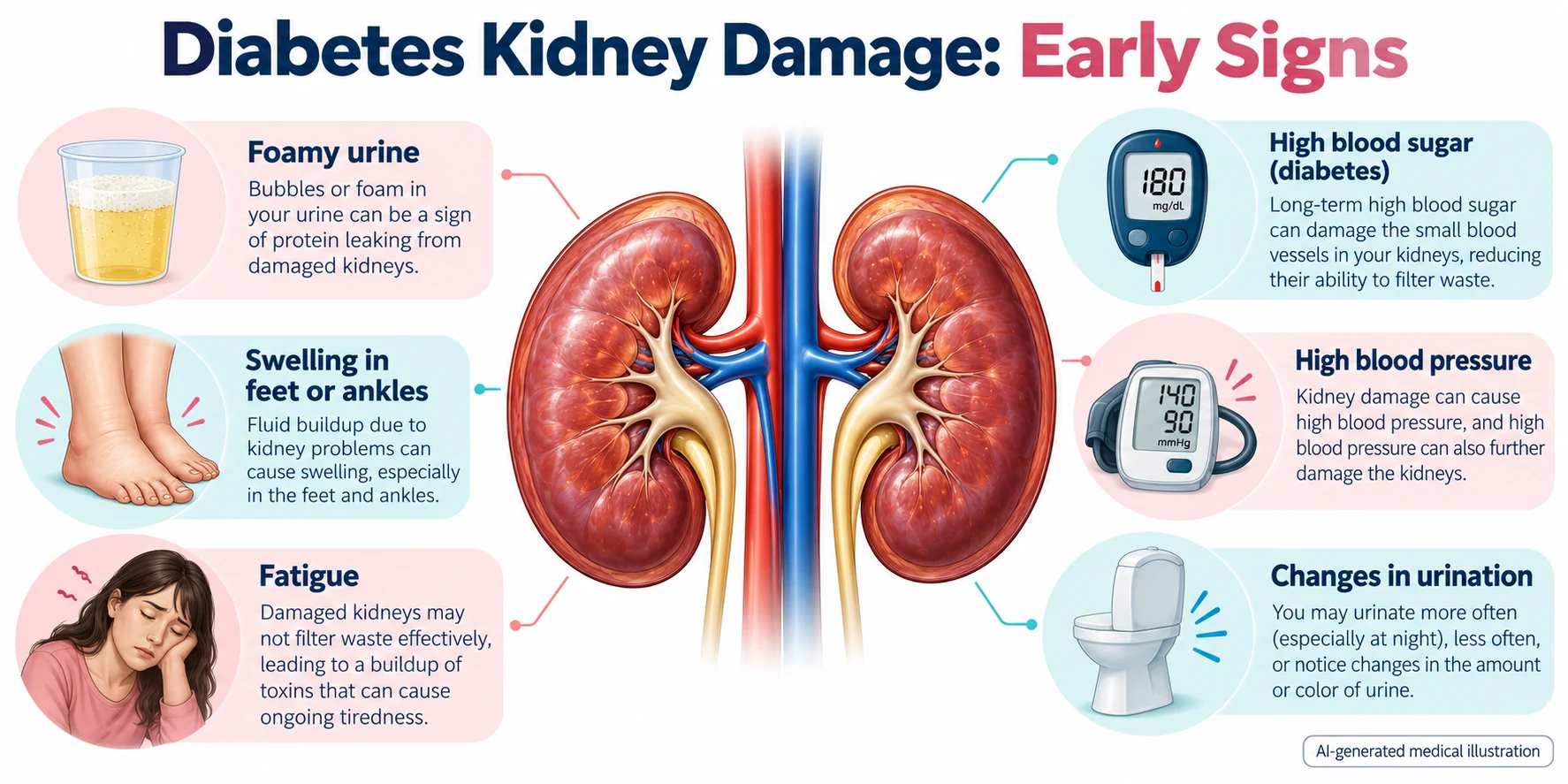
Yes. A person with diabetes may feel completely well even when early kidney abnormalities are developing.
For example, urine albumin levels may increase while serum creatinine and eGFR remain within relatively preserved ranges.
Some people may also develop reduced eGFR without significantly increased albumin in urine.
This is why both eGFR and urine ACR are important when evaluating kidney health in people with diabetes.
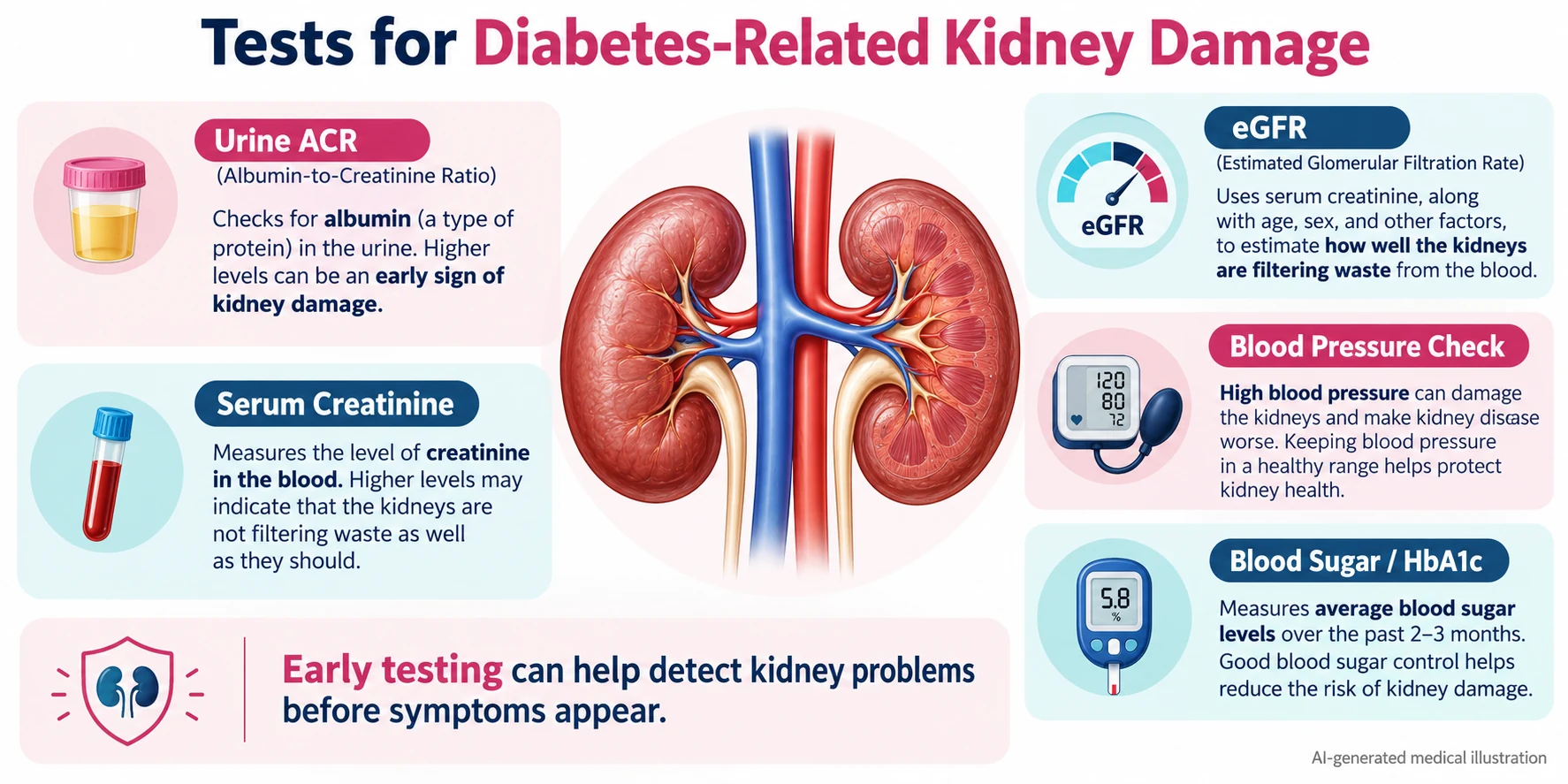
Two of the most important investigations are urine ACR and eGFR. These tests provide different but complementary information.
The urine ACR test measures the amount of albumin relative to creatinine in a urine sample.
Albumin is a protein normally retained in the bloodstream by the kidneys. Increased albumin in urine may indicate kidney damage.
An abnormal urine ACR result may need confirmation because fever, infection, intense exercise, menstruation and temporarily high blood glucose can affect measurements.
Learn more about the Urine ACR Test.
Serum creatinine is a blood marker used to estimate kidney filtration.
eGFR, or estimated glomerular filtration rate, helps assess how effectively the kidneys filter blood.
An eGFR below 60 mL/min/1.73 m² may indicate reduced kidney function. When this persists for at least three months, it meets one of the criteria for chronic kidney disease.
Depending on clinical findings, doctors may also recommend:
Urinalysis to assess protein, blood or other abnormalities.
Blood pressure measurements.
Blood glucose and HbA1c testing.
Electrolyte measurements.
Kidney ultrasound when clinically indicated.
The following categories help explain kidney screening results.
| Test | Result | General interpretation |
|---|---|---|
| Urine ACR | Below 30 mg/g | Normal to mildly increased albumin |
| Urine ACR | 30–299 mg/g | Moderately increased albuminuria |
| Urine ACR | 300 mg/g or above | Severely increased albuminuria |
| eGFR | 90 or above | Normal or high filtration |
| eGFR | 60–89 | Mildly decreased filtration |
| eGFR | 45–59 | Mildly to moderately decreased |
| eGFR | 30–44 | Moderately to severely decreased |
| eGFR | 15–29 | Severely decreased |
| eGFR | Below 15 | Kidney failure range |
A single abnormal result does not necessarily establish chronic kidney disease. Repeat testing and evaluation of the clinical history may be required.
The KDIGO Clinical Practice Guidelines describe how eGFR, urine albumin and other findings are used to classify chronic kidney disease.
According to the American Diabetes Association Standards of Care in Diabetes—2026:
People with type 2 diabetes should generally have urine ACR and eGFR checked at least once a year, starting at diagnosis.
People with type 1 diabetes should generally begin annual kidney screening after five years of diabetes.
People with established chronic kidney disease may need more frequent monitoring, depending on kidney function, albuminuria and clinical circumstances.
These are general recommendations. A healthcare professional may suggest a different schedule based on individual medical needs.
Reference: American Diabetes Association – Standards of Care in Diabetes 2026.
Appropriate treatment may reduce the risk of progression in some people with diabetic kidney disease.
Management depends on the severity of kidney involvement, diabetes type, blood pressure, associated conditions and current medicines.
Medical care may include blood glucose management, blood pressure control, assessment of cardiovascular risk, kidney-protective medicines when appropriate and monitoring of kidney function.
Some patients may also require dietary advice, including individualised recommendations concerning sodium, protein or fluid intake.
Established kidney damage may not be fully reversible, and no treatment guarantees that kidney disease will stop progressing.
Abnormal kidney tests should be discussed with a qualified healthcare professional rather than treated using unverified remedies.
Avoid starting herbal kidney-cleansing products, significantly increasing water intake or taking painkillers such as ibuprofen regularly without medical guidance.
Do not stop prescribed diabetes or blood pressure medicines simply because a creatinine result is abnormal. Medication changes require professional assessment.
Nephrology evaluation may be appropriate when kidney abnormalities are persistent, worsening or difficult to explain.
Examples include:
A progressively declining eGFR.
Persistently increased or rapidly rising urine albumin.
Unexplained blood or protein in urine.
Difficult-to-control blood pressure associated with kidney dysfunction.
Electrolyte abnormalities or suspected advanced kidney disease.
People with diabetes may also have kidney disorders unrelated to diabetes. Additional assessment can help clarify the cause.
For general information about long-term kidney conditions, read Acute & Chronic Kidney Diseases.
Seek urgent medical attention for severe breathlessness, chest pain, confusion, very little or no urine output, or rapidly worsening symptoms.
Previous years of diabetes exposure, blood pressure and other health factors can influence kidney risk. Current good diabetes control remains important, but kidney tests are still recommended at appropriate intervals.
There may be no physical symptom. An increase in urine albumin/UACR can sometimes be one of the earliest laboratory signs, which is why urine testing matters.
No. High creatinine can have several causes, so diabetes should not automatically be assumed to be responsible. Your doctor may review urine tests, medicines, previous results and additional investigations.
urrent ADA guidance recommends at least annual UACR and eGFR testing for people with type 2 diabetes. More frequent monitoring may be needed once CKD has been diagnosed.
No. Many people do not require dialysis. Decisions depend on kidney function, symptoms, complications and overall clinical condition.
Diabetes can affect the kidneys long before noticeable symptoms appear. Urine albumin testing and eGFR measurements help detect abnormalities and monitor changes in kidney function.
Persistently increased urine albumin, declining eGFR and other abnormal findings should be assessed in the context of medical history and clinical investigations.
Appropriate diabetes management, blood pressure control and regular kidney monitoring may help reduce the risk of complications. Individual medical recommendations should always be based on professional assessment.
Medical Information: Dr. Jyoti Bansode, MBBS, MD Medicine, DM Nephrology | Medical Registration No.: 2011/06/1863 | Maharashtra Medical Council (MMC).
Medical Review Status: Pending review and approval by Dr. Jyoti Bansode.
Disclaimer: Website content and visuals are for general informational, educational and representational purposes only, may not reflect individual patient conditions or outcomes, and do not replace personalised medical advice, diagnosis or clinical assessment.
Plot no 70, Moreshwar Heritage, Sector 5, Ulwe, Navi Mumbai, Maharashtra 410206
For Booking: +91 8591009591
Chat With Us
Mini Sea Shore Road, Juhu Nagar, Sector 10A, Vashi, Navi Mumbai, Maharashtra 400703
Chat With Us