
Facing kidney failure can feel overwhelming, but understanding the transplant evaluation process empowers you to act at the right moment. This guide explains when to start preparing, what the evaluation entails, and how to navigate each step with confidence.
A transplant nephrologist typically raises the topic when your kidney function declines to a level where dialysis or transplant becomes the most viable long‑term solution. According to the National Kidney Foundation, patients are usually referred once their glomerular filtration rate (GFR) falls between 25 and 30 mL/min/1.73 m². The HRSA guidelines echo this, noting that early referral gives the transplant team ample time to complete testing before end‑stage renal disease (ESRD) sets in.
Not every person with chronic kidney disease (CKD) qualifies for a transplant right away. Candidates typically include:
Understanding your eGFR is crucial; see our eGFR guide for a detailed breakdown.
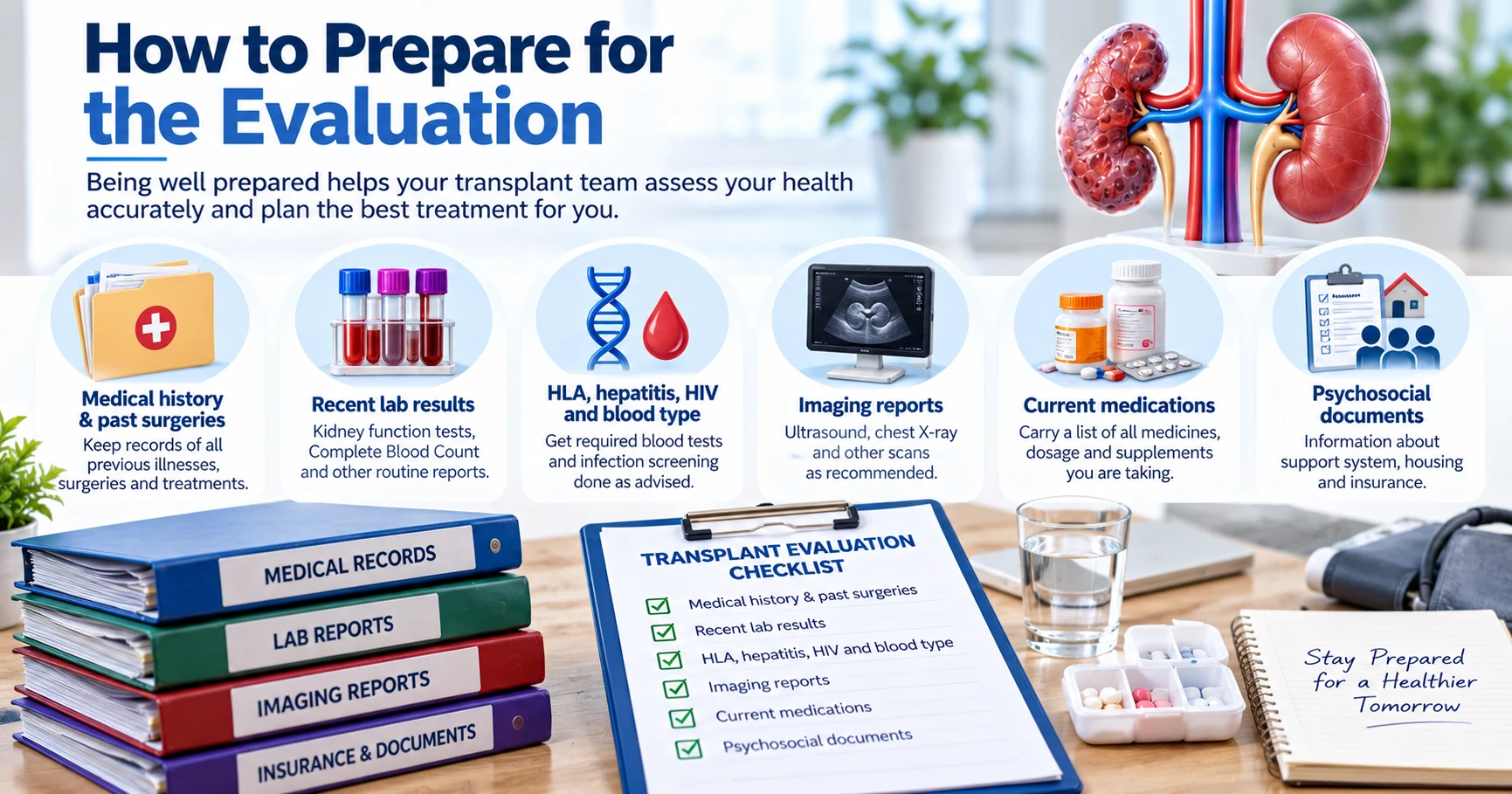
Preparation starts well before the first appointment. Gather the following:
Below is a quick reference table that outlines what to do before, during, and after the evaluation.
| Phase | Key Actions | Purpose |
|---|---|---|
| Before | Collect records, schedule labs, arrange transportation | Ensure the transplant center has a complete picture |
| During | Undergo physical exam, blood work, imaging, and psychosocial interview | Assess medical suitability and match potential |
| After | Review results with the transplant team, discuss listing status | Determine next steps – wait‑list, additional testing, or alternative therapy |
The transplant center conducts a comprehensive, one‑day assessment that may include:
For a detailed look at the testing protocol, refer to the UPMC evaluation overview.
Most patients leave the evaluation center the same day, but the decision timeline varies. Centers typically provide a decision within 1‑2 weeks. If approved, you’ll be placed on the national waiting list and matched based on HLA compatibility, blood type, and waiting time.
Post‑evaluation follow‑up includes:
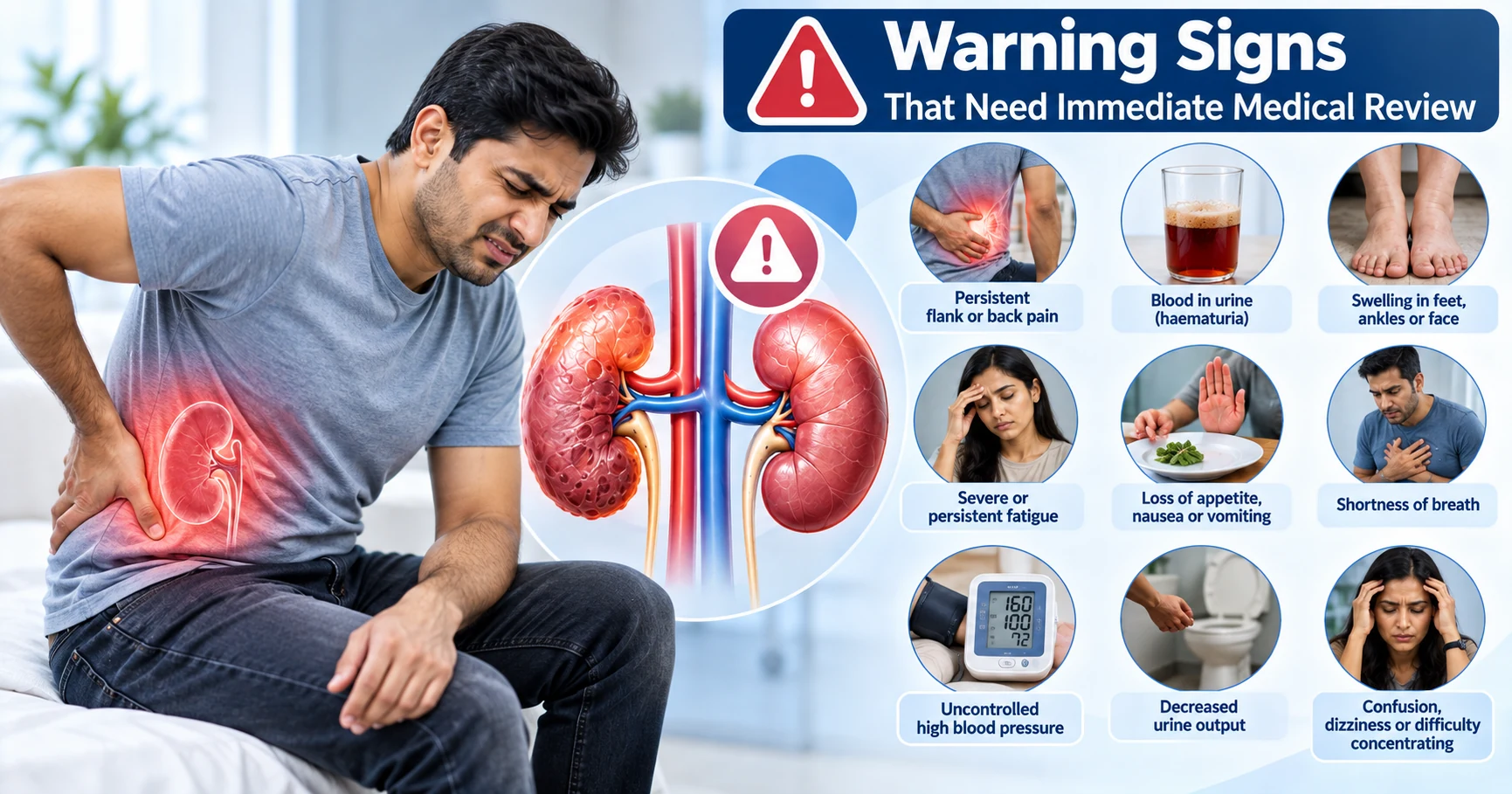
Even after a successful evaluation, certain symptoms warrant prompt attention:
Report any of these to your nephrologist right away to avoid complications.
Medical Review – Dr. Jyoti Bansode
Dr. Jyoti Bansode holds an MBBS, MD in Medicine, and a DM in Nephrology, with over 10 years of experience. She has performed high‑risk, ABO‑incompatible, and pediatric kidney transplants, and leads a dedicated transplant team in Navi Mumbai. For personalized guidance, schedule an dialysis consultation or contact her office directly.
Preparing early, understanding each step, and staying vigilant about warning signs can make the difference between a smooth transplant journey and unnecessary delays.
Experts recommend starting the evaluation when the eGFR falls between 25 and 30 mL/min/1.73 m², allowing enough time to complete testing before reaching end‑stage renal disease.
The evaluation typically includes blood work for kidney function and HLA typing, imaging such as chest X‑ray and kidney ultrasound, cardiac screening, and a psychosocial interview.
Yes. Patients on dialysis are often evaluated concurrently so they can be listed immediately if they meet all medical and psychosocial criteria.
Most transplant centers provide a decision within 1–2 weeks after the one‑day assessment, though complex cases may require additional testing.
Fever can signal infection, which is a red‑flag for transplant candidates. Contact your nephrologist or transplant coordinator immediately.
Living donors undergo a parallel evaluation to ensure kidney health, blood type compatibility, and overall suitability, often completing the process faster than deceased‑donor pathways.
Start the evaluation process as soon as your eGFR approaches 25 mL/min/1.73 m², gather all required documents, and keep an open line of communication with your transplant team. Early preparation maximizes your chances of a timely, successful kidney transplant.
Plot no 70, Moreshwar Heritage, Sector 5, Ulwe, Navi Mumbai, Maharashtra 410206
For Booking: +91 8591009591
Chat With Us
Mini Sea Shore Road, Juhu Nagar, Sector 10A, Vashi, Navi Mumbai, Maharashtra 400703
Chat With Us