
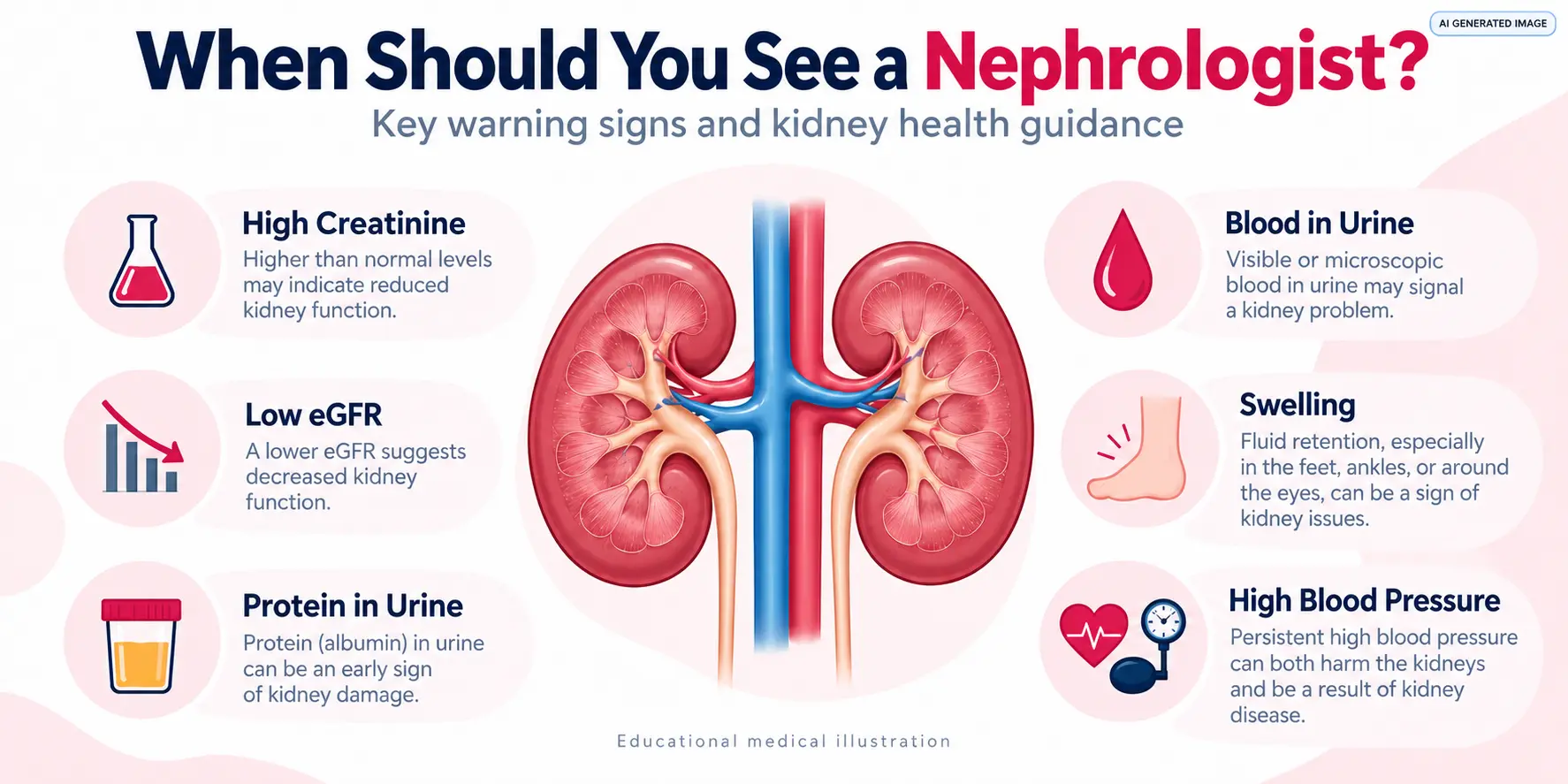
You may need to see a nephrologist if kidney function tests remain abnormal, protein or blood is repeatedly detected in urine, kidney function declines, or high blood pressure is difficult to control. People with diabetes, certain autoimmune disorders or a family history of kidney disease may also require kidney health monitoring and specialist evaluation.
Kidney diseases can develop without noticeable symptoms. Blood tests, urine investigations and clinical assessment help identify abnormalities and determine whether specialist care is appropriate.
A nephrologist is a medical doctor specialising in the evaluation and management of conditions affecting the kidneys.
The kidneys perform several important functions, including filtering waste products from blood, regulating fluid and electrolyte balance, helping control blood pressure and supporting red blood cell production.
Nephrology covers conditions such as:
Acute kidney injury (AKI)
Chronic kidney disease (CKD)
Diabetic kidney disease
Glomerulonephritis
Kidney-related hypertension
Protein or blood in urine
Fluid and electrolyte disorders
Dialysis-related medical care
Kidney transplant-related assessment
Not every abnormal kidney test requires immediate specialist care. The need for a nephrologist depends on the medical findings, severity, rate of change and underlying condition.
What Are the 10 Signs You May Need to See a Nephrologist?
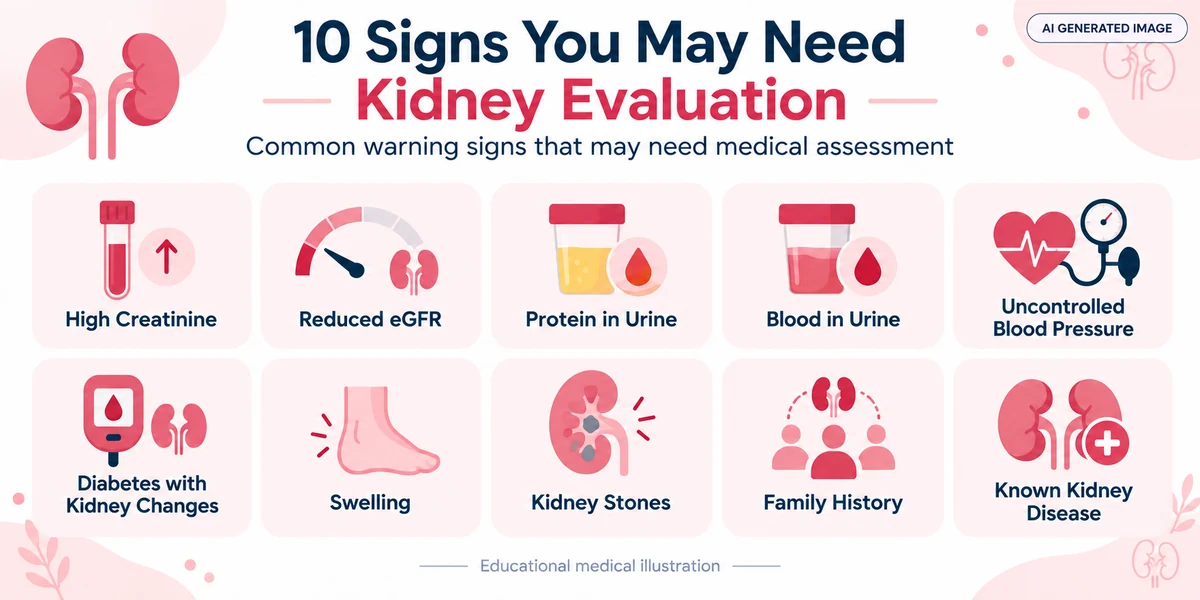
Creatinine is a waste product normally removed from the blood by the kidneys.
An elevated serum creatinine level may indicate reduced kidney filtration. However, dehydration, muscle mass, certain medicines, strenuous exercise and dietary factors can also influence the result.
Persistently elevated or rapidly increasing creatinine requires medical evaluation to identify the possible cause.
A single abnormal creatinine reading does not automatically mean kidney failure.
Related Reading: What Causes High Creatinine?
Estimated glomerular filtration rate (eGFR) helps estimate how effectively the kidneys filter blood.
An eGFR below 60 mL/min/1.73 m² that persists for at least three months may indicate chronic kidney disease.
A single reduced result does not always establish CKD. Temporary illness, acute kidney injury and other factors may influence kidney function.
An eGFR below 30 mL/min/1.73 m² is an important reason to consider nephrology referral, while a rapid decline in eGFR may require assessment even at higher values.
Protein in urine, also called proteinuria, may indicate changes in the kidneys’ filtering structures.
The urine albumin-to-creatinine ratio (ACR) is commonly used to detect albumin leakage.
Persistent or substantial albuminuria may require additional investigations, particularly when associated with diabetes, hypertension or reduced eGFR.
Temporary albuminuria can occur during illness or after strenuous exercise, so repeat testing may be necessary.
Related Reading: Understanding the Urine ACR Test
Blood in urine, called haematuria, may be visible or detected only through laboratory testing.
Possible causes include urinary tract infections, stones, kidney inflammation and other urinary tract conditions.
Persistent haematuria, especially when accompanied by proteinuria, reduced kidney function or high blood pressure, may suggest a kidney-related disorder.
Depending on the cause, evaluation by a nephrologist, urologist or another appropriate clinician may be necessary.
Visible blood in urine should receive medical assessment even when there is no pain.
The kidneys help regulate blood pressure. Kidney disease can contribute to hypertension, while persistently high blood pressure can damage kidney blood vessels.
Blood pressure that remains above the individual treatment target despite an appropriate medication regimen may require further evaluation.
A healthcare professional may assess kidney function, urine abnormalities, medication use and possible secondary causes of hypertension.
Diabetes can damage the kidneys’ small filtering structures over time.
Diabetic kidney disease may develop without symptoms, and serum creatinine can remain within the laboratory reference range during earlier stages.
Kidney health assessment commonly includes eGFR and urine ACR testing.
People with diabetes who develop persistent albuminuria, declining eGFR or unexplained kidney abnormalities may require specialist assessment.
Related Reading: Diabetes & Kidney Diseases
Swelling, also called oedema, may occur when fluid accumulates in body tissues.
Kidney-related conditions can contribute to fluid retention or loss of protein through urine.
However, swelling may also result from heart disease, liver disorders, venous problems, certain medicines or other causes.
Persistent or unexplained swelling should be medically evaluated.
Sudden swelling associated with severe breathlessness requires emergency medical attention.
Kidney stones can sometimes cause urinary obstruction, infection or changes in kidney function.
Many kidney stones are assessed and treated by urologists. Nephrologists may be involved in evaluating recurrent stone formation, metabolic risk factors or associated kidney disease.
The appropriate specialist depends on the individual’s condition and treatment requirements.
A family history of certain kidney disorders may increase an individual’s risk of developing kidney disease.
Examples include polycystic kidney disease and some inherited glomerular or tubular disorders.
Family history, blood pressure, urine testing and kidney function results can help healthcare professionals determine whether additional assessment is appropriate.
Genetic evaluation may be considered in selected cases.
People with diagnosed kidney disease may require specialist input when kidney function worsens, urine abnormalities increase or complications develop.
Some autoimmune diseases, serious infections and conditions affecting multiple organs can also involve the kidneys.
Nephrology assessment may help clarify the diagnosis, evaluate complications and guide appropriate monitoring.
Kidney function results are considered together rather than interpreted as isolated numbers.
| Finding | General clinical significance |
|---|---|
| Persistently elevated creatinine | May indicate reduced filtration or another contributing factor |
| eGFR below 60 for at least 3 months | May indicate CKD |
| eGFR below 30 | Important reason to consider specialist referral |
| Rapidly declining eGFR | Requires assessment; urgency depends on the situation |
| Persistently elevated urine ACR | May indicate kidney damage |
| Persistent haematuria with proteinuria | May suggest a glomerular disorder |
| Significant electrolyte abnormalities | May require prompt or specialist evaluation |
The KDIGO 2024 CKD guideline also supports using validated kidney-failure risk calculations in appropriate patients with CKD stages G3–G5 to help guide nephrology referral decisions.
These are general indications, not a self-diagnosis tool. A clinician should interpret them in context.
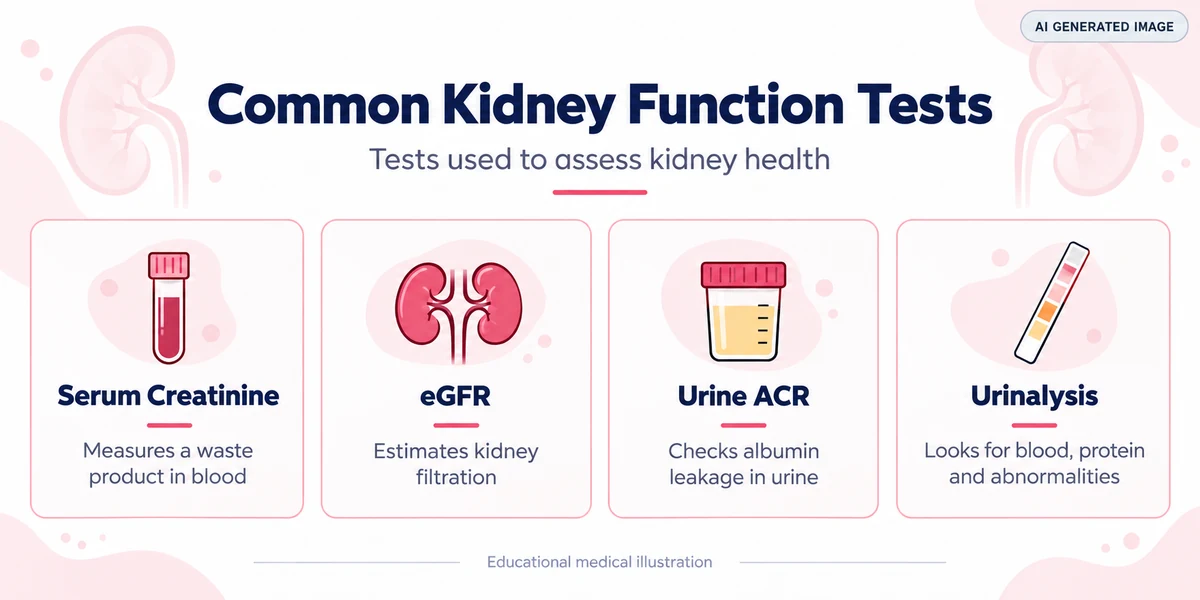
Measures a waste product in blood and helps assess kidney function.
Estimates kidney filtration and assists with CKD assessment and monitoring.
Measures albumin leakage in urine and helps detect kidney damage.
Checks for blood, protein, infection-related findings and other abnormalities.
Evaluates potassium, sodium, bicarbonate and other substances that may be affected by kidney function.
May help evaluate kidney structure, urinary obstruction and selected other abnormalities.
Additional testing, including cystatin C, immune-related blood tests or kidney biopsy, may be considered when clinically appropriate.
Not every person requires every test.
A kidney specialist usually begins by reviewing the individual’s symptoms, past medical history, existing conditions, medicines and previous investigation results.
A clinical assessment may involve:
Reviewing serum creatinine, eGFR and urine reports.
Checking blood pressure and relevant physical findings.
Assessing diabetes, hypertension and other risk factors.
Reviewing medicines and supplements.
Considering additional blood, urine or imaging tests.
Discussing findings, monitoring requirements and possible treatment approaches.
A kidney biopsy or other specialised investigation is recommended only when medically indicated.
Treatment recommendations depend on the diagnosis, kidney function, other illnesses and individual medical circumstances.
If available, previous medical records can provide information about changes in kidney function over time.
Relevant records may include:
Serum creatinine and eGFR reports
Urine routine and ACR results
Blood pressure readings
Blood glucose and HbA1c reports
Current medicine and supplement list
Ultrasound or other imaging results
Previous hospital discharge summaries
Relevant kidney biopsy reports
Fasting is not routinely required before a nephrology consultation. Whether fasting is necessary for a particular blood investigation should be confirmed with the treating healthcare professional or laboratory.
Some kidney-related conditions require urgent medical assessment rather than a routine specialist consultation.
Seek emergency care for:
Very little or no urine, particularly when newly developed
Severe breathlessness or chest pain
Confusion or reduced consciousness
Severe illness with rapidly worsening kidney function
High fever with flank pain, particularly when accompanied by vomiting or marked weakness
Sudden severe pain with suspected urinary obstruction or infection
The urgency of a medical condition cannot be determined from an online article alone.
Early evaluation may identify kidney abnormalities before symptoms become noticeable.
Depending on the underlying diagnosis, timely management may help address reversible causes, control associated medical conditions and slow kidney disease progression in some individuals.
However, kidney diseases have different causes and outcomes. Early evaluation does not guarantee reversal or recovery.
Regular monitoring may be particularly relevant for people with diabetes, hypertension or known kidney disease.
For further information, see the KDIGO Clinical Practice Guidelines.
General kidney health measures include:
Following recommended screening schedules.
Monitoring blood pressure when indicated.
Managing diabetes according to an individual treatment plan.
Avoiding unnecessary use of potentially kidney-harming medicines.
Discussing supplements with a healthcare professional.
Maintaining appropriate physical activity and nutrition.
Attending follow-up appointments for known kidney conditions.
Fluid intake, protein intake and medication recommendations vary according to individual kidney function and medical needs.
Avoid making major dietary or medication changes based solely on online advice.
Book a visit as soon as you have abnormal kidney labs (e.g., high creatinine or low eGFR), persistent proteinuria, unexplained swelling, or uncontrolled high blood pressure.
Serum creatinine, eGFR, BUN, urine protein/albumin, and a complete metabolic panel are essential; a 24‑hour urine protein test may be added if needed.
Yes, seeking a second opinion is encouraged, especially before major decisions like dialysis initiation or transplant evaluation.
People with diabetes should have kidney function tests (creatinine, eGFR, and urine albumin) at least twice a year, or more frequently if abnormalities are detected.
Maintain blood pressure and blood sugar control, stay hydrated, limit excessive salt and protein, avoid NSAIDs overuse, and quit smoking.
Sudden severe flank pain, rapid swelling, sudden loss of urine output, high fever with flank tenderness, or confusion with rising creatinine require immediate medical attention.
Knowing when to see a nephrologist is important for identifying and managing kidney-related conditions. Kidney diseases may develop without noticeable symptoms, making regular kidney function monitoring particularly important for people with diabetes, high blood pressure or other risk factors.
Persistent high creatinine, reduced eGFR, protein or blood in urine, unexplained swelling and changes in urination may indicate the need for medical evaluation. Tests such as serum creatinine, eGFR and urine ACR can help assess kidney health.
Early identification and appropriate medical care may help manage kidney conditions and slow disease progression in some patients. If you notice persistent symptoms or abnormal kidney test results, consult a qualified healthcare professional for individual assessment.
Medical Disclaimer:Disclaimer: Website content and visuals are for general informational, educational and representational purposes only, may not reflect individual patient conditions or outcomes, and do not replace personalised medical advice, diagnosis or clinical assessment.
Plot no 70, Moreshwar Heritage, Sector 5, Ulwe, Navi Mumbai, Maharashtra 410206
For Booking: +91 8591009591
Chat With Us
Mini Sea Shore Road, Juhu Nagar, Sector 10A, Vashi, Navi Mumbai, Maharashtra 400703
Chat With Us