
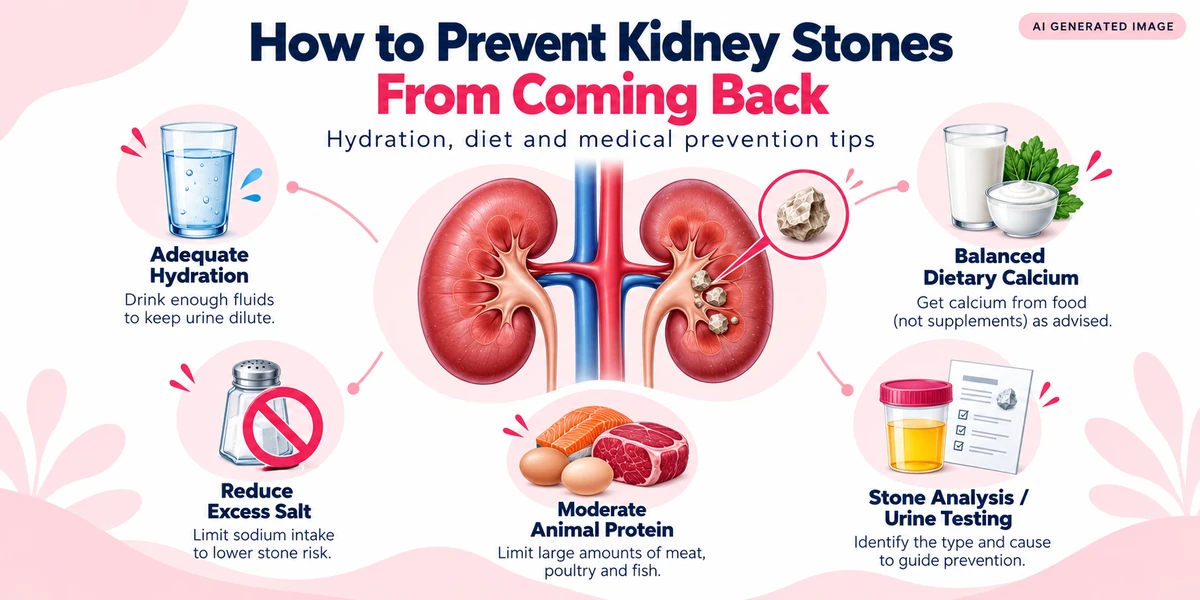
Kidney stones can return after a previous episode, but appropriate hydration, dietary changes and medical evaluation may help reduce the risk of recurrence. Prevention depends on factors such as stone composition, urine chemistry, fluid intake, medical conditions and family history.
Common preventive measures include maintaining adequate hydration, reducing excessive sodium intake, consuming appropriate amounts of dietary calcium and avoiding unnecessarily high animal protein intake.
People who experience repeated kidney stones may benefit from stone analysis and metabolic testing to identify factors contributing to stone formation.
Kidney stones are solid deposits formed when certain minerals and substances become concentrated in urine and crystallise.
Stones may develop in one or both kidneys and vary in size, composition and clinical significance.
Some small stones cause no symptoms, while others can produce pain, bleeding, urinary obstruction or infection.
A previous kidney stone increases the likelihood of developing another stone, although recurrence risk varies considerably between individuals.
For additional information about stone formation, types and general preventive measures, read Kidney Stone Prevention.
Kidney stones may recur when conditions that favour crystal formation remain present.
These include concentrated urine, high urinary calcium or oxalate levels, low urinary citrate, increased uric acid, certain medical conditions and inherited risk factors.
Common contributors include:
– Inadequate fluid intake or excessive fluid loss
– High dietary sodium intake
– Excessive animal protein consumption
– Certain metabolic abnormalities
– A family history of kidney stones
– Obesity and some associated medical conditions
– Recurrent urinary tract infections in selected stone types
– Certain medicines or supplements
The cause of recurrence cannot always be determined from symptoms alone.
Identifying the stone type can help guide prevention.
Calcium oxalate stones are among the most common kidney stone types.
They may be associated with increased urinary calcium or oxalate, low urine volume or reduced urinary citrate.
Dietary recommendations depend on individual risk factors.
Calcium phosphate stones may occur in association with certain metabolic conditions and changes in urine chemistry.
Evaluation may include assessment of urine pH, calcium excretion and relevant medical conditions.
Uric acid stones are more likely to form in persistently acidic urine.
They may be associated with metabolic factors, gout and certain dietary patterns.
Management may involve changes in urine chemistry under medical supervision.
Struvite stones may form in association with urinary tract infections caused by particular bacteria.
Prevention generally requires attention to the underlying infection and any remaining stone material.
Cystine stones occur in people with cystinuria, an inherited condition that causes increased cystine excretion in urine.
They may require specialist evaluation and a targeted prevention plan.
Important: Not every dietary recommendation applies to every kidney stone type.
Drinking sufficient fluid helps dilute substances in urine that may contribute to stone formation.
For many adults with recurrent kidney stones who do not require fluid restriction, guidelines commonly recommend fluid intake sufficient to produce approximately 2.5 litres or more of urine per day.
The amount of fluid required varies according to climate, sweating, physical activity and medical conditions.
Water is generally the preferred beverage.
People with heart failure, advanced kidney disease or prescribed fluid restrictions should not increase fluid intake without medical advice.
A high-sodium diet can increase urinary calcium excretion and contribute to calcium stone formation in susceptible individuals.
Dietary sodium comes from table salt as well as packaged foods, processed snacks, pickles, sauces and restaurant meals.
For many adults, limiting sodium to approximately 2,300 mg per day or less may be appropriate, although individual targets vary.
Practical approaches include choosing less processed food, checking food labels and reducing added salt.
A common misconception is that people with calcium kidney stones should avoid calcium-rich foods.
In fact, very low dietary calcium intake may increase calcium oxalate stone risk because calcium in the digestive tract helps bind dietary oxalate.
Many adults require approximately 1,000–1,200 mg of calcium daily, depending on age and other health factors.
Calcium is preferably obtained through a balanced diet when possible.
Calcium supplements should be discussed with a healthcare professional because their appropriateness depends on individual circumstances.
Excessive animal protein consumption may increase the likelihood of certain kidney stones by affecting urinary calcium, uric acid, citrate or acidity.
Animal protein sources include meat, poultry, fish and eggs.
The appropriate amount depends on overall nutritional needs, stone type and existing medical conditions.
A balanced eating pattern with suitable plant-based protein sources may be helpful for some individuals.
Do not start a severely protein-restricted diet without medical guidance.
Oxalate is a naturally occurring substance found in many foods.
For people with calcium oxalate stones and increased urinary oxalate, a clinician may recommend moderating certain high-oxalate foods.
Examples include:
– Spinach
– Rhubarb
– Certain nuts
– Wheat bran
– Some other concentrated oxalate sources
However, not everyone with kidney stones needs a low-oxalate diet.
Combining oxalate-containing foods with an appropriate amount of dietary calcium can help reduce oxalate absorption.
A varied diet containing suitable portions of vegetables, fruits, whole grains and other nutritious foods may support general health and kidney stone prevention.
A DASH-style dietary pattern has been associated with reduced kidney stone risk in research.
Dietary modifications may be necessary for people with chronic kidney disease, high potassium levels or other medical conditions.
Frequent consumption of sugar-sweetened beverages may contribute to stone risk in some individuals.
High-dose vitamin C supplementation can increase urinary oxalate in susceptible individuals.
Certain other supplements may also influence urine chemistry.
Discuss supplements with a qualified healthcare professional rather than assuming that a product labelled natural is harmless.
Obesity and some metabolic conditions are associated with increased kidney stone risk.
Regular physical activity and weight management may support overall metabolic health.
However, excessive sweating without adequate fluid replacement can contribute to concentrated urine.
Hydration requirements may increase during exercise or hot weather.
Lemons contain citrate, a substance that can reduce the formation of certain calcium-containing crystals in urine.
Citrate in urine is one factor that influences kidney stone formation.
However, drinking lemon water does not reliably prevent every type of kidney stone, and the amount of citrate delivered by homemade drinks varies.
Lemon water may contribute to fluid intake, but it should not replace medically recommended investigations or treatment.
Sugar-sweetened lemon drinks are not necessarily beneficial.
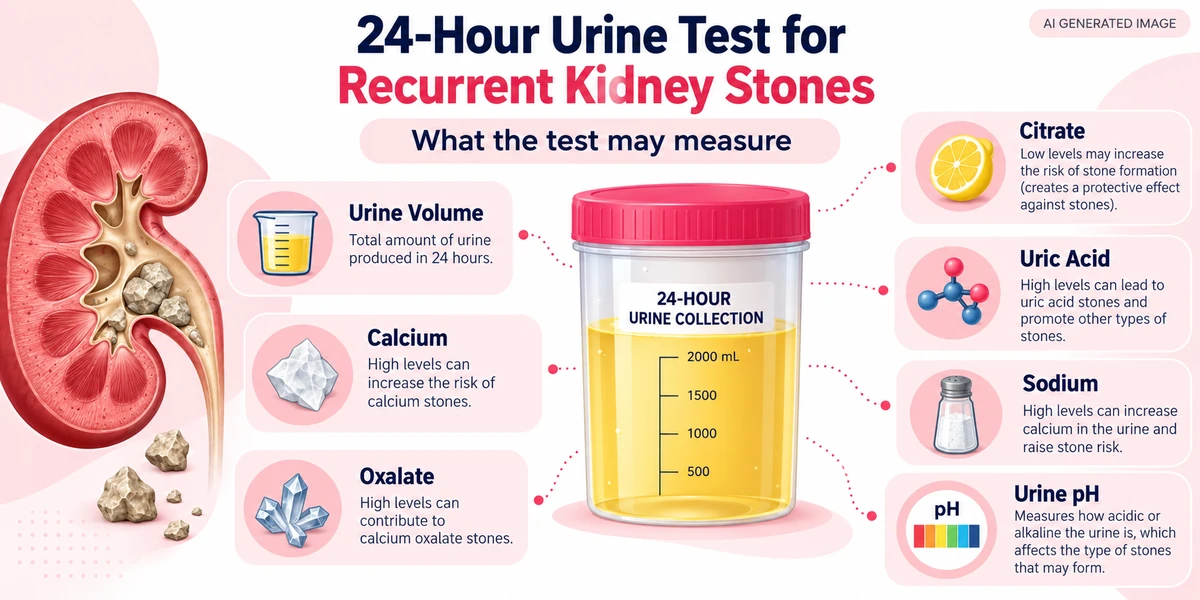
A 24-hour urine test measures substances excreted in urine over a full day.
The test can help identify metabolic factors that increase stone formation risk.
Depending on the laboratory and clinical requirements, measurements may include:
| Measurement | Why it matters |
|---|---|
| Urine volume | Assesses urine concentration and hydration-related risk |
| Urine calcium | Identifies elevated urinary calcium |
| Urine oxalate | Evaluates oxalate-related risk |
| Urine citrate | Detects low citrate, which may favour stones |
| Urine uric acid | Helps evaluate uric acid-related risk |
| Urine sodium | Provides information related to sodium intake |
| Urine pH | Helps assess urine acidity or alkalinity |
| Urine creatinine | May help assess collection completeness |
Not every person who experiences one kidney stone requires a 24-hour urine test.
It may be particularly useful for people with recurrent stones, high-risk stone types or certain associated conditions.
Kidney stone analysis examines the composition of a stone that has passed naturally or has been removed during treatment.
Understanding whether a stone contains calcium oxalate, calcium phosphate, uric acid, cystine or other substances can help guide prevention.
When a stone is available, a healthcare professional may recommend laboratory analysis.
Stone appearance alone does not reliably identify its composition.
Some individuals with recurrent stones may benefit from prescribed medicines, depending on stone composition and metabolic findings.
Examples include:
Potassium Citrate
May be used in selected patients to increase urinary citrate or alter urine pH.
It is not appropriate for everyone and can carry risks, including elevated blood potassium in susceptible individuals.
Thiazide-Type Medicines
May be considered in selected patients with recurrent calcium stones, depending on clinical assessment.
Potential adverse effects and treatment benefits require individual review.
Allopurinol
May be appropriate for certain patients with uric acid-related metabolic abnormalities or selected recurrent calcium stone conditions.
The need for medicines should be determined by a qualified healthcare professional.
Do not start stone-prevention medicines without medical assessment.
Low urine volume can allow stone-forming substances to become concentrated.
Unnecessarily restricting calcium may increase the risk of calcium oxalate stones and affect bone health.
Different stones have different causes, and prevention advice should reflect the patient’s risk factors.
No single juice, herb or food has been shown to reliably prevent all kidney stones.
Repeated stones may indicate underlying metabolic or structural problems requiring further assessment.
High-dose supplements can sometimes influence urinary stone-forming substances.
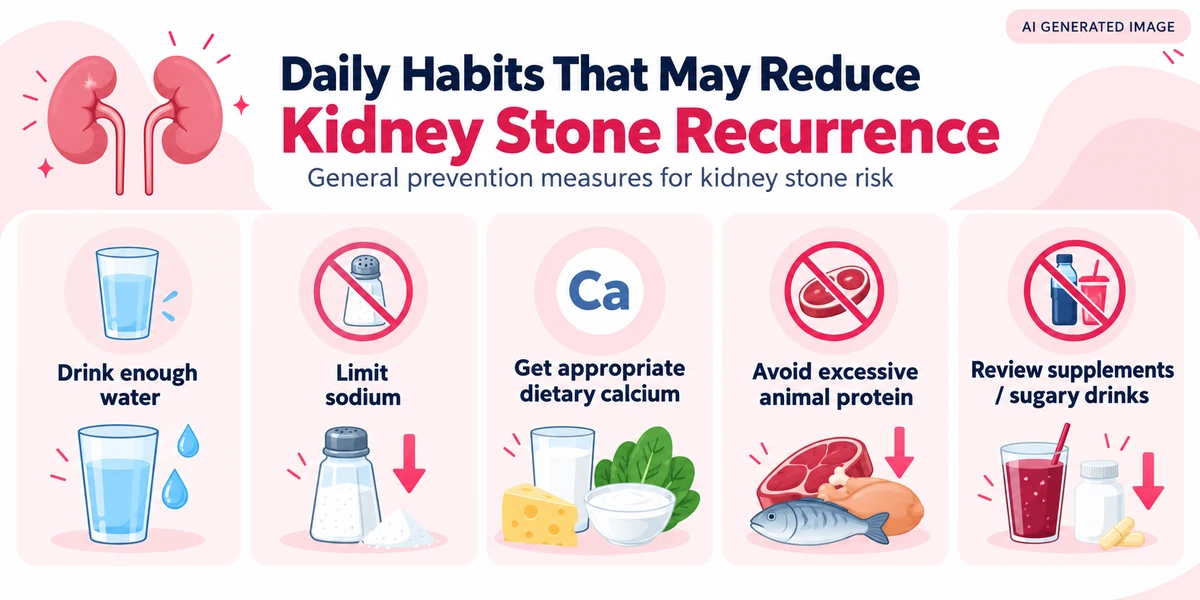
| Habit | General recommendation |
|---|---|
| Hydration | Maintain adequate fluid intake according to medical needs |
| Sodium | Reduce excessive salt and processed foods |
| Dietary calcium | Consume appropriate amounts rather than avoiding calcium |
| Protein | Avoid unnecessarily high animal protein intake |
| Fruits and vegetables | Include suitable varieties as part of balanced nutrition |
| Supplements | Review high-dose supplements with a healthcare professional |
| Previous stones | Consider stone analysis when available |
| Recurrent stones | Discuss metabolic evaluation and individual prevention measures |
This checklist is intended for general education. It is not a personalised diet or treatment prescription.
Kidney stones may require prompt assessment if they cause significant pain, urinary obstruction or infection.
Seek urgent medical care for:
– Severe or persistent flank pain
– Fever or chills with suspected kidney stones
– Repeated vomiting or inability to keep fluids down
– Very little or no urine
– Severe illness or rapidly worsening symptoms
A urinary obstruction associated with infection can be a medical emergency.
Do not delay emergency assessment while attempting home remedies
Aim for 2.5–3 L of urine output daily, which usually means drinking about 3 L (5 pints) of fluid spread throughout the day.
No. Adequate dietary calcium (1,000–1,200 mg) binds oxalate in the gut, reducing stone risk; only high‑dose supplements should be limited.
It measures volume, pH, calcium, oxalate, citrate, uric acid, and sodium, allowing doctors to customize fluid, diet, and medication plans.
If you have recurrent stones, abnormal urine test results, or metabolic conditions (e.g., hyperparathyroidism), a nephrologist can manage the underlying cause.
Yes. Lemon juice raises urinary citrate, which binds calcium and helps prevent calcium‑oxalate stone formation.
Preventing kidney stones from returning involves understanding the factors that contribute to stone formation and following suitable preventive measures.
Adequate hydration, appropriate dietary calcium intake, reduced sodium consumption and avoidance of excessive animal protein may help lower recurrence risk in some individuals.
People with repeated kidney stones may benefit from stone analysis and metabolic investigations, including a 24-hour urine test, when clinically indicated.
Kidney stone prevention should be individualised according to stone type, medical history and laboratory findings. No dietary change, supplement or home remedy can guarantee that stones will never return.
Disclaimer: Website content and visuals are for general informational, educational and representational purposes only, may not reflect individual patient conditions or outcomes, and do not replace personalised medical advice, diagnosis or clinical assessment.
Plot no 70, Moreshwar Heritage, Sector 5, Ulwe, Navi Mumbai, Maharashtra 410206
For Booking: +91 8591009591
Chat With Us
Mini Sea Shore Road, Juhu Nagar, Sector 10A, Vashi, Navi Mumbai, Maharashtra 400703
Chat With Us