
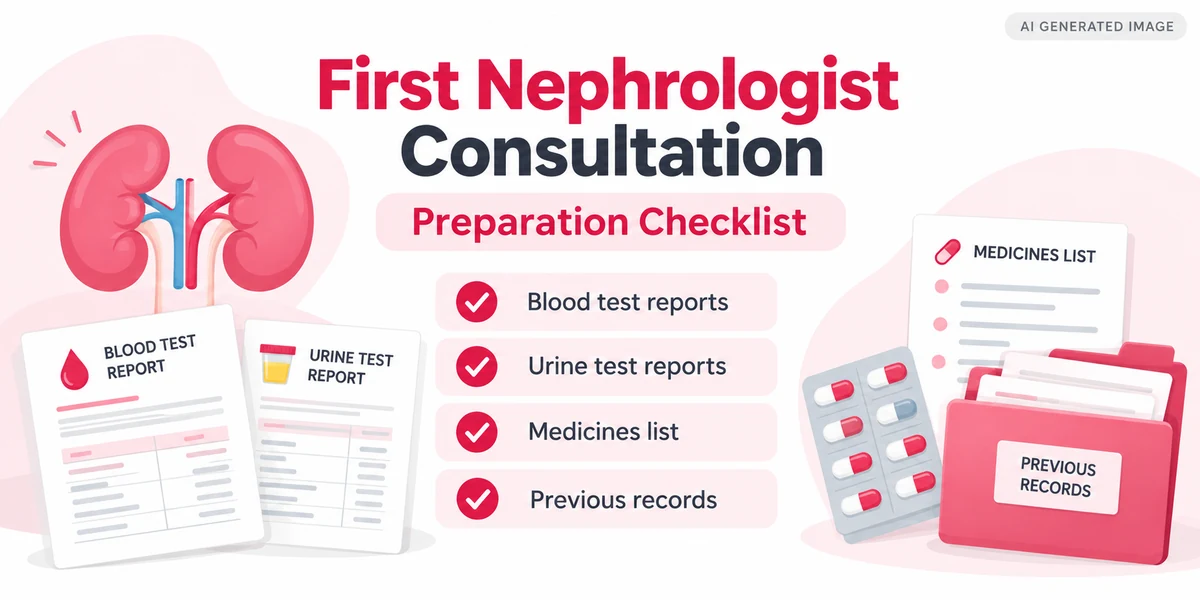
Preparing for your first nephrologist consultation can help you understand your kidney health and make the discussion with your healthcare professional more useful. Bringing previous blood and urine reports, a current medication list, relevant medical records and a summary of symptoms can help with clinical assessment.
You do not need to complete every kidney test before your appointment. A qualified healthcare professional can determine which investigations are necessary based on your symptoms, previous results and medical history.
A nephrologist is a medical doctor who specialises in assessing and managing conditions affecting kidney function.
The kidneys filter waste products and excess fluid from the blood, help regulate blood pressure, maintain electrolyte balance and support several important body functions.
Nephrologists evaluate conditions including:
– Chronic kidney disease (CKD)
– Acute kidney injury (AKI)
– Diabetic kidney disease
– High creatinine and reduced eGFR
– Persistent protein or blood in urine
– Hypertension-related kidney problems
– Glomerulonephritis
– Fluid and electrolyte abnormalities
– Dialysis-related medical concerns
– Kidney transplant-related conditions
Not every abnormal test result indicates kidney failure, and not everyone with a kidney-related concern requires specialist treatment.
Kidney function is often assessed by reviewing changes over time rather than relying on a single test result.
Previous laboratory reports and medical records may help a doctor understand whether an abnormality is new, persistent, improving or worsening.
Preparation can also help patients remember important symptoms, medicines and questions they want to discuss.
However, an appointment should not be delayed simply because some reports or medical records are unavailable.
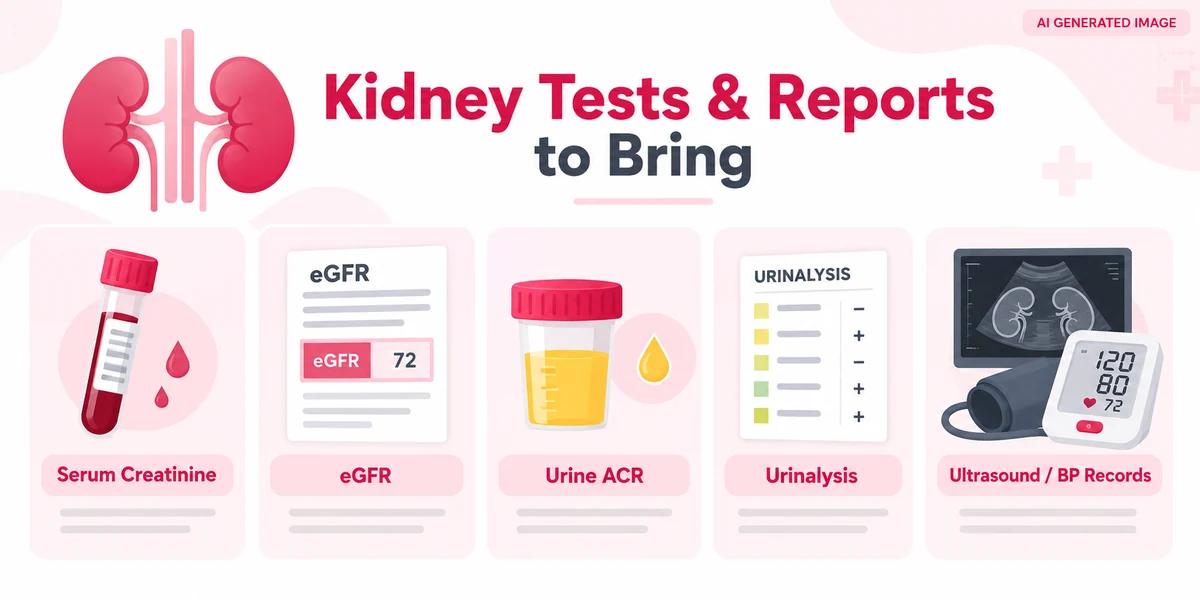
1. Previous Blood Test Reports
Blood tests help assess kidney function and related medical conditions.
If available, bring previous results, particularly reports showing changes over time.
Serum Creatinine
Creatinine is a waste product normally removed by the kidneys. Elevated levels may indicate reduced kidney filtration, although muscle mass, diet, hydration and certain medicines can also affect the result.
Estimated Glomerular Filtration Rate (eGFR)
eGFR estimates how effectively the kidneys filter blood. It is interpreted alongside medical history, urine findings and previous test results.
Blood Urea Nitrogen (BUN)
BUN measures urea nitrogen in the blood. It provides additional information but can be affected by factors beyond kidney function.
Electrolytes
Blood tests measuring potassium, sodium, bicarbonate and other electrolytes may help identify abnormalities associated with kidney disease.
Blood Glucose or HbA1c
These investigations may be useful when diabetes is present or suspected.
Older reports can be helpful because kidney function trends may be more informative than a single recent measurement.
Related Reading: What Causes High Creatinine?
Urine tests help identify abnormalities that may not be apparent from blood creatinine alone.
Urine Routine Examination
Urinalysis may identify blood, protein, infection-related changes or other urine abnormalities.
Urine Albumin-to-Creatinine Ratio (ACR)
Urine ACR measures albumin relative to creatinine in a urine sample.
Persistently elevated albumin may indicate kidney damage, including in people with diabetes or hypertension.
Urine Protein Measurements
Some patients may have additional urine protein investigations, including urine protein-to-creatinine ratio or timed urine collections.
These investigations are not required for every patient.
Related Reading: Understanding the Urine ACR Test
If you have previously undergone kidney or urinary tract imaging, bring the reports.
Relevant investigations may include:
– Kidney or urinary tract ultrasound
– CT scans, if previously performed
– MRI reports, if relevant
– Reports of kidney stones or urinary obstruction
– Previous kidney biopsy findings
Imaging may provide information about kidney structure, size, urinary obstruction and certain other abnormalities.
Do not arrange imaging tests solely for the consultation unless a healthcare professional has advised you to do so.
Medicines are an important part of kidney health assessment.
Prepare a list containing:
– Prescription medicines
– Medicine doses and frequency
– Over-the-counter pain medicines
– Vitamins and nutritional supplements
– Herbal or traditional preparations
– Recently started or discontinued medicines
Some medicines may affect kidney function or require dose adjustments in people with reduced kidney filtration.
Do not stop prescribed medicines or change doses independently before the appointment.
A concise summary of your health history can help a doctor understand possible factors affecting kidney function.
Mention any history of:
– Diabetes
– High blood pressure
– Heart disease
– Recurrent urinary infections
– Kidney stones
– Autoimmune disorders
– Previous episodes of acute kidney injury
– Hospital admissions involving kidney problems
– Kidney disease in close family members
– Previous dialysis or kidney transplantation
Also mention any important allergies or previous adverse reactions to medicines.
If you monitor your blood pressure or blood glucose at home, bring available readings.
A written log or digital record can help identify patterns over time.
Do not change medicines or repeatedly measure blood pressure solely to produce an ideal reading before the consultation.
Some kidney conditions cause few or no symptoms, particularly in their early stages.
If symptoms are present, write down when they began and whether they have changed.
Relevant symptoms may include:
Swelling of the feet, ankles or face
Changes in urine volume or frequency
Persistent foamy urine
Visible blood in urine
Unexplained tiredness
Nausea or reduced appetite
Frequent urination at night
Flank discomfort or pain
Difficulty controlling blood pressure
These symptoms can have causes unrelated to kidney disease. Their significance depends on clinical evaluation.
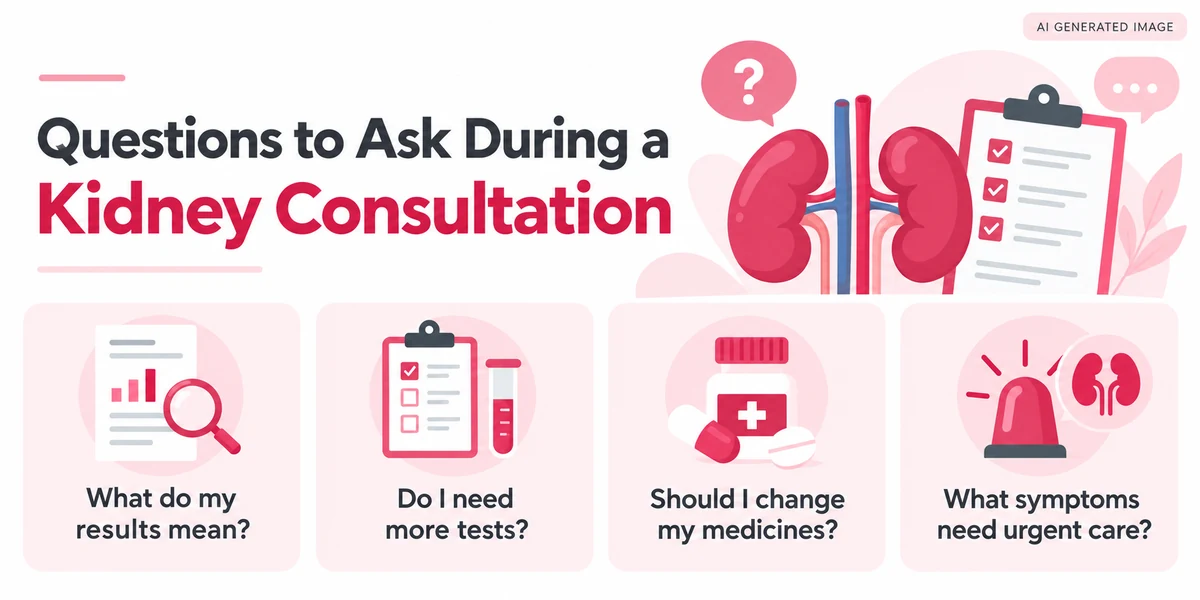
Preparing questions can help you better understand your kidney health.
Consider asking:
What do my creatinine and eGFR results indicate?
Are my kidney test results stable or changing?
Is there evidence of protein or albumin in urine?
What are the possible causes of my abnormal results?
Do I need repeat blood or urine tests?
Are any of my medicines relevant to kidney function?
Should I make changes to my diet or fluid intake?
How frequently should my kidney health be monitored?
Are additional investigations necessary?
Which symptoms require urgent medical attention?
The answers will depend on the individual’s diagnosis and medical circumstances.
The healthcare professional may ask about current symptoms, previous illnesses, prescribed medicines and relevant family history.
Previous kidney reports are often reviewed to assess changes over time.
Depending on the medical concern, examination may include:
– Blood pressure measurement
– Assessment for swelling
– Review of fluid balance
– Heart and lung examination
– Abdominal examination when indicated
Not every examination is necessary for every patient.
The doctor may assess serum creatinine, eGFR, urine ACR and other relevant findings.
Results are interpreted together with medical history and the clinical examination.
Additional blood tests, urine testing or imaging may be recommended when medically appropriate.
Selected patients may require specialised investigations, such as immune-related blood tests or kidney biopsy.
The doctor may explain the suspected diagnosis, uncertainty in the available findings, monitoring requirements and potential management options.
Some kidney conditions require periodic observation, while others require more immediate investigation or treatment.
Fasting is not routinely required for a nephrologist consultation.
Common tests such as serum creatinine and eGFR generally do not require fasting.
However, other investigations ordered alongside kidney tests may have particular preparation requirements.
Follow the instructions provided by the laboratory or treating healthcare professional.
Do not stop drinking water or taking prescribed medicines unless you have received specific medical instructions.
Drinking excessive water before kidney testing is not recommended.
Appropriate fluid intake depends on the individual’s medical condition.
Some patients with kidney disease, heart failure or fluid overload may require specific fluid restrictions.
Others may have a risk of dehydration.
It is generally advisable to follow normal hydration habits unless a healthcare professional provides different instructions.
There is no single kidney diet suitable for every patient.
Dietary recommendations may depend on:
– Kidney function
– Blood pressure
– Diabetes status
– Potassium and phosphorus levels
– Presence of swelling or fluid retention
– Nutritional needs
– Dialysis status, when applicable
Avoid unnecessary protein restriction, excessive fluid intake or elimination of major food groups without professional guidance.
Dietary advice should be individualised.
A second medical opinion may help clarify a diagnosis, investigation plan or proposed treatment.
If you are seeking another assessment, bring:
– Previous consultation notes
– Existing diagnosis and treatment plans
– Recent and older blood reports
– Urine investigation results
– Relevant imaging reports
– Kidney biopsy reports, if available
– Current medicine and supplement list
– Specific questions or concerns
A second opinion may confirm earlier recommendations or identify questions requiring additional investigation.
It does not automatically mean the previous diagnosis or treatment was incorrect.
Some symptoms require urgent clinical assessment rather than waiting for a routine specialist consultation.
Seek emergency medical care for:
Very Little or No Urine
A sudden, substantial reduction in urine output may indicate acute kidney injury, obstruction or another serious medical condition.
Severe Breathlessness or Chest Pain
These symptoms can occur during serious heart, lung or fluid-balance conditions and require immediate assessment.
Confusion or Reduced Consciousness
New confusion or altered consciousness may signal a serious medical problem.
High Fever With Severe Flank Pain
This combination may indicate a kidney infection or another urgent urinary tract condition.
Severe Blood Pressure Elevation With Symptoms
Very high blood pressure accompanied by chest pain, breathlessness, neurological symptoms or visual disturbances requires emergency assessment.
Rapidly Worsening Illness
Sudden deterioration, particularly with abnormal kidney tests, may require urgent evaluation.
Online information cannot determine whether an individual is experiencing a medical emergency.
Use this checklist before visiting a kidney specialist.
| Item | What to prepare |
|---|---|
| Blood reports | Creatinine, eGFR, BUN, electrolytes and other available results |
| Urine reports | Urinalysis, urine ACR and protein investigations, if available |
| Imaging | Previous ultrasound, CT, MRI or biopsy reports |
| Medicines | Current medicines, doses, supplements and allergies |
| Medical history | Diabetes, blood pressure, previous kidney problems and relevant illnesses |
| Family history | Known kidney diseases in close relatives |
| Monitoring records | Home blood pressure or glucose readings |
| Symptoms | A brief record of symptoms and when they started |
| Questions | A short list of concerns to discuss |
Important: This is a preparation checklist, not a list of tests that every patient must complete. Do not delay necessary medical evaluation if some records are missing.
Bring any available kidney blood and urine test reports, previous imaging, current medication details and relevant medical records. A symptom summary and list of questions may also be helpful.
Not necessarily. A qualified healthcare professional can recommend appropriate investigations after reviewing previous results and medical history.
No. Some kidney abnormalities, including albumin leakage, may be present even when serum creatinine is within the laboratory reference range.
Not necessarily. Kidney biopsy is considered for selected conditions when tissue examination may help establish a diagnosis or guide management. The benefits and risks must be assessed individually.
Excessive water intake is not necessary and may be unsafe for some people with kidney or heart conditions. Follow any individual fluid recommendations already provided by your healthcare professional.
Yes. Bring the same records along with previous diagnoses, treatment recommendations and specific questions about your medical care.
Preparing for a nephrologist consultation involves organising available blood and urine test reports, imaging findings, medicine details, medical history and questions about kidney health.
Previous results can help healthcare professionals assess kidney function trends, understand possible causes of abnormalities and determine whether further investigations are needed.
Not every patient requires the same tests or treatment. Clinical assessment and recommendations depend on individual symptoms, medical history and laboratory findings.
If you have kidney-related concerns or persistently abnormal kidney test results, seek appropriate evaluation from a qualified healthcare professional.
Disclaimer: Website content and visuals are for general informational, educational and representational purposes only, may not reflect individual patient conditions or outcomes, and do not replace personalised medical advice, diagnosis or clinical assessment.
Plot no 70, Moreshwar Heritage, Sector 5, Ulwe, Navi Mumbai, Maharashtra 410206
For Booking: +91 8591009591
Chat With Us
Mini Sea Shore Road, Juhu Nagar, Sector 10A, Vashi, Navi Mumbai, Maharashtra 400703
Chat With Us