
A kidney biopsy provides essential clues about kidney health, but the thought of a needle in your back can be intimidating. This guide walks you through why doctors order the test, how to get ready, what the procedure looks like, and the steps for a safe, comfortable recovery.
Nephrologists use kidney biopsies to pinpoint the exact cause of kidney problems when blood tests, urine studies, or imaging cannot give a clear answer. The tissue sample helps differentiate between glomerular diseases, interstitial nephritis, vascular disorders, and other conditions that require specific treatment.
Understanding the reason behind the test helps you feel more in control and can guide post‑procedure discussions with your doctor.

Preparation is mostly about safety and comfort. Follow these steps to minimize complications:
For more on interpreting kidney function numbers, see our eGFR test article.
The biopsy is usually performed under local anesthesia with real‑time ultrasound guidance. A thin needle is inserted through the flank into the kidney to obtain 2–3 core samples. The entire process typically lasts 30–45 minutes.
| Phase | What You Experience | Key Goal |
|---|---|---|
| Before | Positioned on your side, IV line placed, skin cleaned. | Ensure sterility and optimal needle trajectory. |
| During | Local anesthetic applied; needle advances under ultrasound. | Collect adequate tissue while minimizing trauma. |
| After | Needle removed, pressure applied, bandage placed. | Prevent immediate bleeding and start monitoring. |
After the biopsy, you will lie flat for several hours while nurses monitor vital signs, blood pressure, pulse, and urine output. This “flat‑lying” period reduces the risk of bleeding from the puncture site.
Typical discharge instructions include drinking plenty of fluids, avoiding heavy lifting (>10 kg), and watching for signs of bleeding.
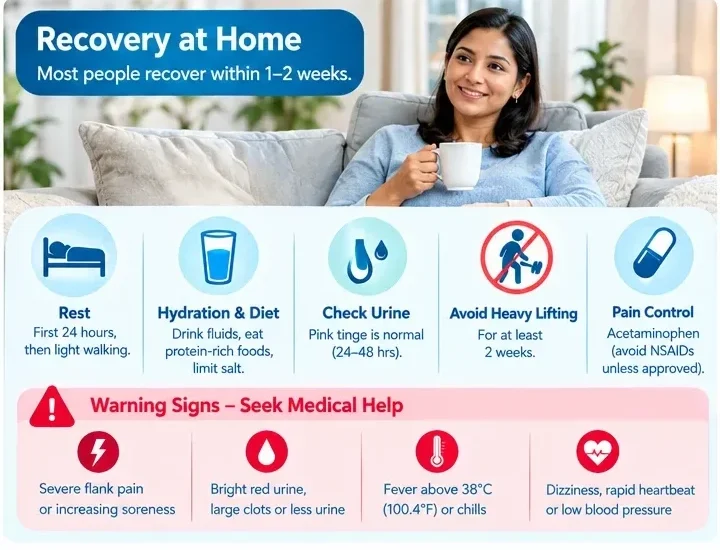
Most patients feel mild soreness at the biopsy site for a few days. Follow these guidelines for a smooth healing process:
If you notice any of the warning signs below, call your nephrologist right away.
These symptoms could indicate bleeding, infection, or other complications that need early intervention NIDDK recovery information.
Pathology results usually arrive within 3–7 days. The report will describe the type of kidney disease, degree of inflammation or scarring, and any specific findings that guide treatment. Your nephrologist will discuss the implications and may adjust medications accordingly.
For related information on protein and blood in urine, visit the Kaiser Permanente home‑care guide.
Most patients are discharged the same day after a few hours of observation, but some may stay overnight if there are concerns about bleeding or blood pressure.
A small amount of pink‑tinged urine for 24–48 hours is common. Bright red urine, clots, or a sudden increase in bleeding should be reported immediately.
Light walking is allowed after the first day, but avoid heavy lifting and vigorous exercise for at least two weeks, or until your doctor gives clearance.
Blood thinners (aspirin, warfarin, clopidogrel) and NSAIDs are typically stopped 5–7 days prior, but always follow the specific instructions from your nephrologist.
Results are usually available within 3–7 days and are discussed in a follow‑up appointment where your doctor explains the diagnosis and treatment plan.
Preparing well, following post‑procedure instructions, and staying alert to warning signs can make your kidney biopsy recovery smooth and uneventful. If you have any doubts, contact your nephrology team promptly.
Plot no 70, Moreshwar Heritage, Sector 5, Ulwe, Navi Mumbai, Maharashtra 410206
For Booking: +91 8591009591
Chat With Us
Mini Sea Shore Road, Juhu Nagar, Sector 10A, Vashi, Navi Mumbai, Maharashtra 400703
Chat With Us