+91 8691888178 / 8850999397 dr.jyotibansode.01@gmail.com Monday to Saturday : 05:00PM TO 06:00PM
How to Prevent Kidney Stones Recurrence – Proven Steps
Kidney stones can be excruciating, and the fear of another episode often looms large after the first pass. Fortunately, research shows that simple, consistent habits can cut the risk of recurrence dramatically. Below you’ll find evidence‑based strategies, the tests that guide personalized care, and clear guidance on when to involve a kidney specialist.
Why Preventing Recurrence Matters
Each stone event can cause severe pain, time off work, and costly medical visits. Repeated stones also increase the risk of chronic kidney damage and may lead to surgical interventions. Proactive prevention therefore protects both health and quality of life.
Who May Be at Higher Risk?
Risk factors include a history of stones, certain metabolic conditions (e.g., hypercalciuria, gout), a diet high in sodium or animal protein, low fluid intake, and a family history of nephrolithiasis. People with obesity, diabetes, or a previous urinary tract infection also face higher odds of recurrence.
Practical Daily Prevention Steps.
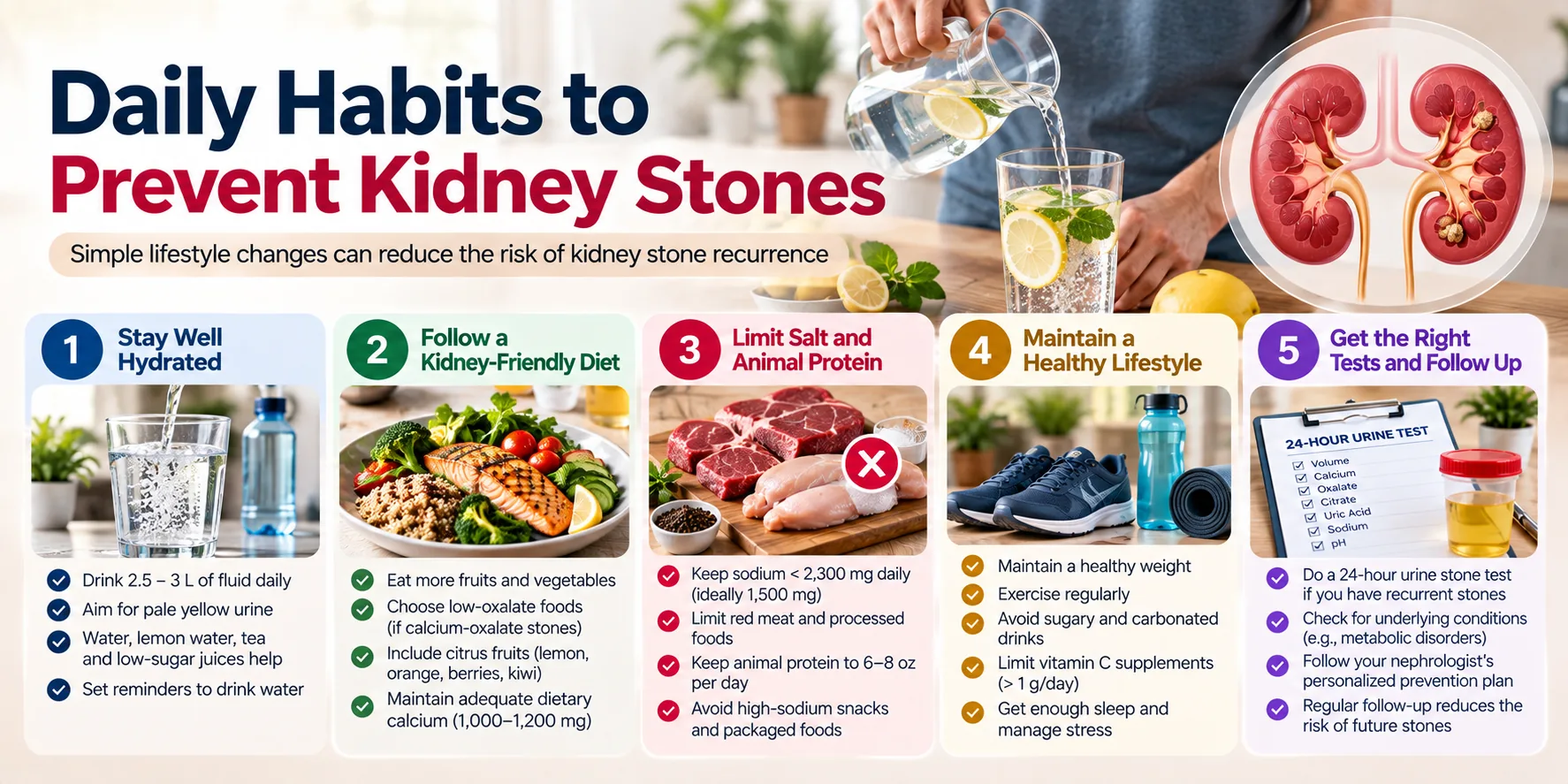
Daily habits to prevent kidney stones including hydration, healthy diet, reduced salt and regular follow-up
Hydration – The Cornerstone
Most guidelines recommend producing 2.5–3 L of urine per day, which typically means drinking about 3 L (5.2 pints) of fluid daily. Water is best, but tea, coffee, and low‑sugar fruit juices also count. Adding fresh lemon juice can increase urinary citrate, a natural stone inhibitor.
Carry a reusable bottle and sip continuously.
Set hourly reminders on your phone.
Track urine volume; aim for a pale yellow color.
Dietary Adjustments
Tailor your diet to the type of stone you’ve formed. General recommendations, supported byNYU Langone Health, include:
Limit animal protein to 6–8 oz per day (about two decks of cards).
Reduce sodium to < 2,300 mg daily; aim for 1,500 mg if you’re salt‑sensitive.
Increase fruits and vegetables, especially those high in citrate (citrus, berries, kiwi).
Choose low‑oxalate foods if you have calcium‑oxalate stones (e.g., limit spinach, nuts, and chocolate).
Lifestyle Considerations
Beyond food and fluid, these habits matter:
Maintain a healthy weight; obesity raises calcium and uric acid excretion.
Skipping the 24‑hour urine test – without objective data, dietary tweaks may miss the mark.
When Individualized Advice Is Needed
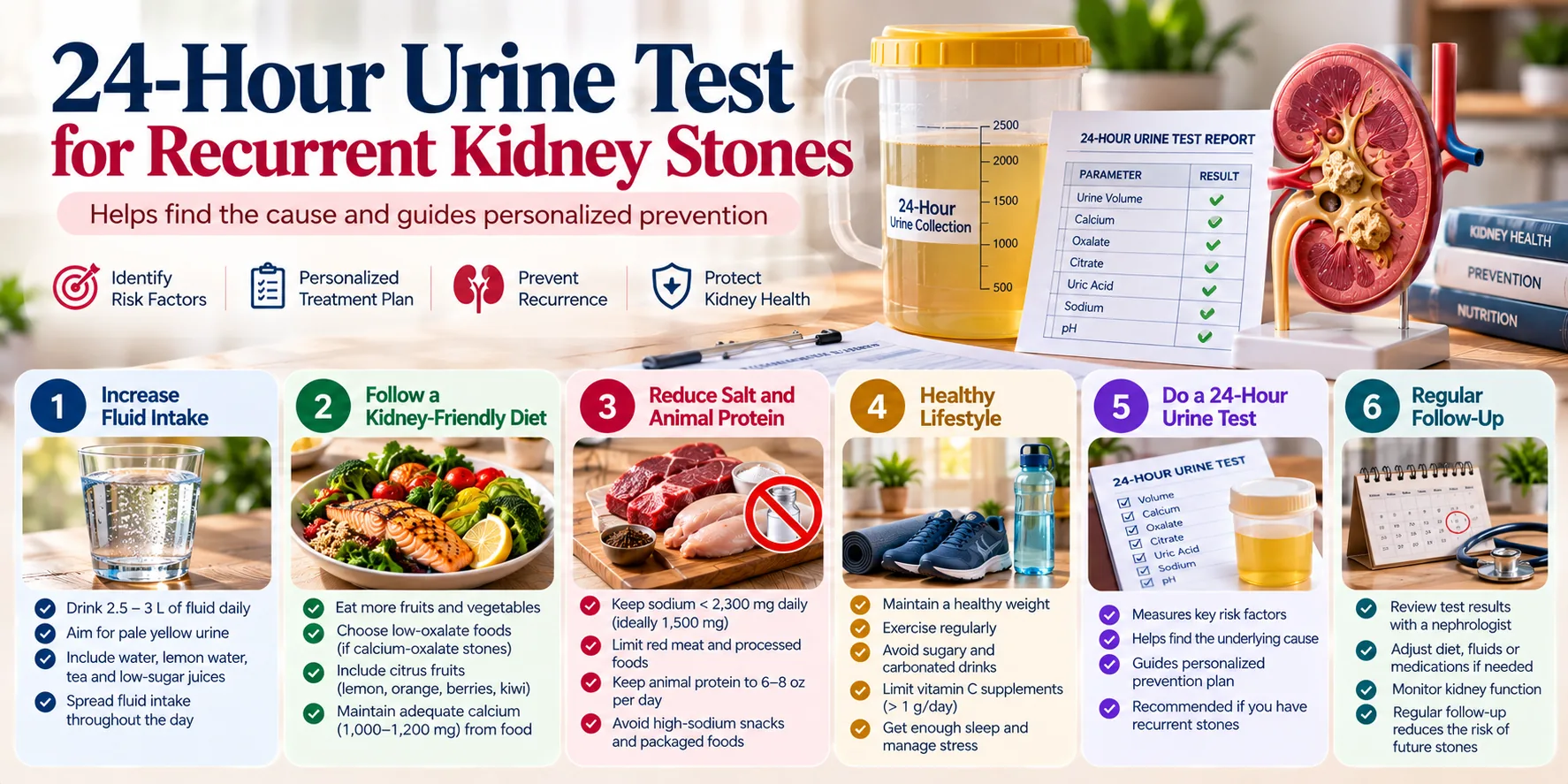
If you’ve had more than one stone, a metabolic evaluation is essential. A 24‑hour urine stone test measures volume, pH, calcium, oxalate, citrate, uric acid, and sodium, helping clinicians tailor prevention.
24-hour urine test for recurrent kidney stones showing urine collection, risk factors and prevention steps
Action
What to Do
What to Limit / Avoid
When to Discuss With Doctor
💧 Fluid Intake
Drink about 3 L of fluid daily
Sugary sodas and excess soft drinks
If urine output remains low despite adequate fluid intake
In a concise prevention statement: Stay well‑hydrated, limit salt and animal protein, eat plenty of fruits/vegetables, and have a 24‑hour urine test to fine‑tune your plan.
Medical Review
Dr. Jyoti Bansode, MBBS, MD Medicine, DM Nephrology – Over 10 years of nephrology experience. For personalized guidance, visit our Kidney Stone Preventionspage or schedule a consultation through ourWhen Should You See a Nephrologistservice.
For deeper reading, see the NHS prevention guide NHS guidance and the AAFP lifestyle recommendations AAFP article.
If you have recurrent stones, abnormal urine test results, or metabolic conditions (e.g., hyperparathyroidism), a nephrologist can manage the underlying cause.
Yes. Lemon juice raises urinary citrate, which binds calcium and helps prevent calcium‑oxalate stone formation.
Conclusion
Preventing kidney stone recurrence is within reach by drinking enough water, adjusting your diet, and using targeted testing. Start these habits today and consult a nephrologist if you notice any warning signs.