
When Should You See a Nephrologist in Navi Mumbai?
Kidney health often goes unnoticed until a problem becomes serious. Knowing the right moment to consult a kidney specialist can prevent complications, preserve function, and improve quality of life. This guide explains the warning signs, essential lab reports, and what to expect during a nephrology visit in Navi Mumbai, with a focus on the expertise of Dr. Jyoti Bansode.
Kidneys filter waste, balance electrolytes, and regulate blood pressure. When they start to falter, the body may not show obvious symptoms right away. Early detection—especially for people with diabetes, hypertension, or a family history of kidney disease—allows timely interventions that can slow or even reverse damage. According to Prime Care 360’s kidney care guide, many kidney conditions are silent in the first stages, making regular monitoring essential.
If any of these red flags appear, schedule a kidney consultation promptly.
Having the right documentation helps the nephrologist assess your kidney health efficiently. Prepare the following:
For a deeper dive into interpreting eGFR, see our What Does Your eGFR Number Mean? article.
During the first visit, Dr. Bansode typically:
Being proactive with questions ensures you leave the appointment with a clear roadmap. Consider asking:
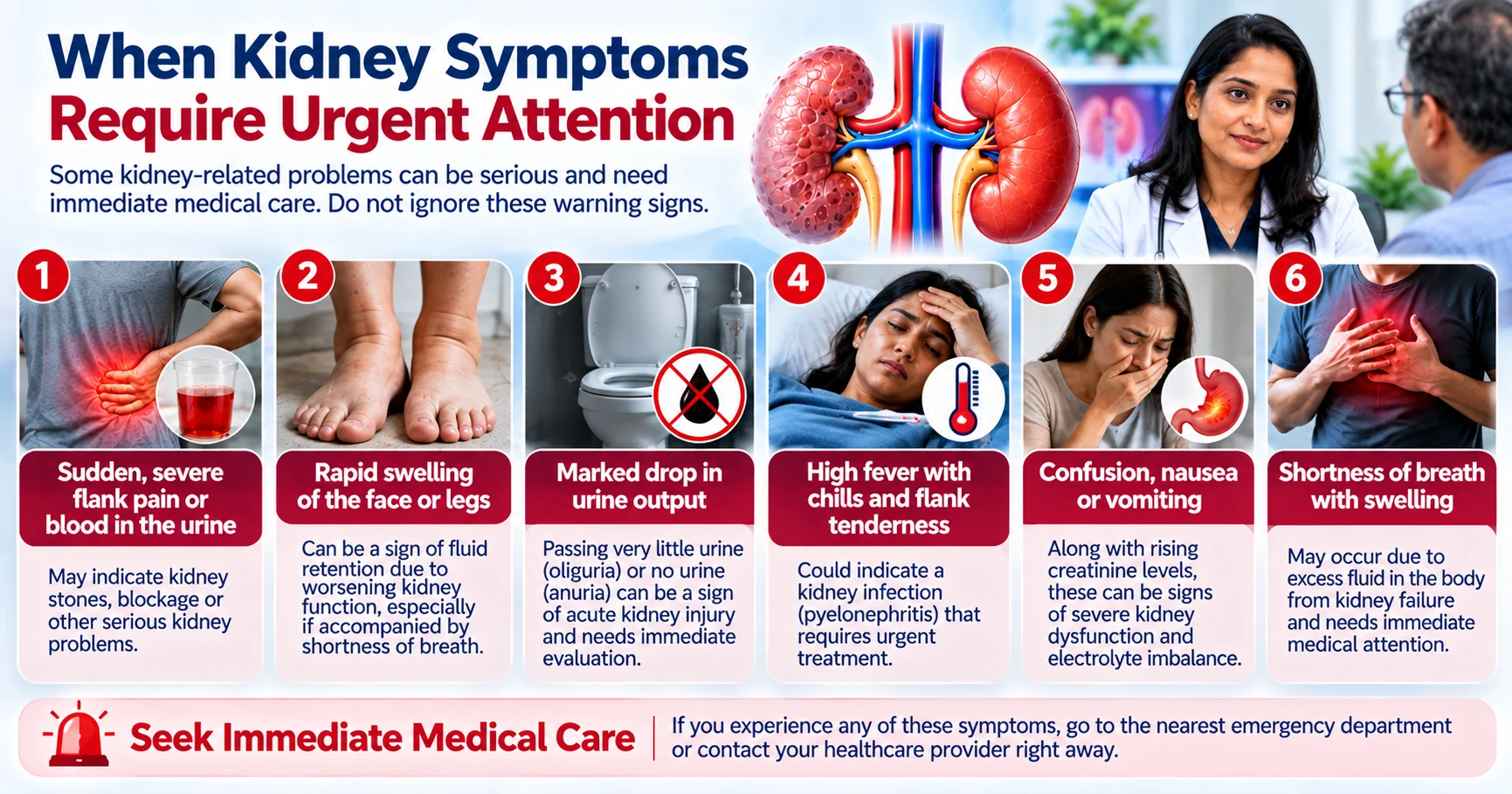
Some kidney‑related emergencies need immediate medical care. Seek urgent evaluation if you experience:
In such cases, go to the nearest emergency department or call emergency services.
To make the most of your visit:
Beyond Dr. Jyoti Bansode, Navi Mumbai hosts several reputable nephrology centers, such as those listed on Practo’s nephrologist guide and Echelon Hospital’s nephrology services. When choosing a provider, consider credentials, patient reviews, and proximity to your home or workplace. Consistency in follow‑up care is key for chronic kidney disease management.
Living in Navi Mumbai offers access to specialized kidney care facilities, patient education workshops, and support groups. Organizations often host free screening camps for diabetes and hypertension—two major contributors to kidney disease. Staying informed and participating in community health events can help you catch problems early.
Book a visit as soon as you have abnormal kidney labs (e.g., high creatinine or low eGFR), persistent proteinuria, unexplained swelling, or uncontrolled high blood pressure.
Serum creatinine, eGFR, BUN, urine protein/albumin, and a complete metabolic panel are essential; a 24‑hour urine protein test may be added if needed.
Yes, seeking a second opinion is encouraged, especially before major decisions like dialysis initiation or transplant evaluation.
People with diabetes should have kidney function tests (creatinine, eGFR, and urine albumin) at least twice a year, or more frequently if abnormalities are detected.
Maintain blood pressure and blood sugar control, stay hydrated, limit excessive salt and protein, avoid NSAIDs overuse, and quit smoking.
Sudden severe flank pain, rapid swelling, sudden loss of urine output, high fever with flank tenderness, or confusion with rising creatinine require immediate medical attention.
Protecting your kidneys starts with recognizing the signs and seeking timely expert care. If any of the symptoms or test results above apply to you, book an appointment with Dr. Jyoti Bansode or another qualified nephrologist in Navi Mumbai today.
Plot no 70, Moreshwar Heritage, Sector 5, Ulwe, Navi Mumbai, Maharashtra 410206
For Booking: +91 8591009591
Chat With Us
Mini Sea Shore Road, Juhu Nagar, Sector 10A, Vashi, Navi Mumbai, Maharashtra 400703
Chat With Us