
When kidney‑related issues arise, the choice between a nephrologist and a urologist can be confusing. Both specialties treat the renal system, but their focus, training, and typical interventions differ. This guide breaks down the roles, common conditions, essential tests, and scenarios where you might need one or both specialists, especially for patients in Navi Mumbai.
A nephrologist is a physician who specializes in the medical management of kidney disease. They handle chronic conditions such as chronic kidney disease (CKD), hypertension‑related kidney damage, electrolyte imbalances, and the coordination of dialysis or transplant care. Their work is largely non‑surgical and focuses on preserving kidney function and managing systemic complications.
A urologist treats diseases of the entire urinary system—including kidneys, ureters, bladder, urethra—and male reproductive organs. They perform surgeries for kidney stones, urinary blockages, prostate enlargement, and cancers of the urinary tract. While they also manage infections and functional problems, their expertise lies in procedural interventions.
Below is a quick reference that highlights the primary distinctions:
| Problem / Symptom | Typical Specialist | Relevant Tests / Options | Direct Answer (40‑60 words) |
|---|---|---|---|
| Persistent high creatinine | Nephrologist | Serum creatinine, eGFR, kidney ultrasound, renal panel | Elevated creatinine usually signals reduced kidney filtration, so a nephrologist evaluates the cause, monitors progression, and decides on medical or dialysis therapy. |
| Kidney stones causing severe pain | Urologist | CT scan, non‑contrast KUB, stone analysis, lithotripsy or ureteroscopy | When stones block the urinary tract, a urologist provides imaging, pain relief, and minimally invasive removal or shock‑wave therapy. |
| Unexplained foamy urine | Nephrologist | Urine protein quantification, albumin‑to‑creatinine ratio, kidney function tests | Foamy urine often indicates proteinuria, a sign of kidney disease; a nephrologist assesses the underlying cause and initiates treatment. |
| Recurrent urinary tract infections (UTIs) | Urologist | Urine culture, imaging of bladder and kidneys, cystoscopy if needed | Frequent UTIs may stem from structural issues; a urologist investigates anatomy and may recommend surgery or long‑term prophylaxis. |
| Need for dialysis or transplant evaluation | Nephrologist | eGFR trends, vascular access planning, transplant work‑up | Dialysis initiation and transplant eligibility are coordinated by nephrologists who monitor kidney function and overall health. |
Complex cases often require a collaborative approach. For example, a patient with large kidney stones and declining kidney function may see a urologist for stone removal and a nephrologist for ongoing CKD management. Joint care ensures surgical success while protecting long‑term renal health.
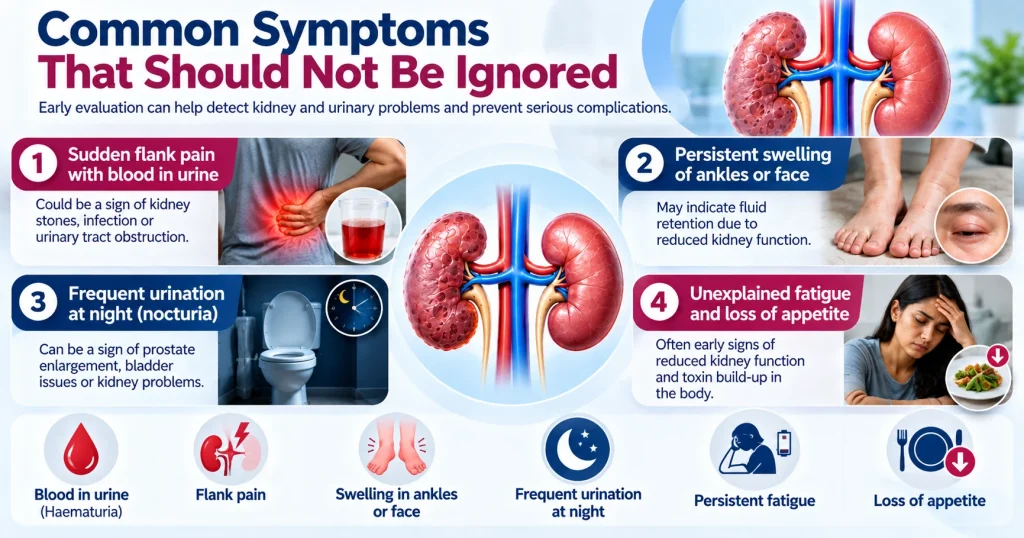
For detailed guidance on kidney biopsy preparation, see our Kidney Biopsy Preparation & Recovery guide. If you notice foamy urine, read our Foamy Urine article for early detection tips. High creatinine levels are explained in What Causes High Creatinine?.
Both specialists rely on imaging and laboratory studies, but the emphasis differs:
According to Understanding the Distinction: Urologist vs. Nephrologist, the decision often hinges on whether the problem is functional (nephrology) or anatomical (urology). Nephrologist vs Urologist: Key Differences Explained adds that nephrologists manage dialysis and transplant follow‑up, whereas urologists perform surgeries. For stone‑specific guidance, Urologist vs. Nephrologist: Which to See For a Kidney Stone provides a clear pathway.
If you suspect a kidney‑related issue, schedule an appointment with a qualified nephrologist or contact a local urologist for surgical concerns. Early evaluation can prevent complications and preserve kidney health.
A nephrologist focuses on medical management of kidney disease, while a urologist specializes in surgical treatment of the urinary tract and related organs.
Kidney stones that require removal or shock‑wave therapy are best managed by a urologist, though a nephrologist may help with prevention and metabolic evaluation.
Yes, complex cases such as large stones with declining kidney function often involve coordinated care between both specialists.
Imaging (ultrasound, CT) identifies structural issues for urologists, while blood tests (creatinine, eGFR) and urine protein analysis guide nephrologists.
If you have persistent high creatinine, proteinuria, uncontrolled hypertension, or need dialysis or transplant assessment, see a nephrologist promptly.
Choosing the right specialist starts with understanding your symptoms and the underlying cause. For medical management of kidney disease, see a nephrologist; for structural or surgical problems, consult a urologist. When in doubt, a brief evaluation by either can direct you to the appropriate care.
Plot no 70, Moreshwar Heritage, Sector 5, Ulwe, Navi Mumbai, Maharashtra 410206
For Booking: +91 8591009591
Chat With Us
Mini Sea Shore Road, Juhu Nagar, Sector 10A, Vashi, Navi Mumbai, Maharashtra 400703
Chat With Us