
Diabetic kidney disease (DKD), also called diabetic nephropathy, is a common complication of diabetes. Current American Diabetes Association guidance estimates that chronic kidney disease affects about 20–40% of people with diabetes. The condition may develop without noticeable symptoms, so regular urine and blood testing is important for detecting kidney damage early.
Medical Review: Dr. Jyoti Bansode, MBBS, MD Medicine, DM Nephrology — more than 10 years of nephrology experience.
Early diabetic kidney disease often causes no obvious symptoms. The first signs may appear on kidney tests, such as increased albumin in urine or changes in eGFR.
As kidney disease progresses, possible symptoms may include:
Because early diabetic kidney disease is often silent, blood and urine tests are more reliable than waiting for symptoms to appear.
Diabetic kidney disease develops when diabetes damages the small blood vessels and filtering structures inside the kidneys.
The kidneys contain microscopic filtering units called glomeruli. Over time, persistently high blood glucose can damage these filters, allowing albumin to leak into the urine and gradually reducing the kidneys’ ability to remove waste from the blood.
High blood pressure can further increase stress on the kidneys and accelerate kidney damage.
For a broader explanation, read about diabetes and kidney diseases.
Kidneys have significant reserve capacity. Early kidney damage may therefore develop while a person still feels completely well.
NIDDK notes that most people with diabetic kidney disease do not have symptoms in the early stages. Kidney problems are usually detected through blood and urine tests.
A patient can have:
No pain + no swelling + normal-looking urine
and still have albuminuria or another early kidney abnormality.
Not everyone with diabetes develops diabetic kidney disease.
Risk may be greater in people who have:
NIDDK identifies poor blood-glucose control and high blood pressure as especially important risk factors.
Current ADA 2026 recommendations advise checking urine ACR and eGFR at least annually once a person has had type 1 diabetes for five years or more.
People with type 2 diabetes should generally have urine ACR and eGFR checked at least once a year from diagnosis, regardless of treatment. Diabetes Journals
This difference matters because type 2 diabetes may have been present for years before it is diagnosed.

Albumin is a protein that normally remains in the bloodstream.
When the kidney filters are damaged, albumin can begin leaking into urine. This is called albuminuria.
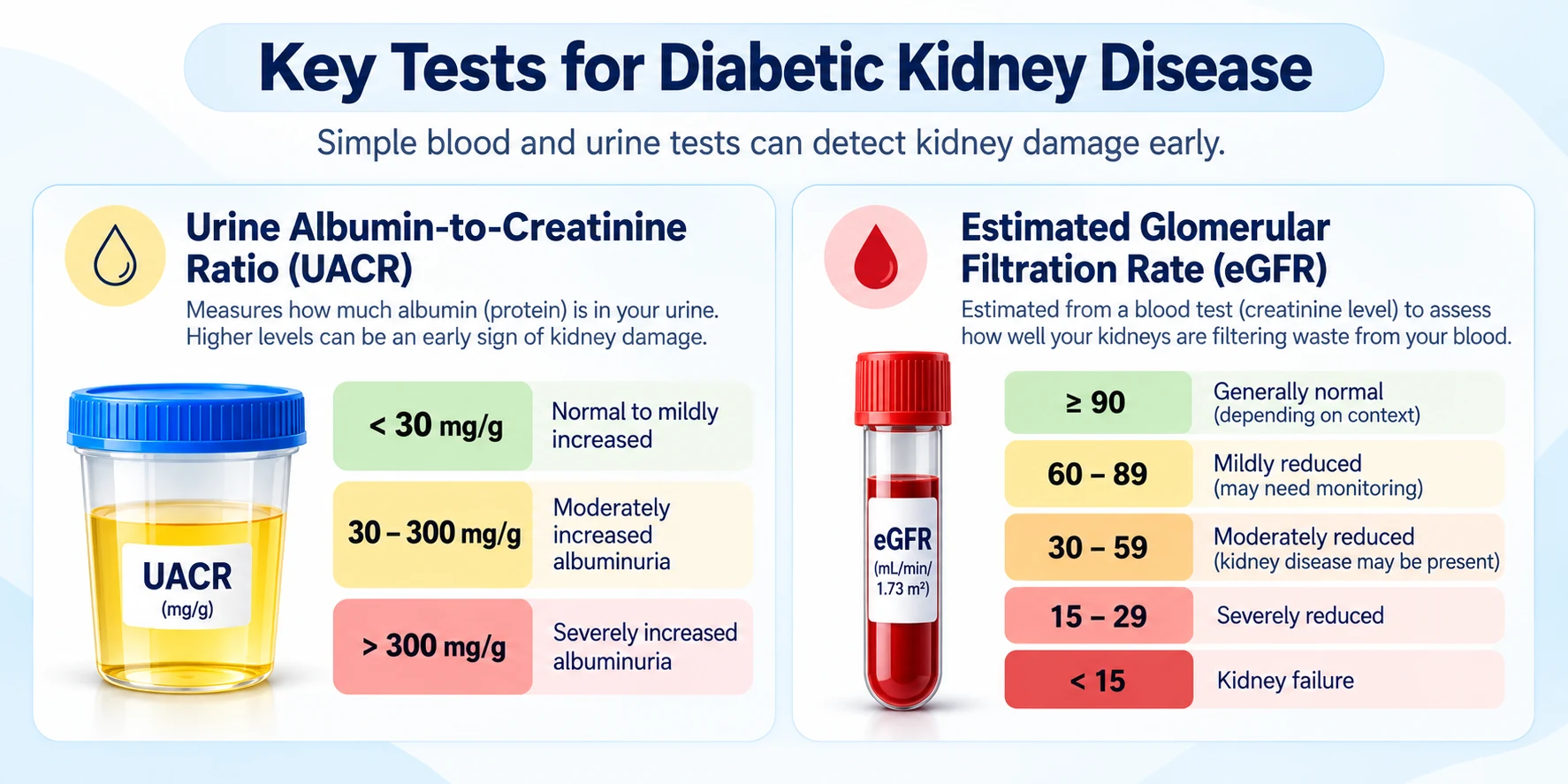
The standard test used to measure this is the urine albumin-to-creatinine ratio (UACR).
For more detail, see the Urine ACR Test Guide.
The estimated glomerular filtration rate (eGFR) estimates how well the kidneys are filtering blood.
A declining eGFR can indicate reduced kidney function.
Creatinine is a waste product normally filtered from the blood by the kidneys.
As filtration worsens, serum creatinine may increase. However, creatinine alone is not enough to assess early diabetic kidney disease.
High blood pressure can damage kidney blood vessels, while kidney disease can also make blood pressure more difficult to control.
Patients with persistent blood-pressure problems can read more about resistant hypertension.
The two key kidney markers are:
NIDDK specifically identifies urine albumin and eGFR as the two major markers used to detect and monitor chronic kidney disease.
UACR measures albumin in urine relative to creatinine.
A random spot urine sample is usually sufficient, meaning a 24-hour urine collection is generally unnecessary for routine screening.
Typical categories include:
| UACR Result | Interpretation |
|---|---|
| Below 30 mg/g | Normal to mildly increased |
| 30–300 mg/g | Moderately increased albuminuria |
| Above 300 mg/g | Severely increased albuminuria |
eGFR estimates kidney filtration.
In general:
The result should always be interpreted alongside urine albumin and the patient’s medical history.
Yes.
A person may have:
Normal or relatively preserved eGFR + elevated urine ACR
and still have evidence of kidney damage.
Albuminuria can appear before significant changes in eGFR. This is why checking only creatinine or eGFR may miss early kidney damage.
| UACR | eGFR | What It May Suggest |
|---|---|---|
| Normal | Normal | Current kidney markers may be reassuring. |
| High | Normal | Possible early kidney damage. |
| Normal | Low | Reduced kidney filtration requiring evaluation. |
| High | Low | Kidney damage with reduced filtration may be present. |
Learn more about combined kidney testing in Kidney Tests Explained.
Yes.
A single elevated urine ACR does not always mean permanent kidney damage.
Factors that can temporarily raise UACR include:
Because UACR can vary, repeat testing and tracking trends over time are important.
Chronic kidney disease is based on persistent kidney abnormalities, not simply one isolated laboratory result.
Doctors may repeat an abnormal UACR and compare it with:
This reduces the risk of incorrectly labelling a temporary abnormality as chronic kidney disease.
Depending on the patient’s condition, kidney evaluation may include:
Used to calculate eGFR.
Can detect:
Provides additional information about kidney function and hydration.
These may include:
HbA1c shows average blood glucose over approximately the previous three months.
Blood-pressure monitoring is especially important because hypertension can accelerate kidney damage.
NIDDK includes urinalysis, UACR, creatinine with eGFR, BUN and electrolytes among commonly used investigations when kidney disease is being evaluated.
No.
Diabetes is a common cause of chronic kidney disease, but a person with diabetes may also develop an unrelated kidney condition.
Doctors may look for another cause when there is:
NIDDK specifically advises clinicians not to automatically assume that all CKD in people with diabetes is diabetic kidney disease.
Diabetes, High Blood Pressure and Kidney Damage
Diabetes and hypertension can reinforce each other.
A simplified cycle looks like this:
High blood glucose → kidney filter damage → albumin leakage
High blood pressure → additional stress on kidney blood vessels
Kidney damage → blood pressure may become harder to control
Managing both blood glucose and blood pressure is therefore an important part of kidney protection.
In many patients, progression can be slowed by identifying kidney damage early and managing the factors contributing to it.
A kidney-protection plan may include:
NIDDK identifies blood-glucose and blood-pressure management as key approaches to helping prevent or slow diabetic kidney disease.
Certain medicines may help protect kidney function in appropriately selected patients, but treatment depends on the individual’s:
For example, current ADA guidance supports ACE inhibitors or ARBs in specific patients with diabetes, hypertension and albuminuria, while SGLT2 inhibitors may also be appropriate in eligible people with type 2 diabetes and CKD. These medicines should only be started or adjusted by the treating clinician.
Current ADA guidance recommends:
Patients with changing kidney function may need more frequent monitoring.
Keep track of:
Useful questions to ask your doctor include:
For more information about urine albumin in diabetes, read the microalbuminuria in diabetes guide.
Nephrology evaluation may be appropriate when kidney abnormalities are persistent or progressive.
Reasons can include:
Current ADA guidance particularly recommends specialist evaluation when kidney disease progresses, the diagnosis is uncertain, management becomes difficult, or eGFR is severely reduced.
To discuss individual kidney test results, use the appointment and consultation page.
Seek prompt medical care if you develop:
These symptoms can have several causes and require direct medical assessment.
| eGFR Result | General Interpretation |
|---|---|
| 90 or above | Generally normal, depending on the overall clinical context. |
| 60–89 | Mildly reduced; interpretation depends on other kidney markers. |
| 30–59 | Moderately reduced kidney function. |
| 15–29 | Severely reduced kidney function. |
| Below 15 | Kidney failure range; specialist assessment is required. |
Early diabetic kidney disease frequently causes no symptoms. An increase in urine albumin detected by a UACR test can be an early marker of kidney damage.
The two main tests are urine ACR and eGFR. Doctors may also check serum creatinine, urinalysis, electrolytes, blood pressure and HbA1c.
Yes. Albuminuria may develop before serum creatinine becomes clearly abnormal, so creatinine alone cannot rule out early kidney damage.
Yes. A person can have elevated UACR while eGFR remains relatively preserved. Both measurements should therefore be evaluated together.
Yes. Exercise, infection, fever, menstruation, heart failure, marked hyperglycaemia and markedly elevated blood pressure can temporarily increase UACR.
Diabetic kidney disease may develop silently, but simple blood and urine tests can help detect kidney abnormalities before advanced symptoms appear.
Plot no 70, Moreshwar Heritage, Sector 5, Ulwe, Navi Mumbai, Maharashtra 410206
For Booking: +91 8591009591
Chat With Us
Mini Sea Shore Road, Juhu Nagar, Sector 10A, Vashi, Navi Mumbai, Maharashtra 400703
Chat With Us