
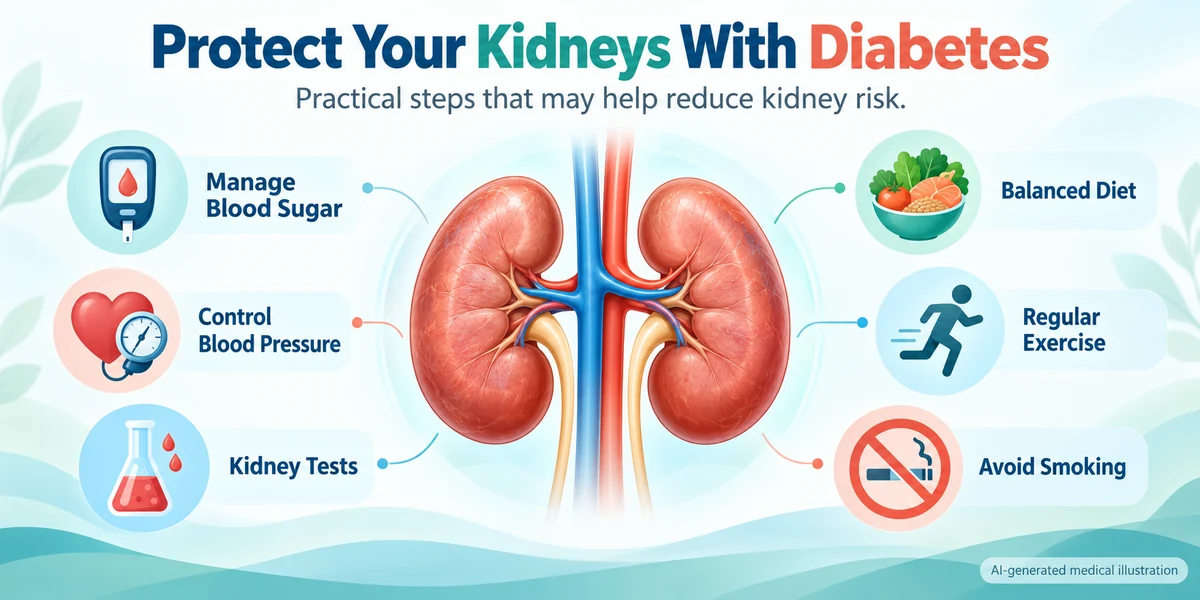
Protecting kidney health with diabetes involves appropriate blood glucose management, blood pressure control, regular kidney tests, a balanced diet, physical activity and safe use of medicines. These measures can reduce the risk of diabetes-related kidney complications, although no strategy guarantees complete prevention.
Diabetes can affect the kidneys gradually, often without noticeable symptoms. Kidney damage may sometimes be detected through an increased urine albumin-to-creatinine ratio (uACR) before a substantial reduction in kidney filtration occurs.
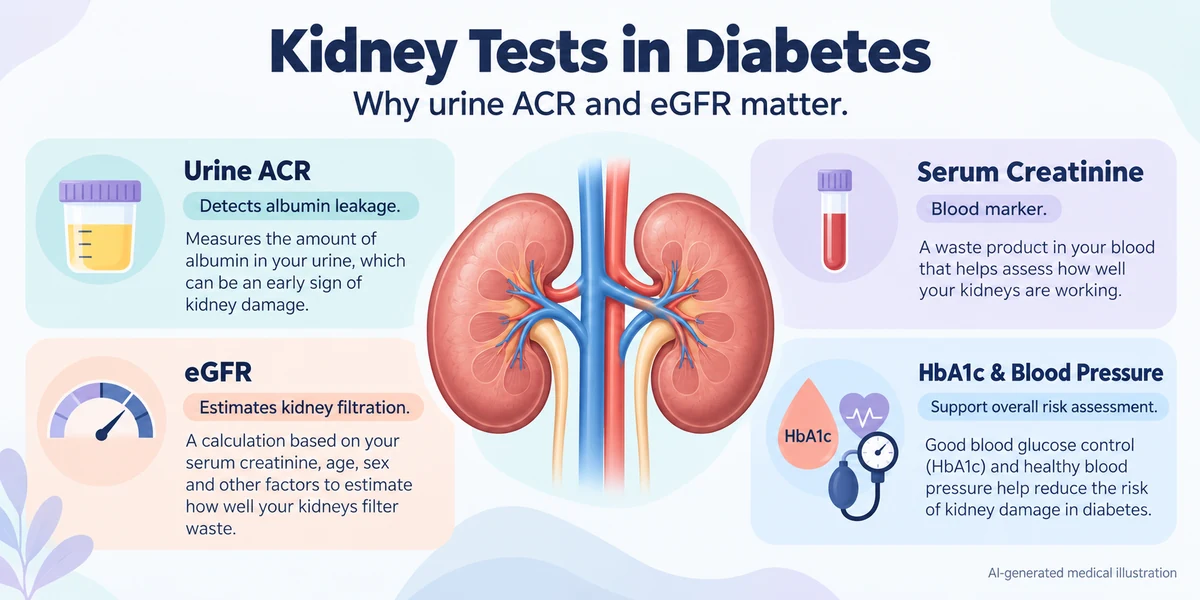
Regular assessment using urine ACR and estimated glomerular filtration rate (eGFR) is important because normal serum creatinine alone does not always exclude early kidney disease.
This article explains practical steps that may help people with diabetes maintain kidney health, recognise potential risks and understand when additional medical evaluation may be appropriate.
The kidneys contain microscopic filtering units called nephrons. Within each nephron, tiny blood vessels form a structure called the glomerulus.
These structures help remove waste products and excess fluid while retaining proteins and other substances needed by the body.
Persistently elevated blood glucose can affect the blood vessels and filtering structures within the kidneys.
Over time, some people develop:
– Increased albumin leakage into urine.
– Changes in kidney filtration.
– High blood pressure or difficulty controlling existing hypertension.
– Impaired fluid and electrolyte regulation.
– Chronic kidney disease.
This form of kidney damage is commonly called diabetic kidney disease (DKD).
However, not every person with diabetes develops kidney disease, and kidney abnormalities in someone with diabetes may have causes unrelated to diabetes.
For related information, read Diabetic Kidney Disease Symptoms.
Early diabetic kidney disease often causes no noticeable symptoms.
A person may feel well even when urine albumin levels are elevated or kidney filtration has changed.
Kidney disease is also associated with an increased risk of cardiovascular complications.
Appropriate diabetes management and kidney monitoring may help:
– Reduce the risk of kidney damage developing.
– Identify abnormalities before noticeable symptoms appear.
– Slow kidney disease progression in eligible patients.
– Support blood pressure and cardiovascular risk management.
– Guide safer use of medicines.
– Identify complications that require medical attention.
The degree of benefit varies according to individual clinical circumstances.
Several factors are associated with greater kidney-related risk in people with diabetes:
Longer duration of diabetes.
Persistently elevated blood glucose.
High blood pressure.
Cardiovascular disease.
Tobacco use.
Excess body weight.
Family history of kidney disease.
Existing albuminuria or reduced eGFR.
These factors do not mean kidney disease will definitely develop.
Kidney-related risk depends on the overall medical condition and changes in laboratory results over time.
The following measures may help support kidney health and reduce associated risks.
Appropriate blood glucose management is an important part of preventing diabetes-related complications.
Persistently elevated blood glucose can contribute to kidney blood vessel injury.
HbA1c is a blood test that reflects average blood glucose over approximately the previous two to three months.
A suitable HbA1c target depends on factors such as:
– Age.
– Type and duration of diabetes.
– Risk of low blood glucose (hypoglycaemia).
– Cardiovascular disease.
– Kidney function.
– Other medical conditions.
– Current treatment.
A single HbA1c target is not appropriate for everyone.
Some patients benefit from home glucose monitoring or continuous glucose monitoring, depending on their medicines and diabetes-management needs.
Important: Diabetes medicines should not be adjusted independently based on one glucose reading.
High blood pressure can damage small blood vessels in the kidneys.
Diabetes and hypertension together may increase the risk of kidney and cardiovascular complications.
Blood pressure assessment is therefore an important part of diabetes care.
Management may involve dietary changes, physical activity, weight management and medicines when indicated.
The appropriate blood pressure target depends on the individual’s medical condition, treatment tolerance and risks.
Home blood pressure monitoring may be useful for some people, but daily measurement is not necessary for every patient.
A healthcare professional can advise on an appropriate monitoring schedule.
Certain medicines may help reduce kidney-related risk or slow the progression of established kidney disease in eligible patients.
Examples include:
ACE inhibitors and angiotensin receptor blockers (ARBs): These may be appropriate for selected people with diabetes, high blood pressure and albuminuria.
SGLT2 inhibitors: These may reduce kidney disease progression and cardiovascular complications in eligible people with type 2 diabetes and chronic kidney disease.
GLP-1 receptor agonists: Certain medicines in this class may provide cardiovascular and kidney-related benefits in selected patients.
Other medicines may also be appropriate according to the clinical condition.
However, not every medicine is suitable for every person with diabetes.
Possible risks can include low blood pressure, changes in kidney function, electrolyte disturbances, dehydration or other medicine-specific adverse effects.
Kidney function and potassium may require monitoring during certain treatments.
ACE inhibitors and ARBs should not automatically be prescribed solely to prevent CKD in people with normal blood pressure, normal urine ACR and normal eGFR.
Never start, stop or change prescribed medicines without guidance from a qualified healthcare professional.
Consuming excessive sodium may contribute to high blood pressure and fluid retention.
Reducing excessive dietary salt can be useful for people with diabetes, particularly when hypertension or kidney disease is present.
Practical measures include:
– Limiting frequently consumed salty packaged foods.
– Reducing added salt during cooking.
– Checking sodium information on packaged foods.
-Using herbs, spices and lemon juice for flavour.
– Choosing less processed foods when practical.
Some foods, such as pickles, papad, namkeen and packaged snacks, can contain substantial amounts of sodium.
However, dietary recommendations must consider individual nutritional needs and medical conditions.
People with advanced kidney disease may require additional dietary guidance.
A balanced eating pattern can support diabetes management, blood pressure control and overall health.
Depending on individual requirements, meals may include:
– Non-starchy vegetables.
– Appropriate portions of whole grains.
– Legumes or other suitable protein sources.
– Healthy unsaturated fats.
– Foods selected according to blood glucose and nutritional needs.
Portion sizes should be individualised.
People with diabetes and chronic kidney disease may require adjustments to protein, potassium, phosphorus or other dietary components.
However, these restrictions are not automatically necessary for everyone.
Avoid extreme low-protein diets or high-protein supplementation without appropriate medical or nutritional assessment.
Fluid intake is important for normal body function, but drinking excessive water does not reverse kidney damage.
Fluid requirements vary depending on:
– Body size.
– Physical activity.
– Climate and fluid losses.
– Kidney function.
– Heart function.
– Current medicines.
– Other medical conditions.
Some patients with heart failure or advanced kidney disease may require fluid restrictions.
Urine colour alone is not a reliable measure of kidney health.
Do not follow a fixed daily water target without considering individual circumstances, particularly when fluid restriction has been recommended.
Regular physical activity supports blood glucose management, cardiovascular health and blood pressure control.
For many adults with diabetes, general recommendations include approximately 150 minutes of moderate-intensity aerobic activity per week, adjusted according to ability and medical condition.
Examples include:
– Brisk walking.
– Cycling.
– Swimming.
– Other suitable aerobic activities.
Resistance training may also be beneficial when appropriate.
People with significant heart disease, advanced kidney disease, mobility limitations or other medical concerns may need an individualised exercise plan.
Activity should be increased gradually and safely.
Tobacco use increases vascular and cardiovascular risks.
Avoiding smoking and other tobacco products is an important part of protecting general health in people with diabetes.
Alcohol may also affect blood glucose, blood pressure and interactions with certain medicines.
Individual advice depends on medical history, medicines and other health factors.
Avoiding tobacco is beneficial, but stopping smoking does not guarantee that existing kidney damage will reverse.
Some non-steroidal anti-inflammatory drugs (NSAIDs), such as ibuprofen and naproxen, can reduce blood flow within the kidneys and contribute to acute kidney injury in certain circumstances.
Risk may be greater in people with:
– Existing kidney disease.
– Dehydration.
– Heart failure.
– Certain combinations of medicines.
– Other medical conditions affecting kidney blood flow.
Not all pain medicines carry the same risks.
Medication safety should be assessed individually.
Unverified herbal supplements or products marketed as kidney cleansers may contain harmful ingredients or interact with medicines.
Do not assume that a product is safe for the kidneys simply because it is described as natural.
Kidney disease related to diabetes can develop without noticeable symptoms.
Regular laboratory assessment helps identify abnormalities and monitor changes.
Two particularly important tests are:
Urine ACR: Measures albumin relative to creatinine in urine and helps detect increased albumin leakage.
eGFR: Estimates how effectively the kidneys filter blood.
Serum creatinine is commonly used to calculate eGFR.
Additional tests may be appropriate depending on kidney function, diabetes management and associated medical conditions.
Read more about Kidney Tests Explained.
The following tests may be used when evaluating kidney health.
| Test | What it measures | Why it matters |
|---|---|---|
| Urine ACR | Albumin relative to creatinine in urine | Helps detect albumin leakage |
| Serum creatinine | Creatinine concentration in blood | Helps estimate kidney filtration |
| eGFR | Estimated kidney filtering function | Helps assess reduced filtration |
| Urinalysis | Protein, blood and other urine findings | Helps identify additional abnormalities |
| HbA1c | Average blood glucose over approximately 2–3 months | Supports diabetes management |
| Blood pressure | Arterial blood pressure | Helps evaluate hypertension |
| Potassium and other electrolytes | Electrolyte concentrations | May help identify kidney-related complications |
Not everyone requires all these tests at the same frequency.
Testing depends on diabetes type, previous results, kidney function and other medical factors.
Urine ACR is commonly reported in mg/g.
| Urine ACR (mg/g) | Category | General interpretation |
|---|---|---|
| Below 30 | A1 | Normal to mildly increased |
| 30–299 | A2 | Moderately increased albuminuria |
| 300 or above | A3 | Severely increased albuminuria |
An increased urine ACR may indicate kidney damage, but one abnormal result does not automatically establish chronic kidney disease.
Fever, infection, strenuous exercise, markedly elevated blood glucose and other factors can temporarily influence urine albumin measurements.
Repeat testing and clinical interpretation may be required.
For more information, read Urine ACR Test Explained.
Yes.
Some people with diabetes develop increased urine albumin while serum creatinine remains within the laboratory reference range.
Serum creatinine helps assess filtration, but it does not directly measure albumin leakage.
A person may have relatively preserved eGFR and persistent albuminuria at the same time.
Other people develop reduced eGFR without substantially increased albuminuria.
Therefore, urine ACR and eGFR should be interpreted together.
Normal creatinine alone does not exclude early diabetic kidney disease.
The American Diabetes Association Standards of Care in Diabetes—2026 provides general screening recommendations.
For adults with type 1 diabetes, urine ACR and eGFR testing is generally recommended at least annually once diabetes has been present for five years or longer.
Earlier testing may be appropriate when other clinical concerns are present.
For adults with type 2 diabetes, urine ACR and eGFR are generally assessed at least annually beginning at diagnosis, regardless of treatment.
People with CKD may require urine ACR and eGFR monitoring approximately one to four times per year, or more frequently when clinically indicated.
The appropriate interval depends on disease severity, changes in results, treatment and associated conditions.
Children and adolescents require age-appropriate screening guidance.
There is no single diet that is suitable for every person with diabetes or kidney disease.
Dietary recommendations should consider blood glucose, kidney function, blood pressure, nutritional requirements and current medicines.
For some people, a balanced meal may include:
– A substantial portion of non-starchy vegetables.
– An appropriate portion of whole grains or other carbohydrate sources.
– A suitable portion of protein.
– Small amounts of healthy fats.
The portion sizes depend on nutritional needs.
For example, vegetables, dal, roti or rice may form part of a balanced eating pattern when amounts are selected appropriately.
However, people with advanced kidney disease may need additional restrictions based on laboratory findings.
No.
Potassium restriction is not routinely necessary for every person with diabetes.
It may be recommended when blood potassium is elevated or specific medical circumstances require it.
Not automatically.
Some people with chronic kidney disease may benefit from individualised protein-intake recommendations.
However, excessive restriction can lead to inadequate nutrition.
People should not eliminate protein or adopt extreme dietary restrictions without appropriate guidance.
Certain misconceptions may interfere with appropriate kidney care.
Albuminuria or other kidney abnormalities may be present despite normal serum creatinine.
Drinking large volumes of water does not remove chronic kidney scarring.
Excessive fluid intake may be harmful in certain conditions.
A medicine that benefits one person may be unsuitable for another.
Treatment changes should be guided by clinical assessment.
Such products do not have established benefits for reversing diabetic kidney disease and may cause harm.
Persistent or increasing albuminuria requires appropriate interpretation, even when symptoms are absent.
Early diabetic kidney disease frequently causes no symptoms.
As kidney dysfunction progresses, possible symptoms may include:
– Persistent foamy urine.
– Swelling of the feet or ankles.
– Puffiness around the eyes.
– Fatigue or weakness.
– Changes in urination.
– Difficult-to-control blood pressure.
– Reduced appetite or nausea.
These symptoms may also occur with other medical conditions.
Laboratory testing is necessary to assess kidney abnormalities.
Further kidney assessment may be appropriate when:
– Urine ACR remains significantly elevated or increases rapidly.
– eGFR declines progressively.
– Serum creatinine changes unexpectedly.
– Blood and protein are present together in urine.
– Blood pressure remains difficult to control with kidney abnormalities.
– Electrolyte disturbances occur.
– Another kidney disorder is suspected.
– Advanced chronic kidney disease is identified.
Not every patient with mildly increased urine albumin requires immediate specialist referral.
The need for evaluation depends on persistence, severity and clinical findings.
Seek emergency medical care for:
– Severe breathlessness.
– Chest pain.
– Confusion or loss of consciousness.
– Seizures.
– Very little or no urine output accompanied by significant illness.
– Rapidly worsening swelling with breathing difficulty.
Persistent vomiting, significant new swelling or rapidly changing kidney function also requires timely medical assessment.
These symptoms may have causes unrelated to diabetic kidney disease.
The following checklist may help patients understand relevant monitoring and lifestyle considerations.
| Health measure | Why it may be useful |
|---|---|
| Blood glucose records | Helps assess glucose management |
| HbA1c | Shows longer-term glucose control |
| Blood pressure records | Helps evaluate hypertension |
| Serum creatinine | Supports kidney filtration assessment |
| eGFR | Estimates filtering function |
| Urine ACR | Helps identify albumin leakage |
| Current medication list | Supports medication safety review |
| Dietary and fluid intake history | Helps assess nutritional and hydration needs |
| Physical activity history | Supports individualised lifestyle recommendations |
| Previous laboratory reports | Helps identify changes over time |
Not every person requires every investigation or daily monitoring of every measure.
Individual assessment determines what is appropriate.
No method guarantees complete prevention. Appropriate blood glucose management, blood pressure control, selected medicines and regular kidney tests may reduce the risk of kidney damage and its progression.
Urine ACR and eGFR are two important complementary tests. Urine ACR helps detect albumin leakage, while eGFR estimates kidney filtration.
Yes. Early kidney abnormalities, including increased albuminuria, may occur while serum creatinine remains within the laboratory reference range.
Annual urine ACR and eGFR testing is generally recommended for adults with type 2 diabetes and adults with type 1 diabetes lasting five years or longer. Some people require more frequent monitoring.
Adequate hydration is important, but excessive water intake does not prevent or reverse diabetic kidney damage. Fluid needs depend on individual medical circumstances.
No. Protein is an essential nutrient. The appropriate amount depends on kidney function, nutritional needs and other medical conditions.
Protecting kidney health with diabetes involves more than controlling blood glucose alone.
Appropriate blood pressure management, safe medication use, balanced nutrition, physical activity, tobacco avoidance and regular kidney assessment all contribute to overall care.
Urine ACR and eGFR testing are particularly important because early kidney disease may develop without noticeable symptoms.
Although these measures may reduce the risk of complications and slow progression in some patients, no treatment or lifestyle strategy guarantees complete prevention or reversal of diabetic kidney disease.
Individualised clinical assessment remains essential.
Medical Information: Dr. Jyoti Bansode | MBBS, MD Medicine, DM Nephrology | Medical Registration No.: 2011/06/1863 | Maharashtra Medical Council (MMC).
Medical Disclaimer: Website content and visuals are for general informational, educational and representational purposes only, may not reflect individual patient conditions or outcomes, and do not replace personalised medical advice, diagnosis or clinical assessment.
Plot no 70, Moreshwar Heritage, Sector 5, Ulwe, Navi Mumbai, Maharashtra 410206
For Booking: +91 8591009591
Chat With Us
Mini Sea Shore Road, Juhu Nagar, Sector 10A, Vashi, Navi Mumbai, Maharashtra 400703
Chat With Us