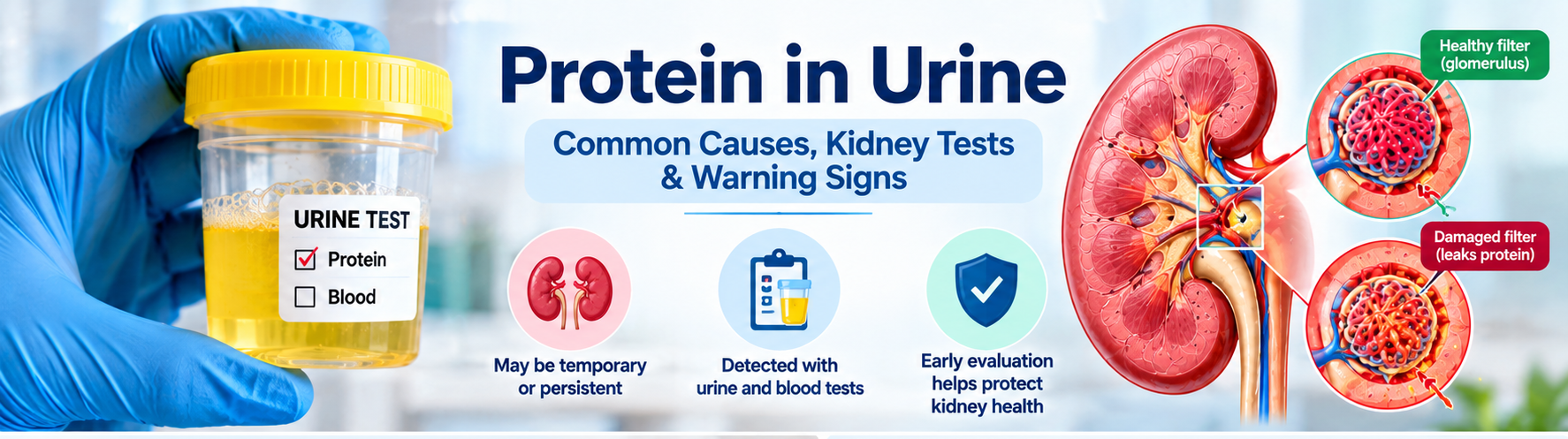
Short answer : Protein in urine can be a fleeting finding after fever, intense exercise, or dehydration, but persistent proteinuria often signals damage to the kidney’s filtering units (glomeruli). Ongoing leakage may require further testing and specialist care. Proteinuria—often discovered on a routine urine test—doesn’t always mean serious disease. A single abnormal result may be temporary, yet repeated or high‑level protein loss usually points to kidney‑filter damage that needs evaluation. What Is Proteinuria? Healthy kidneys keep large proteins such as albumin inside the bloodstream while allowing waste and excess fluid to pass into urine. The glomeruli act as tiny sieves; when they are inflamed, scarred, or otherwise damaged, proteins slip through and appear in the urine. How the kidneys normally work – Blood enters the glomerulus at high pressure. – Small molecules (water, electrolytes, waste) filter out. – Large proteins are retained and re‑absorbed in the tubules. When the glomerular barrier is compromised, albumin and other proteins are lost, leading to a measurable proteinuria. Common Causes of Protein in Urine (Persistent) These conditions often produce ongoing protein leakage and merit a thorough work‑up: – Diabetes mellitus – high blood sugar damages glomerular capillaries. – Hypertension (high blood pressure) – pressure overload injures the filtration barrier. – Glomerular diseases – e.g., IgA nephropathy, membranous nephropathy, focal segmental glomerulosclerosis. – Chronic infections – hepatitis C, HIV, or recurrent urinary‑tract infections. – Cardiovascular conditions – heart failure can raise kidney venous pressure. – Medications – non‑steroidal anti‑inflammatory drugs (NSAIDs), certain antibiotics, and some chemotherapy agents. – Other kidney disorders – polycystic kidney disease, obstructive uropathy. For an in‑depth look at these factors, see Causes of Protein in Urine: Understanding the Key Factors. Temporary Causes of Protein in Urine Not every positive protein test signals chronic disease. Transient proteinuria often resolves once the trigger disappears: Fever or acute illness – inflammation raises glomerular permeability. Strenuous exercise – muscle breakdown and increased blood flow can spill protein. Dehydration – concentrated urine may falsely appear protein‑rich. Cold exposure – vasoconstriction can temporarily affect filtration. Recent urinary‑tract infection – inflammation of the bladder or urethra. Because a single abnormal result may be fleeting, clinicians often repeat a morning urine sample before ordering extensive work‑up. Symptoms and Warning Signs Early proteinuria is frequently silent, but watch for these clues: – Foamy, frothy, or bubbly urine. – Swelling (edema) of ankles, feet, or around the eyes. – Unexplained fatigue or loss of appetite. – Changes in urine volume or frequency. – Elevated blood pressure. Most people with mild proteinuria feel fine; the presence of symptoms often indicates a higher level of protein loss or concurrent kidney dysfunction. Does foamy urine always mean protein in urine? No. Foam can result from rapid urine flow, concentrated urine, or even certain detergents in the toilet bowl. Only a laboratory test (dipstick or ACR) can confirm proteinuria. Protein in Urine vs. Blood in Urine Proteinuria (protein) and hematuria (blood) are distinct findings. Protein indicates a leak of albumin or larger proteins, while blood signals red‑cell leakage, often from a different part of the urinary tract. When both appear together, clinicians consider glomerular disease or severe inflammation. Read more about the overlap in our protein and blood in urine article. How Proteinuria Is Measured The most common tests include: – Urine dipstick – quick screening, semi‑quantitative. – Urine albumin‑to‑creatinine ratio (UACR) – expresses albumin in mg per gram of creatinine; preferred for diabetes monitoring. – Urine protein‑to‑creatinine ratio (PCR) – measures total protein. – Comprehensive urinalysis – evaluates sediment, cells, and casts. – Serum creatinine & eGFR – assess overall kidney filtration function. Interpretation of UACR:Range (mg/g)Interpretation<30Normal or low‑grade30–300Micro‑albuminuria (early kidney damage)>300Macro‑albuminuria (significant kidney disease) Urine ACR (UACR) Result Interpretation UACR Result Interpretation Below 30 mg/g Normal to mildly increased 30–300 mg/g Moderately increased albuminuria Above 300 mg/g Severely increased albuminuria Results should be repeated, especially if the first sample was a random collection, and interpreted alongside creatinine, eGFR, and clinical context. Can You Have Protein in Urine with Normal Creatinine? Yes. Protein leakage can precede a rise in serum creatinine because creatinine reflects overall filtration, not the selective loss of albumin. Early glomerular injury may show a high UACR while eGFR remains >90 mL/min/1.73 m². Glomerular Disease: When to Be Concerned Persistent, significant proteinuria—especially when accompanied by any of the following—should raise suspicion for a primary glomerular disorder: – Protein levels >300 mg/g (macro‑albuminuria). – Concurrent hematuria (blood in urine). – Unexplained edema or high blood pressure. – Declining eGFR over months. – Abnormal urine sediment (casts, dysmorphic RBCs). Dr. Jyoti Bansode has a special clinical interest in glomerular diseases; patients with these red flags are often referred for nephrology evaluation. When Might a Kidney Biopsy Be Needed? Most proteinuria cases are managed without invasive procedures. A biopsy is considered when: – The underlying cause remains unclear after standard labs and imaging. – Protein loss exceeds 3.5 g/day (nephrotic‑range) with rapid eGFR decline. – There is suspicion of a specific glomerular disease that guides therapy (e.g., lupus nephritis, IgA nephropathy). – Patients have refractory proteinuria despite optimal blood‑pressure and diabetes control. Read more about the procedure in our kidney biopsy overview. Patient Checklist After an Abnormal Urine Protein Test Ask which test was performed (dipstick, UACR, PCR). Confirm the exact protein value and its units. Request your serum creatinine and eGFR results. Discuss any recent fever, intense exercise, dehydration, or infection that could be temporary. Inquire whether a repeat morning urine sample is recommended. Review blood‑pressure control and diabetes management. Ask if a referral to a nephrologist is appropriate. When to See a Nephrologist Consider specialist care if you have any of the following: – Persistent proteinuria on two separate tests (≥30 mg/g). – Rising UACR or PCR over weeks to months. – Proteinuria accompanied by hematuria. – Declining eGFR (<60 mL/min/1.73 m²) or rising serum creatinine. – Significant edema or uncontrolled hypertension. – Suspected glomerular disease based on urine sediment. – Unclear cause after standard work‑up. Schedule a consultation through our appointment and consultation page. Medical ReviewDr. Jyoti