+91 8691888178 / 8850999397 dr.jyotibansode.01@gmail.com Monday to Saturday : 05:00PM TO 06:00PM

Persistent Proteinuria Evaluation: Tests a Nephrologist May Recommend

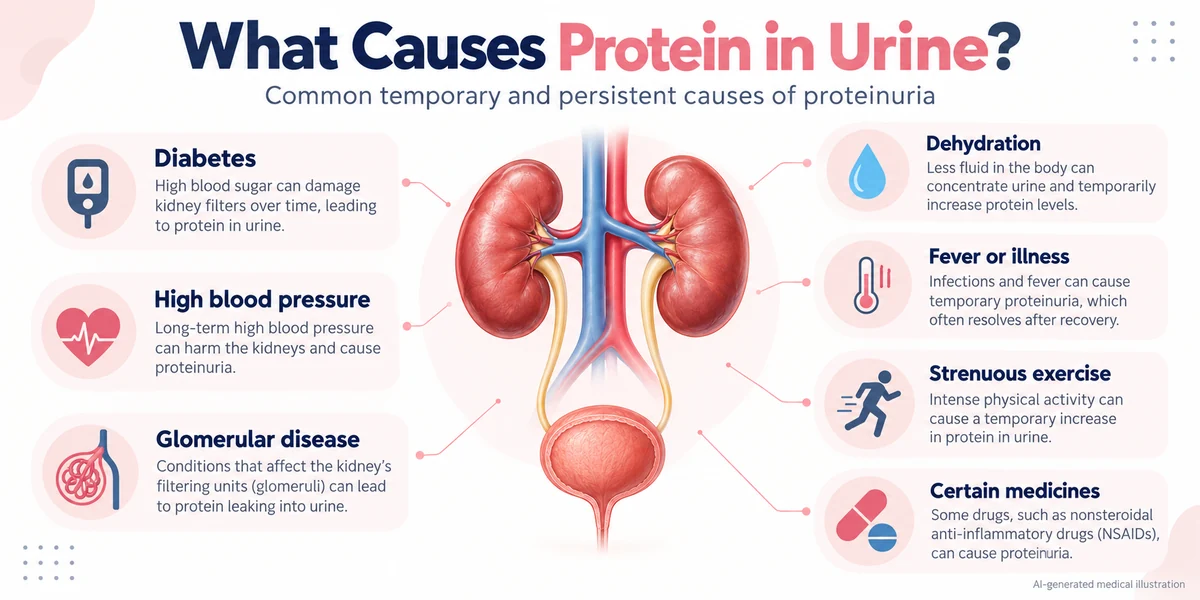
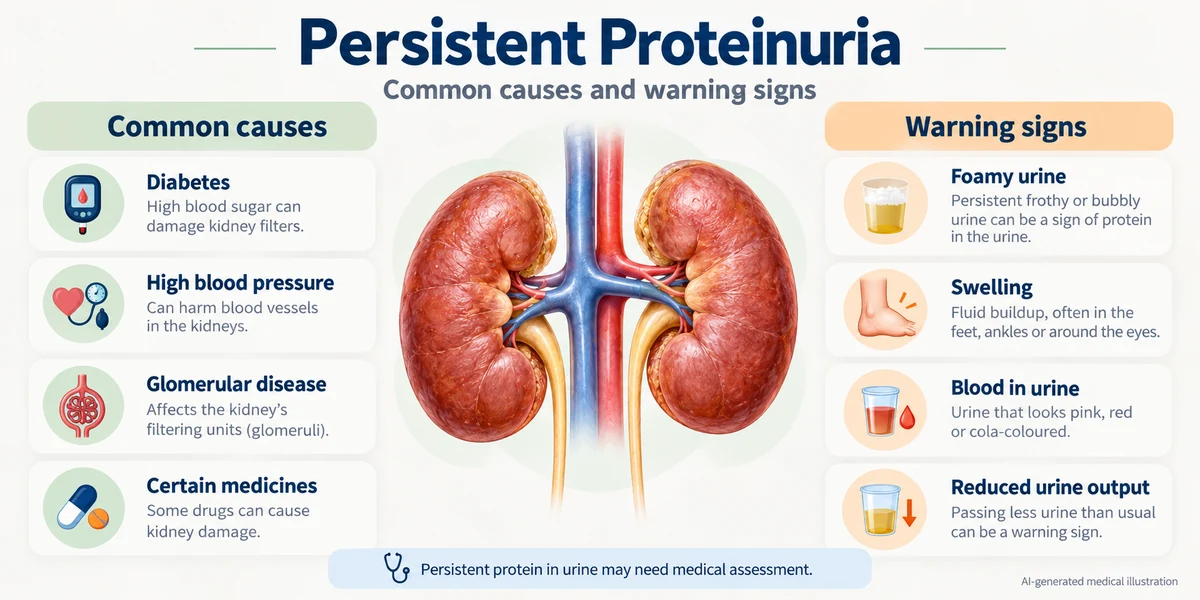
Persistent proteinuria means that increased amounts of protein continue to be detected in urine on repeated testing. It may indicate an underlying kidney disorder, but it does not automatically mean that the kidneys have failed. Protein may appear temporarily in urine during fever, acute illness, strenuous exercise or other physiological changes. When proteinuria remains present, further evaluation helps determine the amount of protein, its possible cause and whether kidney function is affected. Common investigations include urine albumin-to-creatinine ratio (uACR), urine protein-to-creatinine ratio (UPCR), urinalysis, serum creatinine and estimated glomerular filtration rate (eGFR). Depending on clinical findings, additional tests such as kidney ultrasound, immune-related blood investigations or kidney biopsy may be considered. A single abnormal urine test does not establish chronic kidney disease. Repeat results, the duration of abnormalities and the patient’s medical history are important for interpretation. What Is Persistent Proteinuria? Proteinuria refers to the presence of more protein in urine than normally expected. Healthy kidneys contain microscopic filtering structures called glomeruli. These structures help filter waste products and excess fluid from the blood while retaining most essential proteins. The kidney tubules also help reabsorb certain filtered proteins. Proteinuria may develop when:  – The glomerular filtration barrier is affected.  – Kidney tubules cannot adequately reabsorb filtered proteins.  – The body produces increased amounts of certain proteins.  – Temporary physiological or medical factors influence urine protein excretion. Persistent proteinuria is identified when abnormal urinary protein excretion remains present on repeat assessment. The clinical significance depends on the amount and type of protein, accompanying findings and underlying medical condition. What Is the Difference Between Temporary and Persistent Proteinuria? Proteinuria may be temporary or ongoing. Feature Temporary proteinuria Persistent proteinuria Duration Resolves after the contributing factor improves Remains present on repeated testing Possible causes Fever, exercise, acute illness or dehydration-related influences Diabetes, hypertension, glomerular disease or other disorders Symptoms Often absent May be absent or accompanied by other findings Testing Repeat urine examination may confirm resolution Quantitative urine tests and further evaluation may be appropriate Management Depends on the temporary cause Depends on the underlying condition and kidney findings An isolated abnormal dipstick is not sufficient to determine which category applies. Does Persistent Proteinuria Always Mean Chronic Kidney Disease? No. Persistent proteinuria may be a marker of kidney damage, but chronic kidney disease (CKD) generally requires an abnormality of kidney structure or function lasting at least three months and having implications for health. The duration of abnormal findings may be established through previous test reports, medical history, repeat investigations or other evidence. A newly detected abnormal result may also represent an acute kidney condition that requires earlier assessment. What Are the Common Causes of Persistent Proteinuria? There are several possible causes. 1. Diabetes Long-term elevated blood glucose can affect the kidneys’ small blood vessels and filtering structures. This may lead to increased urinary albumin excretion, sometimes before eGFR declines substantially. However, not everyone with diabetes develops albuminuria, and an abnormal urine protein result does not automatically mean diabetes is the underlying cause. Read more about Diabetic Kidney Disease Symptoms. 2. High Blood Pressure Persistently elevated blood pressure can damage small blood vessels in the kidneys. Hypertension may contribute to albuminuria and declining kidney function. Kidney disease can also make blood pressure more difficult to manage. 3. Glomerular Diseases Glomerular disorders affect the kidneys’ filtering structures. Examples include: IgA nephropathy. Membranous nephropathy. Focal segmental glomerulosclerosis (FSGS). Minimal change disease. Lupus nephritis. These conditions may cause proteinuria, blood in urine, swelling or reduced kidney filtration. Their diagnosis and treatment depend on the particular disorder. 4. Chronic Kidney Disease Persistent proteinuria can occur in several forms of chronic kidney disease. However, CKD may also develop without increased urinary albumin. eGFR, urine findings and the underlying cause should be evaluated together. 5. Certain Inherited Kidney Disorders Some inherited conditions can cause persistent proteinuria. A relevant family history, hearing abnormalities, kidney structural findings or other clinical features may prompt additional investigation. Genetic testing is considered only in appropriate circumstances. 6. Kidney Tubular Disorders Some diseases affect the kidney tubules rather than primarily damaging the glomeruli. These conditions can produce increased urinary excretion of proteins that are not adequately detected by an albumin-specific test alone. 7. Certain Medicines and Medical Conditions Some medicines, including certain non-steroidal anti-inflammatory drugs (NSAIDs), may contribute to kidney injury. Other inflammatory, infectious or systemic conditions may also be associated with proteinuria. Medication history is therefore an important part of evaluation. Do not stop prescribed medicines independently because proteinuria is detected. A healthcare professional should assess the possible contribution of treatment. Can Protein in Urine Be Temporary? Yes. Temporary proteinuria may occur during:  – Fever.  – Acute infections or other illnesses.  – Strenuous physical exercise.  – Significant physiological stress.  – Dehydration or concentrated urine. In some younger individuals, orthostatic proteinuria may occur, meaning urinary protein increases during upright activity but is absent or within the expected range after lying down overnight. A first-morning urine sample may help identify this pattern. When an abnormal result is detected, a clinician may recommend repeating the test after relevant temporary factors have resolved. What Are the Symptoms of Persistent Proteinuria? Mild proteinuria frequently causes no noticeable symptoms. Some people with significant protein loss or underlying kidney disease may experience: 1. Foamy or Frothy Urine Persistent foam may sometimes be associated with increased urinary protein. However, rapid urine flow and other non-disease factors can also cause foam. A urine test is required to confirm proteinuria. 2. Swelling Around the Eyes Substantial protein loss may be associated with low blood albumin and fluid accumulation. This can contribute to puffiness around the eyes. 3. Swelling of the Feet or Ankles Fluid retention can occur with certain kidney conditions. However, swelling also has possible cardiac, liver-related, medication-related and other causes. 4. Unexplained Fatigue Fatigue may occur in people with associated kidney dysfunction or other underlying conditions. It is not specific to proteinuria. 5. Blood in Urine Proteinuria may occur together with hematuria, meaning blood in urine. This combination may require evaluation for

Does Long‑Term High Blood Sugar Cause Protein in Urine?

High blood sugar and protein in urine can be connected, particularly in people living with diabetes. When blood glucose remains elevated over time, it can affect the small blood vessels and filtering structures inside the kidneys. This may allow albumin, a protein normally retained in the bloodstream, to pass into the urine. Protein in urine, also called proteinuria, may be an early indicator of kidney damage. However, it does not always mean that a person has permanent kidney disease. Temporary conditions, infections, physical activity and other medical factors can also influence urine protein levels. Understanding the relationship between blood glucose, albuminuria and kidney function can help individuals recognise the importance of appropriate screening and follow-up. 1. How Does High Blood Sugar Affect the Kidneys? The kidneys contain millions of microscopic filtering units called nephrons. Each nephron includes a glomerulus, which helps filter waste products and excess fluid from the blood while retaining important substances such as blood cells and proteins. Persistently elevated blood glucose can gradually affect these filtering structures through several mechanisms:  – Changes in the walls of small kidney blood vessels.  – Increased pressure within the glomerular filtering system.  – Inflammation and oxidative stress.  – Changes in the permeability of the filtration barrier.  – Progressive scarring of kidney tissue in some individuals. These changes can contribute to diabetic kidney disease (DKD), a complication that may develop in people with type 1 or type 2 diabetes. Not everyone with diabetes develops kidney disease. Risk varies according to blood glucose control, blood pressure, duration of diabetes, genetic factors and other health conditions. 2. Why Does Protein Appear in Urine When Blood Sugar Is High? Healthy kidneys normally prevent most albumin from passing into urine. When the kidney filtration barrier becomes damaged, increased amounts of albumin may leak into the urine. This condition is known as albuminuria. High blood sugar can contribute to albuminuria by affecting the structure and function of the glomeruli. However, protein in urine is not specific to diabetes and may occur with other kidney conditions. Types of Albuminuria Urine Albumin-to-Creatinine Ratio (ACR) measures albumin in urine relative to creatinine and helps assess possible kidney damage. Urine ACR Result Classification Interpretation Below 30 mg/g A1 – Normal to mildly increased Generally considered within the normal to mildly increased range. 30–299 mg/g A2 – Moderately increased May indicate kidney damage when persistent. 300 mg/g or higher A3 – Severely increased Associated with a higher risk of kidney disease progression and cardiovascular complications. Important: A single elevated urine ACR result does not confirm chronic kidney disease. Persistent albuminuria, generally present for at least three months, may indicate kidney damage and requires clinical evaluation. A single elevated urine ACR result does not establish chronic kidney disease. Repeat testing and clinical assessment may be required to determine whether the abnormality persists. 3. What Are the Early Symptoms of Protein in Urine? In many individuals, albuminuria develops without noticeable symptoms. This is one reason laboratory screening is important for people living with diabetes. Possible symptoms associated with kidney abnormalities include:  – Foamy or bubbly urine.  – Swelling around the ankles, feet or eyes.  – Changes in urination.  – Fatigue or reduced energy levels. These symptoms are not specific to diabetic kidney disease. For example, foamy urine may occur because of the force of the urine stream or changes in urine concentration. Persistent foam may justify urine testing, but appearance alone cannot confirm proteinuria. Important: Early diabetic kidney disease may be present even when a person feels well and has no urinary symptoms. 4. Can Protein in Urine Occur Even When Creatinine Is Normal? Yes. Elevated urine albumin can occur when serum creatinine remains within the laboratory reference range. Serum creatinine helps assess kidney filtration, but it may not identify every early change affecting the kidney’s filtration barrier. A person may have:  – Serum creatinine within the reference range.  – Preserved estimated glomerular filtration rate (eGFR).  – Elevated urine albumin-to-creatinine ratio (ACR). This combination may indicate kidney involvement, particularly when albuminuria persists. Because kidney function cannot be fully evaluated using creatinine alone, healthcare professionals may assess urine ACR and eGFR together. Learn more in Kidney Tests Explained: Creatinine, eGFR, Urine ACR and Electrolytes. 5. Which Kidney Tests Are Important for People With Diabetes? Regular kidney assessments may help detect changes before noticeable symptoms develop. Important Kidney Tests in Diabetes Test What It Evaluates Clinical Importance Urine ACR Albumin leakage in urine Helps identify and monitor albuminuria. Serum Creatinine Creatinine concentration in blood Supports evaluation of kidney filtration. eGFR Estimated kidney filtration capacity Helps assess kidney function. HbA1c Average blood glucose over approximately 2–3 months Supports diabetes management. Blood Pressure Arterial blood pressure Helps assess kidney and cardiovascular risk. Serum Potassium Potassium concentration in blood May identify kidney-related or medication-related changes. Urinalysis Protein, blood and other urinary findings Helps investigate urinary abnormalities. Important: Not every patient requires every investigation. Testing frequency and follow-up should be based on individual clinical findings and professional medical assessment. How Often Should Kidney Tests Be Performed? Clinical guidelines generally recommend annual urine ACR and eGFR assessment for adults with type 2 diabetes and for people with type 1 diabetes after approximately five years of disease. Individuals with established kidney abnormalities may require more frequent monitoring depending on clinical findings and risk of progression. The American Diabetes Association Standards of Care – Chronic Kidney Disease and Risk Management provides evidence-based recommendations on kidney screening, monitoring and management in diabetes.   6. What Other Conditions Can Cause Protein in Urine? Although diabetes is an important cause of albuminuria, protein in urine can occur for several other reasons. These include:  – High blood pressure.  – Glomerulonephritis and other kidney disorders.  – Urinary tract infections or fever.  – Strenuous physical activity.  – Certain medications, including NSAIDs.  – Other conditions affecting the kidney filtration barrier. Some causes of proteinuria are temporary, while others require ongoing evaluation and management. A healthcare professional may recommend repeat testing to determine whether urinary protein loss persists. 7. Can

Protein in Urine Causes: What’s Normal, What’s Worrisome?

Short Answer: Protein in urine, medically called proteinuria, may occur temporarily during fever, acute illness, strenuous exercise or dehydration. However, persistent proteinuria may indicate an underlying kidney condition and should be evaluated alongside other medical findings. Proteinuria is often discovered during a routine urine examination and may occur without noticeable symptoms. A single abnormal test does not automatically indicate chronic kidney disease or kidney failure. Repeat urine testing, urine ACR or protein-to-creatinine ratio testing, serum creatinine and eGFR may help determine the significance and possible cause. What Is Proteinuria? Proteinuria refers to increased amounts of protein in urine. Healthy kidneys contain microscopic filtering structures called glomeruli. These structures help remove waste products and excess fluid while retaining most blood proteins. The kidney tubules also help reabsorb certain filtered proteins. Proteinuria may occur when the kidney’s filtering barrier is affected, when the tubules cannot adequately reclaim filtered proteins or because of certain other medical conditions. The clinical significance depends on the amount and type of protein, whether the finding persists and the patient’s overall kidney function. How the kidneys normally work  – Blood enters the glomerulus at high pressure.  – Small molecules (water, electrolytes, waste) filter out. – Large proteins are retained and re‑absorbed in the tubules. When the glomerular barrier is compromised, albumin and other proteins are lost, leading to a measurable proteinuria. Common Causes of Protein in Urine (Persistent) These conditions often produce ongoing protein leakage and merit a thorough work‑up:  – Diabetes mellitus – high blood sugar damages glomerular capillaries.  – Hypertension (high blood pressure) – pressure overload injures the filtration barrier.  – Glomerular diseases – e.g., IgA nephropathy, membranous nephropathy, focal segmental glomerulosclerosis.  – Chronic infections – hepatitis C, HIV, or recurrent urinary‑tract infections.  – Cardiovascular conditions – heart failure can raise kidney venous pressure.  – Medications – non‑steroidal anti‑inflammatory drugs (NSAIDs), certain antibiotics, and some chemotherapy agents.  – Other kidney disorders – polycystic kidney disease, obstructive uropathy. Diabetes and hypertension are important causes of persistent albuminuria. Learn more about Diabetic Kidney Disease Symptoms and High Blood Pressure and Kidney Damage to understand how these conditions may affect kidney function. Temporary Causes of Protein in Urine Not every positive protein test indicates chronic kidney damage. Temporary changes may occur with: Fever or acute illness. Strenuous physical exercise. Dehydration or concentrated urine. Certain acute infections. Orthostatic proteinuria, particularly in adolescents and younger people. A first-morning urine sample may help distinguish orthostatic proteinuria from persistent proteinuria. Depending on the clinical circumstances, healthcare professionals may recommend repeating urine testing after temporary contributing factors have resolved. Symptoms and Warning Signs Mild proteinuria frequently causes no noticeable symptoms. Foamy urine, swelling, fatigue or changes in urination may occur in some people, but these symptoms have several possible causes. The presence or absence of symptoms cannot reliably determine the amount of protein in urine. Laboratory testing is necessary for assessment. Does foamy urine always mean protein in urine? No. Foam can result from rapid urine flow, concentrated urine, or even certain detergents in the toilet bowl. Only a laboratory test (dipstick or ACR) can confirm proteinuria. Protein in Urine vs. Blood in Urine Protein and blood in urine are distinct findings. When they occur together, additional investigations may help determine whether a kidney filtering disorder or another urinary condition is present. For related information, read about Nephrologist vs Urologist and how different kidney and urinary conditions are assessed.How Proteinuria Is Measured The most common tests include: – Urine dipstick – quick screening, semi‑quantitative.  – Urine albumin‑to‑creatinine ratio (UACR) – expresses albumin in mg per gram of creatinine; preferred for diabetes monitoring.  – Urine protein‑to‑creatinine ratio (PCR) – measures total protein.  – Comprehensive urinalysis – evaluates sediment, cells, and casts.  – Serum creatinine & eGFR – assess overall kidney filtration function. Interpretation of UACR:Range (mg/g)Interpretation<30Normal or low‑grade30–300Micro‑albuminuria (early kidney damage)>300Macro‑albuminuria (significant kidney disease) Urine ACR (UACR) Result Interpretation UACR Result Interpretation Below 30 mg/g Normal to mildly increased 30–300 mg/g Moderately increased albuminuria Above 300 mg/g Severely increased albuminuria Urine ACR measures albumin relative to creatinine, while urine PCR measures total protein relative to creatinine. An increased urine ACR may indicate kidney damage, but a single abnormal result does not establish chronic kidney disease. Repeat testing and interpretation alongside eGFR, medical history and other clinical findings may be required. Can You Have Protein in Urine with Normal Creatinine? Yes. Protein leakage can precede a rise in serum creatinine because creatinine reflects overall filtration, not the selective loss of albumin. Early glomerular injury may show a high UACR while eGFR remains >90 mL/min/1.73 m². Glomerular Disease: When to Be Concerned Glomerular diseases affect the microscopic filtering structures of the kidneys. Some glomerular disorders cause proteinuria, blood in urine, swelling, hypertension or reduced kidney function. Further evaluation may be appropriate when: Proteinuria is persistent or increasing. Significant proteinuria occurs with blood in urine. Urine microscopy shows findings suggesting glomerular injury. Serum creatinine rises or eGFR declines. Swelling or hypertension develops. An immune-mediated kidney disorder is suspected. A urine ACR of 300 mg/g or above indicates severely increased albuminuria, but it does not independently establish a specific glomerular disease. Additional investigations depend on the patient’s medical history, examination findings and laboratory results. When Might a Kidney Biopsy Be Needed? A kidney biopsy involves obtaining a small sample of kidney tissue for microscopic examination. It may be considered when the underlying cause of proteinuria is uncertain or when tissue findings could help guide treatment. Possible indications include: Suspected glomerular disease. Significant proteinuria with unexplained abnormalities. Proteinuria accompanied by certain concerning urine findings. Unexplained deterioration in kidney function. Suspected immune-mediated kidney disease. A kidney biopsy is not automatically necessary because urinary protein exceeds a particular threshold. The decision depends on the potential diagnostic benefit, the patient’s clinical condition and procedural risks, including bleeding. For more information, read Kidney Biopsy Preparation and Recovery.Patient Checklist After an Abnormal Urine Protein Test Ask which test was performed (dipstick, UACR, PCR). Confirm the exact protein value and its units. Request your serum creatinine and

Protein in Urine Child: When to Seek Kidney Care

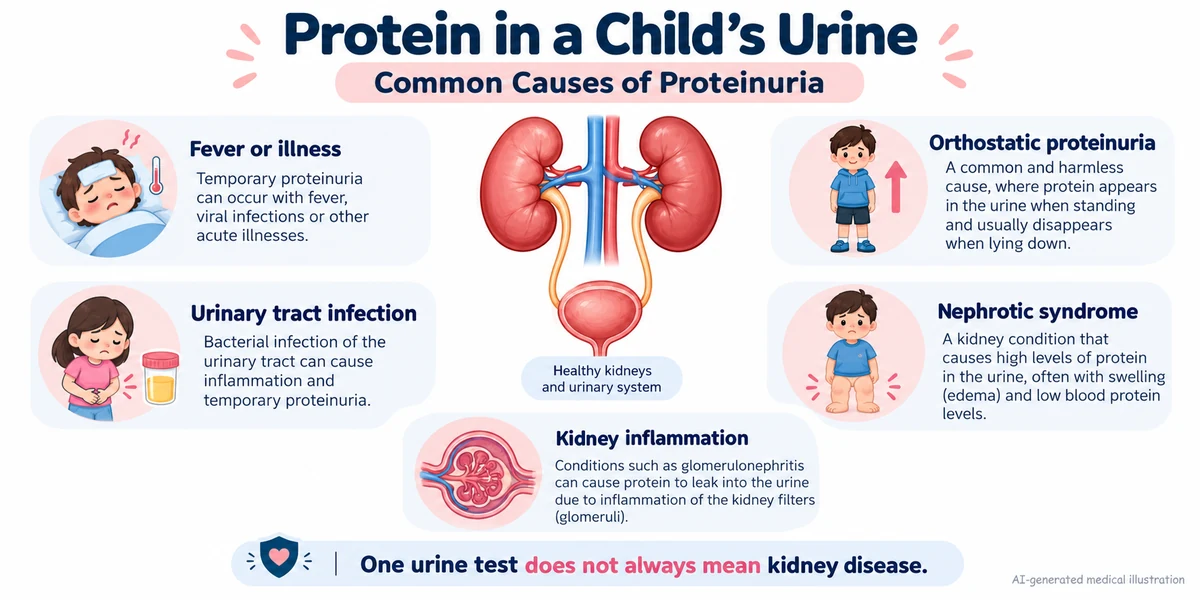
Protein in a child’s urine, medically called proteinuria, does not always mean that the child has kidney disease. Small amounts of protein may appear temporarily during fever, illness, dehydration or intense physical activity. Some children, particularly adolescents, have a harmless condition called orthostatic proteinuria. However, persistent proteinuria, especially when accompanied by blood in urine, swelling, high blood pressure or changes in kidney function, may require further medical evaluation. The first step is usually to confirm the urine finding and determine whether it is temporary or persistent. A first-morning urine sample is particularly useful. This article explains the possible causes of proteinuria in children, the tests used to investigate it, warning signs and situations in which specialist kidney assessment may be appropriate. What Does Protein in a Child’s Urine Mean? Healthy kidneys contain tiny filtering structures called glomeruli. These structures help remove waste products and excess fluid from the blood while retaining most proteins needed by the body. Proteinuria occurs when more protein than expected is found in urine. The presence of protein may be associated with changes in kidney filtration, but it can also occur temporarily in otherwise healthy children. Proteinuria is often first detected during a routine urine examination. A child may have no symptoms, and the result may be an incidental finding. One positive urine dipstick result does not automatically establish kidney disease. Repeat testing and assessment of the child’s medical history help determine whether further investigation is necessary. What Are the Common Causes of Proteinuria in Children? Proteinuria has several possible causes. Some are temporary and harmless, while others are associated with kidney disorders. 1. Temporary or Transient Proteinuria Transient proteinuria means that increased protein appears in urine for a limited period and later resolves. Possible triggers include: Fever or acute illness. Dehydration. Strenuous physical activity. Physical stress. Other temporary physiological changes. For example, protein may be detected during a febrile illness but no longer be present when the child has recovered. Clinicians may recommend repeating the urine examination after the illness resolves. Temporary proteinuria does not usually require kidney-specific treatment when no other abnormalities are present. 2. Orthostatic Proteinuria Orthostatic proteinuria occurs when protein is present in urine while a child is upright but is absent or within the expected range after lying down overnight. It is particularly common in adolescents. A first-morning urine sample can help identify this pattern because it is collected after the child has spent several hours lying down. In otherwise healthy children, confirmed isolated orthostatic proteinuria is generally considered benign and does not require medication. The clinician may advise periodic reassessment according to the individual situation. 3. Urinary Tract Infection A urinary tract infection (UTI) may be associated with abnormal urine findings, including protein and sometimes blood. Symptoms can include: Pain or burning during urination. Increased urinary frequency. Fever. Abdominal discomfort. Cloudy or unusually smelling urine. A urine examination and, when indicated, urine culture can help identify infection. Treatment depends on the child’s age, symptoms, test results and clinical condition. 4. Nephrotic Syndrome Nephrotic syndrome is an important kidney condition that can cause substantial protein loss through urine. It typically involves significant proteinuria and low blood albumin, often accompanied by swelling. Possible symptoms include: Puffiness around the eyes, particularly in the morning. Swelling of the feet, legs or abdomen. Rapid weight gain related to fluid retention. Foamy urine. Reduced appetite or tiredness. Minimal change disease is a common cause of nephrotic syndrome in young children, although other kidney diseases can cause it. Nephrotic syndrome requires medical assessment. Treatment depends on the underlying condition and may involve prescribed medicines and monitoring. 5. Glomerulonephritis Glomerulonephritis refers to conditions involving inflammation or injury of the kidneys’ filtering structures. Some forms may develop after an infection, while others are associated with immune-system disorders. Possible findings include: Protein in urine. Blood in urine. Swelling. High blood pressure. Reduced kidney function. The severity and treatment vary according to the underlying disease. 6. Other Kidney Conditions Persistent proteinuria may also occur in children with: Certain inherited kidney disorders. Structural or congenital kidney abnormalities. Chronic kidney disease. Other medical conditions affecting kidney filtration. Persistent proteinuria may sometimes be associated with underlying kidney disorders. Understanding the difference between Acute and Chronic Kidney Diseases can provide useful background about kidney function abnormalities and their evaluation.The presence of proteinuria alone does not identify which condition is responsible. Can Protein in Urine Occur Without Symptoms? Yes. Many children with proteinuria appear healthy and have no noticeable symptoms. Temporary and orthostatic proteinuria are often found during routine investigations rather than because of a specific complaint. Some kidney disorders may also develop before obvious symptoms appear. This is why repeat urine testing, blood pressure measurement and clinical review can be more informative than symptoms alone. What Is the Difference Between Temporary and Persistent Proteinuria? Feature Temporary proteinuria Persistent proteinuria Duration Resolves on subsequent testing Remains present on repeated tests Possible causes Fever, illness, exercise or dehydration Kidney filtering disorders or other conditions Symptoms Often absent May be absent or accompanied by other findings Testing Repeat urine examination Urine quantification and additional assessment Management Often observation after resolution Depends on cause and associated findings Orthostatic proteinuria is a separate, usually benign pattern that may recur in daytime samples while remaining normal in first-morning urine. The distinction is established through testing rather than appearance of the urine alone. Can Foamy Urine Mean a Child Has Proteinuria? Persistent foamy urine may sometimes be associated with increased protein in urine. However, foam can also appear because of urine flow, concentration or other non-disease factors. Foamy urine alone cannot confirm proteinuria. If foam is persistent, particularly when accompanied by swelling or other symptoms, medical assessment and a urine examination may be appropriate. What Does Blood in a Child’s Urine Mean? Blood in urine is called hematuria. It may be: Visible hematuria: Urine appears red, pink, brown or tea-coloured. Microscopic hematuria: Blood is detected through laboratory examination but cannot be seen with the naked eye. Possible causes include urinary tract

Foamy Urine: Could It Signal Kidney Disease?

  Foamy urine does not always indicate kidney disease. Bubbles can sometimes appear because of forceful urination, concentrated urine or substances in toilet water. However, persistent or repeatedly foamy urine may occasionally be associated with excess protein in urine, known as proteinuria. Proteinuria can be a sign of kidney damage, but urine appearance alone cannot confirm or exclude kidney disease. Urinalysis, urine albumin-to-creatinine ratio (uACR) and blood tests for kidney function can help identify abnormalities. Key Takeaways Occasional bubbles in urine do not necessarily mean kidney disease. Persistent foam may sometimes be associated with proteinuria or albuminuria. Diabetes, hypertension and glomerular diseases can cause protein leakage into urine. Urine ACR and eGFR are important tests for evaluating kidney health. Early chronic kidney disease may have no noticeable symptoms. Persistent foamy urine with swelling, blood in urine or abnormal kidney tests warrants medical evaluation. What Is Foamy Urine? Foamy urine refers to urine that produces visible bubbles or foam after entering the toilet. The appearance may vary depending on: Urine flow: A strong stream may create temporary bubbles. Urine concentration: Concentrated urine may sometimes appear more bubbly. Toilet water: Cleaning agents and other substances may produce foam. Urine composition: Increased urinary protein can sometimes contribute to persistent foam. Foamy urine is a visible finding, not a medical diagnosis. The National Kidney Foundation identifies foamy urine as a possible finding in certain kidney conditions associated with proteinuria. What Are the Common Causes of Foamy Urine? Several factors can affect urine appearance. Some are temporary, while others may require investigation. 1. Forceful Urination A strong urine stream can trap air when urine strikes the toilet water. Possible features include: Bubbles appearing immediately after urination. Foam that disappears relatively quickly. No associated urinary or general symptoms. This can occur without underlying kidney disease. 2. Concentrated Urine or Dehydration Urine may become more concentrated when fluid intake decreases or fluid loss increases. Possible contributing factors include: Inadequate fluid intake. Excessive sweating. Vomiting or diarrhoea. Increased fluid loss during illness. Concentrated urine can sometimes influence its appearance. However, persistent foam should not automatically be attributed to dehydration. 3. Protein in Urine (Proteinuria) Proteinuria occurs when an increased amount of protein passes into urine. Healthy kidney filters normally prevent most blood proteins, including albumin, from entering urine. Damage to these filtering structures may allow proteins to leak into the urine. Important points include: Proteinuria may indicate kidney damage. Significant protein leakage can sometimes produce persistent foam. Proteinuria may occur without visible urine changes. Urine appearance cannot reliably measure protein levels. The NIDDK guide to albuminuria explains why albumin in urine is an important marker of kidney health. Read more about Protein in Urine: Causes and Kidney Health. 4. Diabetes-Related Kidney Damage Long-term diabetes can affect the small blood vessels and filtering structures within the kidneys. As kidney damage develops: Albumin may leak into urine. Kidney function may remain relatively preserved during early disease. Abnormalities may occur without noticeable symptoms. Kidney filtration may decline over time in some people. Not everyone with diabetes develops kidney disease. Regular testing is more reliable than monitoring urine appearance alone. 5. High Blood Pressure Long-standing hypertension can damage kidney blood vessels. Some people develop albuminuria or reduced kidney function as a result of kidney damage associated with high blood pressure. However, hypertension does not necessarily cause foamy urine, and foam alone cannot establish a connection. 6. Glomerular Diseases The glomeruli are tiny filtering structures within the kidneys. Diseases affecting these structures may lead to: Protein in urine. Blood in urine. Swelling. High blood pressure. Changes in kidney function. Examples include minimal change disease, focal segmental glomerulosclerosis and membranous nephropathy. These conditions have different causes, treatments and outcomes. Diagnosis requires appropriate medical investigations. Does Foamy Urine Always Mean Kidney Disease? No. Foamy urine alone does not confirm kidney disease. Occasional bubbles may occur for harmless reasons. However, medical assessment may be appropriate when foamy urine: Occurs repeatedly or persists. Is associated with abnormal urine protein results. Appears alongside swelling. Occurs with visible blood in urine. Is accompanied by reduced urine output. Occurs in someone with diabetes or hypertension. Is associated with abnormal kidney function tests. Early kidney disease may also occur without foamy urine. Therefore, both symptoms and laboratory findings must be considered. What Symptoms May Occur Alongside Foamy Urine? Foamy urine may warrant greater attention when accompanied by other abnormalities. Possible warning signs include: Swelling: Puffiness around the eyes or swelling in the feet and ankles. Blood in urine: Pink, red or brown urine. High blood pressure: Persistent or difficult-to-control hypertension. Urination changes: Unexplained changes in frequency or urine volume. Fatigue: Persistent tiredness or weakness. Fluid retention: Unexplained weight gain associated with swelling. Abnormal kidney tests: Reduced eGFR, elevated creatinine or increased urine albumin. These findings are not specific to kidney disease. Medical assessment is needed to determine their cause. Who May Be at Increased Risk of Kidney Disease? Certain conditions increase the likelihood of kidney abnormalities. These include: Diabetes mellitus. High blood pressure. Cardiovascular disease. Previous kidney injury. Family history of kidney failure. Known glomerular disorders. Certain autoimmune conditions. Persistent albuminuria or proteinuria. People with these risk factors may require kidney screening according to their individual clinical circumstances. How Do Doctors Evaluate Persistent Foamy Urine? Evaluation generally begins with a review of symptoms, medical history, medicines, blood pressure and previous test results. Depending on the findings, a healthcare professional may recommend urine and blood investigations. 1. Urinalysis Urinalysis examines a urine sample for abnormalities. It may help detect: Protein. Blood. Possible signs of urinary tract infection. Other findings requiring investigation. A urine dipstick may detect protein, but additional testing may be necessary to quantify the amount. 2. Urine Albumin-to-Creatinine Ratio (uACR) The urine ACR test compares albumin with creatinine in a urine sample. It is used to: Detect albuminuria. Assess possible kidney damage. Monitor albumin levels over time. Help classify kidney disease risk alongside eGFR. Understanding urine ACR results Urine ACR (mg/g) Interpretation Below 30 Normal to mildly increased 30–299