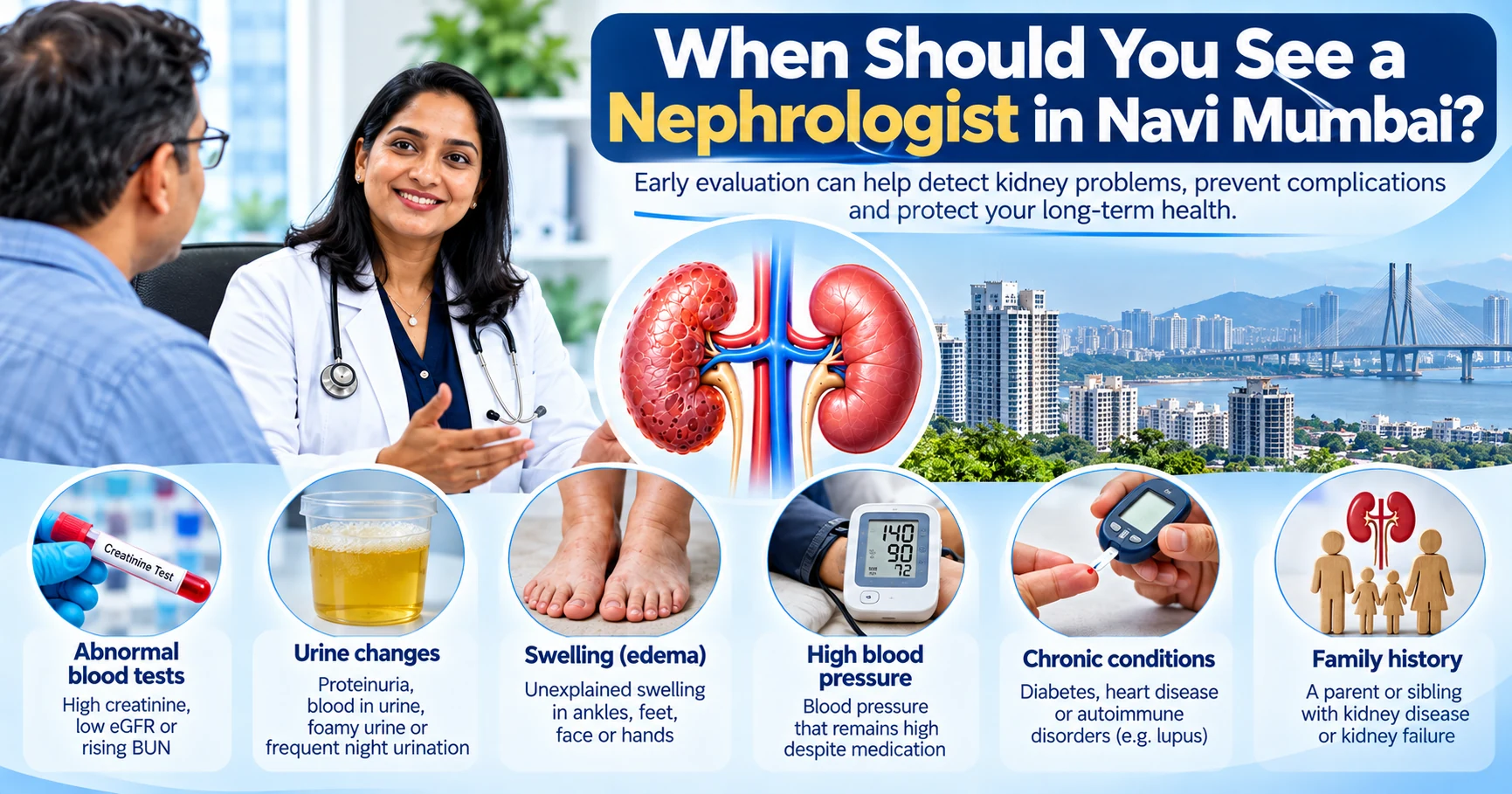
When Should You See a Nephrologist in Navi Mumbai? Kidney health often goes unnoticed until a problem becomes serious. Knowing the right moment to consult a kidney specialist can prevent complications, preserve function, and improve quality of life. This guide explains the warning signs, essential lab reports, and what to expect during a nephrology visit in Navi Mumbai, with a focus on the expertise of Dr. Jyoti Bansode. Why Early Nephrology Care Matters Kidneys filter waste, balance electrolytes, and regulate blood pressure. When they start to falter, the body may not show obvious symptoms right away. Early detection—especially for people with diabetes, hypertension, or a family history of kidney disease—allows timely interventions that can slow or even reverse damage. According to Prime Care 360’s kidney care guide, many kidney conditions are silent in the first stages, making regular monitoring essential. Key Situations When You Should See a Nephrologist Abnormal Blood Tests: Elevated serum creatinine, low eGFR (<60 mL/min/1.73 m²), or rising blood urea nitrogen (BUN) without an obvious cause. Urine Changes: Persistent proteinuria, blood in urine, foamy or frothy urine, or frequent nighttime urination. Swelling (Edema): Unexplained swelling in the ankles, feet, face, or hands. High Blood Pressure Uncontrolled by Medication: Hypertension that remains high despite treatment can be a sign of kidney involvement. Chronic Conditions: Diabetes, heart disease, or autoimmune disorders (e.g., lupus) that increase kidney risk. Family History: A parent or sibling with chronic kidney disease (CKD) or kidney failure. If any of these red flags appear, schedule a kidney consultation promptly. Essential Reports to Bring to Your Appointment Having the right documentation helps the nephrologist assess your kidney health efficiently. Prepare the following: Recent serum creatinine and eGFR results. Urine analysis reports (protein, blood, microalbumin). Blood pressure logs (if you monitor at home). Medication list, including over‑the‑counter supplements. Any prior imaging (ultrasound, CT) or biopsy reports. For a deeper dive into interpreting eGFR, see our What Does Your eGFR Number Mean? article. How Dr. Jyoti Bansode Evaluates Kidney Problems Medical Review – Dr. Jyoti Bansode MBBS, MD (Medicine), DM (Nephrology) – over 10 years of dedicated nephrology practice. Based in NewEra Hospitals, Vashi, Dr. Bansode offers comprehensive kidney care, from early CKD detection to dialysis planning and transplant evaluation. Patients benefit from a personalized approach, state‑of‑the‑art diagnostics, and coordinated care with allied specialists. During the first visit, Dr. Bansode typically: Reviews your medical history and risk factors. Analyzes the lab reports you bring. Performs a focused physical exam (checking for edema, blood pressure, and abdominal masses). Orders additional tests if needed (e.g., renal ultrasound, 24‑hour urine protein, or kidney biopsy). Creates a tailored management plan, which may include lifestyle changes, medication adjustments, or referral for advanced therapies. Questions to Ask at Your Nephrology Consultation Being proactive with questions ensures you leave the appointment with a clear roadmap. Consider asking: What is the likely cause of my kidney abnormalities? How fast is my kidney function declining, and what does my eGFR trend mean? Which lifestyle changes can protect my kidneys the most? Do I need medication adjustments for blood pressure or diabetes? When should I return for follow‑up labs or imaging? Is a second opinion or referral to a transplant center appropriate? When Kidney Symptoms Require Urgent Attention Kidney warning signs that require urgent medical attention including pain, swelling, fever, low urine output and breathlessness Some kidney‑related emergencies need immediate medical care. Seek urgent evaluation if you experience: Sudden, severe flank pain or blood in the urine. Rapid swelling of the face or legs accompanied by shortness of breath. Marked drop in urine output (oliguria) or complete absence of urine (anuria). High fever with chills and flank tenderness (possible kidney infection). Confusion, nausea, or vomiting with rising creatinine levels. In such cases, go to the nearest emergency department or call emergency services. Preparing for Your Nephrologist Appointment To make the most of your visit: Fast for 8‑12 hours if you’re scheduled for blood work. Bring a list of all medications, including herbal supplements. Write down any symptoms, their frequency, and triggers. Carry previous kidney‑related reports (e.g., What Causes High Creatinine? for background). Prepare insurance or payment information; most clinics in Navi Mumbai accept major insurers. Finding a Trusted Kidney Specialist in Navi Mumbai Beyond Dr. Jyoti Bansode, Navi Mumbai hosts several reputable nephrology centers, such as those listed on Practo’s nephrologist guide and Echelon Hospital’s nephrology services. When choosing a provider, consider credentials, patient reviews, and proximity to your home or workplace. Consistency in follow‑up care is key for chronic kidney disease management. Local Support and Resources Living in Navi Mumbai offers access to specialized kidney care facilities, patient education workshops, and support groups. Organizations often host free screening camps for diabetes and hypertension—two major contributors to kidney disease. Staying informed and participating in community health events can help you catch problems early. Frequently Asked Questions When should I schedule my first nephrology appointment? Book a visit as soon as you have abnormal kidney labs (e.g., high creatinine or low eGFR), persistent proteinuria, unexplained swelling, or uncontrolled high blood pressure. What lab tests are most important for a kidney evaluation? Serum creatinine, eGFR, BUN, urine protein/albumin, and a complete metabolic panel are essential; a 24‑hour urine protein test may be added if needed. Can I get a second opinion on a kidney diagnosis? Yes, seeking a second opinion is encouraged, especially before major decisions like dialysis initiation or transplant evaluation. How often should I have kidney function checked if I have diabetes? People with diabetes should have kidney function tests (creatinine, eGFR, and urine albumin) at least twice a year, or more frequently if abnormalities are detected. What lifestyle changes help preserve kidney health? Maintain blood pressure and blood sugar control, stay hydrated, limit excessive salt and protein, avoid NSAIDs overuse, and quit smoking. When is kidney disease considered an emergency? Sudden severe flank pain, rapid swelling, sudden loss of urine output, high fever with flank tenderness, or confusion with rising creatinine require immediate medical attention. Conclusion Protecting your kidneys starts with recognizing the signs