+91 8691888178 / 8850999397 dr.jyotibansode.01@gmail.com Monday to Saturday : 05:00PM TO 06:00PM

Kidney Transplant Evaluation: When Should Preparation Begin?

Facing kidney failure can feel overwhelming, but understanding the transplant evaluation process empowers you to act at the right moment. This guide explains when to start preparing, what the evaluation entails, and how to navigate each step with confidence. Why Kidney Transplant Evaluation May Be Discussed A transplant nephrologist typically raises the topic when your kidney function declines to a level where dialysis or transplant becomes the most viable long‑term solution. According to the National Kidney Foundation, patients are usually referred once their glomerular filtration rate (GFR) falls between 25 and 30 mL/min/1.73 m². The HRSA guidelines echo this, noting that early referral gives the transplant team ample time to complete testing before end‑stage renal disease (ESRD) sets in. Who May Need an Evaluation? Not every person with chronic kidney disease (CKD) qualifies for a transplant right away. Candidates typically include: Adults with CKD stage 4 (eGFR 15‑29) or stage 5 (eGFR < 15) who are otherwise medically stable. Patients already on dialysis who meet age, cardiovascular, and psychosocial criteria. Living donors – family members or friends with compatible blood type and kidney health. High‑risk or ABO‑incompatible cases managed by experienced centers like Dr. Jyoti Bansode’s practice. Understanding your eGFR is crucial; see our eGFR guide for a detailed breakdown. How to Prepare for the Evaluation How to Prepare for the Evaluation Preparation starts well before the first appointment. Gather the following: Complete medical history, including past surgeries, infections, and vaccination records. Recent laboratory results (CBC, metabolic panel, hepatitis B/C, HIV, and blood type). Imaging reports (chest X‑ray, abdominal ultrasound, cardiac stress test if indicated). List of current medications, especially immunosuppressants or anticoagulants. Psychosocial documentation – proof of stable housing, insurance, and support system. Below is a quick reference table that outlines what to do before, during, and after the evaluation. Phase Key Actions Purpose Before Collect records, schedule labs, arrange transportation Ensure the transplant center has a complete picture During Undergo physical exam, blood work, imaging, and psychosocial interview Assess medical suitability and match potential After Review results with the transplant team, discuss listing status Determine next steps – wait‑list, additional testing, or alternative therapy What Happens During the Evaluation The transplant center conducts a comprehensive, one‑day assessment that may include: Blood tests: kidney function panel, HLA typing, infectious disease screening. Imaging: Doppler ultrasound of kidneys, chest X‑ray, and possibly a cardiac echo. Cardiovascular review: stress test or coronary calcium scan for patients over 50 or with heart risk factors. Psychosocial interview: evaluation of mental health, adherence potential, and support network. Educational session: overview of post‑transplant care, medication regimen, and lifestyle changes. For a detailed look at the testing protocol, refer to the UPMC evaluation overview. Recovery, Results, and Follow‑Up Most patients leave the evaluation center the same day, but the decision timeline varies. Centers typically provide a decision within 1‑2 weeks. If approved, you’ll be placed on the national waiting list and matched based on HLA compatibility, blood type, and waiting time. Post‑evaluation follow‑up includes: Review of any abnormal findings (e.g., cardiac issues that need treatment before listing). Vaccination updates – especially hepatitis B and pneumococcal vaccines. Continued dialysis planning if you’re already on treatment. Regular meetings with the transplant coordinator to keep your profile current. Warning signs of kidney problems that need immediate medical review Warning Signs That Need Immediate Medical Review Even after a successful evaluation, certain symptoms warrant prompt attention: Sudden swelling of the legs or face. Fever, chills, or unexplained infections. Shortness of breath or chest pain. New onset of severe hypertension. Rapid decline in urine output (if you still produce urine). Report any of these to your nephrologist right away to avoid complications. Medical Review – Dr. Jyoti Bansode Dr. Jyoti Bansode holds an MBBS, MD in Medicine, and a DM in Nephrology, with over 10 years of experience. She has performed high‑risk, ABO‑incompatible, and pediatric kidney transplants, and leads a dedicated transplant team in Navi Mumbai. For personalized guidance, schedule an dialysis consultation or contact her office directly. Preparing early, understanding each step, and staying vigilant about warning signs can make the difference between a smooth transplant journey and unnecessary delays. Frequently Asked Questions When is the ideal time to begin a kidney transplant evaluation? Experts recommend starting the evaluation when the eGFR falls between 25 and 30 mL/min/1.73 m², allowing enough time to complete testing before reaching end‑stage renal disease. What tests are required during the transplant evaluation? The evaluation typically includes blood work for kidney function and HLA typing, imaging such as chest X‑ray and kidney ultrasound, cardiac screening, and a psychosocial interview. Can I be evaluated for a transplant while still on dialysis? Yes. Patients on dialysis are often evaluated concurrently so they can be listed immediately if they meet all medical and psychosocial criteria. How long does it take to receive the evaluation results? Most transplant centers provide a decision within 1–2 weeks after the one‑day assessment, though complex cases may require additional testing. What should I do if I develop a fever after the evaluation? Fever can signal infection, which is a red‑flag for transplant candidates. Contact your nephrologist or transplant coordinator immediately. Are there special considerations for living donors? Living donors undergo a parallel evaluation to ensure kidney health, blood type compatibility, and overall suitability, often completing the process faster than deceased‑donor pathways. Conclusion Start the evaluation process as soon as your eGFR approaches 25 mL/min/1.73 m², gather all required documents, and keep an open line of communication with your transplant team. Early preparation maximizes your chances of a timely, successful kidney transplant.

When Is Dialysis Needed? Symptoms, eGFR & Clinical Factors

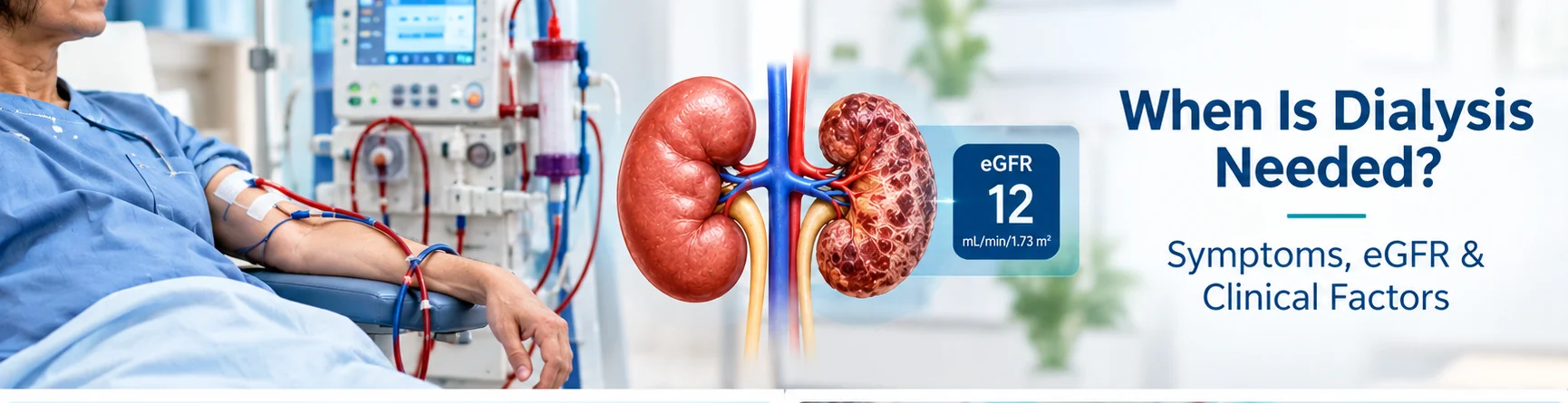
Quick answer (40‑60 words): Dialysis is usually started when eGFR falls below 15 mL/min/1.73 m² and the patient shows uremic symptoms such as nausea, severe itching, fluid overload, high potassium, or metabolic acidosis. Even with higher eGFR, urgent dialysis may be required for life‑threatening electrolyte or fluid problems. Common symptoms: nausea, vomiting, loss of appetite, weight loss, severe itching, fatigue, confusion. Key tests: eGFR, serum potassium, bicarbonate, blood urea nitrogen, chest X‑ray for fluid overload. When to see a doctor: any of the above symptoms, eGFR < 20, uncontrolled blood pressure, or rapid rise in creatinine. Medical Review: Dr. Jyoti Bansode, MBBS, MD Medicine, DM Nephrology, with over 10 years of nephrology experience and more than 500 tunneled/Permacath catheter procedures, reviewed this content. Dialysis is a life‑saving therapy that replaces the filtering function of kidneys when they can no longer remove waste, excess fluid, or maintain electrolyte balance. Deciding when to start dialysis involves a blend of laboratory numbers, patient‑reported symptoms, and overall clinical context. What Is Dialysis and When Is It Considered? Dialysis can be performed as hemodialysis (blood filtered through a machine) or peritoneal dialysis (fluid in the abdomen absorbs waste). According to Mayo Clinic, hemodialysis is typically recommended when eGFR is very low and patients experience symptoms such as nausea, vomiting, loss of appetite, weight loss, severe itching, tiredness, or confusion. It is also indicated for fluid overload, high potassium, or severe metabolic acidosis. Understanding eGFR and the Critical Thresholds Estimated Glomerular Filtration Rate (eGFR) is the most widely used metric to gauge kidney function. Normal adult eGFR is >90 mL/min/1.73 m². Chronic Kidney Disease (CKD) is staged based on eGFR: Stage 3: eGFR 30‑59 Stage 4: eGFR 15‑29 Stage 5 (End‑Stage Renal Disease): eGFR <15 Guidelines from the National Kidney Foundation suggest that patients with Stage 5 CKD (eGFR < 15) are evaluated for dialysis or transplantation. However, the decision is not based on eGFR alone; clinical signs often drive the timing. Symptoms That Signal the Need for Dialysis Symptoms and clinical factors that may indicate the need for dialysis, including low eGFR, fluid overload, high potassium, nausea, and metabolic acidosis Even with an eGFR slightly above 15, dialysis may be necessary if severe symptoms cannot be managed medically. Key warning signs include: Uremic symptoms: nausea, vomiting, loss of appetite, weight loss, severe itching, fatigue, confusion, or seizures. Fluid overload: swelling in legs, shortness of breath, pulmonary edema, or uncontrolled hypertension. Electrolyte disturbances: potassium >6.5 mmol/L, severe metabolic acidosis (bicarbonate <15 mmol/L). Pericardial effusion or uremic pericarditis: chest pain, muffled heart sounds. Rapid decline in kidney function: creatinine rising >0.3 mg/dL within 48 hours. MyNephrologist notes that emergency dialysis is often required when kidney function drops to 10‑15 % of normal and life‑threatening complications arise. Clinical Factors Beyond eGFR Several non‑laboratory factors influence the decision: Blood pressure control: refractory hypertension despite optimal medication may indicate the need for dialysis. Nutritional status: unintentional weight loss, protein‑energy wasting, or malnutrition. Cardiovascular health: heart failure exacerbated by fluid overload. Patient preferences and quality of life: ability to adhere to dialysis schedule, support system, and personal goals. According to a PubMed study, early initiation of dialysis at eGFR > 10 mL/min/1.73 m² does not improve morbidity or mortality, underscoring the importance of symptom‑driven timing. Diagnostic Tests and Evaluations When dialysis is being considered, a comprehensive assessment is performed: Blood work: eGFR, serum creatinine, BUN, electrolytes, bicarbonate, calcium/phosphate, hemoglobin. Urine analysis: proteinuria, hematuria, and volume status. Imaging: renal ultrasound to assess size and obstruction. Cardiac evaluation: ECG, echocardiogram if fluid overload or hypertension is present. Nutrition assessment: albumin, pre‑albumin, dietary intake. For a deeper dive on interpreting eGFR, see our eGFR explanation article. If you’re unsure whether your symptoms are kidney‑related, the early CKD signs guide can help you decide when to get tested. When to See a Nephrologist Prompt referral to a kidney specialist is crucial. You should schedule an appointment if you: Have an eGFR < 30 mL/min/1.73 m². Experience any of the uremic symptoms listed above. Have uncontrolled hypertension or fluid overload despite treatment. Notice rapid changes in kidney function or new electrolyte abnormalities. Are considering dialysis access options such as a Permacath or tunneled catheter; Dr. Bansode’s interventional nephrology practice has placed over 500 such catheters (high blood pressure and kidneys). Early nephrology involvement allows for education about dialysis modalities, vascular access planning, and potential transplant evaluation. Dialysis Access Options Nephrologist discussing dialysis with a patient and explaining AV fistula, AV graft, and Permacath dialysis access options When dialysis becomes necessary, a reliable vascular access is essential. Options include: Arteriovenous fistula (AVF): preferred long‑term access, requires surgical creation and maturation time. Arteriovenous graft (AVG): synthetic conduit, used when veins are unsuitable. Permacath (tunneled dialysis catheter): rapid‑access solution, especially for urgent starts; Dr. Bansode’s team has extensive experience with Permacath insertion Permacath and dialysis catheter insertion. Choosing the right access depends on urgency, vascular anatomy, and patient lifestyle. Understanding when dialysis is needed empowers patients to act early, avoid emergency situations, and collaborate with their care team for the best outcomes. Frequently Asked Questions What eGFR level usually triggers dialysis? Dialysis is most commonly considered when eGFR drops below 15 mL/min/1.73 m², especially if uremic symptoms or fluid overload are present. Can dialysis be started before eGFR reaches 15? Yes, if severe symptoms like high potassium, uncontrolled hypertension, or pulmonary edema occur, dialysis may be started at a higher eGFR. What are the most urgent signs that require emergency dialysis? Life‑threatening hyperkalemia, severe metabolic acidosis, pulmonary edema, or uremic encephalopathy are emergencies that need immediate dialysis. How does a Permacath differ from a regular dialysis catheter? A Permacath is a tunneled, cuffed catheter designed for longer‑term use, reducing infection risk compared with short‑term non‑tunneled catheters. Should I see a nephrologist if my eGFR is 25 but I feel fine? Yes. An eGFR of 25 indicates Stage 4 CKD, and early specialist care can help monitor progression and plan future access or transplant options. Is dialysis the only treatment for end‑stage kidney disease? Dialysis and kidney transplantation are the two main options; some patients may also be eligible for conservative management if they choose not to pursue

Can High Blood Pressure Damage Your Kidneys?

Short answer: Yes—persistent high blood pressure can scar and narrow kidney blood vessels, reducing filtration and eventually leading to chronic kidney disease or failure. Early symptoms include swelling, fatigue, and changes in urine; tests such as eGFR, creatinine, and urine protein help detect damage. See a nephrologist if blood pressure stays above 130/80 mmHg, kidney function declines, or you develop any warning signs. Understanding High Blood Pressure (Hypertension) Hypertension is defined as a blood pressure reading of 130/80 mmHg or higher. When the heart must work harder to pump blood, the force against artery walls increases. Over time, this pressure damages small vessels throughout the body, including those in the kidneys. How high blood pressure damages kidney blood vessels and reduces kidney filtration How High Blood Pressure Affects the Kidneys The kidneys filter about 180 liters of blood each day. They rely on a network of tiny blood vessels called glomeruli. Chronic high pressure can cause: Thickening and scarring (glomerulosclerosis) of the glomeruli. Narrowing of renal arteries, reducing blood flow. Loss of filtering ability, leading to fluid overload and waste buildup. These changes are collectively known as hypertensive nephropathy. According to the American Heart Association, scarring of kidney tissue impairs both filtration and fluid regulation. Key Research Findings Recent studies highlight the seriousness of the link: NIDDK explains that high blood pressure constricts vessels, weakening them throughout the body, kidneys included. Mayo Clinic notes that uncontrolled hypertension forces the heart to work harder, accelerating kidney damage. Southwest Kidney Institute describes hypertensive nephropathy as often unnoticed until irreversible damage occurs. Early Warning Signs of Kidney Damage Kidney injury from hypertension can be silent. Watch for these clues: Swelling in ankles, feet, or face (edema). Persistent fatigue or weakness. Changes in urine: foamy, dark, or decreased output. High blood pressure that is difficult to control despite medication. For a broader view of early kidney disease signs, see our Early Signs of Chronic Kidney Disease article. Diagnostic Tests to Evaluate Kidney Health Doctors use several laboratory and imaging tools to assess kidney function: eGFR (estimated Glomerular Filtration Rate): Calculates filtration capacity from serum creatinine, age, sex, and race. An eGFR below 60 mL/min/1.73 m² signals reduced kidney function. Learn more in our eGFR explained guide. Serum Creatinine: Elevated levels indicate impaired waste clearance. See What Causes High Creatinine for details. Urine Albumin-to-Creatinine Ratio (ACR): Detects protein leakage, an early sign of glomerular damage. Kidney Ultrasound: Visualizes structural changes, such as reduced kidney size. When Hypertension Leads to Kidney Failure If high blood pressure remains uncontrolled, the cumulative damage can progress to end‑stage renal disease (ESRD). At this stage, the kidneys can no longer filter blood adequately, and dialysis or transplantation becomes necessary. When Is Dialysis Needed? Dialysis is typically considered when: eGFR falls below 15 mL/min/1.73 m². Severe symptoms appear, such as persistent nausea, shortness of breath, or dangerous electrolyte imbalances. Fluid overload cannot be managed with medication. Patients may need a permanent access device, such as a Permacath, for hemodialysis. Our clinic has performed over 500 tunneled catheter procedures, reflecting a special interest in interventional nephrology. Managing Blood Pressure to Protect Your Kidneys Effective control of hypertension can halt or even reverse early kidney damage: Lifestyle changes: Low‑salt diet, regular aerobic exercise, weight management, and limiting alcohol. Medications: ACE inhibitors or ARBs are first‑line because they lower pressure and reduce proteinuria. Regular monitoring: Check blood pressure at home and schedule routine kidney labs. For practical tips, see NephDocs’ guide to managing high blood pressure for kidney health. When to See a Nephrologist Early specialist involvement improves outcomes. Schedule an appointment if you: Have blood pressure consistently above 130/80 mmHg despite treatment. Show a declining eGFR or rising creatinine. Experience any of the warning signs listed above. Need advice on dialysis access options, such as Permacath placement. Our clinic offers comprehensive evaluation and interventional procedures. Book an appointment and consultation with Dr. Jyoti Bansode today. Medical Review: Dr. Jyoti Bansode, MBBS, MD Medicine, DM Nephrology, with over 10 years of nephrology experience and a special interest in interventional nephrology. More than 500 tunneled/Permacath catheter procedures performed. Frequently Asked Questions Can high blood pressure cause kidney failure? Yes. Uncontrolled hypertension damages the tiny blood vessels in the kidneys, leading to scarring, reduced filtration, and eventually end‑stage renal disease if not treated. What lab test shows early kidney damage from hypertension? The urine albumin‑to‑creatinine ratio (ACR) and a slight rise in serum creatinine are the earliest indicators, often before eGFR drops significantly. How low does eGFR need to be before dialysis is considered? Dialysis is usually recommended when eGFR falls below 15 mL/min/1.73 m², especially if symptoms of uremia or fluid overload are present. Are ACE inhibitors safe for people with high blood pressure and kidney disease? ACE inhibitors are first‑line because they lower blood pressure and reduce protein loss in urine, slowing kidney damage in most patients. What is a Permacath and when is it used? A Permacath is a tunneled dialysis catheter placed in a large vein for long‑term hemodialysis access, often used when a fistula is not yet mature. How often should I have kidney function tests if I have hypertension? At least twice a year, or more frequently if blood pressure is hard to control or you have other risk factors like diabetes. Conclusion High blood pressure is a silent but potent threat to kidney health. By monitoring your pressure, staying on kidney‑friendly medications, and seeking nephrology care early, you can preserve kidney function and avoid dialysis.