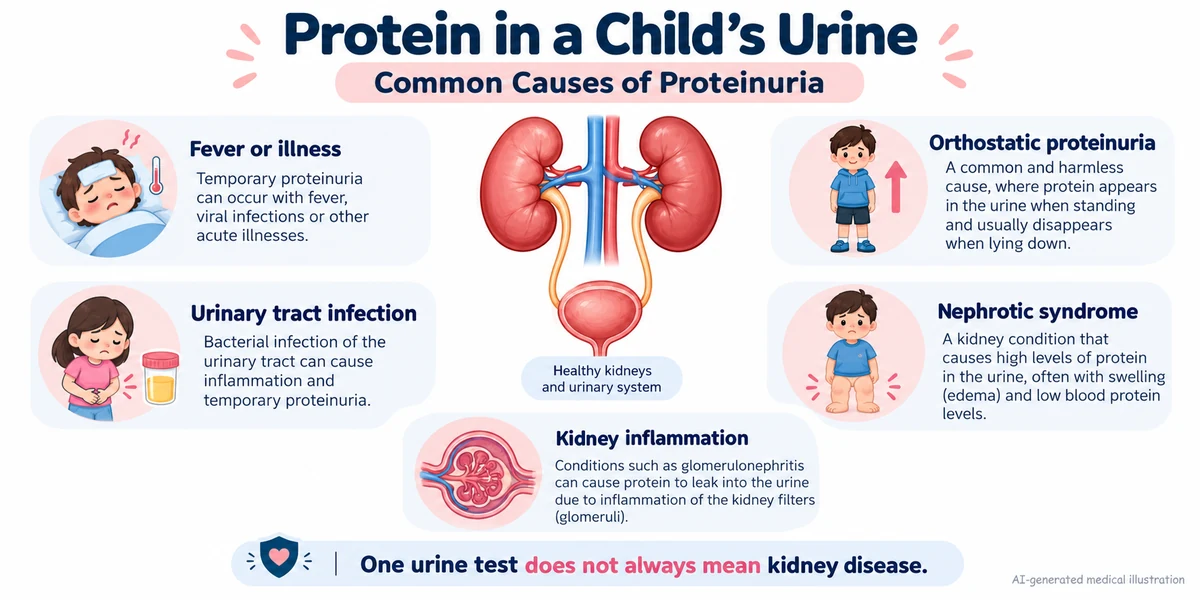
Protein in a child’s urine, medically called proteinuria, does not always mean that the child has kidney disease. Small amounts of protein may appear temporarily during fever, illness, dehydration or intense physical activity. Some children, particularly adolescents, have a harmless condition called orthostatic proteinuria. However, persistent proteinuria, especially when accompanied by blood in urine, swelling, high blood pressure or changes in kidney function, may require further medical evaluation. The first step is usually to confirm the urine finding and determine whether it is temporary or persistent. A first-morning urine sample is particularly useful. This article explains the possible causes of proteinuria in children, the tests used to investigate it, warning signs and situations in which specialist kidney assessment may be appropriate. What Does Protein in a Child’s Urine Mean? Healthy kidneys contain tiny filtering structures called glomeruli. These structures help remove waste products and excess fluid from the blood while retaining most proteins needed by the body. Proteinuria occurs when more protein than expected is found in urine. The presence of protein may be associated with changes in kidney filtration, but it can also occur temporarily in otherwise healthy children. Proteinuria is often first detected during a routine urine examination. A child may have no symptoms, and the result may be an incidental finding. One positive urine dipstick result does not automatically establish kidney disease. Repeat testing and assessment of the child’s medical history help determine whether further investigation is necessary. What Are the Common Causes of Proteinuria in Children? Proteinuria has several possible causes. Some are temporary and harmless, while others are associated with kidney disorders. 1. Temporary or Transient Proteinuria Transient proteinuria means that increased protein appears in urine for a limited period and later resolves. Possible triggers include: Fever or acute illness. Dehydration. Strenuous physical activity. Physical stress. Other temporary physiological changes. For example, protein may be detected during a febrile illness but no longer be present when the child has recovered. Clinicians may recommend repeating the urine examination after the illness resolves. Temporary proteinuria does not usually require kidney-specific treatment when no other abnormalities are present. 2. Orthostatic Proteinuria Orthostatic proteinuria occurs when protein is present in urine while a child is upright but is absent or within the expected range after lying down overnight. It is particularly common in adolescents. A first-morning urine sample can help identify this pattern because it is collected after the child has spent several hours lying down. In otherwise healthy children, confirmed isolated orthostatic proteinuria is generally considered benign and does not require medication. The clinician may advise periodic reassessment according to the individual situation. 3. Urinary Tract Infection A urinary tract infection (UTI) may be associated with abnormal urine findings, including protein and sometimes blood. Symptoms can include: Pain or burning during urination. Increased urinary frequency. Fever. Abdominal discomfort. Cloudy or unusually smelling urine. A urine examination and, when indicated, urine culture can help identify infection. Treatment depends on the child’s age, symptoms, test results and clinical condition. 4. Nephrotic Syndrome Nephrotic syndrome is an important kidney condition that can cause substantial protein loss through urine. It typically involves significant proteinuria and low blood albumin, often accompanied by swelling. Possible symptoms include: Puffiness around the eyes, particularly in the morning. Swelling of the feet, legs or abdomen. Rapid weight gain related to fluid retention. Foamy urine. Reduced appetite or tiredness. Minimal change disease is a common cause of nephrotic syndrome in young children, although other kidney diseases can cause it. Nephrotic syndrome requires medical assessment. Treatment depends on the underlying condition and may involve prescribed medicines and monitoring. 5. Glomerulonephritis Glomerulonephritis refers to conditions involving inflammation or injury of the kidneys’ filtering structures. Some forms may develop after an infection, while others are associated with immune-system disorders. Possible findings include: Protein in urine. Blood in urine. Swelling. High blood pressure. Reduced kidney function. The severity and treatment vary according to the underlying disease. 6. Other Kidney Conditions Persistent proteinuria may also occur in children with: Certain inherited kidney disorders. Structural or congenital kidney abnormalities. Chronic kidney disease. Other medical conditions affecting kidney filtration. Persistent proteinuria may sometimes be associated with underlying kidney disorders. Understanding the difference between Acute and Chronic Kidney Diseases can provide useful background about kidney function abnormalities and their evaluation.The presence of proteinuria alone does not identify which condition is responsible. Can Protein in Urine Occur Without Symptoms? Yes. Many children with proteinuria appear healthy and have no noticeable symptoms. Temporary and orthostatic proteinuria are often found during routine investigations rather than because of a specific complaint. Some kidney disorders may also develop before obvious symptoms appear. This is why repeat urine testing, blood pressure measurement and clinical review can be more informative than symptoms alone. What Is the Difference Between Temporary and Persistent Proteinuria? Feature Temporary proteinuria Persistent proteinuria Duration Resolves on subsequent testing Remains present on repeated tests Possible causes Fever, illness, exercise or dehydration Kidney filtering disorders or other conditions Symptoms Often absent May be absent or accompanied by other findings Testing Repeat urine examination Urine quantification and additional assessment Management Often observation after resolution Depends on cause and associated findings Orthostatic proteinuria is a separate, usually benign pattern that may recur in daytime samples while remaining normal in first-morning urine. The distinction is established through testing rather than appearance of the urine alone. Can Foamy Urine Mean a Child Has Proteinuria? Persistent foamy urine may sometimes be associated with increased protein in urine. However, foam can also appear because of urine flow, concentration or other non-disease factors. Foamy urine alone cannot confirm proteinuria. If foam is persistent, particularly when accompanied by swelling or other symptoms, medical assessment and a urine examination may be appropriate. What Does Blood in a Child’s Urine Mean? Blood in urine is called hematuria. It may be: Visible hematuria: Urine appears red, pink, brown or tea-coloured. Microscopic hematuria: Blood is detected through laboratory examination but cannot be seen with the naked eye. Possible causes include urinary tract