+91 8691888178 / 8850999397 dr.jyotibansode.01@gmail.com Monday to Saturday : 05:00PM TO 06:00PM

Diabetic Kidney Disease with Normal Creatinine – What You Need to Know

Yes, diabetic kidney disease can be present even when serum creatinine is within the normal laboratory range. Creatinine alone may miss early kidney damage because albumin leakage in urine often appears before a significant fall in the kidneys’ filtering ability. Why Creatinine Can Remain Normal in Early Diabetic Kidney Disease Serum creatinine reflects the overall filtration capacity of the kidneys, but it does not detect subtle damage to the glomerular filter. In the early stages of diabetic nephropathy, the glomerular basement membrane becomes leaky, allowing albumin to pass into the urine while the total filtration rate (and thus creatinine) stays within normal limits. Therefore, a patient can have: Normal creatinine Relatively preserved eGFR Elevated urine albumin (high urine ACR) and still have evidence of kidney damage. How Diabetes Damages the Glomeruli Prolonged high blood glucose damages the tiny blood vessels that line the glomeruli – the kidney’s filtering units. The excess glucose triggers inflammation and thickening of the basement membrane, making it porous. The first sign is usually a small amount of albumin spilling into the urine (microalbuminuria). Over time, continued injury can reduce the number of functional nephrons, leading to a drop in eGFR and, eventually, chronic kidney disease. Creatinine vs eGFR vs Urine ACR Each test answers a different question about kidney health. Understanding their roles helps catch disease early. Test What It Measures Typical Use Creatinine Blood waste product from muscle metabolism Basic screen; high levels suggest reduced filtration eGFR Estimated glomerular filtration rate (calculates filtration based on creatinine, age, sex, race) Quantifies overall kidney function Urine ACR Albumin‑to‑creatinine ratio in a spot urine sample Detects early leak of protein (albumin) from glomeruli Because they assess different aspects, clinicians interpret them together rather than in isolation. Can eGFR Be Normal in Early Diabetic Kidney Disease? Yes. In the initial phases of diabetic nephropathy, the eGFR often remains >90 mL/min/1.73 m² while urine ACR is already elevated. A normal eGFR does not guarantee that the kidneys are healthy; persistent albuminuria signals early injury even when filtration appears preserved. Current Screening Guidance for Diabetes Guidelines from the American Diabetes Association and KDIGO recommend: People with type 2 diabetes: urine ACR and eGFR testing at least once a year from the time of diagnosis. People with type 1 diabetes: begin annual kidney screening after about five years of diabetes duration, unless other risk factors call for earlier testing. Regular monitoring helps detect changes before symptoms appear. Early Warning Signs (Often Absent) Early diabetic kidney disease usually has no noticeable symptoms. When it progresses, patients may notice: Foamy or frothy urine (protein) Swelling of the feet or ankles Increasing blood pressure Fatigue or reduced energy Changes in urination frequency Nausea or loss of appetite Can a High Urine ACR Be Temporary? Transient factors can raise urine albumin, including intense exercise, fever, urinary‑tract infection, marked hyperglycaemia, menstruation, heart failure, or a sudden spike in blood pressure. One abnormal ACR result does not automatically confirm chronic kidney disease; repeat testing after a few weeks is recommended to verify persistence. What Test Results May Suggest Early Kidney Damage? Look for patterns such as: Normal serum creatinine + elevated urine ACR. Preserved eGFR + elevated urine ACR. Gradual decline in eGFR over months or years. Increasing albumin levels on consecutive ACR tests. These findings indicate that the kidneys are under stress even if the filtration rate seems normal. What Should You Do If Creatinine Is Normal but You Have Diabetes? Discuss the following with your clinician: Request a urine ACR test. Ask for an eGFR calculation based on your latest labs. Review previous creatinine results to spot trends. Review prior urine ACR results, if available. Check your blood pressure readings. Know your most recent HbA1c level. Ask whether repeat urine testing is needed to confirm any abnormality. Inquire if your kidney‑function numbers are changing over time. When Should You See a Nephrologist? Referral is appropriate when any of the following occur: Persistently elevated urine ACR (especially >300 mg/g). Rapid increase in albuminuria over a short period. Steady decline in eGFR (e.g., drop >5 mL/min/1.73 m² per year). Persistent protein or blood in urine protein and blood in urine. Difficult‑to‑control hypertension despite medication. Unexplained swelling (edema). Sudden or unexplained changes in kidney‑function test results. Uncertainty about the cause of abnormal kidney tests acute and chronic kidney diseases. Referral does not mean you have end‑stage disease; it ensures specialized care to slow progression. Why Early Detection Matters Interventions such as tighter glucose control, blood‑pressure management (often with ACE inhibitors or ARBs), lifestyle changes, and regular monitoring can significantly slow the progression of diabetic kidney disease. Medical Review: Dr. Jyoti BansodeMBBS, MD Medicine, DM NephrologyMore than 10 years of nephrology experience For a deeper look at how diabetes affects kidney health, see our diabetes and kidney diseases page. If you notice persistent protein or blood in your urine, read our protein and blood in urine guide. For broader information on chronic kidney conditions, explore acute and chronic kidney diseases. Key sources:  American Heart Association overview of kidney disease in diabetes, bidirectional link study between diabetes and kidney disease, KDIGO‑style review of diabetic kidney disease. Frequently Asked Questions Can diabetic kidney disease happen with normal creatinine? Yes. Early kidney damage can cause albumin to leak into urine while serum creatinine remains within the normal range. Can kidney damage occur with a normal eGFR? Yes. Albuminuria can be present even when eGFR is >90 mL/min/1.73 m², indicating early glomerular injury. Which test detects diabetic kidney disease earliest? Urine ACR (albumin‑to‑creatinine ratio) is the most sensitive early marker, detecting microalbuminuria before creatinine or eGFR change. Is urine ACR more useful than creatinine for early kidney damage? For early detection, yes. Urine ACR identifies tiny amounts of albumin that appear before serum creatinine rises. Can albumin in urine be temporary? Transient factors like exercise, infection, fever, or high blood pressure can raise urine albumin; repeat testing confirms persistence. When should a person with diabetes see a nephrologist? See a nephrologist if urine ACR stays high, eGFR declines, protein/blood persists in urine, hypertension is uncontrolled,

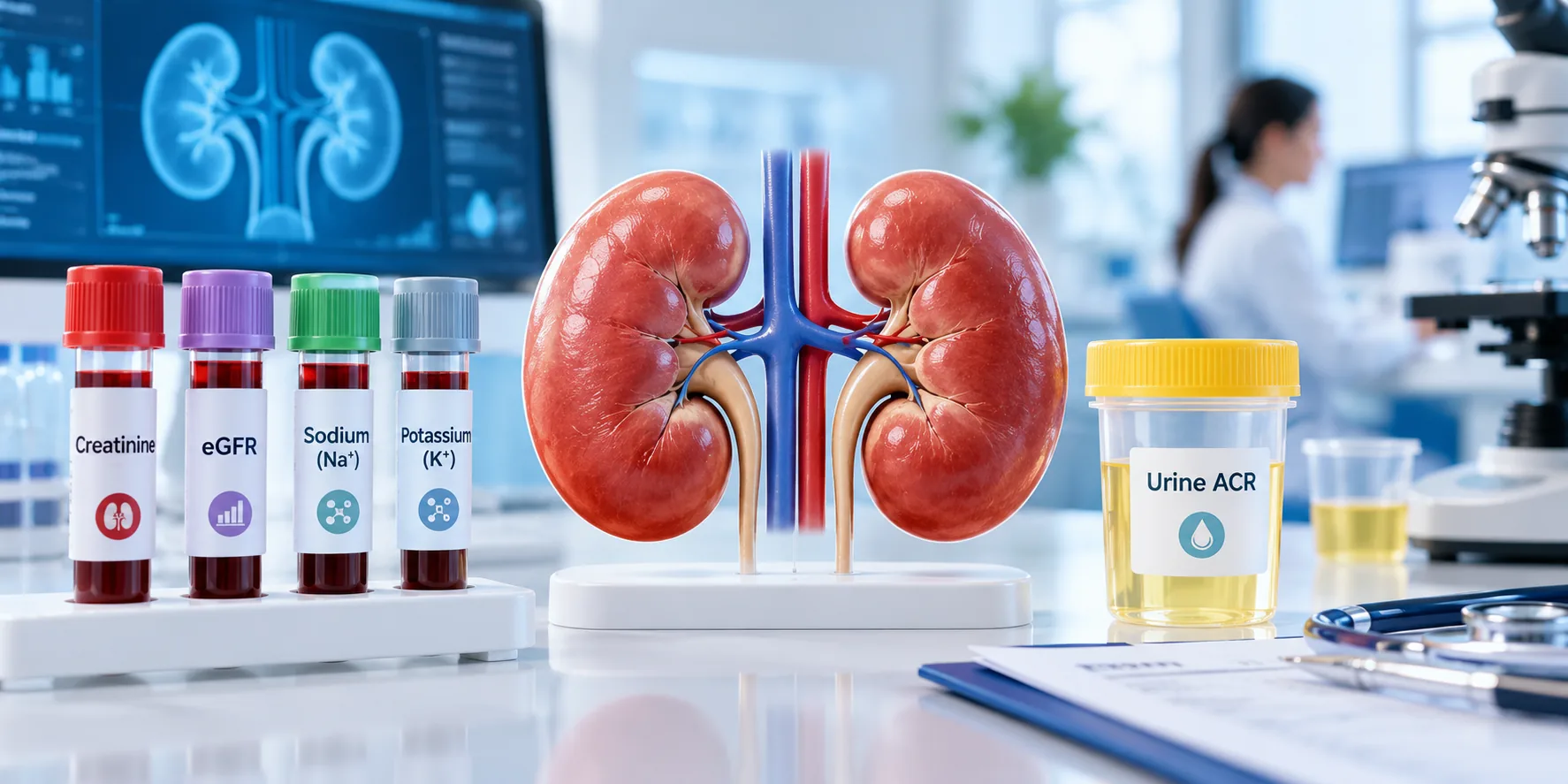
Kidney Tests Explained: Creatinine, eGFR, Urine ACR & Electrolytes

Kidney Tests Explained: Creatinine, eGFR, Urine ACR & ElectrolytesUnderstanding kidney function starts with the right lab tests. Creatinine, eGFR, urine albumin‑to‑creatinine ratio (uACR) and electrolyte panels are the four pillars doctors use to spot early disease, track progression, and guide treatment. This guide breaks down each test, normal values, and what the numbers mean for you. Medical Review – Dr. Jyoti BansodeMBBS, MD Medicine, DM NephrologyOver 10 years of experience in diagnosing and managing kidney disease. For personalized care, visit Dr. Bansode’s nephrology services. Why Kidney Function Testing Matters Kidneys filter waste, balance fluids, and regulate electrolytes. When they falter, waste builds up, blood pressure spikes, and vital minerals become imbalanced. Early detection through lab testing can prevent irreversible damage and reduce the need for dialysis or transplant. Common Symptoms That Prompt Testing Persistent fatigue or weakness Swelling in ankles, feet, or face Changes in urine color or frequency Unexplained high blood pressure Muscle cramps or tingling sensations If you notice any of these, ask your primary‑care physician for a kidney panel. Key Kidney Tests Overview Key Kidney Tests Overview Serum Creatinine – What It Shows Creatinine is a waste product from muscle metabolism. The kidneys clear it from the blood, so higher levels indicate reduced filtration. Normal ranges vary by sex and muscle mass, but typical limits are 0.6–1.2 mg/dL for women and 0.7–1.3 mg/dL for men Nephrology Specialists. Values above these thresholds often signal early kidney stress. Estimated Glomerular Filtration Rate (eGFR) eGFR translates the creatinine value into an estimate of how many milliliters of blood the kidneys filter each minute per 1.73 m² of body surface. An eGFR > 60 mL/min/1.73 m² is generally considered normal, 30–59 suggests moderate decline, and <30 indicates severe kidney disease MyNephrologist. The calculation also incorporates age, sex, and sometimes race, making it a more comprehensive indicator than creatinine alone. Urine Albumin‑to‑Creatinine Ratio (uACR) Albumin is a protein that should stay in the bloodstream. When the glomeruli are damaged, albumin leaks into urine. uACR compares the amount of albumin to creatinine in a single urine sample, eliminating the need for a 24‑hour collection. Normal uACR is 300 mg/g reflects macro‑albuminuria (significant damage) MyNephrologist. This test can detect kidney injury years before eGFR drops. Electrolytes and Blood Urea Nitrogen (BUN) Electrolyte panels measure sodium, potassium, chloride, bicarbonate, and calcium—minerals the kidneys tightly regulate. Abnormalities often accompany chronic kidney disease (CKD). BUN, another waste product, rises as kidney function declines but is less specific than creatinine because it is influenced by diet and hydration Nephrology Specialists. Interpreting Results Together Creatinine & eGFR Relationship Because eGFR is derived from creatinine, the two numbers should be read as a pair. A mildly elevated creatinine with a normal eGFR may be due to high muscle mass, while a normal creatinine with a low eGFR often points to early CKD, especially in older adults. When uACR Raises a Red Flag Even with a healthy eGFR, a uACR > 30 mg/g signals that the kidney’s filtering units are leaking protein. This early sign is common in diabetes and hypertension and warrants tighter blood‑sugar or blood‑pressure control, plus possible referral to a nephrologist. Electrolyte Imbalance Clues High potassium (hyperkalaemia) can indicate reduced excretion, while low sodium often reflects fluid overload. Metabolic acidosis (low bicarbonate) is another hallmark of advanced CKD. Spotting these changes early allows dietary or medication adjustments before complications arise. When to Seek Specialist Care If any of the following appear, schedule a consultation with a kidney specialist: eGFR consistently below 60 mL/min/1.73 m² uACR ≥ 30 mg/g on two separate tests Persistent electrolyte abnormalities despite treatment Rapid rise in serum creatinine (e.g., >0.3 mg/dL in 48 hours) Our clinic’s nephrology team can provide a detailed assessment and personalized plan. Learn more about when to see a specialist in When Should You See a Nephrologist in Navi Mumbai?. Common Myths About Kidney Tests Myth: “If my creatinine is normal, my kidneys are fine.” – Fact: Creatinine alone can miss early damage; uACR often reveals problems first. Myth: “Only diabetics need kidney testing.” – Fact: Hypertension, family history, and age over 50 are also risk factors. Myth: “Low potassium always means a kidney problem.” – Fact: Diet, medications, and gastrointestinal loss can also lower potassium. Putting It All Together: A Practical Checklist Use this quick reference during your next lab visit: Kidney Test Typical / Reference Range When to Seek Medical Attention Serum Creatinine Reference ranges vary by laboratory, age, sex, and muscle mass. A persistently elevated or rising creatinine level may require further evaluation. eGFR Generally ≥60 mL/min/1.73 m² An eGFR below 60 that persists for 3 months or longer may indicate chronic kidney disease. Urine ACR (uACR) <30 mg/g 30–300 mg/g indicates moderately increased albuminuria; >300 mg/g indicates severely increased albuminuria. Electrolytes(Na, K, Cl, HCO₃) Within your laboratory’s reference range Persistent or significant abnormalities, particularly potassium or bicarbonate changes, require medical assessment. BUN Typically about 7–20 mg/dL, depending on the laboratory An elevated BUN should be interpreted together with creatinine, eGFR, hydration status, and other clinical findings. Regular monitoring—typically every 6–12 months for at‑risk patients—helps catch changes early. For detailed guidance on test frequency, see our When Is Dialysis Needed? Symptoms, eGFR & Clinical Factors page. By understanding what each number represents, you can partner with your healthcare team to protect kidney health before problems become serious. Frequently Asked Questions What should patients know first about kidney disease tests? Kidney tests measure waste removal (creatinine, eGFR), protein leakage (uACR), and mineral balance (electrolytes). Together they reveal how well the kidneys filter blood and whether early damage is present.   Which kidney tests are most relevant for early detection? The urine albumin‑to‑creatinine ratio (uACR) is the most sensitive early marker, often detecting damage before eGFR declines. Serum creatinine and eGFR confirm overall filtration capacity.   What symptoms should prompt evaluation? Persistent fatigue, swelling, changes in urine, high blood pressure, and unexplained muscle cramps should trigger a kidney panel, including creatinine, eGFR, uACR, and electrolytes.   How are creatinine and eGFR interpreted together? Creatinine provides the raw waste level, while eGFR translates it into an estimated filtration