+91 8691888178 / 8850999397 dr.jyotibansode.01@gmail.com Monday to Saturday : 05:00PM TO 06:00PM

Rising Creatinine in Diabetes: What It Means and What to Do

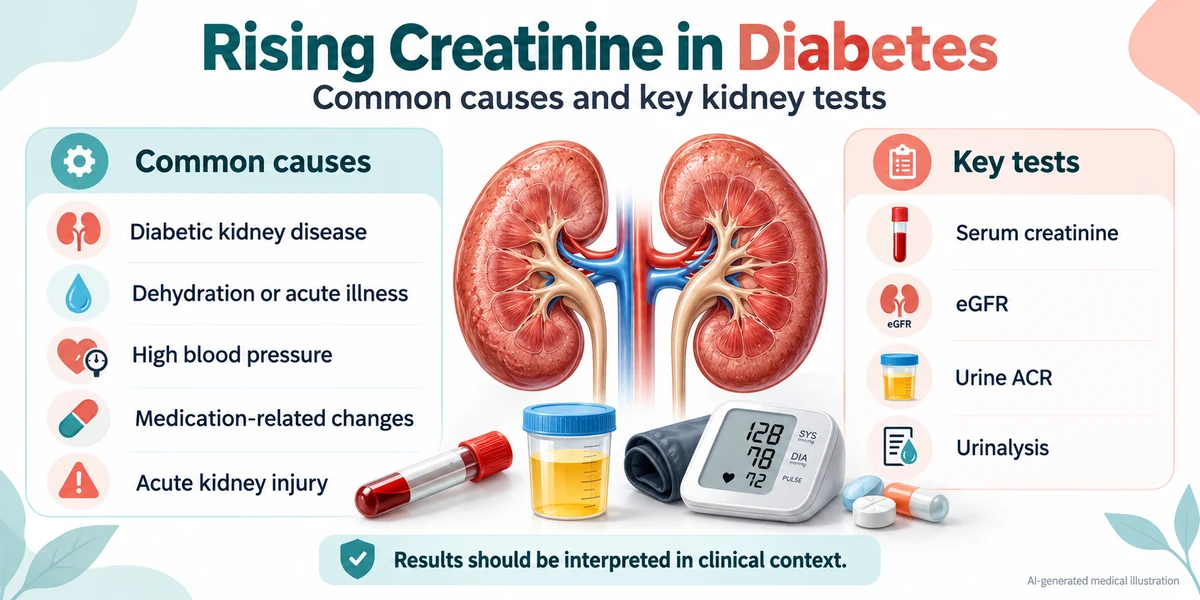
Rising creatinine in a person with diabetes may indicate a change in kidney filtration, but it does not automatically mean permanent kidney damage or kidney failure. Possible causes include acute kidney injury, dehydration, long-term diabetic kidney disease, high blood pressure, urinary obstruction and certain medication effects. Serum creatinine is a waste product measured in blood. Its concentration is influenced by kidney function as well as muscle mass, diet and other factors. An unexpected increase should be interpreted alongside previous creatinine results, estimated glomerular filtration rate (eGFR), urine albumin-to-creatinine ratio (uACR), medical history and symptoms. The size and speed of the creatinine change can be more important than one isolated value. This article explains why creatinine may rise in diabetes, how kidney tests are interpreted, which conditions require assessment and what symptoms should prompt urgent medical care. What Is Creatinine and Why Is It Important? Creatinine is a waste product produced through normal muscle metabolism. The kidneys remove creatinine from the bloodstream, primarily through filtration, and it is then excreted in urine. Serum creatinine testing helps assess kidney function, but it does not directly measure the amount of kidney damage. Its interpretation depends on factors including:  – Age and body composition.  – Muscle mass.  – Recent strenuous exercise.  – Recent meat consumption.  – Certain medicines and supplements.  –  Kidney filtration.  – Changes in hydration and circulation. A creatinine result within the laboratory reference range does not always exclude kidney disease. Similarly, an elevated result does not independently establish the cause or permanence of kidney dysfunction. How Does Diabetes Affect Kidney Function? Diabetes may affect the kidneys’ small blood vessels and filtering structures over time. Within each kidney, microscopic structures called glomeruli help filter blood while retaining most essential proteins. Persistently elevated blood glucose can contribute to structural and functional changes in these filtering units. Possible consequences include:  – Increased urinary albumin.  – Changes in glomerular filtration.  – Gradual reduction in eGFR.  – Increased kidney-related and cardiovascular risk.  – Development of chronic kidney disease in some individuals. This condition is commonly described as diabetic kidney disease. However, not every person with diabetes develops kidney disease. Importantly, not every rise in creatinine in someone with diabetes is caused by diabetic kidney disease. Read more about Diabetic Kidney Disease Symptoms. What Are the Common Causes of Rising Creatinine in Diabetes? A rising creatinine level can have several possible explanations. 1. Diabetic Kidney Disease Long-term diabetes may contribute to kidney damage and declining filtration. In some individuals, urine albumin increases before eGFR declines. Others experience reduced kidney filtration without significantly increased albuminuria. Diabetic kidney disease often develops gradually, but changes in kidney function should not automatically be attributed to diabetes without considering other causes. 2. Dehydration or Reduced Circulating Fluid Volume Fluid loss from vomiting, diarrhoea, fever or other causes may reduce blood flow to the kidneys. Significant dehydration can contribute to acute kidney injury and increased serum creatinine. People with markedly elevated blood glucose may lose additional fluid through increased urination. However, drinking large amounts of water is not an appropriate treatment for every cause of high creatinine. Fluid management depends on the underlying medical condition. 3. Acute Kidney Injury Acute kidney injury (AKI) involves a relatively sudden deterioration in kidney function. Possible triggers include:  – Severe infection or sepsis.  – Significant dehydration.  – Reduced blood pressure or circulation.  – Certain medicines.  – Urinary tract obstruction.  – Other acute medical conditions. AKI may develop in someone who previously had normal kidney function or in someone with established CKD. An abrupt rise in creatinine warrants timely medical assessment. 4. High Blood Pressure Persistently elevated blood pressure can contribute to kidney blood vessel injury. Diabetes and hypertension may occur together, increasing the importance of kidney and cardiovascular risk assessment. Kidney dysfunction can also make blood pressure more difficult to manage. 5. Medication-Related Changes Certain medicines may affect serum creatinine or kidney function. Examples include:  – Non-steroidal anti-inflammatory drugs (NSAIDs).  – Some antibiotics and other medicines with potential kidney toxicity.  – Medicines that affect kidney blood flow.  – Certain medicines that alter creatinine secretion without necessarily reducing filtration. ACE inhibitors and angiotensin receptor blockers (ARBs) may cause a modest creatinine rise after initiation because they change pressure within the glomeruli. This does not automatically mean the medicine is causing harmful kidney injury. Such treatments may provide kidney benefits in eligible patients. The significance of a creatinine change depends on its magnitude, timing, potassium level, fluid status and other clinical findings. Never stop or change prescribed medicines independently because of a creatinine result. 6. Urinary Tract Obstruction A blockage affecting urine drainage can impair kidney function. Possible causes include:  – Certain urinary stones.  – Prostate enlargement.  – Urinary tract narrowing.  – Other structural conditions. Additional investigations, including ultrasound, may be appropriate when obstruction is suspected. 7. Strenuous Exercise, Diet and Supplements Recent intense exercise, muscle injury, cooked meat consumption or creatine supplements may influence serum creatinine. These factors do not always indicate kidney damage. However, severe muscle injury can itself cause acute kidney injury, so symptoms and associated findings remain important. Does Rising Creatinine Always Mean Kidney Failure? No. An increase in creatinine may indicate reduced filtration, but it does not automatically mean kidney failure. Creatinine may increase because of temporary conditions, acute kidney injury, chronic kidney disease or non-kidney factors. Kidney failure is assessed using kidney function, symptoms, complications and other findings. One creatinine number alone cannot establish whether dialysis is needed. Is a Sudden Rise in Creatinine Different From a Gradual Rise? Yes. The timing of a change provides important diagnostic information. Feature Sudden Creatinine Rise Gradual Creatinine Rise Pattern Develops over hours or days. Develops over months or years. Possible Causes Acute kidney injury (AKI), severe illness, dehydration, obstruction or medicine-related changes. CKD progression or other longer-term conditions. Importance of Previous Tests Helps identify an acute change. Helps determine trends and chronicity. Evaluation May require urgent assessment. Depends on rate of progression and associated findings. Possible Outcome May improve if a reversible cause is
Understanding Microalbuminuria in Diabetes: What an Abnormal Urine Test Means

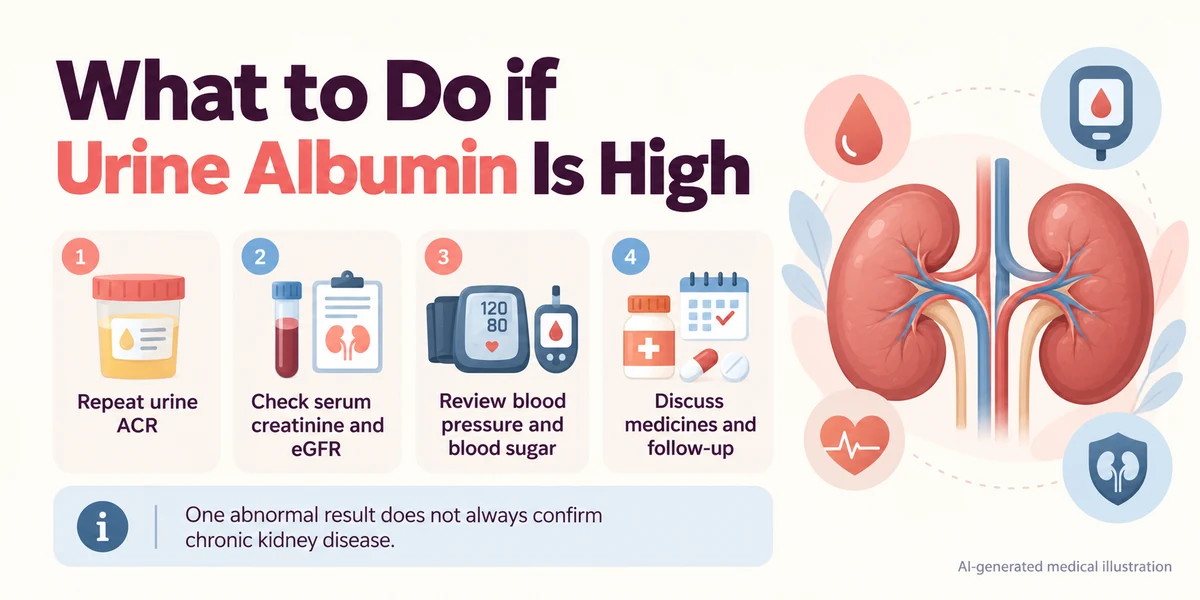
Microalbuminuria in diabetes means that a moderately increased amount of albumin is detected in urine. It may be an early marker of kidney damage, even when serum creatinine and estimated glomerular filtration rate (eGFR) appear relatively normal. The term microalbuminuria is still commonly used, but current medical guidelines generally refer to it as moderately increased albuminuria (A2). A urine albumin-to-creatinine ratio (uACR) between 30 and 299 mg/g falls within this category. However, one abnormal urine test does not automatically confirm diabetic kidney disease. Urine albumin can increase temporarily because of infection, fever, strenuous exercise or other medical factors. Urine ACR, eGFR, repeat testing and clinical evaluation help determine whether albuminuria is persistent and what may be causing it. What Is Microalbuminuria in Diabetes? Albumin is a protein normally found in the bloodstream. Healthy kidneys contain tiny filtering structures called glomeruli. These help remove waste products and excess fluid while retaining most albumin in the blood. When certain kidney conditions affect the filtration barrier, increased amounts of albumin may pass into urine. This is called albuminuria. In people with diabetes, long-term exposure to elevated blood glucose can damage the small blood vessels and filtering structures within the kidneys. However, albuminuria may also develop because of hypertension, glomerular disease or other medical conditions. Is Microalbuminuria Different From Albuminuria? Microalbuminuria is an older term describing a moderately increased amount of albumin in urine. Contemporary classification generally uses: A1: Normal to mildly increased albuminuria. A2: Moderately increased albuminuria. A3: Severely increased albuminuria. The term microalbuminuria does not mean that the albumin molecules are smaller than normal. It refers to the amount detected in urine. Why Is Albuminuria Important in People With Diabetes? Albuminuria is an important marker used when evaluating kidney health and cardiovascular risk. Persistent albuminuria may indicate kidney damage even when overall kidney filtration remains relatively preserved. It is also associated with increased cardiovascular risk. However, albuminuria does not always mean that a person has diabetic kidney disease, and it does not predict the same outcome for everyone. Early abnormalities may remain stable, improve or progress depending on the underlying condition and other health factors. Can Diabetes Damage the Kidneys Without Symptoms? Yes. Early diabetic kidney disease often develops without noticeable symptoms. A person may have: No swelling. Normal-looking urine. No pain. Relatively preserved eGFR. Serum creatinine within the laboratory reference range. Yet urine ACR testing may identify increased albumin. This is why blood and urine investigations are important when assessing kidney health in people with diabetes. Learn more about Diabetic Kidney Disease With Normal Creatinine. What Is a Urine Microalbumin Test? A urine microalbumin test is an investigation used to detect small increases in urinary albumin. The commonly recommended measurement is the urine albumin-to-creatinine ratio (uACR). It measures albumin relative to creatinine in a urine sample. Using the ratio helps account for differences in urine concentration caused by hydration and other factors. Urine ACR is useful for screening and monitoring kidney abnormalities in people with diabetes, hypertension and chronic kidney disease. How Is the Urine ACR Test Performed? Urine ACR testing is usually performed using a single urine sample. 1. Random Spot Urine Sample A sample can be collected at a convenient time. This is commonly used for routine screening. A 24-hour urine collection is not usually necessary for initial urine albumin screening. 2. First-Morning Urine Sample A first-morning specimen may be preferred when confirming an abnormal result. It can help reduce some variation related to physical activity and changes in urine concentration. 3. Laboratory Analysis The laboratory measures urinary albumin and creatinine and calculates their ratio. Results may be reported in mg/g or mg/mmol. The units matter because these two reporting systems use different numerical ranges. Follow the collection instructions provided by the laboratory or healthcare professional. What Is the Normal Range for Urine ACR? Urine ACR is commonly expressed as milligrams of albumin per gram of creatinine (mg/g). Urine ACR (mg/g) Category General interpretation Below 30 A1 Normal to mildly increased 30–299 A2 Moderately increased albuminuria 300 or above A3 Severely increased albuminuria What Does an ACR Below 30 mg/g Mean? An ACR below 30 mg/g falls within the normal to mildly increased albuminuria category. However, a result in this range does not independently rule out kidney disease. Other abnormalities, including reduced eGFR or structural kidney disorders, may still be present. What Does an ACR of 30–299 mg/g Mean? This is classified as moderately increased albuminuria. It may suggest kidney damage when persistent, particularly in people with relevant risk factors such as diabetes or hypertension. However, repeat testing and clinical evaluation are important. What Does an ACR of 300 mg/g or Above Mean? This is classified as severely increased albuminuria. It may be associated with greater kidney and cardiovascular risk, depending on the overall medical condition. Further evaluation may be appropriate to determine the cause and identify associated complications. Important: These categories describe urine albumin levels. They do not independently establish the diagnosis or cause of kidney disease. For a more detailed explanation, read Urine ACR Test Explained. Can a High Urine ACR Result Be Temporary? Yes. A single elevated urine ACR may be influenced by temporary factors. Possible contributors include: Fever or acute illness. Urinary tract infection. Strenuous exercise. Menstruation or specimen contamination. Markedly elevated blood glucose. Markedly elevated blood pressure. Heart failure or other acute medical conditions. These factors can temporarily influence urinary albumin measurements. They should be considered when interpreting a result, but an abnormal finding should not automatically be dismissed. Can Dehydration Affect the Test? Urine concentration can affect urine albumin measurements, particularly when albumin concentration is assessed without creatinine. The albumin-to-creatinine ratio helps reduce this variation. However, significant dehydration may affect kidney function or coincide with acute illness. The result should be interpreted in clinical context. Why Is Repeat Urine ACR Testing Necessary? Urine albumin excretion varies naturally from one measurement to another. A single elevated result may not establish persistent albuminuria. According to ADA guidance, clinicians commonly require at least two abnormal