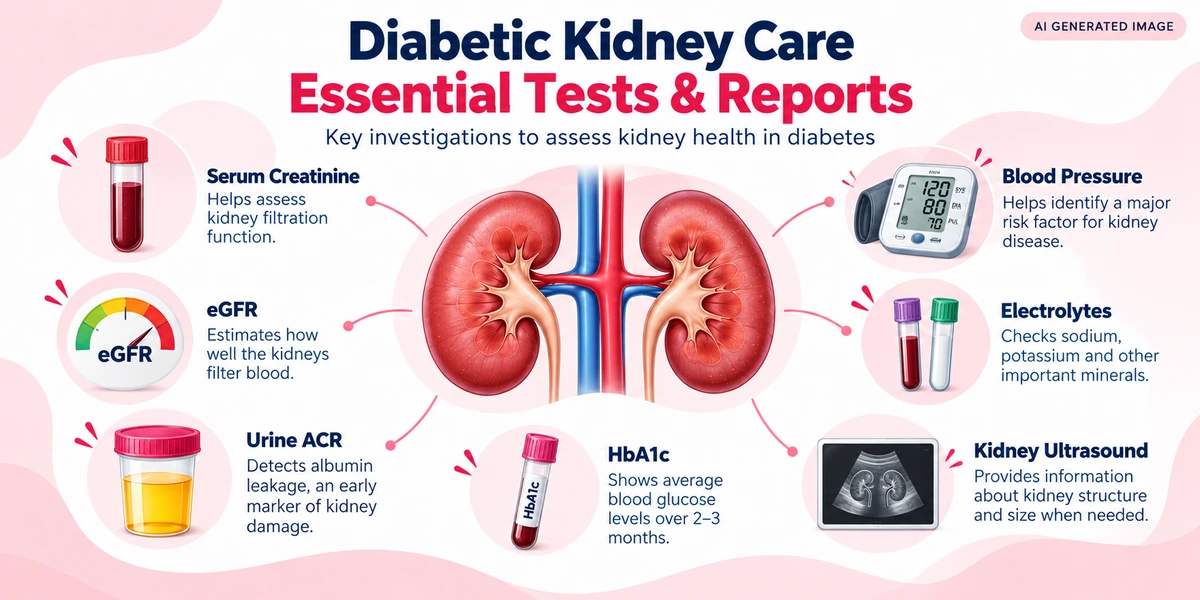
People with diabetes may develop kidney abnormalities even when they have no noticeable symptoms. Blood and urine investigations, particularly serum creatinine, estimated glomerular filtration rate (eGFR) and urine albumin-to-creatinine ratio (ACR), help assess kidney function and identify possible kidney damage. Keeping previous kidney test reports, HbA1c results, blood pressure records and medication details can help healthcare professionals understand changes in kidney health over time. Not everyone needs every investigation before a kidney consultation. Test selection depends on individual medical history, symptoms and clinical findings. What Is Diabetic Kidney Disease? Diabetic kidney disease (DKD) refers to kidney damage associated with diabetes. Over time, persistently elevated blood glucose can affect the small blood vessels and filtering structures inside the kidneys, known as glomeruli. These changes may lead to increased albumin in urine, reduced kidney filtration or both. Diabetic kidney disease is one of the important causes of chronic kidney disease (CKD). However, kidney abnormalities in a person with diabetes are not always caused by diabetes itself. Other kidney conditions, medicines, infections or medical problems may also affect kidney function. Related Reading: Diabetes and Kidney Diseases Why Are Regular Kidney Tests Important in Diabetes? Early diabetic kidney disease often develops without obvious symptoms. A person may feel well while urine tests show increased albumin or blood tests reveal changes in kidney filtration. Regular kidney assessment can help healthcare professionals: Identify albumin leakage into urine. Monitor kidney filtration. Assess changes in kidney function over time. Evaluate complications associated with diabetes and hypertension. Review the suitability and safety of certain medicines. Determine whether further investigations are necessary. Kidney tests help guide medical decisions, but no single result provides a complete picture of kidney health. What Reports Are Important for Diabetic Kidney Care? The following reports may be useful when assessing kidney health in someone with diabetes. 1. Serum Creatinine Serum creatinine is a blood test measuring creatinine, a waste product produced during normal muscle metabolism. The kidneys normally remove creatinine from the bloodstream. Higher-than-expected creatinine may suggest reduced kidney filtration, but results can also be affected by muscle mass, diet, certain medicines and other factors. A single creatinine result does not automatically establish chronic kidney disease. Previous reports may help determine whether creatinine is stable, rising or improving. Related Reading: What Causes High Creatinine? 2. Estimated Glomerular Filtration Rate (eGFR) Estimated glomerular filtration rate helps estimate how well the kidneys filter blood. It is commonly calculated using serum creatinine, age and sex. Some clinical situations may require additional testing, such as cystatin C, to improve estimation accuracy. eGFR values are generally reported in mL/min/1.73 m². A persistently reduced eGFR may indicate chronic kidney disease, but temporary illness, acute kidney injury and other factors can affect the result. Doctors consider eGFR together with urine findings and previous reports. 3. Urine Albumin-to-Creatinine Ratio (ACR) Urine ACR measures the amount of albumin relative to creatinine in a urine sample. Albumin is a protein normally retained mainly in the bloodstream. Increased albumin in urine may indicate damage to the kidneys’ filtering structures. Urine ACR is particularly useful in diabetes because albumin leakage can appear before a significant decrease in kidney filtration. However, not everyone with diabetic kidney disease develops increased albuminuria. Related Reading: Urine ACR Test Explained 4. HbA1c Test HbA1c reflects average blood glucose levels over approximately the previous two to three months. It helps assess longer-term diabetes management. Persistently elevated blood glucose can contribute to kidney damage over time. However, HbA1c may be less reliable in certain circumstances, including advanced chronic kidney disease, anaemia, altered red blood cell turnover and some medical treatments. Doctors may use additional glucose measurements when appropriate. Blood glucose targets should be individualised. 5. Blood Pressure Records Blood pressure monitoring is important because diabetes and hypertension can both contribute to kidney disease. High blood pressure may worsen existing kidney damage, while kidney disease can also make blood pressure more difficult to control. Available home and clinic blood pressure readings can provide useful information. The frequency of home monitoring and appropriate blood pressure targets depend on the individual’s medical condition. 6. Blood Electrolyte Tests The kidneys help regulate electrolytes and maintain fluid and acid-base balance. Blood tests may assess: – Potassium – Sodium – Bicarbonate – Calcium – Phosphate, when indicated Electrolyte abnormalities may occur in kidney disease or as a result of certain medicines. Not every person requires every electrolyte test at each assessment. 7. Lipid Profile A lipid profile measures substances such as LDL cholesterol, HDL cholesterol and triglycerides. People with diabetes and kidney disease may have an increased risk of cardiovascular complications. Lipid testing may form part of broader cardiovascular risk assessment. It is not a direct measure of kidney filtration. 8. Urinalysis A routine urine examination may help detect: – Protein – Blood – Infection-related changes – Glucose – Other urine abnormalities Urinalysis complements, but does not replace, quantitative urine ACR testing when assessing albuminuria. 9. Kidney Ultrasound and Imaging Kidney ultrasound may provide information about kidney structure, size and possible urinary obstruction. It may be considered when there are unexpected kidney abnormalities, suspected structural problems or other clinical indications. A kidney ultrasound is not routinely necessary before every diabetes-related kidney assessment. Quick Comparison of Essential Diabetic Kidney Tests Test What it measures Why it may be useful Serum Creatinine Creatinine concentration in blood Helps assess kidney filtration eGFR Estimated kidney filtering function Helps evaluate and monitor kidney function Urine ACR Albumin relative to creatinine in urine Helps identify albumin leakage HbA1c Average glucose over approximately 2–3 months Helps assess diabetes management Blood Pressure Pressure inside blood vessels Helps identify a major kidney disease risk factor Electrolytes Potassium, sodium and related substances Helps detect metabolic abnormalities Lipid Profile Cholesterol and triglycerides Supports cardiovascular risk assessment Urinalysis Blood, protein and other urine findings Helps investigate urinary abnormalities Important: These investigations provide different information. Their results must be interpreted together with medical history and clinical findings. What Is the Normal Urine ACR Range in Diabetes? Urine ACR results are generally classified