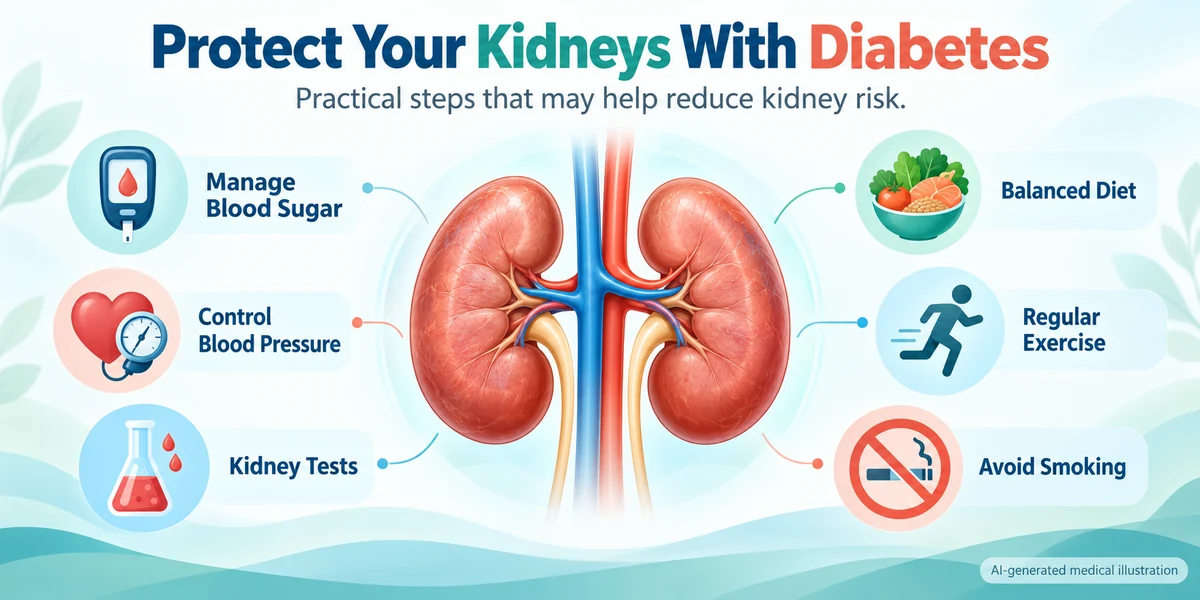
Protecting kidney health with diabetes involves appropriate blood glucose management, blood pressure control, regular kidney tests, a balanced diet, physical activity and safe use of medicines. These measures can reduce the risk of diabetes-related kidney complications, although no strategy guarantees complete prevention. Diabetes can affect the kidneys gradually, often without noticeable symptoms. Kidney damage may sometimes be detected through an increased urine albumin-to-creatinine ratio (uACR) before a substantial reduction in kidney filtration occurs. Regular assessment using urine ACR and estimated glomerular filtration rate (eGFR) is important because normal serum creatinine alone does not always exclude early kidney disease. This article explains practical steps that may help people with diabetes maintain kidney health, recognise potential risks and understand when additional medical evaluation may be appropriate. How Does Diabetes Affect the Kidneys? The kidneys contain microscopic filtering units called nephrons. Within each nephron, tiny blood vessels form a structure called the glomerulus. These structures help remove waste products and excess fluid while retaining proteins and other substances needed by the body. Persistently elevated blood glucose can affect the blood vessels and filtering structures within the kidneys. Over time, some people develop: – Increased albumin leakage into urine. – Changes in kidney filtration. – High blood pressure or difficulty controlling existing hypertension. – Impaired fluid and electrolyte regulation. – Chronic kidney disease. This form of kidney damage is commonly called diabetic kidney disease (DKD). However, not every person with diabetes develops kidney disease, and kidney abnormalities in someone with diabetes may have causes unrelated to diabetes. For related information, read Diabetic Kidney Disease Symptoms. Why Is Kidney Protection Important for People With Diabetes? Early diabetic kidney disease often causes no noticeable symptoms. A person may feel well even when urine albumin levels are elevated or kidney filtration has changed. Kidney disease is also associated with an increased risk of cardiovascular complications. Appropriate diabetes management and kidney monitoring may help: – Reduce the risk of kidney damage developing. – Identify abnormalities before noticeable symptoms appear. – Slow kidney disease progression in eligible patients. – Support blood pressure and cardiovascular risk management. – Guide safer use of medicines. – Identify complications that require medical attention. The degree of benefit varies according to individual clinical circumstances. Who Is at Greater Risk of Diabetic Kidney Disease? Several factors are associated with greater kidney-related risk in people with diabetes: Longer duration of diabetes. Persistently elevated blood glucose. High blood pressure. Cardiovascular disease. Tobacco use. Excess body weight. Family history of kidney disease. Existing albuminuria or reduced eGFR. These factors do not mean kidney disease will definitely develop. Kidney-related risk depends on the overall medical condition and changes in laboratory results over time. 10 Practical Ways to Protect Your Kidneys With Diabetes The following measures may help support kidney health and reduce associated risks. 1. Manage Blood Glucose According to Individual Targets Appropriate blood glucose management is an important part of preventing diabetes-related complications. Persistently elevated blood glucose can contribute to kidney blood vessel injury. HbA1c is a blood test that reflects average blood glucose over approximately the previous two to three months. A suitable HbA1c target depends on factors such as: – Age. – Type and duration of diabetes. – Risk of low blood glucose (hypoglycaemia). – Cardiovascular disease. – Kidney function. – Other medical conditions. – Current treatment. A single HbA1c target is not appropriate for everyone. Some patients benefit from home glucose monitoring or continuous glucose monitoring, depending on their medicines and diabetes-management needs. Important: Diabetes medicines should not be adjusted independently based on one glucose reading. 2. Monitor and Manage Blood Pressure High blood pressure can damage small blood vessels in the kidneys. Diabetes and hypertension together may increase the risk of kidney and cardiovascular complications. Blood pressure assessment is therefore an important part of diabetes care. Management may involve dietary changes, physical activity, weight management and medicines when indicated. The appropriate blood pressure target depends on the individual’s medical condition, treatment tolerance and risks. Home blood pressure monitoring may be useful for some people, but daily measurement is not necessary for every patient. A healthcare professional can advise on an appropriate monitoring schedule. 3. Take Prescribed Medicines Safely Certain medicines may help reduce kidney-related risk or slow the progression of established kidney disease in eligible patients. Examples include: ACE inhibitors and angiotensin receptor blockers (ARBs): These may be appropriate for selected people with diabetes, high blood pressure and albuminuria. SGLT2 inhibitors: These may reduce kidney disease progression and cardiovascular complications in eligible people with type 2 diabetes and chronic kidney disease. GLP-1 receptor agonists: Certain medicines in this class may provide cardiovascular and kidney-related benefits in selected patients. Other medicines may also be appropriate according to the clinical condition. However, not every medicine is suitable for every person with diabetes. Possible risks can include low blood pressure, changes in kidney function, electrolyte disturbances, dehydration or other medicine-specific adverse effects. Kidney function and potassium may require monitoring during certain treatments. ACE inhibitors and ARBs should not automatically be prescribed solely to prevent CKD in people with normal blood pressure, normal urine ACR and normal eGFR. Never start, stop or change prescribed medicines without guidance from a qualified healthcare professional. 4. Reduce Excessive Salt Intake Consuming excessive sodium may contribute to high blood pressure and fluid retention. Reducing excessive dietary salt can be useful for people with diabetes, particularly when hypertension or kidney disease is present. Practical measures include: – Limiting frequently consumed salty packaged foods. – Reducing added salt during cooking. – Checking sodium information on packaged foods. -Using herbs, spices and lemon juice for flavour. – Choosing less processed foods when practical. Some foods, such as pickles, papad, namkeen and packaged snacks, can contain substantial amounts of sodium. However, dietary recommendations must consider individual nutritional needs and medical conditions. People with advanced kidney disease may require additional dietary guidance. 5. Follow a Balanced, Kidney-Appropriate Diet A balanced eating pattern can support diabetes management, blood pressure control and overall health. Depending on individual requirements,