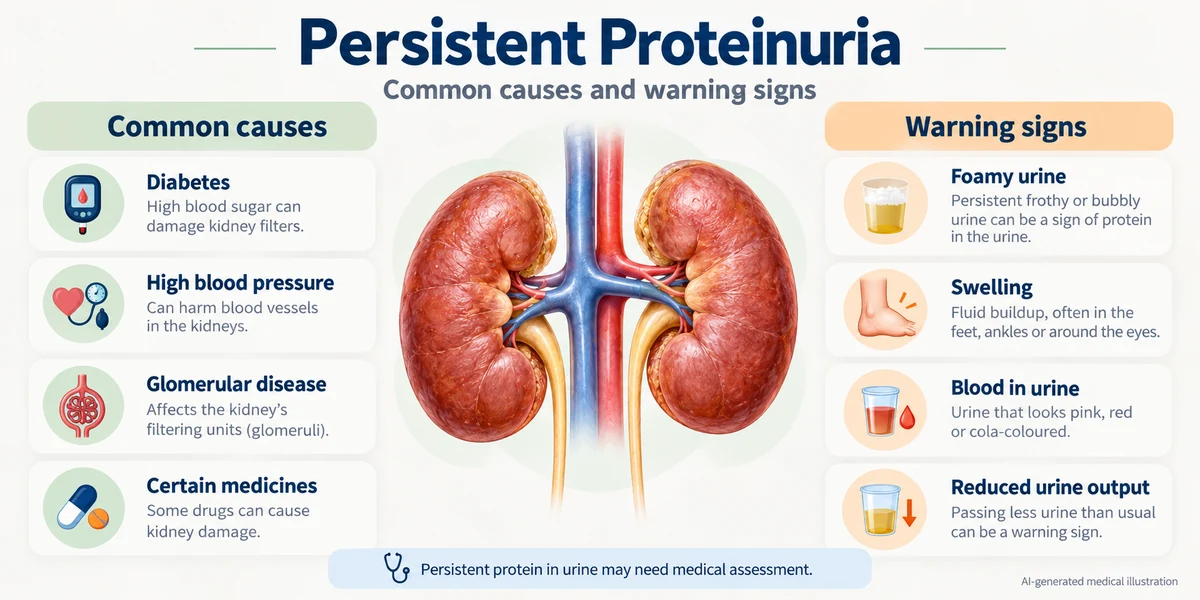
Persistent proteinuria means that increased amounts of protein continue to be detected in urine on repeated testing. It may indicate an underlying kidney disorder, but it does not automatically mean that the kidneys have failed. Protein may appear temporarily in urine during fever, acute illness, strenuous exercise or other physiological changes. When proteinuria remains present, further evaluation helps determine the amount of protein, its possible cause and whether kidney function is affected. Common investigations include urine albumin-to-creatinine ratio (uACR), urine protein-to-creatinine ratio (UPCR), urinalysis, serum creatinine and estimated glomerular filtration rate (eGFR). Depending on clinical findings, additional tests such as kidney ultrasound, immune-related blood investigations or kidney biopsy may be considered. A single abnormal urine test does not establish chronic kidney disease. Repeat results, the duration of abnormalities and the patient’s medical history are important for interpretation. What Is Persistent Proteinuria? Proteinuria refers to the presence of more protein in urine than normally expected. Healthy kidneys contain microscopic filtering structures called glomeruli. These structures help filter waste products and excess fluid from the blood while retaining most essential proteins. The kidney tubules also help reabsorb certain filtered proteins. Proteinuria may develop when: – The glomerular filtration barrier is affected. – Kidney tubules cannot adequately reabsorb filtered proteins. – The body produces increased amounts of certain proteins. – Temporary physiological or medical factors influence urine protein excretion. Persistent proteinuria is identified when abnormal urinary protein excretion remains present on repeat assessment. The clinical significance depends on the amount and type of protein, accompanying findings and underlying medical condition. What Is the Difference Between Temporary and Persistent Proteinuria? Proteinuria may be temporary or ongoing. Feature Temporary proteinuria Persistent proteinuria Duration Resolves after the contributing factor improves Remains present on repeated testing Possible causes Fever, exercise, acute illness or dehydration-related influences Diabetes, hypertension, glomerular disease or other disorders Symptoms Often absent May be absent or accompanied by other findings Testing Repeat urine examination may confirm resolution Quantitative urine tests and further evaluation may be appropriate Management Depends on the temporary cause Depends on the underlying condition and kidney findings An isolated abnormal dipstick is not sufficient to determine which category applies. Does Persistent Proteinuria Always Mean Chronic Kidney Disease? No. Persistent proteinuria may be a marker of kidney damage, but chronic kidney disease (CKD) generally requires an abnormality of kidney structure or function lasting at least three months and having implications for health. The duration of abnormal findings may be established through previous test reports, medical history, repeat investigations or other evidence. A newly detected abnormal result may also represent an acute kidney condition that requires earlier assessment. What Are the Common Causes of Persistent Proteinuria? There are several possible causes. 1. Diabetes Long-term elevated blood glucose can affect the kidneys’ small blood vessels and filtering structures. This may lead to increased urinary albumin excretion, sometimes before eGFR declines substantially. However, not everyone with diabetes develops albuminuria, and an abnormal urine protein result does not automatically mean diabetes is the underlying cause. Read more about Diabetic Kidney Disease Symptoms. 2. High Blood Pressure Persistently elevated blood pressure can damage small blood vessels in the kidneys. Hypertension may contribute to albuminuria and declining kidney function. Kidney disease can also make blood pressure more difficult to manage. 3. Glomerular Diseases Glomerular disorders affect the kidneys’ filtering structures. Examples include: IgA nephropathy. Membranous nephropathy. Focal segmental glomerulosclerosis (FSGS). Minimal change disease. Lupus nephritis. These conditions may cause proteinuria, blood in urine, swelling or reduced kidney filtration. Their diagnosis and treatment depend on the particular disorder. 4. Chronic Kidney Disease Persistent proteinuria can occur in several forms of chronic kidney disease. However, CKD may also develop without increased urinary albumin. eGFR, urine findings and the underlying cause should be evaluated together. 5. Certain Inherited Kidney Disorders Some inherited conditions can cause persistent proteinuria. A relevant family history, hearing abnormalities, kidney structural findings or other clinical features may prompt additional investigation. Genetic testing is considered only in appropriate circumstances. 6. Kidney Tubular Disorders Some diseases affect the kidney tubules rather than primarily damaging the glomeruli. These conditions can produce increased urinary excretion of proteins that are not adequately detected by an albumin-specific test alone. 7. Certain Medicines and Medical Conditions Some medicines, including certain non-steroidal anti-inflammatory drugs (NSAIDs), may contribute to kidney injury. Other inflammatory, infectious or systemic conditions may also be associated with proteinuria. Medication history is therefore an important part of evaluation. Do not stop prescribed medicines independently because proteinuria is detected. A healthcare professional should assess the possible contribution of treatment. Can Protein in Urine Be Temporary? Yes. Temporary proteinuria may occur during: – Fever. – Acute infections or other illnesses. – Strenuous physical exercise. – Significant physiological stress. – Dehydration or concentrated urine. In some younger individuals, orthostatic proteinuria may occur, meaning urinary protein increases during upright activity but is absent or within the expected range after lying down overnight. A first-morning urine sample may help identify this pattern. When an abnormal result is detected, a clinician may recommend repeating the test after relevant temporary factors have resolved. What Are the Symptoms of Persistent Proteinuria? Mild proteinuria frequently causes no noticeable symptoms. Some people with significant protein loss or underlying kidney disease may experience: 1. Foamy or Frothy Urine Persistent foam may sometimes be associated with increased urinary protein. However, rapid urine flow and other non-disease factors can also cause foam. A urine test is required to confirm proteinuria. 2. Swelling Around the Eyes Substantial protein loss may be associated with low blood albumin and fluid accumulation. This can contribute to puffiness around the eyes. 3. Swelling of the Feet or Ankles Fluid retention can occur with certain kidney conditions. However, swelling also has possible cardiac, liver-related, medication-related and other causes. 4. Unexplained Fatigue Fatigue may occur in people with associated kidney dysfunction or other underlying conditions. It is not specific to proteinuria. 5. Blood in Urine Proteinuria may occur together with hematuria, meaning blood in urine. This combination may require evaluation for