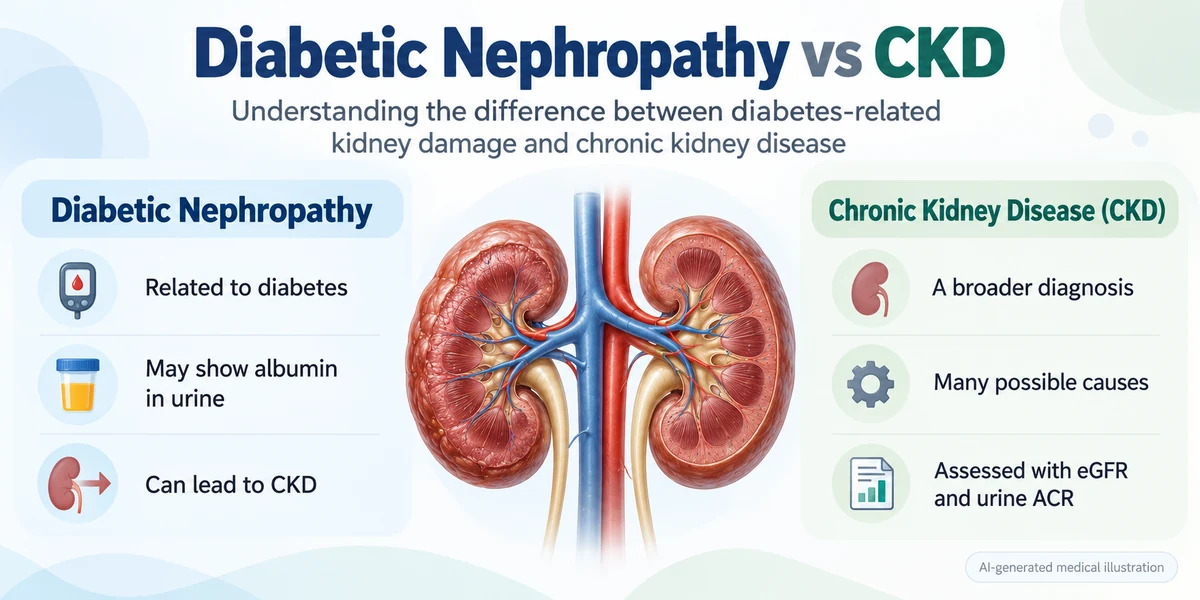
Diabetic nephropathy is kidney damage attributed to diabetes, while chronic kidney disease (CKD) is a broader medical diagnosis describing abnormalities of kidney structure or function that persist for at least three months and have implications for health. Diabetes is one of the possible causes of CKD, but CKD can also result from high blood pressure, glomerular diseases, inherited conditions and other kidney disorders. A person with diabetes may develop CKD because of diabetes, an unrelated kidney disease or a combination of conditions. The distinction is important because the underlying cause, urine findings, kidney filtration and other clinical factors help determine appropriate investigations and treatment. This article explains the differences between diabetic nephropathy and CKD, their symptoms, diagnostic tests, stages, treatment considerations and warning signs. What Is Diabetic Nephropathy? Diabetic nephropathy refers to kidney damage associated with diabetes. The term is often used alongside diabetic kidney disease (DKD), although diabetic nephropathy can also refer more specifically to characteristic structural changes caused by diabetes. The kidneys contain microscopic filtering structures called glomeruli. Over time, elevated blood glucose can affect the small blood vessels and filtering barrier within these structures. Possible changes include: Thickening of the glomerular basement membrane. Changes in the supporting tissue within the glomeruli. Increased albumin leakage into urine. Injury to kidney blood vessels. Progressive reduction in kidney filtration in some individuals. High blood pressure may contribute to further kidney damage. However, diabetic kidney disease does not follow the same pattern in everyone. Some people develop increased urinary albumin before eGFR declines, while others develop reduced eGFR without significant albuminuria. Not every person with diabetes develops diabetic nephropathy. What Is Chronic Kidney Disease (CKD)? Chronic kidney disease is a condition involving abnormalities of kidney structure or function that persist for at least three months and have implications for health. CKD may be present when there is: Persistently reduced eGFR. Persistent albuminuria. Certain abnormalities in urine sediment. Structural kidney abnormalities. Other recognised evidence of chronic kidney damage. An eGFR below 60 mL/min/1.73 m² persisting for at least three months is one criterion for CKD. CKD may also be present with an eGFR of 60 or above when other evidence of persistent kidney damage exists. What Causes Chronic Kidney Disease? Possible causes include: Diabetes. High blood pressure. Glomerulonephritis and other glomerular disorders. Polycystic kidney disease and other inherited conditions. Certain autoimmune disorders. Chronic urinary obstruction. Other vascular, inflammatory or structural kidney conditions. Determining the underlying cause is an important part of kidney disease evaluation. Diabetic Nephropathy vs CKD: Key Differences Although the conditions are closely related, they are not interchangeable. Feature Diabetic nephropathy Chronic kidney disease (CKD) Meaning Kidney damage attributed to diabetes Persistent kidney abnormalities lasting at least three months Underlying cause Diabetes-associated kidney injury Diabetes or various other causes Relationship May be a cause of CKD Includes diabetic and non-diabetic kidney diseases Urine albumin May be increased or normal May be increased or normal eGFR May be preserved or reduced May be preserved when other kidney-damage markers exist, or reduced Symptoms Often absent early Often absent early Diagnosis Based on diabetes history, kidney findings and assessment of other causes Based on persistent kidney structure or function abnormalities Management Diabetes care plus kidney and cardiovascular risk management Depends on underlying cause, kidney function and complications Progression Variable Variable Key point: Diabetic nephropathy can fall within the broader category of CKD, but CKD is not always caused by diabetes. How Can Diabetes Lead to Chronic Kidney Disease? Long-term diabetes may affect kidney blood vessels, glomeruli and other kidney structures. In some people, the earliest detected abnormality is increased urine albumin. Over time, ongoing injury may contribute to reduced kidney filtration. However, this sequence is not inevitable. Some people experience: Persistent albuminuria with preserved eGFR. Reduced eGFR without increased albuminuria. Both increased albuminuria and reduced filtration. Stable kidney function over prolonged periods. Improvement in certain laboratory abnormalities after appropriate treatment. An abnormal test result should be interpreted alongside previous results, diabetes duration, blood pressure and other clinical findings. Can Someone Have CKD Without Diabetes? Yes. Diabetes is not required for a diagnosis of chronic kidney disease. CKD may result from hypertension, inherited kidney conditions, autoimmune disorders, glomerulonephritis or other causes. A person without diabetes may have persistent albuminuria, reduced eGFR or structural kidney abnormalities. The clinical evaluation focuses on identifying the underlying cause and determining the degree of kidney dysfunction. Does Everyone With Diabetes and CKD Have Diabetic Nephropathy? No. Kidney disease in someone with diabetes may have another underlying cause. Examples include: IgA nephropathy. Lupus nephritis. Other glomerular diseases. Urinary obstruction. Certain medication-associated kidney disorders. Inherited kidney conditions. Sometimes more than one cause contributes to kidney dysfunction. What Findings May Suggest Another Kidney Disease? An alternative or additional diagnosis may be considered when there is: Rapidly declining eGFR. Rapidly increasing or substantial proteinuria. Blood in urine with concerning microscopic findings. Active urinary sediment or cellular casts. Sudden changes in kidney function. Nephrotic syndrome. A clinical pattern that does not fit the expected course of diabetic kidney disease. The absence of diabetic retinopathy may also contribute to diagnostic assessment, particularly in certain people with type 1 diabetes, but it does not independently determine the cause. Additional investigations or kidney biopsy may be considered when findings are atypical. What Symptoms Can Occur With Diabetic Nephropathy and CKD? Both conditions may develop without symptoms in the early stages. As kidney dysfunction progresses, possible findings include: 1. Foamy Urine Persistent foamy urine may sometimes be associated with increased urinary protein. However, foam alone does not confirm kidney disease. 2. Swelling of the Feet or Ankles Fluid retention or substantial urinary protein loss may contribute to swelling. Swelling can also result from heart, liver, vascular or other medical conditions. 3. Persistent Fatigue Fatigue may occur with reduced kidney function, anaemia or other associated conditions. It is not specific to CKD. 4. High Blood Pressure Hypertension can contribute to kidney damage, while kidney dysfunction may make blood pressure more difficult to control. 5. Changes in Urination Some