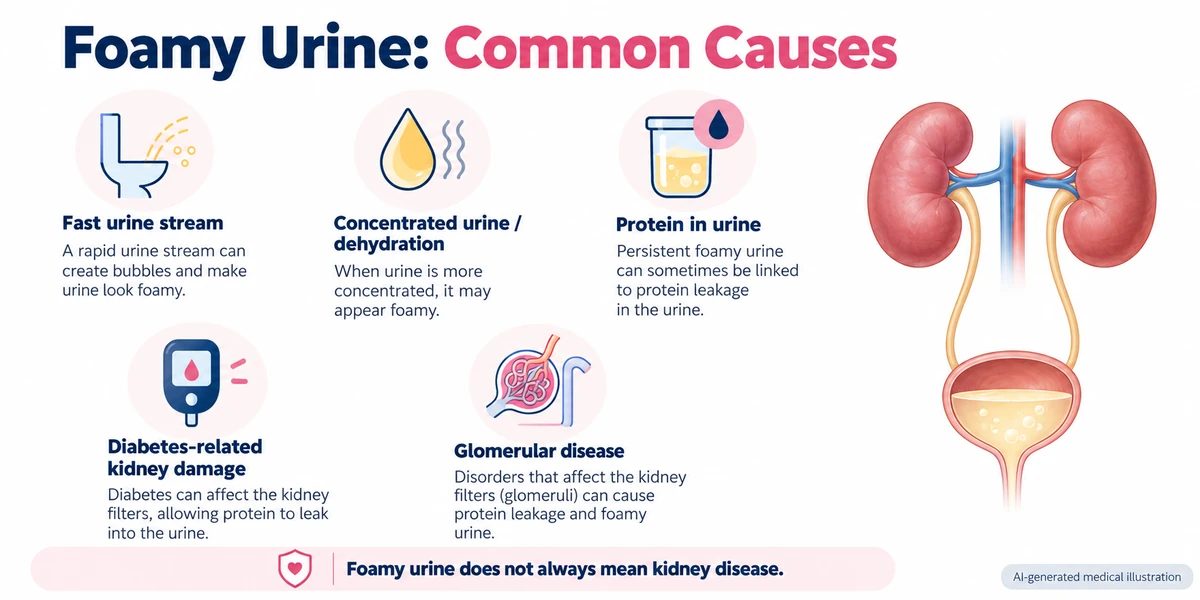
Foamy urine does not always indicate kidney disease. Bubbles can sometimes appear because of forceful urination, concentrated urine or substances in toilet water. However, persistent or repeatedly foamy urine may occasionally be associated with excess protein in urine, known as proteinuria. Proteinuria can be a sign of kidney damage, but urine appearance alone cannot confirm or exclude kidney disease. Urinalysis, urine albumin-to-creatinine ratio (uACR) and blood tests for kidney function can help identify abnormalities. Key Takeaways Occasional bubbles in urine do not necessarily mean kidney disease. Persistent foam may sometimes be associated with proteinuria or albuminuria. Diabetes, hypertension and glomerular diseases can cause protein leakage into urine. Urine ACR and eGFR are important tests for evaluating kidney health. Early chronic kidney disease may have no noticeable symptoms. Persistent foamy urine with swelling, blood in urine or abnormal kidney tests warrants medical evaluation. What Is Foamy Urine? Foamy urine refers to urine that produces visible bubbles or foam after entering the toilet. The appearance may vary depending on: Urine flow: A strong stream may create temporary bubbles. Urine concentration: Concentrated urine may sometimes appear more bubbly. Toilet water: Cleaning agents and other substances may produce foam. Urine composition: Increased urinary protein can sometimes contribute to persistent foam. Foamy urine is a visible finding, not a medical diagnosis. The National Kidney Foundation identifies foamy urine as a possible finding in certain kidney conditions associated with proteinuria. What Are the Common Causes of Foamy Urine? Several factors can affect urine appearance. Some are temporary, while others may require investigation. 1. Forceful Urination A strong urine stream can trap air when urine strikes the toilet water. Possible features include: Bubbles appearing immediately after urination. Foam that disappears relatively quickly. No associated urinary or general symptoms. This can occur without underlying kidney disease. 2. Concentrated Urine or Dehydration Urine may become more concentrated when fluid intake decreases or fluid loss increases. Possible contributing factors include: Inadequate fluid intake. Excessive sweating. Vomiting or diarrhoea. Increased fluid loss during illness. Concentrated urine can sometimes influence its appearance. However, persistent foam should not automatically be attributed to dehydration. 3. Protein in Urine (Proteinuria) Proteinuria occurs when an increased amount of protein passes into urine. Healthy kidney filters normally prevent most blood proteins, including albumin, from entering urine. Damage to these filtering structures may allow proteins to leak into the urine. Important points include: Proteinuria may indicate kidney damage. Significant protein leakage can sometimes produce persistent foam. Proteinuria may occur without visible urine changes. Urine appearance cannot reliably measure protein levels. The NIDDK guide to albuminuria explains why albumin in urine is an important marker of kidney health. Read more about Protein in Urine: Causes and Kidney Health. 4. Diabetes-Related Kidney Damage Long-term diabetes can affect the small blood vessels and filtering structures within the kidneys. As kidney damage develops: Albumin may leak into urine. Kidney function may remain relatively preserved during early disease. Abnormalities may occur without noticeable symptoms. Kidney filtration may decline over time in some people. Not everyone with diabetes develops kidney disease. Regular testing is more reliable than monitoring urine appearance alone. 5. High Blood Pressure Long-standing hypertension can damage kidney blood vessels. Some people develop albuminuria or reduced kidney function as a result of kidney damage associated with high blood pressure. However, hypertension does not necessarily cause foamy urine, and foam alone cannot establish a connection. 6. Glomerular Diseases The glomeruli are tiny filtering structures within the kidneys. Diseases affecting these structures may lead to: Protein in urine. Blood in urine. Swelling. High blood pressure. Changes in kidney function. Examples include minimal change disease, focal segmental glomerulosclerosis and membranous nephropathy. These conditions have different causes, treatments and outcomes. Diagnosis requires appropriate medical investigations. Does Foamy Urine Always Mean Kidney Disease? No. Foamy urine alone does not confirm kidney disease. Occasional bubbles may occur for harmless reasons. However, medical assessment may be appropriate when foamy urine: Occurs repeatedly or persists. Is associated with abnormal urine protein results. Appears alongside swelling. Occurs with visible blood in urine. Is accompanied by reduced urine output. Occurs in someone with diabetes or hypertension. Is associated with abnormal kidney function tests. Early kidney disease may also occur without foamy urine. Therefore, both symptoms and laboratory findings must be considered. What Symptoms May Occur Alongside Foamy Urine? Foamy urine may warrant greater attention when accompanied by other abnormalities. Possible warning signs include: Swelling: Puffiness around the eyes or swelling in the feet and ankles. Blood in urine: Pink, red or brown urine. High blood pressure: Persistent or difficult-to-control hypertension. Urination changes: Unexplained changes in frequency or urine volume. Fatigue: Persistent tiredness or weakness. Fluid retention: Unexplained weight gain associated with swelling. Abnormal kidney tests: Reduced eGFR, elevated creatinine or increased urine albumin. These findings are not specific to kidney disease. Medical assessment is needed to determine their cause. Who May Be at Increased Risk of Kidney Disease? Certain conditions increase the likelihood of kidney abnormalities. These include: Diabetes mellitus. High blood pressure. Cardiovascular disease. Previous kidney injury. Family history of kidney failure. Known glomerular disorders. Certain autoimmune conditions. Persistent albuminuria or proteinuria. People with these risk factors may require kidney screening according to their individual clinical circumstances. How Do Doctors Evaluate Persistent Foamy Urine? Evaluation generally begins with a review of symptoms, medical history, medicines, blood pressure and previous test results. Depending on the findings, a healthcare professional may recommend urine and blood investigations. 1. Urinalysis Urinalysis examines a urine sample for abnormalities. It may help detect: Protein. Blood. Possible signs of urinary tract infection. Other findings requiring investigation. A urine dipstick may detect protein, but additional testing may be necessary to quantify the amount. 2. Urine Albumin-to-Creatinine Ratio (uACR) The urine ACR test compares albumin with creatinine in a urine sample. It is used to: Detect albuminuria. Assess possible kidney damage. Monitor albumin levels over time. Help classify kidney disease risk alongside eGFR. Understanding urine ACR results Urine ACR (mg/g) Interpretation Below 30 Normal to mildly increased 30–299