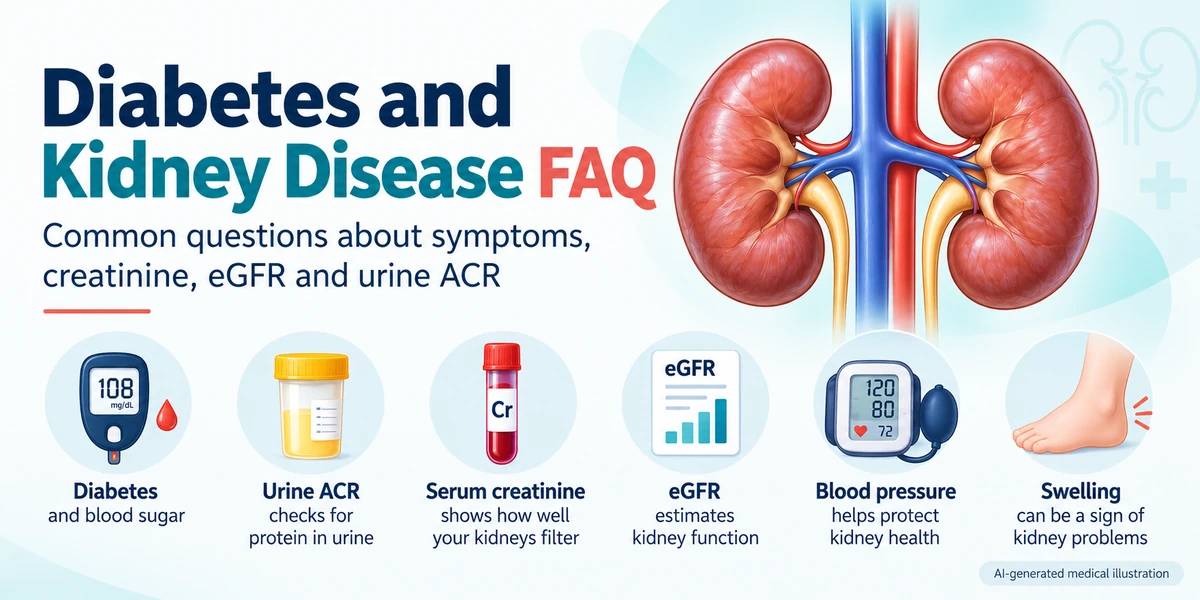
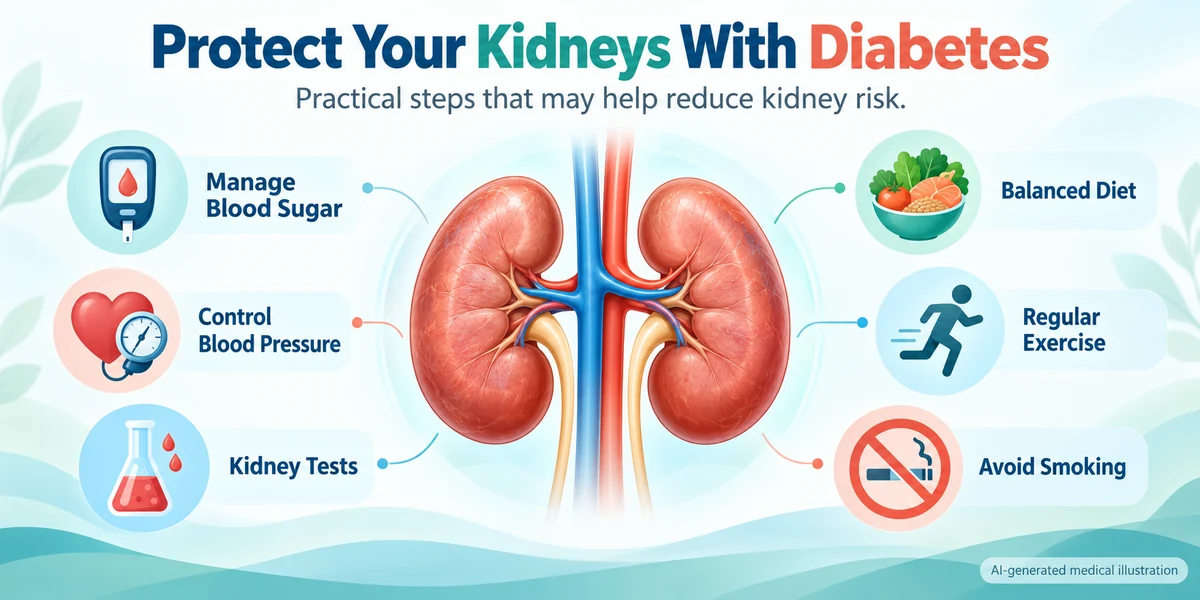
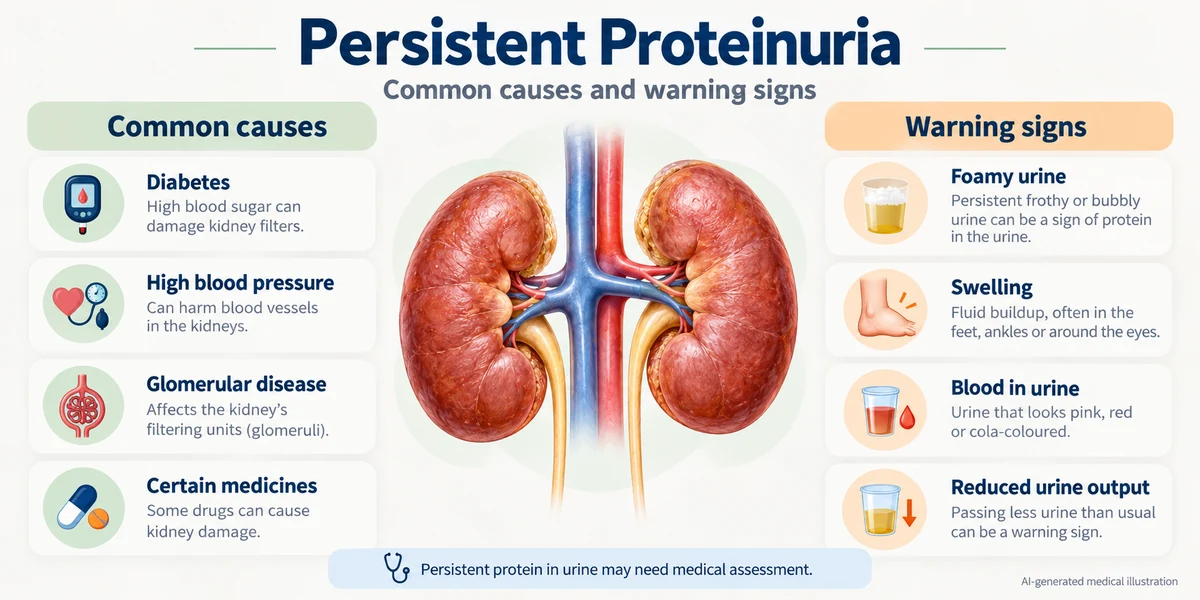
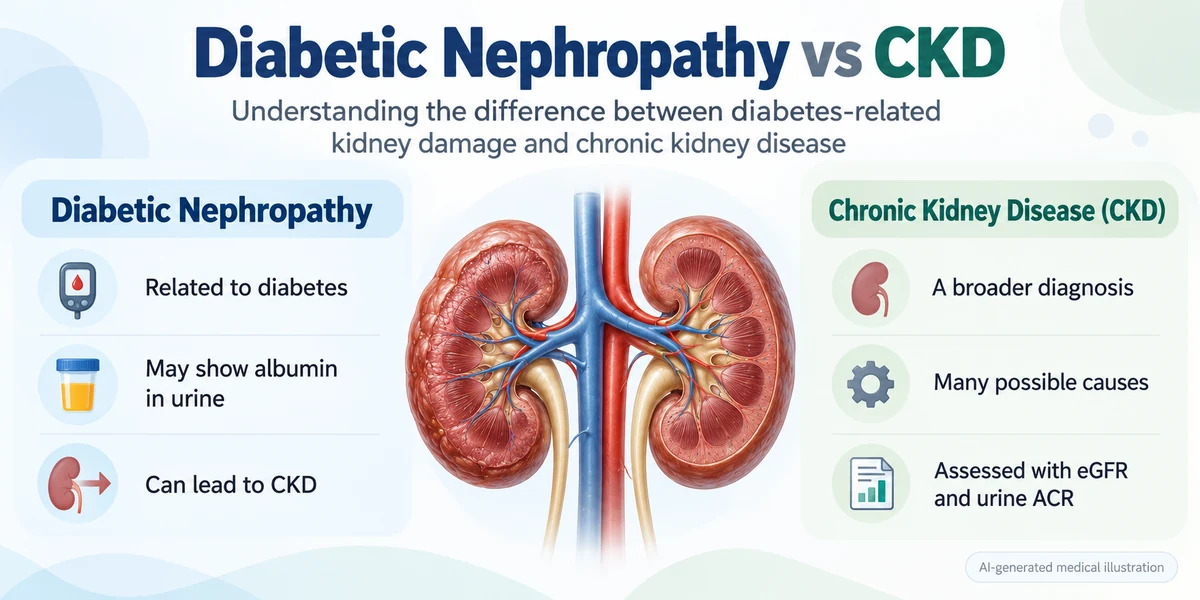
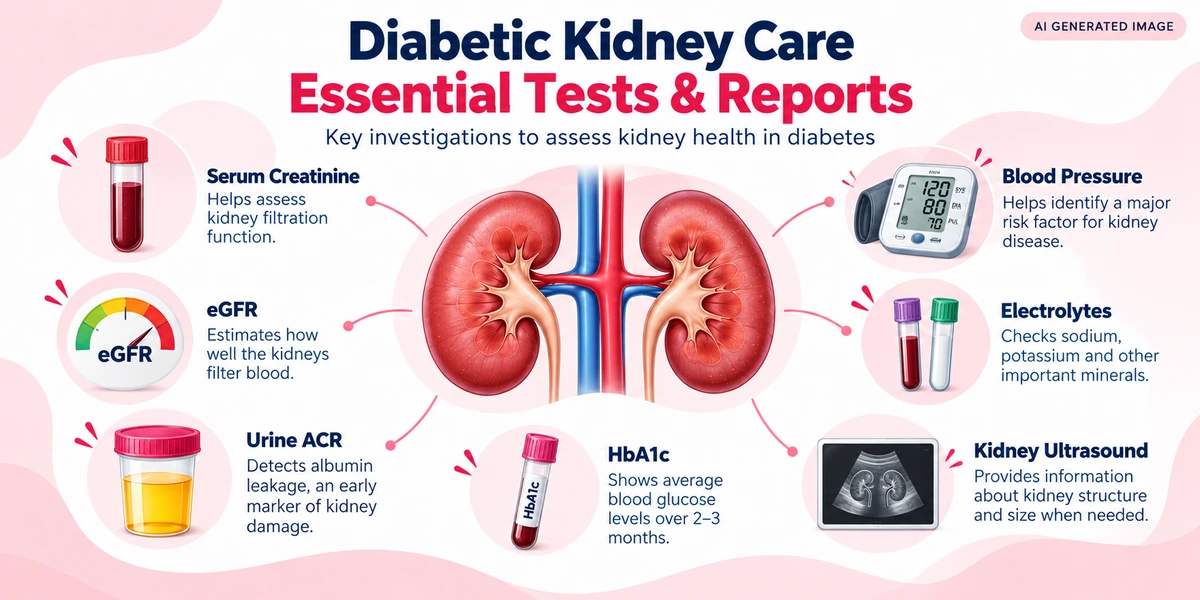
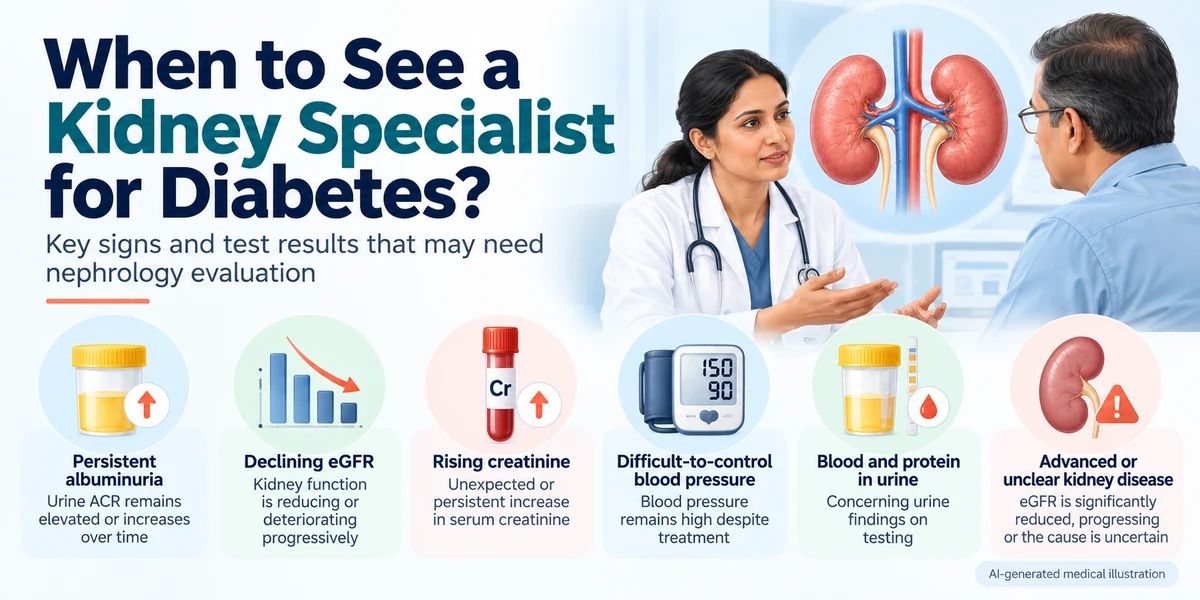
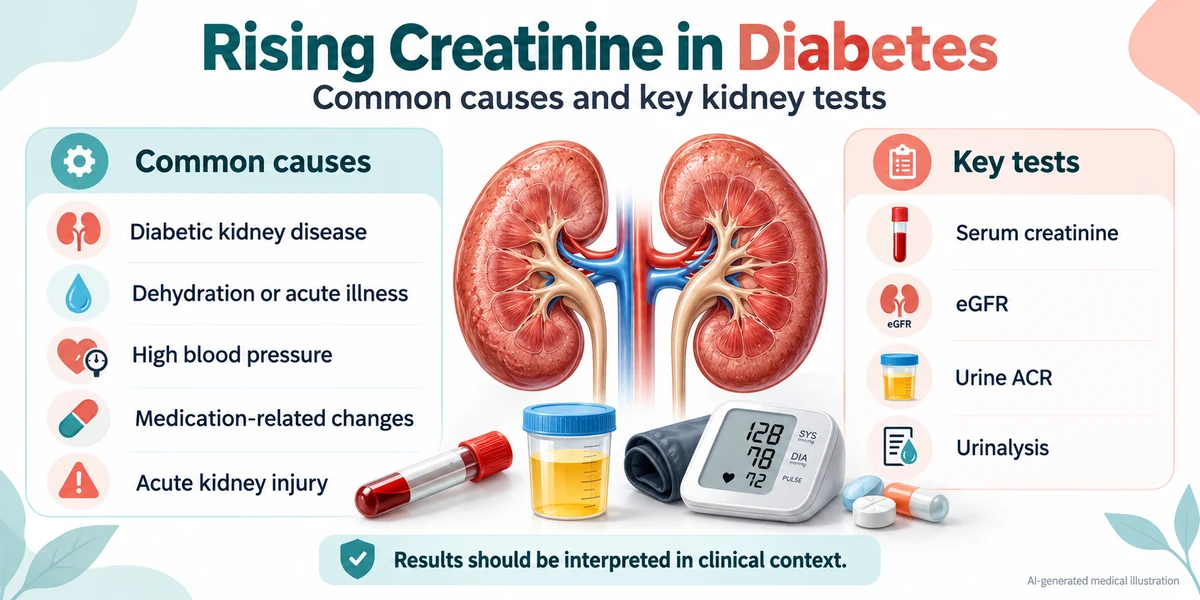
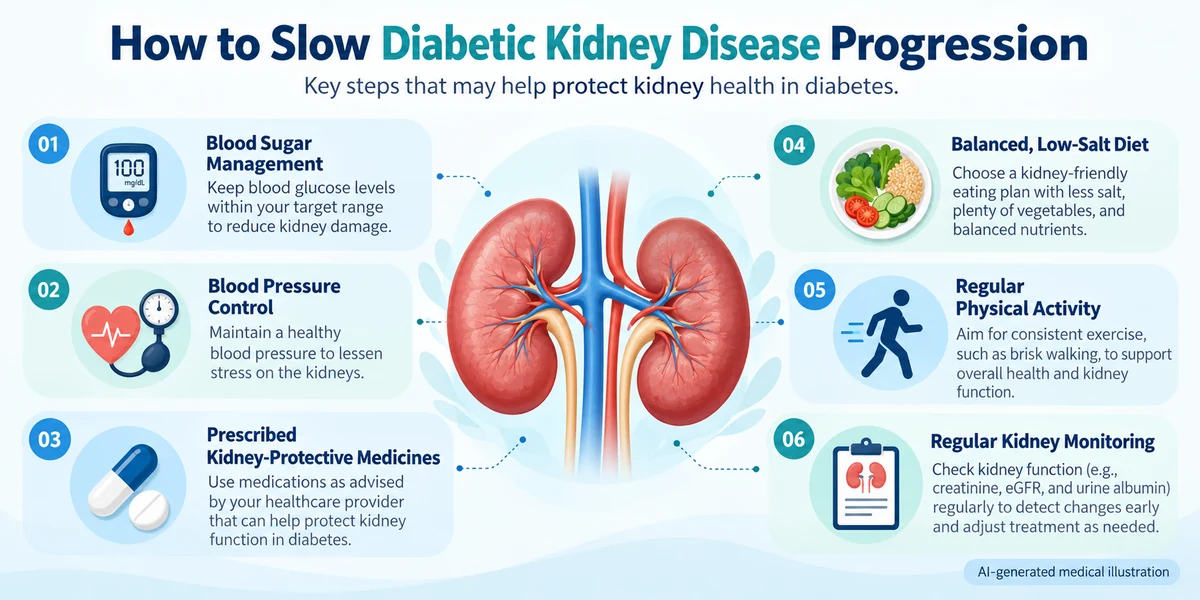
Diabetes can affect kidney health even before symptoms appear. Long-term elevated blood glucose may damage the kidneys’ small blood vessels and filtering structures, resulting in albumin leakage, reduced kidney filtration or both. Two important tests used to assess kidney health in people with diabetes are the urine albumin-to-creatinine ratio (uACR) and estimated glomerular filtration rate (eGFR). A person may have normal serum creatinine but still have evidence of kidney damage. Conversely, some people have reduced kidney filtration without increased urine albumin. This frequently asked questions guide explains how diabetes affects the kidneys, how to interpret common laboratory findings, what symptoms may occur and when further medical assessment may be necessary. Understanding Diabetes and Kidney Health 1. How does diabetes affect the kidneys? Persistently elevated blood glucose can damage the kidneys’ small blood vessels and filtering structures, called glomeruli. Over time, some people develop increased albumin in urine, reduced kidney filtration or other kidney abnormalities. High blood pressure may further contribute to kidney-related damage. However, not everyone with diabetes develops kidney disease, and the extent of damage varies between individuals. 2. What is diabetic kidney disease? Diabetic kidney disease (DKD) refers to kidney damage associated with diabetes. It may involve persistent albuminuria, reduced eGFR or both. The term diabetic nephropathy is also used, particularly when describing characteristic kidney changes associated with diabetes. Not every kidney abnormality in someone with diabetes is necessarily caused by diabetes. Other kidney disorders may require consideration. 3. Can diabetes cause kidney damage without symptoms? Yes. Early diabetic kidney disease frequently causes no noticeable symptoms. A person may feel well while urine ACR is elevated or kidney filtration has started to decline. Regular blood and urine testing can help identify abnormalities before noticeable symptoms develop. 4. Will everyone with diabetes eventually develop kidney failure? No. Diabetes increases the risk of chronic kidney disease, but not everyone with diabetes develops serious kidney problems. The risk depends on factors including blood glucose management, blood pressure, diabetes duration, cardiovascular health and other medical conditions. Appropriate monitoring and treatment may reduce the likelihood of kidney disease progression, but outcomes cannot be guaranteed. Creatinine and Kidney Function Questions 5. What does a serum creatinine test measure? Serum creatinine measures the concentration of creatinine in blood. Creatinine is a waste product formed during normal muscle metabolism. The kidneys remove creatinine from the bloodstream, so its measurement can help assess kidney filtration. However, the result is also influenced by muscle mass, diet, certain medicines and other factors. 6. Can diabetic kidney disease occur with normal creatinine? Yes. Early kidney abnormalities may occur while serum creatinine remains within the laboratory reference range. For example, increased urine albumin may be detected before a substantial decrease in kidney filtration develops. Serum creatinine alone cannot identify every form of kidney damage. Urine ACR and eGFR provide complementary information. Read more about Diabetic Kidney Disease With Normal Creatinine. 7. Does high creatinine always mean kidney failure? No. An elevated creatinine result may indicate reduced kidney filtration, but it does not automatically mean kidney failure. Possible contributing factors include acute kidney injury, chronic kidney disease, dehydration, certain medicines and other medical conditions. Previous measurements, eGFR, urine findings and clinical assessment help determine the significance. 8. What is eGFR? The estimated glomerular filtration rate (eGFR) is an estimate of how well the kidneys filter blood. It is commonly calculated using serum creatinine together with age and sex. eGFR is usually reported in mL/min/1.73 m². It provides a more useful estimate of kidney filtration than interpreting serum creatinine alone in many clinical situations. 9. What is the difference between serum creatinine and eGFR? Serum creatinine is a measured blood concentration. eGFR is a calculated estimate of kidney filtering function, commonly derived from serum creatinine and other relevant factors. A normal laboratory creatinine result does not always mean that eGFR is normal. Both measurements should be interpreted in the context of previous results and clinical findings. 10. Can eGFR be normal when kidney damage is present? Yes. Some people have an eGFR of 90 mL/min/1.73 m² or above while urine testing shows persistent albuminuria. When albuminuria or another marker of kidney damage persists, chronic kidney disease may be present even with relatively preserved filtration. However, one abnormal urine result does not automatically establish CKD. 11. What do the different eGFR categories mean? The commonly used KDIGO GFR categories are: eGFR (mL/min/1.73 m²) Category Description 90 or above G1 Normal or high 60–89 G2 Mildly decreased 45–59 G3a Mildly to moderately decreased 30–44 G3b Moderately to severely decreased 15–29 G4 Severely decreased Below 15 G5 Kidney failure range G1 and G2 alone do not establish chronic kidney disease without other evidence of kidney damage. CKD generally requires abnormalities persisting for at least three months. A single eGFR result should not be interpreted without considering the clinical situation. Urine ACR and Albuminuria Questions 12. What is a urine ACR test? The urine albumin-to-creatinine ratio (uACR) measures albumin relative to creatinine in a urine sample. Albumin is a blood protein that may appear in increased amounts in urine when the kidneys’ filtering structures are affected. Urine ACR helps detect albumin leakage that may not be identified through serum creatinine alone. A single spot urine sample is commonly used. 13. What is the normal urine ACR range? Urine ACR results are classified into three categories: Urine ACR (mg/g) Category Interpretation Below 30 A1 Normal to mildly increased 30–299 A2 Moderately increased albuminuria 300 or above A3 Severely increased albuminuria The older term microalbuminuria generally refers to the A2 category. These categories describe albumin excretion rather than the exact cause of kidney disease. For further information, read Urine ACR Test Explained. 14. What does a high urine ACR mean? A high urine ACR indicates increased albumin in urine. Persistent albuminuria may be a marker of kidney damage and is associated with increased kidney and cardiovascular risk. However, a single elevated result may be temporary. The underlying cause and clinical significance require assessment. 15. Can a high urine