+91 8691888178 / 8850999397 dr.jyotibansode.01@gmail.com Monday to Saturday : 05:00PM TO 06:00PM

Nephrologist vs Urologist: Which Specialist Should You See?

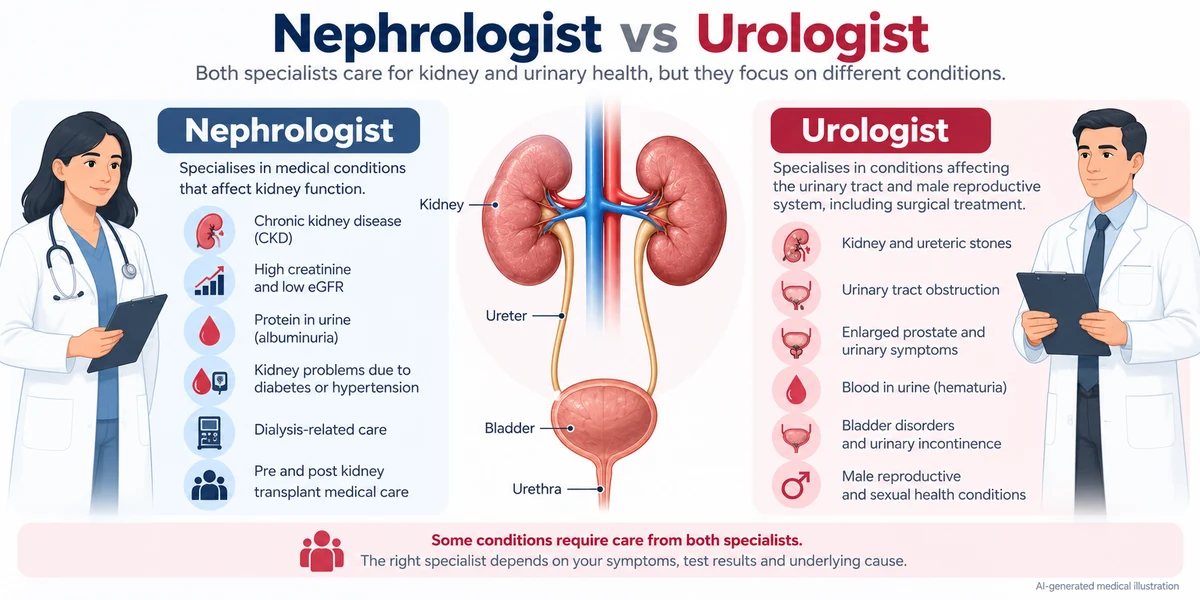
The main difference between a nephrologist and a urologist is the type of conditions they diagnose and manage. A nephrologist specialises in the medical evaluation and treatment of kidney diseases, while a urologist focuses on conditions affecting the urinary tract and male reproductive system, including those that may require surgery. Both specialists may evaluate kidney-related concerns, but their roles are different and sometimes overlap. For example, a person with persistent high creatinine or protein in urine may require nephrology evaluation. Someone with an obstructing kidney stone, urinary retention or a prostate problem may require urological assessment. Understanding these differences can help patients recognise when specialist evaluation may be appropriate. What Is a Nephrologist? A nephrologist is a medical doctor who specialises in diagnosing and managing diseases that affect kidney function. The kidneys remove waste products and excess fluid from the bloodstream. They also help regulate electrolytes, blood pressure, acid–base balance and processes involved in red blood cell production and bone health. Nephrologists evaluate conditions that interfere with these functions. Their work generally focuses on medical treatment, monitoring and the management of kidney-related complications rather than urinary tract surgery. What Conditions Does a Nephrologist Treat? Nephrologists commonly evaluate and manage: Chronic kidney disease (CKD): Long-term abnormalities of kidney structure or function. Acute kidney injury (AKI): A sudden decline in kidney function. Diabetic kidney disease: Kidney damage associated with diabetes. Hypertension-related kidney disease: Kidney problems associated with high blood pressure. Proteinuria and albuminuria: Abnormal protein or albumin in urine. Glomerular diseases: Disorders affecting the kidneys’ filtering structures. Fluid and electrolyte abnormalities: Conditions involving potassium, sodium, fluid balance or acid–base regulation. Dialysis-related conditions: Assessment and ongoing medical management of patients requiring dialysis. Kidney transplant-related care: Medical evaluation and follow-up before and after transplantation. A nephrologist may also evaluate unexplained changes in kidney function or persistent abnormalities in blood and urine test results. What Is a Urologist? A urologist is a medical specialist who diagnoses and treats conditions affecting the urinary tract in people of all sexes and the male reproductive system. The urinary tract includes the kidneys, ureters, bladder and urethra. Urology includes both medical and surgical treatments. Although many urological conditions can be managed without surgery, urologists have specialised training in procedures involving the urinary tract. What Conditions Does a Urologist Treat? Urologists commonly evaluate and manage: Kidney and ureteric stones: Particularly stones causing obstruction, pain or other complications. Urinary tract obstruction: Blockages affecting normal urine drainage. Enlarged prostate: Prostate enlargement that may cause urinary symptoms or retention. Bladder disorders: Conditions affecting urine storage and emptying. Urinary incontinence: Difficulty controlling urination. Recurrent urinary tract infections: Particularly when anatomical or functional abnormalities are suspected. Blood in urine: Evaluation for possible structural, inflammatory or other urinary tract conditions. Urinary tract tumours: Conditions affecting the kidneys, bladder or other urinary organs. Male reproductive and sexual health disorders: Selected conditions involving the prostate, testes and reproductive system. The appropriate treatment depends on the diagnosis, disease severity and individual clinical findings. Nephrologist vs Urologist: Key Differences The following table explains how the two medical specialties differ. Feature Nephrologist Urologist Primary focus Medical conditions affecting kidney function Diseases of the urinary tract and male reproductive system Type of care Mainly medical diagnosis, treatment and monitoring Medical, procedural and surgical management Chronic kidney disease Common area of care May be involved when structural or surgical problems contribute High creatinine Evaluates possible kidney dysfunction May be involved if an obstruction or other urological cause is suspected Kidney stones May assess kidney function and stone prevention May treat stones requiring procedures or surgery Protein in urine Evaluates possible kidney filtering disorders May participate when another urinary tract problem is suspected Dialysis Medical management and monitoring May assist with selected surgical or access-related procedures Kidney transplantation Medical evaluation and transplant follow-up Transplant surgery is performed by appropriately trained transplant surgeons, who may have urological training Important: These are common areas of practice, not exclusive boundaries. The appropriate specialist depends on the patient’s clinical findings, and collaborative care may be needed. When Should You See a Nephrologist? A nephrology evaluation may be appropriate when symptoms, medical conditions or laboratory findings suggest impaired kidney function. 1. Persistently High Creatinine Creatinine is a waste product that the kidneys normally remove from the bloodstream. An elevated result may indicate reduced kidney filtration, but it can also be influenced by dehydration, medicines, muscle mass and other factors. A nephrologist may assess serum creatinine alongside eGFR, urine tests, previous results and medical history to investigate its significance. For additional information, read What Causes High Creatinine. 2. Reduced eGFR Estimated glomerular filtration rate (eGFR) helps assess how effectively the kidneys filter blood. A persistently reduced eGFR may indicate chronic kidney disease. However, a single abnormal result does not necessarily establish a chronic diagnosis. A nephrologist may evaluate the cause, changes over time and associated complications. 3. Protein or Albumin in Urine Albuminuria or proteinuria may indicate damage to the kidney’s filtering structures. Evaluation may include urine albumin-to-creatinine ratio (ACR), urine protein measurements, kidney function tests and other investigations. Foamy urine may sometimes accompany proteinuria, but foam alone does not confirm kidney disease. 4. Kidney Problems Associated With Diabetes Diabetes can damage the small filtering structures in the kidneys. Early diabetic kidney disease may develop without noticeable symptoms. Nephrology assessment may be considered when urine albumin is persistently elevated, kidney function declines or the clinical condition becomes more complex. 5. Difficult-to-Control Blood Pressure With Kidney Abnormalities Persistent hypertension can contribute to kidney damage, while impaired kidney function can make blood pressure harder to manage. A nephrologist may help evaluate kidney involvement and associated electrolyte or fluid abnormalities. 6. Advanced Chronic Kidney Disease People with advanced kidney disease may require evaluation of anaemia, mineral and bone disorders, electrolyte abnormalities and the potential need for kidney replacement treatment. Nephrologists also help patients understand dialysis, transplantation and conservative kidney management. When Should You See a Urologist? Urological evaluation may be appropriate when symptoms or investigations suggest a disorder affecting urine drainage, bladder
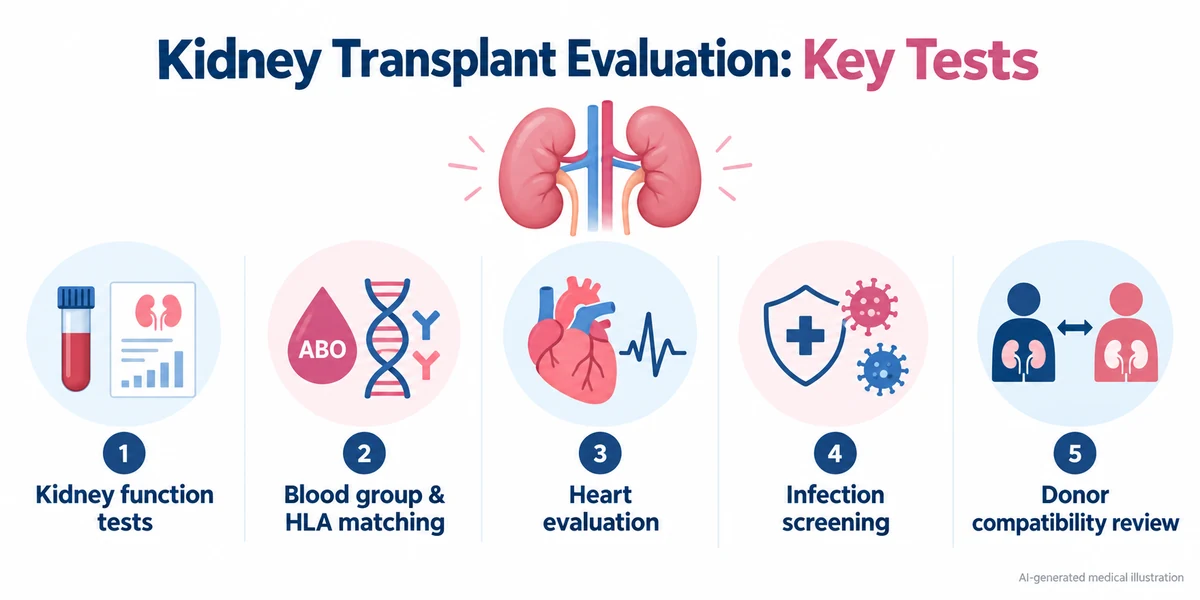
Kidney Transplant Evaluation: When Should Preparation Begin?

Kidney transplant evaluation is a detailed medical assessment used to determine whether a kidney transplant is an appropriate treatment for a person with advanced chronic kidney disease or kidney failure. The process involves reviewing kidney function, heart health, infections, donor compatibility and the person’s ability to manage long-term treatment. Evaluation may begin before dialysis becomes necessary. Early discussion with a kidney specialist can provide time for medical investigations, donor assessment and treatment planning. However, not everyone with advanced kidney disease is suitable for transplantation. The benefits, surgical risks and lifelong treatment requirements must be considered individually. Key Takeaways Kidney transplantation is a treatment for kidney failure, not a permanent cure. – Evaluation may begin before dialysis is required. – Eligibility depends on overall health, not eGFR alone. – Blood tests, heart assessments, infection screening and other investigations may be needed. – Living and deceased donor transplantation involve different preparation pathways. – Donor compatibility and donor safety require separate assessment. – Immunosuppressive medicines and regular follow-up are essential after transplantation. – Evaluation does not guarantee approval, a donor match or successful transplantation. What Is a Kidney Transplant? A kidney transplant is a surgical procedure in which a healthy kidney from a living or deceased donor is placed into a person whose kidneys can no longer function adequately. The transplanted kidney helps filter waste products and excess fluid from the bloodstream. In most cases, the person’s original kidneys are left in place unless there is a specific medical reason to remove them. The transplanted kidney is usually positioned in the lower abdomen, where its blood vessels and ureter are connected. Kidney transplantation may provide better long-term outcomes than remaining on dialysis for many suitable patients, but it involves significant risks and lifelong medical care. According to the National Institute of Diabetes and Digestive and Kidney Diseases (NIDDK), transplantation is a treatment for kidney failure rather than a cure. What Is Kidney Transplant Evaluation? Kidney transplant evaluation is a series of medical, surgical and psychosocial assessments performed by a transplant team. The evaluation helps determine: – Whether the person is medically suitable for major surgery. Whether transplantation is likely to offer meaningful benefit. Whether additional health conditions require treatment. Whether a living or deceased donor pathway may be appropriate. Whether donor compatibility testing is required. Whether the person understands the need for lifelong medicines and follow-up. The process may involve several visits over weeks or months. Additional investigations may be required depending on individual findings. When Should Kidney Transplant Evaluation Begin? Transplantation can be discussed when chronic kidney disease becomes advanced or is expected to progress toward kidney failure. Evaluation may be considered before dialysis starts, especially when kidney function is declining and transplantation could be a suitable future treatment. A common approach is to discuss transplant referral during advanced CKD, often around stage 4, but the appropriate timing depends on the rate of kidney function decline and the person’s overall condition. An eGFR value alone should not determine when evaluation begins. Factors influencing timing include: Current eGFR and its rate of decline. Symptoms and complications of kidney disease. Underlying cause of kidney failure. Cardiovascular health. Other medical conditions. Availability of a potential living donor. Expected time needed to complete evaluation. People already receiving dialysis may also undergo transplant assessment. For related information, read about Acute & Chronic Kidney Diseases. Who May Be Considered for a Kidney Transplant? People with advanced irreversible kidney disease or kidney failure may be considered for transplantation when the expected benefits outweigh the risks. Possible candidates include: People with advanced chronic kidney disease approaching kidney failure. People receiving haemodialysis or peritoneal dialysis. Selected patients who may undergo transplantation before dialysis begins. People with kidney failure caused by diabetes, hypertension or certain other kidney conditions. Patients with suitable medical and surgical risk profiles. Age alone does not necessarily determine eligibility. Frailty, other health problems and functional status may be more important. What Conditions May Affect Transplant Eligibility? A transplant may be delayed or considered unsuitable when certain conditions significantly increase surgical or long-term treatment risks. Examples include: Active serious infection. Certain active cancers. Severe cardiovascular disease that cannot be adequately managed. Major uncontrolled medical conditions. Significant untreated health problems that affect procedural safety. Circumstances that make essential post-transplant care difficult to maintain. Some conditions are temporary barriers rather than permanent exclusions. For example, a person with an active infection may become suitable after successful treatment. Eligibility is determined by the transplant team following individual assessment. What Tests Are Required During Kidney Transplant Evaluation? The exact tests depend on age, medical history, previous investigations and transplant centre protocols. 1. Kidney Function and General Blood Tests Laboratory investigations may include: Serum creatinine and eGFR. Electrolytes, including potassium. Complete blood count. Liver function tests. Blood glucose and HbA1c when indicated. Albumin and nutritional assessments. Blood-clotting tests when necessary. These investigations help assess kidney failure, associated complications and general medical fitness. 2. Blood Group and Tissue Matching Compatibility testing helps determine whether a donor kidney is suitable for the recipient. Important tests may include: ABO blood group: Helps assess blood group compatibility. Human leukocyte antigen (HLA) typing: Evaluates tissue-matching characteristics. HLA antibody testing: Identifies antibodies that may react against donor tissue. Crossmatch testing: Assesses whether recipient antibodies react against a particular donor. A suitable match does not eliminate the possibility of rejection. In certain circumstances, specialised transplant programmes may consider transplantation between otherwise incompatible donor-recipient pairs, but this requires additional assessment and risk management. 3. Cardiovascular Evaluation Kidney transplant surgery places demands on the heart and circulatory system. Depending on clinical risk, investigations may include: Electrocardiogram (ECG). Echocardiogram. Assessment for coronary artery disease. Cardiac stress testing when indicated. Additional cardiovascular investigations when required. Not every patient needs the same cardiac tests. 4. Infection Screening Transplant recipients require immunosuppressive treatment, which increases susceptibility to certain infections. Screening may include: Hepatitis B. Hepatitis C. HIV. Tuberculosis. Cytomegalovirus (CMV). Other infections based on medical history and clinical risk. An infection-related finding does not automatically exclude

Kidney Biopsy Preparation & Recovery: What to Expect

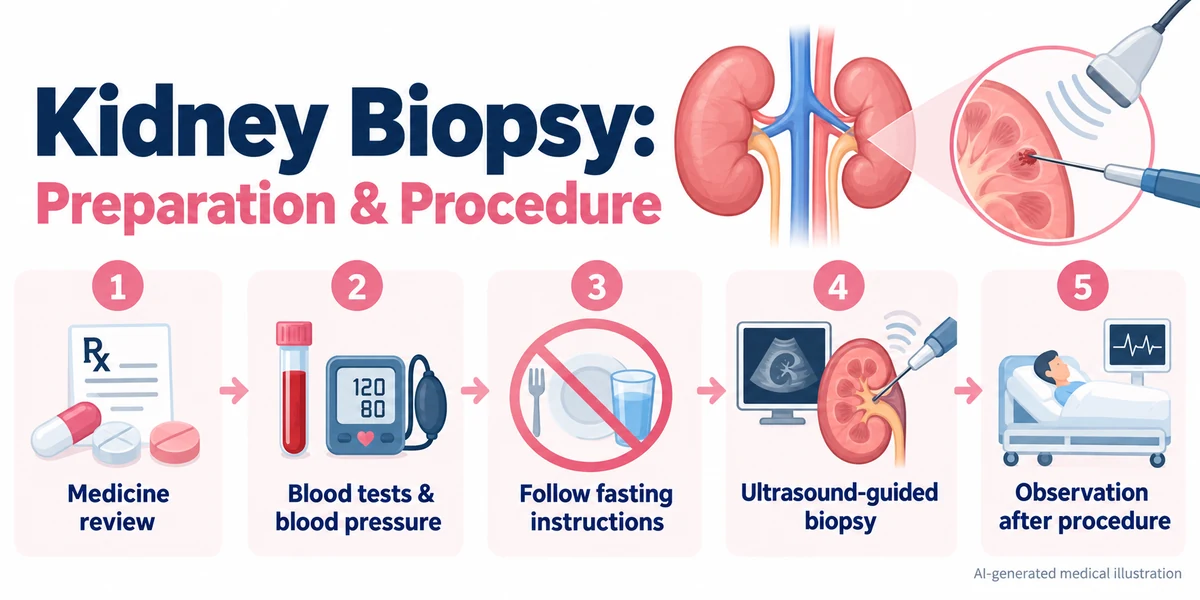
A kidney biopsy is a medical procedure in which a small tissue sample is collected from the kidney for examination under a microscope. It may help identify the cause of unexplained kidney abnormalities, assess certain types of kidney disease or evaluate a transplanted kidney when clinically indicated. Most native kidney biopsies are performed using a needle guided by ultrasound imaging. Preparation includes reviewing medicines, checking blood pressure and bleeding risk, and following instructions about eating, drinking and recovery. Although kidney biopsy can provide valuable diagnostic information, it involves risks, particularly bleeding. The decision to perform a biopsy depends on the individual’s medical condition, expected diagnostic benefit and possible complications. What Is a Kidney Biopsy? A kidney biopsy, also called a renal biopsy, involves obtaining one or more small samples of kidney tissue. The tissue is examined by a pathologist using specialised techniques to look for changes such as: – Inflammation: Signs of inflammatory activity within kidney tissue. – Scarring: Areas of long-term kidney damage. – Glomerular abnormalities: Changes affecting the kidney’s filtering units. – Tubulointerstitial abnormalities: Changes involving kidney tubules and surrounding tissue. – Blood vessel changes: Findings involving the small vessels within the kidney. – Transplant-related abnormalities: Changes that may affect the function of a transplanted kidney. These findings can sometimes clarify a diagnosis when blood tests, urine tests and imaging do not provide sufficient information. According to the National Institute of Diabetes and Digestive and Kidney Diseases (NIDDK), kidney biopsies may help diagnose kidney conditions and guide clinical decisions. Why Might a Kidney Biopsy Be Recommended? A kidney biopsy is not necessary for every person with kidney disease. Doctors may consider it when the result is likely to provide information that could influence diagnosis, prognosis or treatment. 1. Unexplained Protein in Urine Persistent or significant proteinuria may indicate damage to the kidney’s filtering structures. A biopsy may be considered when the pattern or amount of protein leakage raises concern for a specific kidney disorder. 2. Blood in Urine With Other Abnormal Findings Blood in urine, particularly when accompanied by proteinuria or declining kidney function, may indicate a glomerular condition. However, not every person with blood in urine requires a kidney biopsy. 3. Unexplained Decline in Kidney Function Rapid or otherwise unexplained deterioration in kidney function may require further assessment. A biopsy may help distinguish certain inflammatory, immune-related or other kidney diseases. 4. Suspected Glomerular or Autoimmune Disease A biopsy may be used to investigate conditions such as: – IgA nephropathy. – Lupus nephritis. – Membranous nephropathy. – Certain forms of glomerulonephritis. – Other conditions affecting kidney tissue. The need for a biopsy varies according to the suspected diagnosis and available test results. 5. Evaluation of a Transplanted Kidney A biopsy may sometimes be recommended when a transplanted kidney is not functioning as expected. It can help investigate possible rejection, medication-related injury or other causes of graft dysfunction. Important: Kidney masses are generally evaluated through a separate diagnostic pathway. Biopsy of a kidney mass differs from a routine biopsy performed to investigate medical kidney disease. Is a Kidney Biopsy Always Necessary? No. Many kidney conditions can be evaluated using blood tests, urine tests, ultrasound and medical history without collecting kidney tissue. Before recommending a biopsy, doctors may consider: – Whether the likely diagnosis is already sufficiently clear. – Whether biopsy findings could change treatment. – How much protein or blood is present in urine. – The severity and pattern of kidney function changes. – Bleeding risk and other medical conditions. – Whether a safer or more suitable alternative investigation is available. The benefits and risks should be discussed before proceeding. For related information, read about Acute & Chronic Kidney Diseases. How Should You Prepare for a Kidney Biopsy? Preparation focuses on reducing avoidable risks and ensuring the procedure is appropriate. Your healthcare team will provide instructions based on your medicines, medical conditions and planned biopsy technique. 1. Review Your Medicines Tell your healthcare team about all medicines and supplements you take. These may include: – Blood-thinning medicines such as warfarin or apixaban. – Antiplatelet medicines such as aspirin or clopidogrel. – Painkillers such as ibuprofen or naproxen. – Diabetes medicines, including insulin. – Herbal products and dietary supplements. Some medicines may need to be temporarily adjusted before or after the biopsy. Do not stop aspirin, anticoagulants or any prescribed medicine without explicit instructions from the treating healthcare professional. Stopping certain medicines can increase the risk of stroke, blood clots or other complications. 2. Complete Recommended Blood and Urine Tests Before a biopsy, doctors may recommend investigations such as: – Complete blood count. – Haemoglobin level. – Platelet count. – Blood-clotting tests. – Serum creatinine and kidney function tests. – Urinalysis when indicated. – Other investigations according to clinical findings. These tests help assess bleeding risk, kidney function and possible conditions that may affect the procedure. 3. Check Blood Pressure Blood pressure is assessed before a kidney biopsy because uncontrolled hypertension may increase bleeding risk. If blood pressure is not adequately controlled, the procedure may need to be delayed until it can be performed more safely. 4. Follow Fasting Instructions Fasting requirements depend on whether sedation or anaesthesia is planned and on local procedural protocols. Some patients may be asked not to eat or drink for a specified period. Follow the exact instructions provided by your healthcare team rather than fasting independently for a fixed number of hours. 5. Inform the Team About Other Medical Conditions Before the procedure, tell the team about: – Previous unusual bleeding. – Known blood-clotting disorders. – Medicine or anaesthetic allergies. – Recent infections or fever. – Pregnancy or possible pregnancy. – Previous kidney procedures. – Other important health conditions. 6. Arrange Transportation and Support Arrange for someone to accompany you or take you home if instructed. Driving restrictions depend on the procedure, sedation and hospital discharge policy. Having a responsible adult available during early recovery may be recommended. What Happens During a Kidney Biopsy? Most biopsies performed for medical kidney disease use a percutaneous technique, meaning that the tissue sample is collected through the skin using a needle. Step 1: Patient Positioning For a native kidney biopsy, the person usually lies on their stomach or in another position selected

When Is Dialysis Needed? Symptoms, eGFR & Clinical Factors

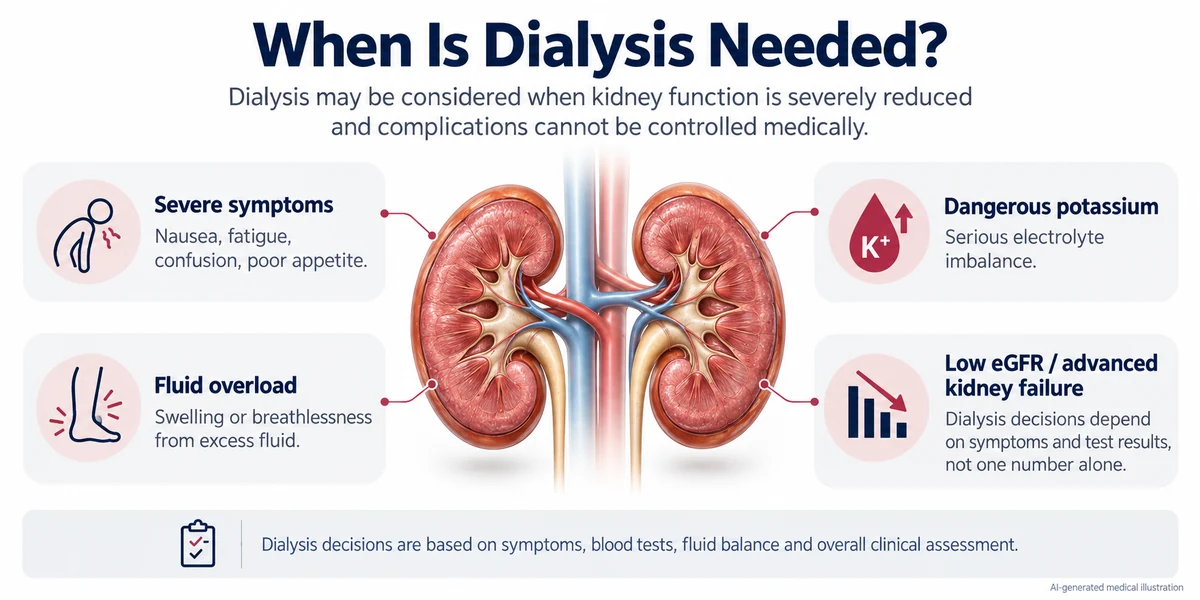
Dialysis may be needed when the kidneys can no longer adequately remove waste products, control excess fluid or maintain the body’s electrolyte and acid–base balance. It is considered in advanced chronic kidney disease and, in some situations, during acute kidney injury. The decision to start dialysis is not based on a single creatinine or eGFR value. Doctors assess symptoms, laboratory results, fluid balance, nutritional status and the patient’s overall medical condition. According to KDIGO guidance, dialysis initiation often occurs when eGFR is approximately 5–10 mL/min/1.73 m² in advanced chronic kidney disease, but this is not a fixed threshold. Some patients require dialysis earlier because of serious complications, while others can continue monitoring without dialysis for a period of time. What Is Dialysis? Dialysis is a medical treatment that helps remove waste products and excess fluid from the blood when kidney function is insufficient. Healthy kidneys help: – Filter waste products from the bloodstream. – Regulate body fluid balance. – Maintain appropriate electrolyte levels. – Support the body’s acid–base balance. – Contribute to blood pressure regulation. When the kidneys become severely impaired, waste products and fluid may accumulate, leading to potentially serious complications. Dialysis replaces some of the kidneys’ filtering functions, but it does not perform every function of a healthy kidney. When Do Doctors Recommend Starting Dialysis? The decision to begin dialysis depends on the clinical condition rather than a fixed laboratory number. Dialysis may be recommended when kidney failure is associated with complications that cannot be adequately controlled through appropriate medical treatment. Important indications include: 1. Severe Symptoms of Uremia Uremia occurs when substances normally removed by the kidneys accumulate in the body. Possible symptoms include: Persistent nausea or vomiting. – Significant loss of appetite. – Unexplained weight loss. – Severe itching. – Marked fatigue or weakness. – Difficulty concentrating or confusion. These symptoms may have causes other than kidney failure. Medical evaluation is needed to determine their significance. Severe neurological complications attributable to uremia may require urgent dialysis. 2. Excess Fluid That Cannot Be Controlled When kidney function declines, excess fluid may accumulate in the body. Signs can include swelling of the legs, difficulty breathing or fluid accumulation in the lungs. Severe fluid overload, particularly when breathing is affected and medical treatment is insufficient, may require urgent dialysis. 3. Dangerous Potassium Levels Potassium is an electrolyte involved in normal muscle and heart function. When kidneys cannot remove sufficient potassium, levels may become dangerously elevated. Severe hyperkalemia can cause abnormal heart rhythms and may become life-threatening. Dialysis may be required when hyperkalemia is severe, persistent or not adequately controlled with other emergency treatments. 4. Severe Metabolic Acidosis Healthy kidneys help maintain the body’s acid–base balance. When kidney function becomes severely impaired, acid can accumulate in the bloodstream. Severe metabolic acidosis that cannot be adequately managed with other treatments may require dialysis. 5. Other Complications of Kidney Failure Additional reasons for considering dialysis include: – Uremic pericarditis, involving inflammation around the heart. – Persistent neurological symptoms attributable to kidney failure. – Progressive nutritional deterioration despite appropriate management. – Inability to control fluid status or blood pressure. Not everyone with these symptoms needs dialysis, and the urgency depends on the medical assessment. What eGFR Level Indicates That Dialysis May Be Needed? Estimated glomerular filtration rate (eGFR) is a measure used to estimate how effectively the kidneys filter blood. Lower eGFR values generally indicate reduced kidney filtration. Understanding eGFR Categories eGFR (mL/min/1.73 m²) Kidney function category 90 or above Normal or high 60–89 Mildly decreased 45–59 Mildly to moderately decreased 30–44 Moderately to severely decreased 15–29 Severely decreased Below 15 Kidney failure range An eGFR below 15 is associated with CKD category G5 when the reduction is chronic. However, an eGFR below 15 does not automatically mean dialysis must begin immediately. For many people with advanced chronic kidney disease, dialysis begins when clinically significant symptoms or complications develop, often at an eGFR around 5–10. Some people need dialysis at a higher eGFR because of serious complications. Others may remain clinically stable without immediate dialysis. The timing is individualised. Learn more about the eGFR Kidney Function Test. Does High Creatinine Mean Dialysis Is Needed? No. An elevated serum creatinine result alone does not determine the need for dialysis. Creatinine levels are influenced by kidney filtration, muscle mass and other factors. Doctors interpret creatinine alongside: – eGFR and changes over time. – Blood potassium and bicarbonate. – Fluid balance and urine output. – Clinical symptoms. – The cause of kidney dysfunction. – Response to medical treatment. A person with high creatinine may not require dialysis, while someone with a less dramatically elevated creatinine level may need urgent treatment because of severe complications. Read more about What Causes High Creatinine. Can Dialysis Be Needed in Acute Kidney Injury? Yes. Dialysis may be required temporarily during severe acute kidney injury (AKI). AKI involves a sudden reduction in kidney function, potentially caused by severe infection, reduced blood flow to the kidneys, urinary obstruction or certain medicines. Dialysis may be considered in AKI when serious complications occur, such as: – Dangerous potassium abnormalities. – Severe metabolic acidosis. – Fluid overload affecting breathing. – Certain uremic complications. In selected cases of poisoning, dialysis may also be used to remove particular toxins. The need for dialysis in AKI depends on the type and severity of complications, not simply how rapidly creatinine has increased. Is Dialysis Permanent After Acute Kidney Injury? Not always. Some patients recover sufficient kidney function after the underlying cause of AKI has been treated and may no longer need dialysis. Others develop persistent kidney impairment and require ongoing treatment. Recovery depends on the cause, severity and duration of AKI, previous kidney function and other medical conditions. What Are the Different Types of Dialysis? There are two main forms of dialysis used for kidney failure: hemodialysis and peritoneal dialysis. Hemodialysis Hemodialysis uses a machine and an external filter, called a dialyzer, to remove waste products and excess fluid from the blood. Blood passes through the filter and

Can High Blood Pressure Damage Your Kidneys?

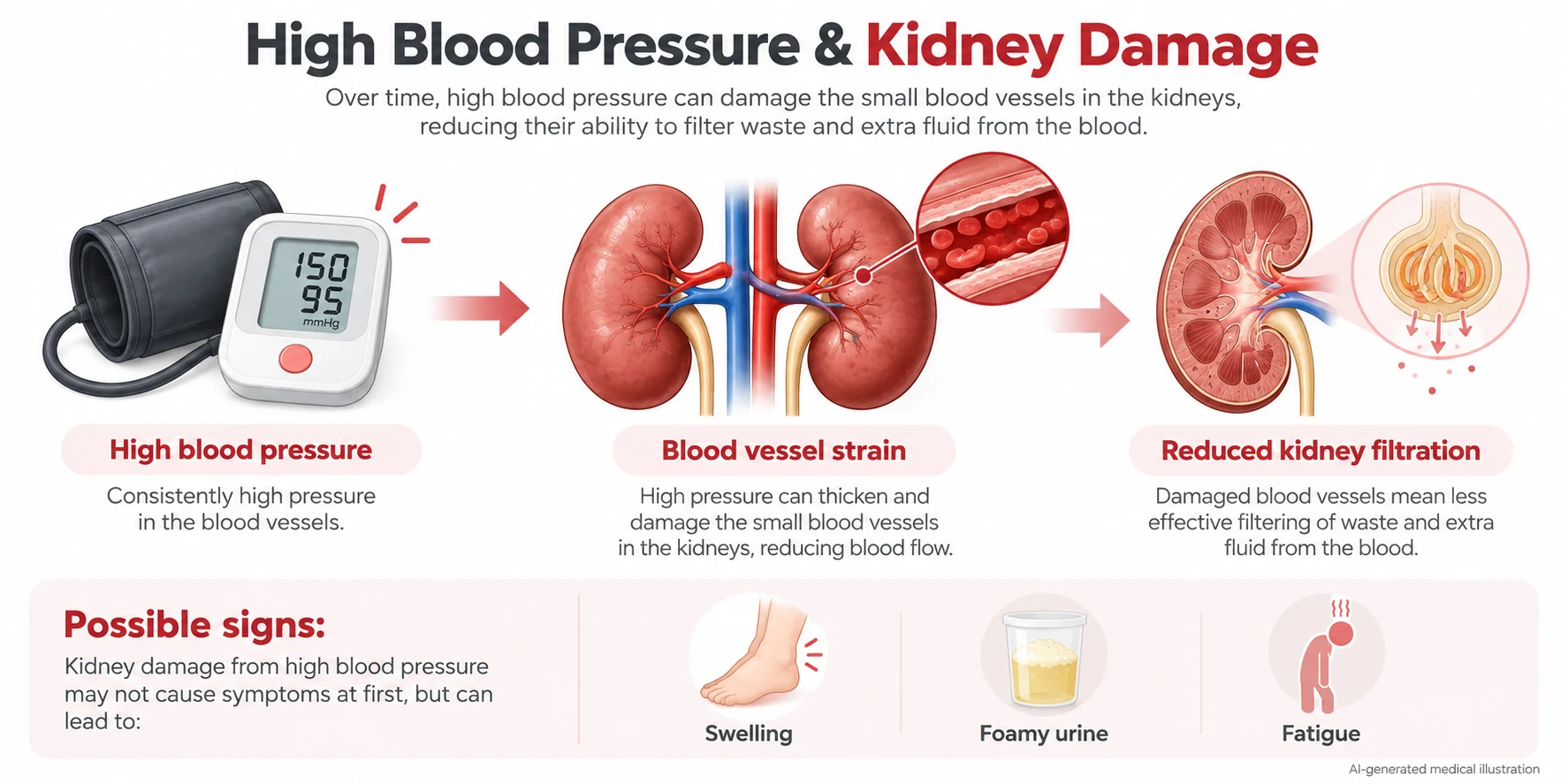
Yes, long-standing or poorly controlled high blood pressure can damage the kidneys. Excess pressure within small blood vessels can gradually affect the kidneys’ filtering structures, reduce kidney function and contribute to chronic kidney disease (CKD). The relationship also works in the opposite direction: kidney disease can make blood pressure more difficult to control. Early kidney damage often causes no noticeable symptoms. Blood pressure monitoring, serum creatinine, estimated glomerular filtration rate (eGFR) and urine albumin testing help identify abnormalities and assess kidney health. How Does High Blood Pressure Affect the Kidneys? The kidneys contain small filtering units called nephrons. Each nephron includes a glomerulus, a network of tiny blood vessels that helps remove waste products and excess fluid from the blood. Persistent high blood pressure can damage the blood vessels and filtering structures in the kidneys. Over time, this may result in: Thickening and narrowing of small kidney blood vessels. Reduced blood flow to kidney tissue. Damage to the glomeruli. Leakage of albumin or other proteins into urine. Gradual loss of kidney filtration function. Kidney damage related to long-standing hypertension is sometimes described as hypertensive kidney disease or hypertensive nephrosclerosis. Not everyone with hypertension develops kidney disease. Individual risk depends on several factors, including blood pressure control, diabetes, age, cardiovascular health and existing kidney conditions. Can High Blood Pressure Cause Kidney Disease Without Symptoms? Yes. Both high blood pressure and early chronic kidney disease may be present without noticeable symptoms. A person may feel well even when urine albumin levels are increased or kidney filtration has started to decline. Symptoms generally become more likely as kidney disease progresses, although their presence and severity vary. For this reason, people with hypertension should not rely on symptoms alone to determine whether their kidneys are healthy. Regular blood pressure assessment and appropriate kidney testing can help identify changes that might otherwise go unnoticed. What Are the Warning Signs of Kidney Damage From High Blood Pressure? Possible symptoms of kidney dysfunction include the following. 1. Swelling in the Feet, Ankles or Face When kidney function becomes impaired, the body may retain excess sodium and fluid. This can contribute to swelling, particularly around the ankles, feet or sometimes the face. However, swelling can also result from heart, liver or other medical conditions. 2. Foamy or Frothy Urine Persistent foamy urine may sometimes indicate protein leakage. Protein or albumin in urine can be associated with kidney damage, although foam alone is not sufficient for diagnosis. 3. Changes in Urination Some people notice increased nighttime urination or changes in urine volume. These changes can have several causes, including urinary disorders, medications and blood glucose abnormalities. 4. Persistent Fatigue Reduced kidney function can contribute to tiredness, particularly when associated complications such as anaemia develop. Fatigue is not specific to kidney disease. 5. Difficult-to-Control Blood Pressure Kidney dysfunction may affect the body’s ability to regulate sodium, fluid and blood pressure. Blood pressure that remains high despite prescribed treatment may require further evaluation. 6. Reduced Appetite or Nausea Poor appetite, nausea and changes in taste may occur in more advanced kidney disease. These symptoms require medical assessment because they can also be caused by conditions unrelated to the kidneys. Important: Early kidney damage often causes no symptoms. None of these findings confirms kidney disease on its own. For more information, read Early Signs of Chronic Kidney Disease. Which Tests Detect Kidney Damage Caused by High Blood Pressure? A healthcare professional may recommend blood and urine tests to evaluate kidney function. 1. Serum Creatinine Test Creatinine is a waste product produced during normal muscle activity. The kidneys remove creatinine from the bloodstream. When kidney filtration declines, creatinine levels may rise. However, creatinine is influenced by factors such as muscle mass, diet, certain medicines and hydration status. An abnormal creatinine result should therefore be interpreted alongside other findings. Learn more about What Causes High Creatinine. 2. Estimated Glomerular Filtration Rate (eGFR) eGFR is an estimate of how effectively the kidneys filter blood. It is commonly calculated using serum creatinine, age and sex. A persistently reduced eGFR may indicate chronic kidney disease. An eGFR below 60 mL/min/1.73 m² for at least three months meets one of the diagnostic criteria for CKD. However, a single low eGFR result does not always indicate chronic kidney disease. Learn more about the eGFR Kidney Function Test. 3. Urine Albumin-to-Creatinine Ratio (uACR) Urine ACR measures albumin relative to creatinine in a urine sample. Albumin is a protein normally retained in the bloodstream. An increased urine albumin level may suggest kidney damage. Urine ACR is particularly useful because albumin leakage may occur before a substantial decline in eGFR. 4. Blood Pressure Measurement Accurate blood pressure measurement is important when assessing hypertension. Clinicians may recommend repeated clinic measurements or home blood pressure monitoring to better understand blood pressure patterns. 5. Other Investigations Depending on the clinical findings, additional tests may include: Urinalysis for blood, protein or infection. Blood electrolyte measurements. Blood glucose or HbA1c testing. Kidney ultrasound when clinically indicated. Not every patient requires all these investigations. Understanding eGFR and Urine ACR Results Both eGFR and urine ACR provide useful information when evaluating possible kidney damage. Test Result General interpretation eGFR 90 or above Normal or high filtration eGFR 60–89 Mildly decreased filtration eGFR 45–59 Mildly to moderately decreased filtration eGFR 30–44 Moderately to severely decreased filtration eGFR 15–29 Severely decreased filtration eGFR Below 15 Kidney failure range Urine ACR Below 30 mg/g Normal to mildly increased Urine ACR 30–299 mg/g Moderately increased albuminuria Urine ACR 300 mg/g or above Severely increased albuminuria eGFR values of 60 or higher do not establish CKD without other evidence of kidney damage. Chronic kidney disease generally involves abnormalities persisting for at least three months. Kidney disease is classified using its cause, eGFR category and albuminuria category. Can High Blood Pressure Cause Kidney Failure? Yes. Persistent uncontrolled hypertension can contribute to progressive kidney damage and, in some individuals, kidney failure. However, kidney disease does not progress at the same rate in everyone. The likelihood

Foamy Urine: Could It Signal Kidney Disease?

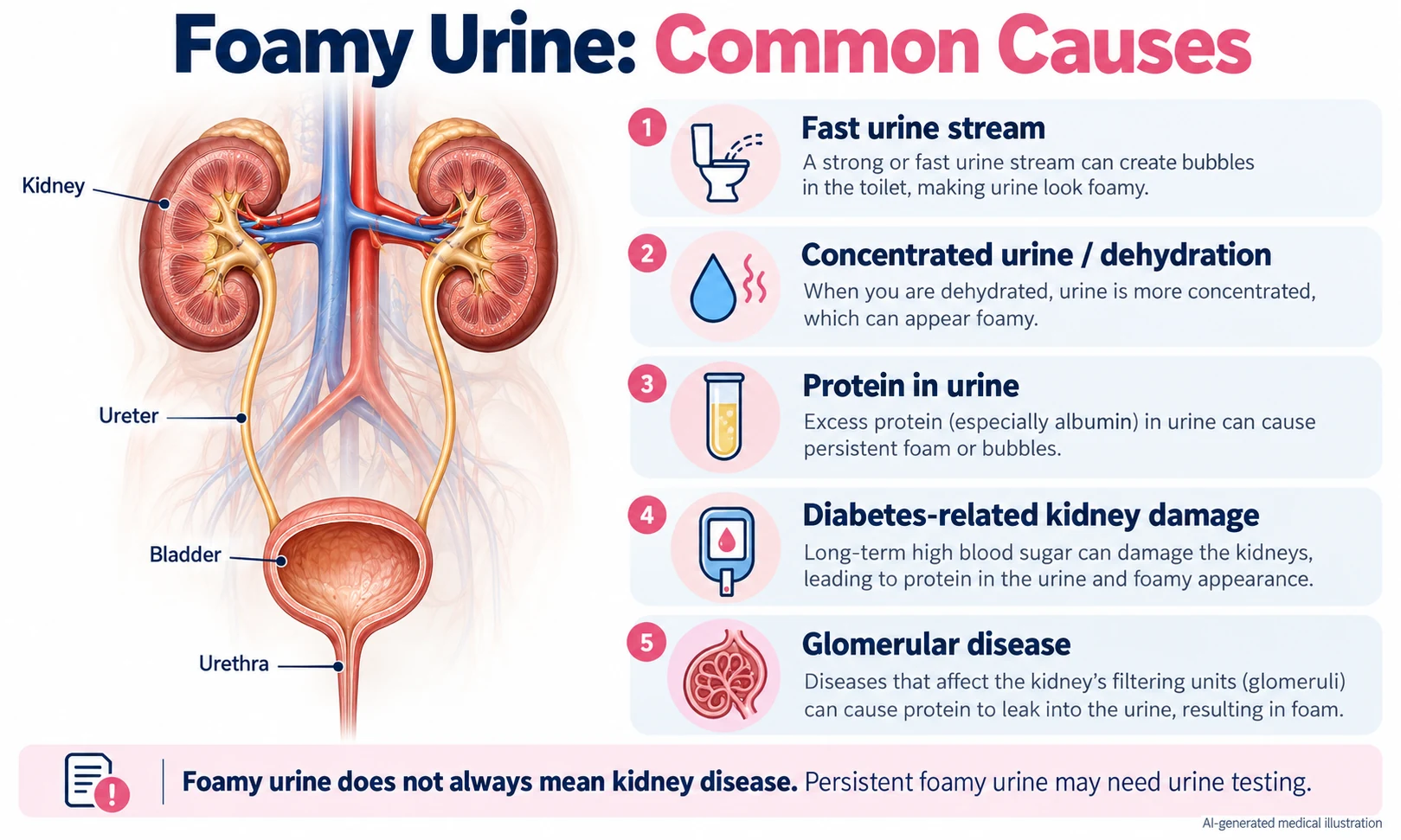
  Foamy urine does not always indicate kidney disease. Bubbles can sometimes appear because of forceful urination, concentrated urine or substances in toilet water. However, persistent or repeatedly foamy urine may occasionally be associated with excess protein in urine, known as proteinuria. Proteinuria can be a sign of kidney damage, but urine appearance alone cannot confirm or exclude kidney disease. Urinalysis, urine albumin-to-creatinine ratio (uACR) and blood tests for kidney function can help identify abnormalities. Key Takeaways Occasional bubbles in urine do not necessarily mean kidney disease. Persistent foam may sometimes be associated with proteinuria or albuminuria. Diabetes, hypertension and glomerular diseases can cause protein leakage into urine. Urine ACR and eGFR are important tests for evaluating kidney health. Early chronic kidney disease may have no noticeable symptoms. Persistent foamy urine with swelling, blood in urine or abnormal kidney tests warrants medical evaluation. What Is Foamy Urine? Foamy urine refers to urine that produces visible bubbles or foam after entering the toilet. The appearance may vary depending on: Urine flow: A strong stream may create temporary bubbles. Urine concentration: Concentrated urine may sometimes appear more bubbly. Toilet water: Cleaning agents and other substances may produce foam. Urine composition: Increased urinary protein can sometimes contribute to persistent foam. Foamy urine is a visible finding, not a medical diagnosis. The National Kidney Foundation identifies foamy urine as a possible finding in certain kidney conditions associated with proteinuria. What Are the Common Causes of Foamy Urine? Several factors can affect urine appearance. Some are temporary, while others may require investigation. 1. Forceful Urination A strong urine stream can trap air when urine strikes the toilet water. Possible features include: Bubbles appearing immediately after urination. Foam that disappears relatively quickly. No associated urinary or general symptoms. This can occur without underlying kidney disease. 2. Concentrated Urine or Dehydration Urine may become more concentrated when fluid intake decreases or fluid loss increases. Possible contributing factors include: Inadequate fluid intake. Excessive sweating. Vomiting or diarrhoea. Increased fluid loss during illness. Concentrated urine can sometimes influence its appearance. However, persistent foam should not automatically be attributed to dehydration. 3. Protein in Urine (Proteinuria) Proteinuria occurs when an increased amount of protein passes into urine. Healthy kidney filters normally prevent most blood proteins, including albumin, from entering urine. Damage to these filtering structures may allow proteins to leak into the urine. Important points include: Proteinuria may indicate kidney damage. Significant protein leakage can sometimes produce persistent foam. Proteinuria may occur without visible urine changes. Urine appearance cannot reliably measure protein levels. The NIDDK guide to albuminuria explains why albumin in urine is an important marker of kidney health. Read more about Protein in Urine: Causes and Kidney Health. 4. Diabetes-Related Kidney Damage Long-term diabetes can affect the small blood vessels and filtering structures within the kidneys. As kidney damage develops: Albumin may leak into urine. Kidney function may remain relatively preserved during early disease. Abnormalities may occur without noticeable symptoms. Kidney filtration may decline over time in some people. Not everyone with diabetes develops kidney disease. Regular testing is more reliable than monitoring urine appearance alone. 5. High Blood Pressure Long-standing hypertension can damage kidney blood vessels. Some people develop albuminuria or reduced kidney function as a result of kidney damage associated with high blood pressure. However, hypertension does not necessarily cause foamy urine, and foam alone cannot establish a connection. 6. Glomerular Diseases The glomeruli are tiny filtering structures within the kidneys. Diseases affecting these structures may lead to: Protein in urine. Blood in urine. Swelling. High blood pressure. Changes in kidney function. Examples include minimal change disease, focal segmental glomerulosclerosis and membranous nephropathy. These conditions have different causes, treatments and outcomes. Diagnosis requires appropriate medical investigations. Does Foamy Urine Always Mean Kidney Disease? No. Foamy urine alone does not confirm kidney disease. Occasional bubbles may occur for harmless reasons. However, medical assessment may be appropriate when foamy urine: Occurs repeatedly or persists. Is associated with abnormal urine protein results. Appears alongside swelling. Occurs with visible blood in urine. Is accompanied by reduced urine output. Occurs in someone with diabetes or hypertension. Is associated with abnormal kidney function tests. Early kidney disease may also occur without foamy urine. Therefore, both symptoms and laboratory findings must be considered. What Symptoms May Occur Alongside Foamy Urine? Foamy urine may warrant greater attention when accompanied by other abnormalities. Possible warning signs include: Swelling: Puffiness around the eyes or swelling in the feet and ankles. Blood in urine: Pink, red or brown urine. High blood pressure: Persistent or difficult-to-control hypertension. Urination changes: Unexplained changes in frequency or urine volume. Fatigue: Persistent tiredness or weakness. Fluid retention: Unexplained weight gain associated with swelling. Abnormal kidney tests: Reduced eGFR, elevated creatinine or increased urine albumin. These findings are not specific to kidney disease. Medical assessment is needed to determine their cause. Who May Be at Increased Risk of Kidney Disease? Certain conditions increase the likelihood of kidney abnormalities. These include: Diabetes mellitus. High blood pressure. Cardiovascular disease. Previous kidney injury. Family history of kidney failure. Known glomerular disorders. Certain autoimmune conditions. Persistent albuminuria or proteinuria. People with these risk factors may require kidney screening according to their individual clinical circumstances. How Do Doctors Evaluate Persistent Foamy Urine? Evaluation generally begins with a review of symptoms, medical history, medicines, blood pressure and previous test results. Depending on the findings, a healthcare professional may recommend urine and blood investigations. 1. Urinalysis Urinalysis examines a urine sample for abnormalities. It may help detect: Protein. Blood. Possible signs of urinary tract infection. Other findings requiring investigation. A urine dipstick may detect protein, but additional testing may be necessary to quantify the amount. 2. Urine Albumin-to-Creatinine Ratio (uACR) The urine ACR test compares albumin with creatinine in a urine sample. It is used to: Detect albuminuria. Assess possible kidney damage. Monitor albumin levels over time. Help classify kidney disease risk alongside eGFR. Understanding urine ACR results Urine ACR (mg/g) Interpretation Below 30 Normal to mildly increased 30–299

Foamy Urine: When Could It Be a Sign of Kidney Disease?

Foamy urine does not always mean kidney disease. Occasional bubbles can appear because of the force of urination or concentrated urine. However, persistent or unusually foamy urine may sometimes be associated with excess protein in urine, known as proteinuria. Foamy urine alone cannot confirm kidney damage. Medical evaluation may involve: Urinalysis: Checks for protein, blood and other urinary abnormalities. Urine albumin-to-creatinine ratio (uACR): Helps detect abnormal albumin leakage. Kidney function blood tests: Assess creatinine levels and estimated kidney filtration. These tests help determine whether further medical evaluation is necessary. What Is Foamy Urine? Foamy urine describes urine that forms visible bubbles or foam when it enters the toilet. Common factors that may affect urine appearance include: Fast urine flow: A strong stream can produce temporary bubbles. Concentrated urine: Urine concentration can influence its appearance. Substances in toilet water: Cleaning products or other substances can create foam. Protein in urine: Significant proteinuria may sometimes cause persistent foam. Occasional bubbles without other symptoms are not necessarily a sign of illness. However, repeated, persistent or unexplained foamy urine may warrant urine testing. According to the National Kidney Foundation, foamy urine can sometimes be associated with protein in urine, particularly in people with certain kidney conditions. What Causes Foamy Urine? Foamy urine may develop for several reasons. Some causes are temporary, while others may be associated with kidney or urinary tract conditions. 1. Forceful Urination A strong or rapid urine stream can create bubbles when urine strikes the toilet water. Bubbles may appear immediately during urination. The foam may disappear shortly afterward. This can occur without underlying kidney disease. 2. Concentrated Urine or Dehydration Urine may become more concentrated when fluid intake is low or fluid loss increases. Possible contributing factors include: Inadequate fluid intake. Excessive sweating. Fluid loss during illness. Concentrated urine can sometimes affect urine appearance. However, foamy urine should not automatically be attributed to dehydration. 3. Protein in Urine (Proteinuria) Proteinuria occurs when an increased amount of protein passes into urine. Healthy kidneys normally retain most proteins in the bloodstream. Damage to kidney filters may allow albumin and other proteins to leak into urine. Important points include: Proteinuria may be associated with kidney damage. Significant protein leakage can sometimes produce persistent foamy urine. Urine appearance alone cannot measure protein levels. Laboratory testing is needed to identify abnormal protein leakage. The National Institute of Diabetes and Digestive and Kidney Diseases (NIDDK) explains that albuminuria can be an important marker of kidney damage. Read more about Protein in Urine: Causes and Kidney Health. 4. Diabetes-Related Kidney Damage Long-term diabetes may damage the small blood vessels and filtering structures within the kidneys. Important considerations include: Prolonged high blood glucose can contribute to kidney damage. Albumin may leak into urine before kidney filtration declines significantly. Kidney disease may develop without noticeable symptoms. Regular screening is more reliable than judging kidney health by urine appearance. Not everyone with diabetes develops kidney disease. 5. Glomerular Diseases Glomerular diseases affect the tiny filtering units of the kidneys. Depending on the condition, possible findings include: Protein in urine. Blood in urine. Swelling in the feet, ankles or around the eyes. High blood pressure. Changes in kidney function. The causes, severity and treatment requirements of glomerular diseases vary. Does Foamy Urine Always Mean Kidney Disease? No. Foamy urine alone does not confirm kidney disease. Occasional bubbles may occur without any kidney abnormality. However, further investigation may be appropriate when: Foamy urine occurs repeatedly or persists. Urine tests show increased protein or albumin. Swelling develops in the feet, ankles or around the eyes. Blood is visible in urine. Kidney function tests are abnormal. High blood pressure or diabetes is present. Early kidney disease may also occur without foamy urine or other noticeable symptoms. Therefore, neither the presence nor absence of foam is sufficient to diagnose or exclude kidney disease. What Symptoms Should You Watch For? Persistent foamy urine may warrant additional attention when accompanied by other symptoms or abnormal test results. Possible warning signs include: Swelling: Puffiness around the eyes or swelling in the feet and ankles. Blood in urine: Urine that appears pink, red or brown. High blood pressure: Persistent or difficult-to-control blood pressure. Changes in urination: Unexplained changes in frequency or volume. Reduced urine output: Passing significantly less urine than usual. Fatigue: Persistent tiredness or weakness. Abnormal kidney tests: Increased creatinine, reduced eGFR or abnormal urine albumin. These symptoms can have several causes. Medical assessment helps determine whether kidney disease or another condition is responsible. How Is Persistent Foamy Urine Evaluated? Doctors generally begin by reviewing the person’s medical history, symptoms, medicines, blood pressure and previous laboratory findings. Depending on the clinical assessment, the following investigations may be recommended. 1. Urinalysis A routine urine examination can identify several urinary abnormalities, including: Protein in urine. Blood in urine. Possible signs of urinary tract infection. Other abnormalities requiring further investigation. A urine dipstick may help detect protein, although additional testing may be necessary. 2. Urine Albumin-to-Creatinine Ratio (uACR) The urine ACR test measures albumin relative to creatinine in a urine sample. It can help: Detect abnormal albumin leakage. Identify a possible early marker of kidney damage. Monitor albuminuria over time. Support kidney disease risk assessment. According to the National Kidney Foundation’s ACR guidance, albumin-to-creatinine ratio testing is an important method for evaluating albumin levels in urine. Urine ACR interpretation Urine ACR (mg/g) Interpretation Below 30 Normal to mildly increased 30–299 Moderately increased 300 or above Severely increased An elevated urine ACR result may require confirmation because albumin levels can be temporarily affected by: Fever. Urinary tract infection. Intense physical exercise. Certain other temporary medical conditions. Learn more about the Urine ACR Test. 3. Serum Creatinine and eGFR Serum creatinine is a blood marker used to estimate kidney filtration. The estimated glomerular filtration rate (eGFR) helps assess how effectively the kidneys filter blood. These tests provide information about: Kidney filtration capacity. Possible changes in kidney function. Kidney function trends over time. Whether additional investigations may be appropriate. eGFR and urine ACR

Can Diabetes Damage Your Kidneys? Early Signs & Tests

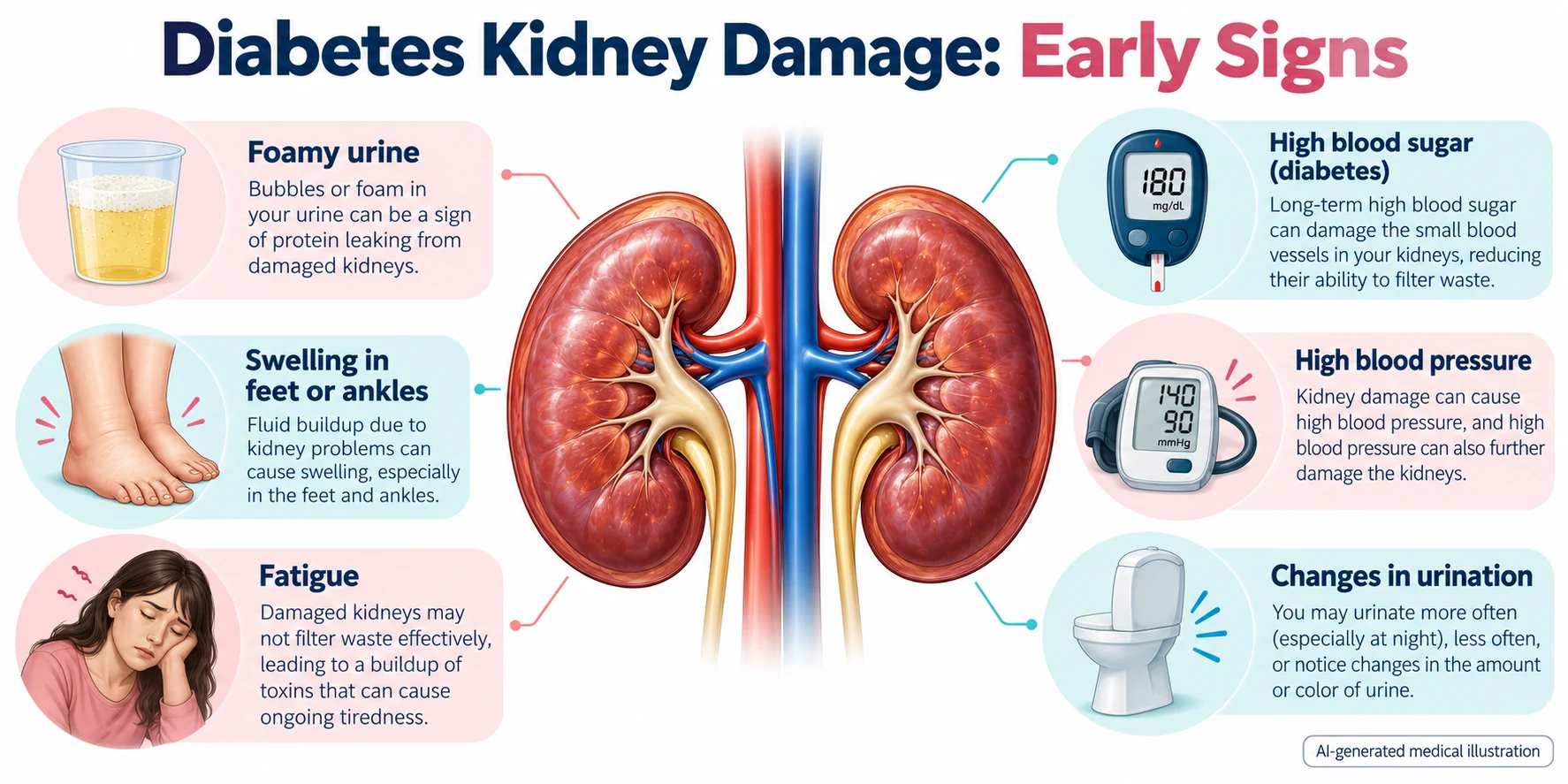
Diabetes can damage the kidneys without causing noticeable symptoms in the early stages. High blood glucose over time can affect the kidneys’ filtering structures, allowing albumin (a protein) to leak into urine or reducing kidney filtration. Blood tests for eGFR and urine tests for albumin can help detect these changes. Kidney damage associated with diabetes is commonly called diabetic kidney disease (DKD). Early detection and appropriate medical management may help reduce the risk of further kidney damage, although individual outcomes vary. How Does Diabetes Damage the Kidneys? The kidneys contain millions of tiny filtering units called nephrons. Within these units, structures known as glomeruli filter waste products and excess fluid from the blood. Over time, diabetes can damage the small blood vessels and filtering structures within the kidneys. High blood pressure may also contribute to this damage. As kidney disease develops, albumin may begin leaking into urine, and kidney filtration may gradually decline. However, diabetic kidney disease does not follow the same pattern in every person. For further information, read about Diabetes & Kidney Diseases. What Are the Early Signs of Kidney Damage From Diabetes? Early diabetic kidney disease frequently has no noticeable symptoms. Some kidney abnormalities may be detected through laboratory testing before a person experiences any physical changes. As kidney disease progresses, possible symptoms include: 1. Foamy or Frothy Urine Persistent foam in urine may sometimes indicate protein leakage, although foamy urine can have other causes. A urine albumin-to-creatinine ratio test can help identify abnormal albumin levels. 2. Swelling in the Feet, Ankles or Around the Eyes Kidney dysfunction may contribute to fluid retention, causing swelling in different parts of the body. Swelling can also occur because of heart, liver or other medical conditions. 3. Persistent Fatigue Some people with kidney disease experience tiredness or weakness, particularly when complications such as anaemia develop. Fatigue is not specific to kidney disease and may have several other explanations. 4. Changes in Urination Changes in urination frequency, particularly increased nighttime urination, may occur in some people. These changes can also be caused by high blood glucose, urinary infections or other conditions. 5. Difficult-to-Control Blood Pressure High blood pressure can contribute to kidney damage, while reduced kidney function can make blood pressure more difficult to manage. 6. Reduced Appetite or Nausea Poor appetite, nausea and changes in taste may occur as kidney disease becomes more advanced. Important: These symptoms do not confirm diabetic kidney disease. Many people have no symptoms, making laboratory screening particularly important. Can Diabetes Cause Kidney Damage Without Symptoms? Yes. A person with diabetes may feel completely well even when early kidney abnormalities are developing. For example, urine albumin levels may increase while serum creatinine and eGFR remain within relatively preserved ranges. Some people may also develop reduced eGFR without significantly increased albumin in urine. This is why both eGFR and urine ACR are important when evaluating kidney health in people with diabetes. Which Tests Detect Diabetes-Related Kidney Damage? Two of the most important investigations are urine ACR and eGFR. These tests provide different but complementary information. 1. Urine Albumin-to-Creatinine Ratio (uACR) The urine ACR test measures the amount of albumin relative to creatinine in a urine sample. Albumin is a protein normally retained in the bloodstream by the kidneys. Increased albumin in urine may indicate kidney damage. An abnormal urine ACR result may need confirmation because fever, infection, intense exercise, menstruation and temporarily high blood glucose can affect measurements. Learn more about the Urine ACR Test. 2. Serum Creatinine and eGFR Serum creatinine is a blood marker used to estimate kidney filtration. eGFR, or estimated glomerular filtration rate, helps assess how effectively the kidneys filter blood. An eGFR below 60 mL/min/1.73 m² may indicate reduced kidney function. When this persists for at least three months, it meets one of the criteria for chronic kidney disease. 3. Other Investigations Depending on clinical findings, doctors may also recommend: Urinalysis to assess protein, blood or other abnormalities. Blood pressure measurements. Blood glucose and HbA1c testing. Electrolyte measurements. Kidney ultrasound when clinically indicated. Understanding Urine ACR and eGFR Results The following categories help explain kidney screening results. Test Result General interpretation Urine ACR Below 30 mg/g Normal to mildly increased albumin Urine ACR 30–299 mg/g Moderately increased albuminuria Urine ACR 300 mg/g or above Severely increased albuminuria eGFR 90 or above Normal or high filtration eGFR 60–89 Mildly decreased filtration eGFR 45–59 Mildly to moderately decreased eGFR 30–44 Moderately to severely decreased eGFR 15–29 Severely decreased eGFR Below 15 Kidney failure range A single abnormal result does not necessarily establish chronic kidney disease. Repeat testing and evaluation of the clinical history may be required. The KDIGO Clinical Practice Guidelines describe how eGFR, urine albumin and other findings are used to classify chronic kidney disease. How Often Should People With Diabetes Have Kidney Tests? According to the American Diabetes Association Standards of Care in Diabetes—2026: People with type 2 diabetes should generally have urine ACR and eGFR checked at least once a year, starting at diagnosis. People with type 1 diabetes should generally begin annual kidney screening after five years of diabetes. People with established chronic kidney disease may need more frequent monitoring, depending on kidney function, albuminuria and clinical circumstances. These are general recommendations. A healthcare professional may suggest a different schedule based on individual medical needs. Reference: American Diabetes Association – Standards of Care in Diabetes 2026. Can Diabetes-Related Kidney Damage Be Slowed? Appropriate treatment may reduce the risk of progression in some people with diabetic kidney disease. Management depends on the severity of kidney involvement, diabetes type, blood pressure, associated conditions and current medicines. Medical care may include blood glucose management, blood pressure control, assessment of cardiovascular risk, kidney-protective medicines when appropriate and monitoring of kidney function. Some patients may also require dietary advice, including individualised recommendations concerning sodium, protein or fluid intake. Established kidney damage may not be fully reversible, and no treatment guarantees that kidney disease will stop progressing. What Should You Avoid If Your Kidney Tests

Early Signs of Chronic Kidney Disease: Symptoms Often Missed

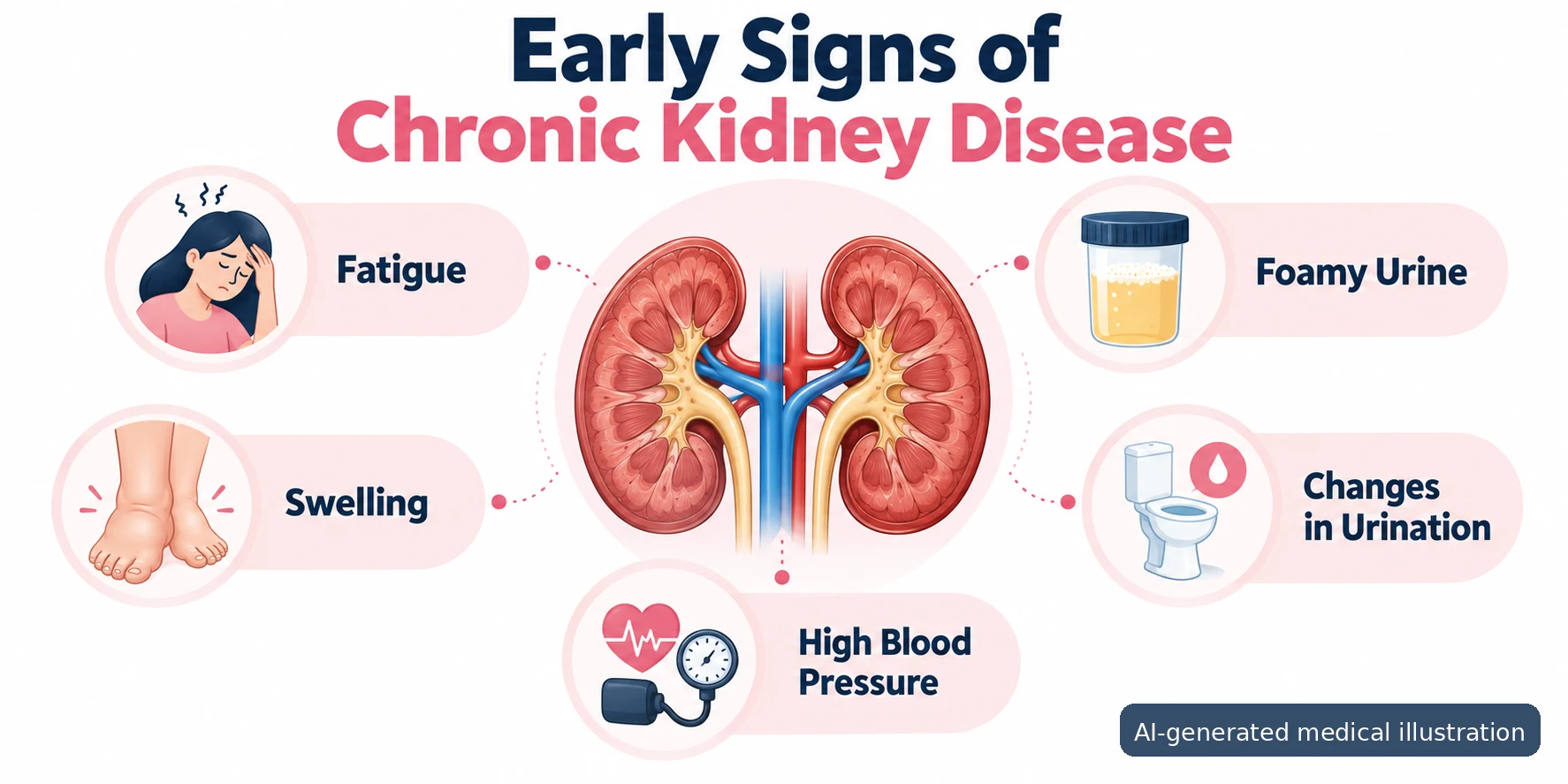
Chronic kidney disease (CKD) often develops without noticeable symptoms in its early stages. Some people may experience fatigue, swelling, foamy urine or changes in urination, but these symptoms are not specific to kidney disease. Blood and urine tests are important for identifying kidney abnormalities, sometimes before symptoms appear. People with diabetes, high blood pressure, cardiovascular disease or a family history of kidney failure may have an increased risk of CKD. Regular screening, when clinically appropriate, can help identify changes in kidney health. What Is Chronic Kidney Disease (CKD)? Chronic kidney disease is a long-term condition involving abnormalities in kidney structure or function that persist for at least three months and have implications for health. The kidneys remove waste products from the blood, regulate fluid and electrolyte balance, help control blood pressure and support red blood cell production. CKD may develop because of diabetes, hypertension, glomerular diseases, inherited kidney conditions or certain urinary tract abnormalities. Understanding the causes and progression of Acute & Chronic Kidney Diseases can help explain how kidney function changes over time. What Are the Early Signs of Chronic Kidney Disease? Early CKD frequently causes no obvious symptoms. When symptoms occur, their severity and type depend on the underlying condition, kidney function and other medical factors. 1. Persistent Fatigue or Weakness Feeling unusually tired may occur in people with kidney disease, particularly when complications such as anaemia develop. However, fatigue is common in many other conditions, including sleep disorders and nutritional deficiencies. It cannot establish a CKD diagnosis by itself. 2. Foamy or Frothy Urine Persistently foamy urine may sometimes be associated with protein leakage into the urine, known as proteinuria. Protein in urine can be a marker of kidney damage. However, urine may appear foamy for other reasons, and laboratory testing is needed to determine whether protein levels are abnormal. 3. Swelling in the Feet, Ankles or Around the Eyes Some kidney conditions affect the body’s ability to regulate sodium and fluid balance. This can contribute to swelling, particularly in the legs, feet and around the eyes. Swelling can also occur due to heart, liver, venous or other medical conditions. It requires interpretation alongside other findings. 4. Changes in Urination Some people notice increased urination at night, changes in urinary frequency or differences in urine appearance. These symptoms may occur in kidney disease but can also be associated with urinary infections, diabetes, prostate conditions or other causes. 5. High Blood Pressure High blood pressure is both a possible cause and consequence of chronic kidney disease. Over time, elevated blood pressure can damage blood vessels within the kidneys. Reduced kidney function may also make blood pressure more difficult to control. 6. Reduced Appetite or Nausea Loss of appetite, nausea and changes in taste may develop as kidney disease progresses. These symptoms are generally more common in advanced kidney dysfunction and have many possible causes unrelated to CKD. 7. Dry or Itchy Skin Persistent itching may occur in people with more advanced CKD, sometimes in association with complications involving mineral balance. Dry or itchy skin alone is not a reliable indicator of kidney disease. 8. Muscle Cramps or Sleep Disturbances Muscle cramps and sleep difficulties can occur in people with chronic kidney disease, particularly when associated medical complications develop. Because these symptoms are nonspecific, doctors consider them alongside kidney function tests and the patient’s overall medical history. Important: Symptoms alone cannot confirm or exclude CKD. Some people have kidney abnormalities despite feeling completely well. Can Chronic Kidney Disease Be Present Without Symptoms? Yes. Early chronic kidney disease may be present without noticeable symptoms. A person may have a relatively preserved estimated glomerular filtration rate (eGFR) while urine testing shows persistent albumin leakage. Similarly, a gradual reduction in kidney filtration may be detected through blood testing before significant physical symptoms appear. According to the National Institute of Diabetes and Digestive and Kidney Diseases (NIDDK), blood and urine investigations are important for evaluating chronic kidney disease. What Are the Stages of Chronic Kidney Disease? CKD is classified using the cause of kidney disease, eGFR category and urine albumin category. The following GFR categories describe levels of estimated kidney filtration. GFR category eGFR (mL/min/1.73 m²) Interpretation G1 90 or above Normal or high G2 60–89 Mildly decreased G3a 45–59 Mildly to moderately decreased G3b 30–44 Moderately to severely decreased G4 15–29 Severely decreased G5 Below 15 Kidney failure range An eGFR of 60 or above does not exclude kidney disease when other markers of kidney damage are present. Conversely, G1 and G2 categories do not establish CKD without additional evidence of kidney abnormalities. A single abnormal eGFR result also does not automatically confirm CKD. Doctors generally evaluate whether abnormalities have persisted for at least three months. Medical reference: KDIGO Clinical Practice Guideline for CKD Evaluation and Management. Which Tests Help Detect Chronic Kidney Disease Early? Laboratory tests are important because chronic kidney disease may not produce noticeable early symptoms. 1. Serum Creatinine and eGFR Serum creatinine is a blood marker commonly used to estimate kidney filtration. eGFR provides an estimate of how effectively the kidneys filter blood. Results are interpreted alongside previous measurements, medical history and other investigations. 2. Urine Albumin-to-Creatinine Ratio (uACR) The urine ACR test measures albumin relative to creatinine in a urine sample. A uACR of 30 mg/g or above is generally considered increased. Temporary factors can affect albumin levels, so abnormal results may require confirmation. Learn more about the Urine ACR Test and its role in evaluating kidney damage. 3. Urinalysis Urinalysis can identify abnormalities such as protein, blood or signs of infection in urine. The results help determine whether additional testing is necessary. 4. Blood Pressure Measurement High blood pressure can contribute to kidney damage. Regular measurement is particularly relevant for people with diabetes, known hypertension or existing kidney abnormalities. 5. Kidney Ultrasound A kidney ultrasound may be recommended to assess kidney size, structure or possible urinary tract obstruction. Not every person requires imaging. The decision depends on symptoms, laboratory results and clinical findings. Who Is

What Does Your eGFR Number Mean? Kidney Function Test Explained

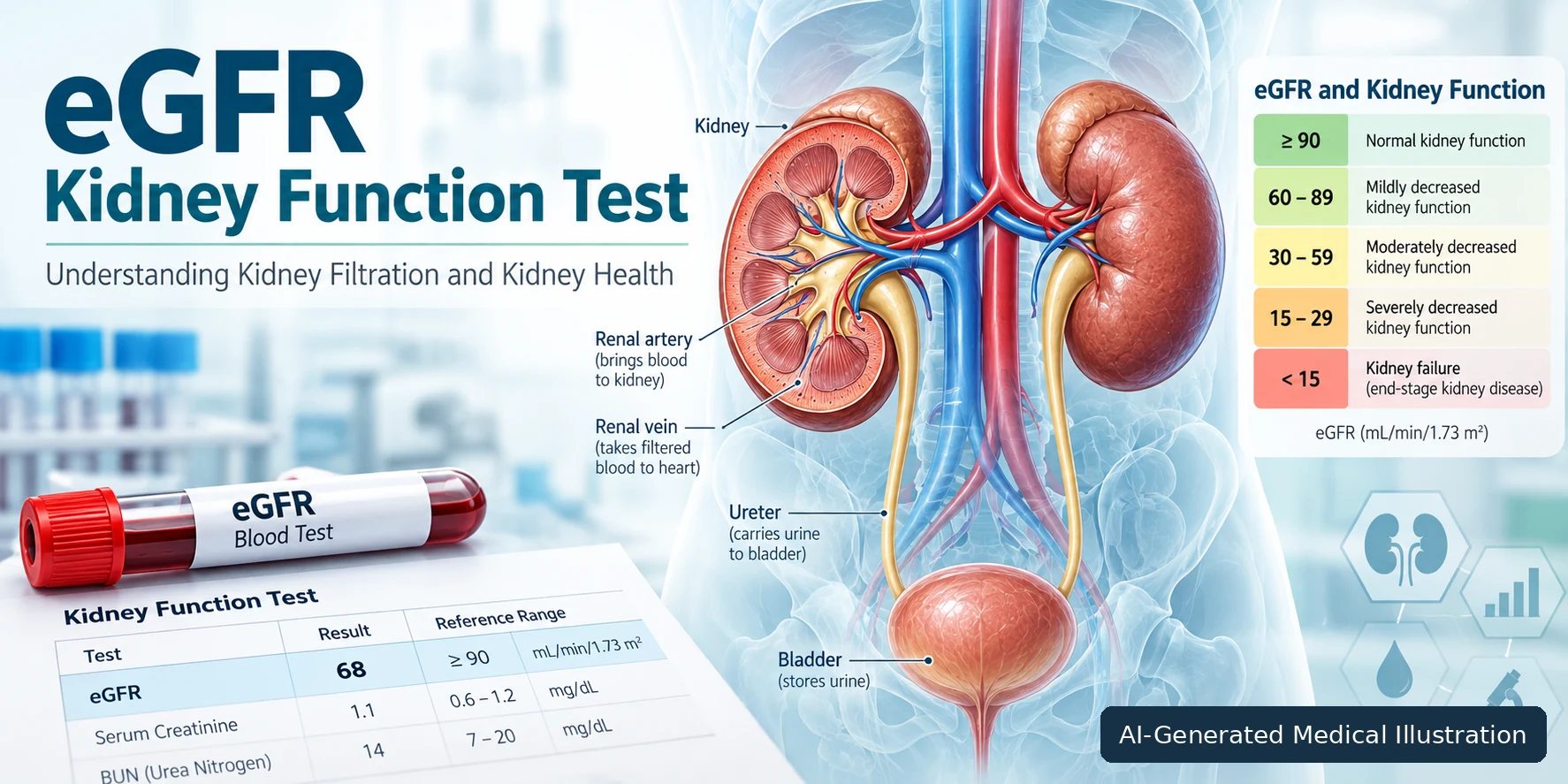
The eGFR kidney function test estimates how well your kidneys filter waste products from the blood. It is commonly calculated using serum creatinine and helps assess kidney function, identify possible abnormalities and monitor existing kidney conditions. An eGFR below 60 mL/min/1.73 m² may indicate reduced kidney filtration. However, a single abnormal result does not automatically confirm chronic kidney disease (CKD). Doctors interpret eGFR alongside urine tests, previous reports, medical history and other clinical findings. What Is an eGFR Kidney Function Test? eGFR stands for estimated glomerular filtration rate. It provides an estimate of how efficiently the kidneys filter blood. The calculation commonly uses serum creatinine, age and sex. Creatinine is a waste product generated through normal muscle activity and removed from the bloodstream by the kidneys. An eGFR result is usually expressed in millilitres per minute per 1.73 square metres (mL/min/1.73 m²). Doctors use eGFR to evaluate kidney function, monitor changes and help identify kidney disease when considered alongside other investigations. What Is the Normal eGFR Range? An eGFR of 90 or above is generally classified as normal or high filtration in adults. However, normal values vary with age and individual health circumstances. An eGFR between 60 and 89 does not automatically indicate kidney disease. Other findings, such as persistent albumin in urine or structural kidney abnormalities, may be needed for a CKD diagnosis. According to the National Kidney Foundation, eGFR should be interpreted with the patient’s age, clinical history and other relevant tests. Understanding eGFR Levels and CKD Stages eGFR categories help doctors classify kidney filtration and evaluate chronic kidney disease. Important: G1 and G2 are not considered CKD without additional evidence of kidney damage. Chronic kidney disease generally requires abnormalities in kidney structure or function lasting at least three months. These categories are based on the KDIGO Clinical Practice Guideline for CKD. What Does an eGFR Below 60 Mean? An eGFR below 60 indicates reduced estimated kidney filtration. When this reduction persists for at least three months, it meets one of the criteria for chronic kidney disease. However, eGFR can fall temporarily because of dehydration, acute illness or acute kidney injury. Doctors may recommend repeating blood tests, reviewing previous results and assessing urine albumin before determining whether the reduction is persistent. Learn more about Acute & Chronic Kidney Diseases and their clinical evaluation. Can Kidney Disease Occur with a Normal eGFR? Yes. Kidney damage may be present even when eGFR is normal or relatively preserved. For example, a person with diabetes may have albumin leakage in urine before a significant reduction in eGFR develops. Doctors commonly use the urine albumin-to-creatinine ratio (uACR) to detect albuminuria. An eGFR result and urine ACR test provide different but complementary information about kidney health. Read about the Urine ACR Test and its role in detecting kidney abnormalities. What Is the Difference Between Creatinine and eGFR? Creatinine is a waste product measured through a blood test, while eGFR is a calculation that estimates kidney filtration. Serum creatinine may be influenced by muscle mass, diet, medicines and certain medical conditions. An eGFR calculation provides additional information, but it remains an estimate rather than a direct measurement of kidney function. In selected cases, doctors may use cystatin C testing to improve the accuracy of the estimate. What Causes Low eGFR? Low eGFR may occur because of several medical conditions or temporary factors, including: Chronic kidney disease. Acute kidney injury. Diabetes-related kidney damage. Long-standing high blood pressure. Dehydration or reduced blood flow to the kidneys. Certain medicines or other medical conditions. A low eGFR result does not identify the underlying cause by itself. Further medical evaluation may be required. How Do Diabetes and High Blood Pressure Affect eGFR? Diabetes and hypertension are important risk factors for chronic kidney disease. Long-term high blood glucose may damage the kidneys’ filtering structures, while persistent high blood pressure can affect the small blood vessels in the kidneys. People with these conditions may require periodic kidney function assessment, including eGFR and urine ACR tests. Learn more about Diabetes & Kidney Diseases and their effects on kidney health. What Should You Do If Your eGFR Is Low? If your eGFR result is low, discuss it with a qualified healthcare professional. Depending on the clinical situation, the doctor may recommend: Comparing current and previous creatinine and eGFR results. Repeating kidney function tests. Checking urine albumin and urine routine examination. Evaluating blood pressure and blood glucose. Reviewing current medicines and medical conditions. Performing additional investigations when indicated. Do not stop prescribed medicines, take kidney supplements or substantially change your fluid intake without appropriate medical advice. Can a Low eGFR Improve? A low eGFR may improve when its underlying cause is reversible, such as dehydration or certain forms of acute kidney injury. In chronic kidney disease, management often focuses on treating the underlying condition, slowing further decline and reducing complications. Not every patient experiences improvement, and recovery cannot be guaranteed. The appropriate management plan depends on the cause, duration and severity of kidney dysfunction. When Should You Consult a Nephrologist? Kidney specialist evaluation may be appropriate in the following situations: Persistently reduced or progressively declining eGFR. Repeatedly elevated serum creatinine. Protein or blood in urine. Diabetes with abnormal kidney screening results. Difficult-to-control hypertension with kidney abnormalities. Other unexplained changes in kidney function. Seek urgent medical evaluation for very low or absent urine output, severe breathlessness, confusion or other serious symptoms, particularly if they develop suddenly. eGFR Kidney Function Evaluation in Navi Mumbai Dr. Jyoti Bansode, MBBS, MD Medicine, DM Nephrology, is a nephrologist practising in Navi Mumbai, including Vashi and Ulwe. Her clinical areas include evaluation of abnormal kidney function tests, acute and chronic kidney diseases, diabetic kidney disease and hypertension-related kidney conditions. Assessment of reduced eGFR may involve reviewing medical history, existing reports, urine findings and other investigations to determine the possible cause and appropriate next steps. Consultation information is available on the website. Clinical recommendations depend on each patient’s individual medical condition. Frequently Asked Questions What is a normal eGFR level? An