+91 8691888178 / 8850999397 dr.jyotibansode.01@gmail.com Monday to Saturday : 05:00PM TO 06:00PM

How to Protect Kidneys with Diabetes – Practical Daily Tips

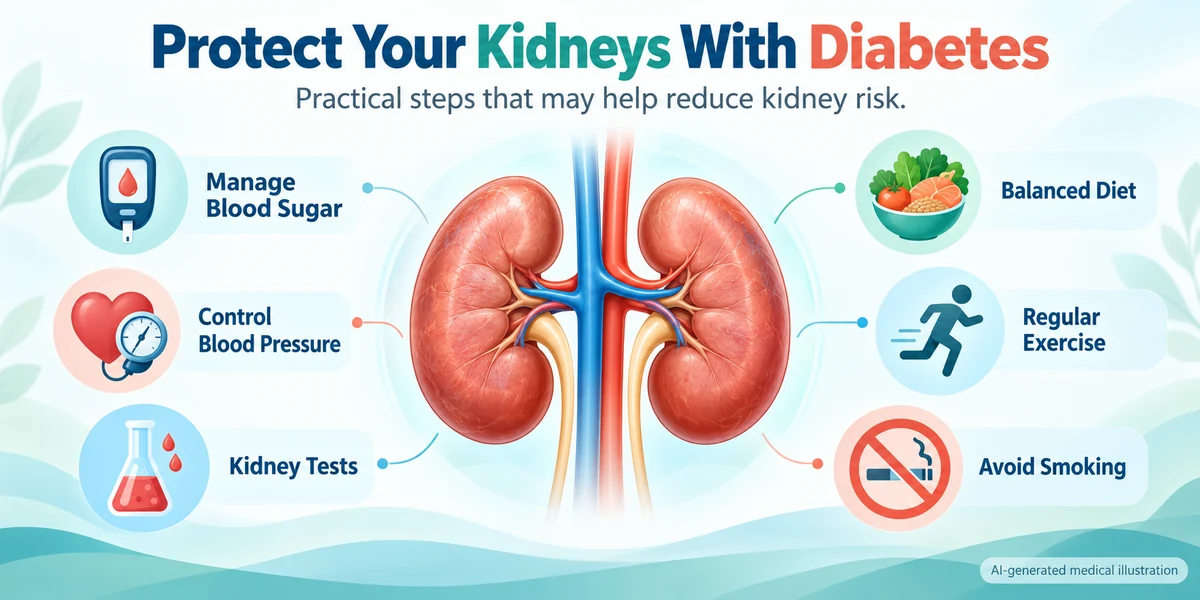
Protecting kidney health with diabetes involves appropriate blood glucose management, blood pressure control, regular kidney tests, a balanced diet, physical activity and safe use of medicines. These measures can reduce the risk of diabetes-related kidney complications, although no strategy guarantees complete prevention. Diabetes can affect the kidneys gradually, often without noticeable symptoms. Kidney damage may sometimes be detected through an increased urine albumin-to-creatinine ratio (uACR) before a substantial reduction in kidney filtration occurs. Regular assessment using urine ACR and estimated glomerular filtration rate (eGFR) is important because normal serum creatinine alone does not always exclude early kidney disease. This article explains practical steps that may help people with diabetes maintain kidney health, recognise potential risks and understand when additional medical evaluation may be appropriate. How Does Diabetes Affect the Kidneys? The kidneys contain microscopic filtering units called nephrons. Within each nephron, tiny blood vessels form a structure called the glomerulus. These structures help remove waste products and excess fluid while retaining proteins and other substances needed by the body. Persistently elevated blood glucose can affect the blood vessels and filtering structures within the kidneys. Over time, some people develop:  – Increased albumin leakage into urine.  – Changes in kidney filtration.  – High blood pressure or difficulty controlling existing hypertension.  – Impaired fluid and electrolyte regulation.  – Chronic kidney disease. This form of kidney damage is commonly called diabetic kidney disease (DKD). However, not every person with diabetes develops kidney disease, and kidney abnormalities in someone with diabetes may have causes unrelated to diabetes. For related information, read Diabetic Kidney Disease Symptoms. Why Is Kidney Protection Important for People With Diabetes? Early diabetic kidney disease often causes no noticeable symptoms. A person may feel well even when urine albumin levels are elevated or kidney filtration has changed. Kidney disease is also associated with an increased risk of cardiovascular complications. Appropriate diabetes management and kidney monitoring may help:  – Reduce the risk of kidney damage developing.  – Identify abnormalities before noticeable symptoms appear.  – Slow kidney disease progression in eligible patients.  – Support blood pressure and cardiovascular risk management.  – Guide safer use of medicines.  – Identify complications that require medical attention. The degree of benefit varies according to individual clinical circumstances. Who Is at Greater Risk of Diabetic Kidney Disease? Several factors are associated with greater kidney-related risk in people with diabetes: Longer duration of diabetes. Persistently elevated blood glucose. High blood pressure. Cardiovascular disease. Tobacco use. Excess body weight. Family history of kidney disease. Existing albuminuria or reduced eGFR. These factors do not mean kidney disease will definitely develop. Kidney-related risk depends on the overall medical condition and changes in laboratory results over time. 10 Practical Ways to Protect Your Kidneys With Diabetes The following measures may help support kidney health and reduce associated risks. 1. Manage Blood Glucose According to Individual Targets Appropriate blood glucose management is an important part of preventing diabetes-related complications. Persistently elevated blood glucose can contribute to kidney blood vessel injury. HbA1c is a blood test that reflects average blood glucose over approximately the previous two to three months. A suitable HbA1c target depends on factors such as:  – Age.  – Type and duration of diabetes.  – Risk of low blood glucose (hypoglycaemia).  – Cardiovascular disease.  – Kidney function.  – Other medical conditions.  – Current treatment. A single HbA1c target is not appropriate for everyone. Some patients benefit from home glucose monitoring or continuous glucose monitoring, depending on their medicines and diabetes-management needs. Important: Diabetes medicines should not be adjusted independently based on one glucose reading. 2. Monitor and Manage Blood Pressure High blood pressure can damage small blood vessels in the kidneys. Diabetes and hypertension together may increase the risk of kidney and cardiovascular complications. Blood pressure assessment is therefore an important part of diabetes care. Management may involve dietary changes, physical activity, weight management and medicines when indicated. The appropriate blood pressure target depends on the individual’s medical condition, treatment tolerance and risks. Home blood pressure monitoring may be useful for some people, but daily measurement is not necessary for every patient. A healthcare professional can advise on an appropriate monitoring schedule. 3. Take Prescribed Medicines Safely Certain medicines may help reduce kidney-related risk or slow the progression of established kidney disease in eligible patients. Examples include: ACE inhibitors and angiotensin receptor blockers (ARBs): These may be appropriate for selected people with diabetes, high blood pressure and albuminuria. SGLT2 inhibitors: These may reduce kidney disease progression and cardiovascular complications in eligible people with type 2 diabetes and chronic kidney disease. GLP-1 receptor agonists: Certain medicines in this class may provide cardiovascular and kidney-related benefits in selected patients. Other medicines may also be appropriate according to the clinical condition. However, not every medicine is suitable for every person with diabetes. Possible risks can include low blood pressure, changes in kidney function, electrolyte disturbances, dehydration or other medicine-specific adverse effects. Kidney function and potassium may require monitoring during certain treatments. ACE inhibitors and ARBs should not automatically be prescribed solely to prevent CKD in people with normal blood pressure, normal urine ACR and normal eGFR. Never start, stop or change prescribed medicines without guidance from a qualified healthcare professional. 4. Reduce Excessive Salt Intake Consuming excessive sodium may contribute to high blood pressure and fluid retention. Reducing excessive dietary salt can be useful for people with diabetes, particularly when hypertension or kidney disease is present. Practical measures include:  – Limiting frequently consumed salty packaged foods.  – Reducing added salt during cooking.  – Checking sodium information on packaged foods.  -Using herbs, spices and lemon juice for flavour.  – Choosing less processed foods when practical. Some foods, such as pickles, papad, namkeen and packaged snacks, can contain substantial amounts of sodium. However, dietary recommendations must consider individual nutritional needs and medical conditions. People with advanced kidney disease may require additional dietary guidance. 5. Follow a Balanced, Kidney-Appropriate Diet A balanced eating pattern can support diabetes management, blood pressure control and overall health. Depending on individual requirements,
Microalbuminuria Follow‑Up: What Happens After an Abnormal Result?

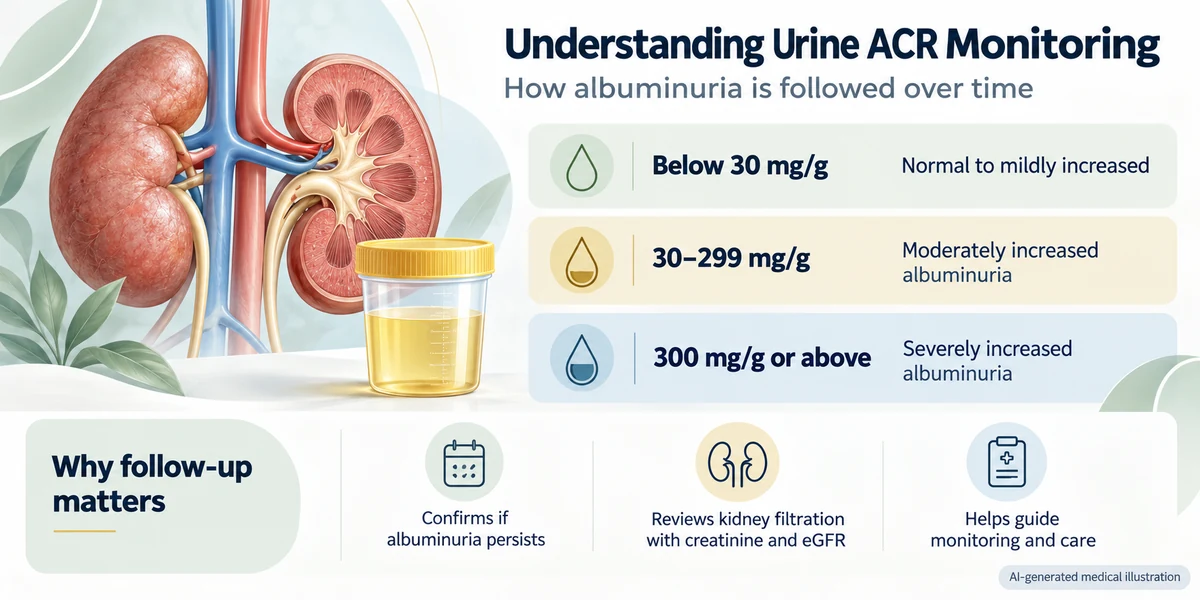
An elevated urine albumin-to-creatinine ratio (uACR) does not automatically mean permanent kidney damage or chronic kidney disease. Follow-up may involve repeating the urine ACR test, reviewing serum creatinine and estimated glomerular filtration rate (eGFR), checking blood pressure and assessing possible temporary causes of increased urine albumin. Microalbuminuria is an older term for moderately increased albuminuria (A2), generally corresponding to a urine ACR of 30–299 mg/g. Urine albumin may increase temporarily during fever, infection, strenuous exercise or markedly elevated blood glucose. Persistent albuminuria, however, may indicate kidney damage and require further evaluation. The appropriate follow-up plan depends on the degree of albuminuria, kidney function, medical history and accompanying clinical findings. This article explains how abnormal urine ACR results are confirmed, what additional investigations may be needed and how kidney health is monitored over time. What Is Microalbuminuria? Albumin is a protein normally found in the bloodstream. Healthy kidneys contain tiny filtering structures called glomeruli, which help remove waste products and excess fluid while retaining most albumin. When certain kidney conditions affect the filtering barrier, increased amounts of albumin may appear in urine. This condition is called albuminuria. Microalbuminuria is an older term used for moderately increased albuminuria. Current clinical guidelines generally use the A1, A2 and A3 classification. Is Microalbuminuria the Same as Kidney Disease? Not necessarily. Persistent albuminuria may be a marker of kidney damage, but a single elevated urine ACR result does not establish chronic kidney disease. The underlying cause may include diabetes, hypertension, glomerular disorders or temporary medical conditions. Some people have increased urine albumin with preserved kidney filtration, while others have reduced eGFR without increased albuminuria. Urine ACR, eGFR and medical history should therefore be assessed together. Understanding Urine ACR Result Categories The urine albumin-to-creatinine ratio compares albumin with creatinine in a urine specimen. Results are commonly reported in milligrams of albumin per gram of creatinine (mg/g). Urine ACR (mg/g) Category General interpretation Below 30 A1 Normal to mildly increased 30–299 A2 Moderately increased albuminuria 300 or above A3 Severely increased albuminuria A1: Below 30 mg/g This is the normal to mildly increased category. However, a result below 30 mg/g does not rule out all forms of kidney disease. Kidney filtration or other urine findings may still be abnormal. A2: 30–299 mg/g This category is called moderately increased albuminuria. The older term microalbuminuria is often used for these values. Persistently increased albuminuria may indicate kidney damage and contribute to kidney and cardiovascular risk assessment. A3: 300 mg/g or Above This category indicates severely increased albuminuria. Depending on the clinical circumstances, additional investigations or specialist evaluation may be appropriate. Important: These categories describe urinary albumin excretion, not a specific diagnosis or the severity of kidney filtration impairment. For further information, read Urine ACR Test Explained. Why Does an Abnormal Urine ACR Need Follow-Up? Urine albumin measurements vary naturally over time. A high result may reflect a temporary influence, an underlying kidney disorder or a combination of factors. Follow-up helps determine: Whether the abnormal result persists. Whether urine albumin levels are increasing or decreasing. Whether kidney filtration is affected. Whether diabetes or hypertension contributes to kidney-related risk. Whether other causes of albuminuria should be investigated. Whether treatment or monitoring needs adjustment. An abnormal result should not be ignored, but it also should not automatically be interpreted as permanent kidney damage. What Can Temporarily Increase Urine Albumin? Several factors can influence a urine ACR result. 1. Fever or Acute Illness Urinary albumin excretion may increase temporarily during fever or certain acute illnesses. 2. Urinary Tract Infection An infection may affect urine test findings. Depending on the circumstances, repeat testing may be appropriate after the infection has resolved. 3. Strenuous Exercise Intense physical activity shortly before urine collection can temporarily increase urinary albumin. 4. Markedly Elevated Blood Glucose Significant hyperglycaemia can affect urine albumin measurements, particularly in people with diabetes. 5. Markedly Elevated Blood Pressure Severely elevated blood pressure may contribute to increased urinary albumin. 6. Menstruation or Sample Contamination Menstrual blood or other contamination may affect specimen interpretation. 7. Heart Failure and Other Acute Conditions Certain episodes of heart failure or other acute medical conditions may influence urinary albumin excretion. Dehydration and changes in urine concentration can also complicate assessment, although the albumin-to-creatinine ratio helps account for urine concentration differences. The possible influence of these factors should be reviewed clinically. An elevated result should not automatically be dismissed as temporary. When Should a High Urine ACR Test Be Repeated? Repeat testing is often appropriate because a single elevated result does not reliably establish persistent albuminuria. KDIGO guidance recommends confirming a urine ACR of 30 mg/g or above obtained from a random urine specimen using a subsequent first-morning sample when feasible. For people with diabetes, ADA guidance commonly recommends that at least two of three urine ACR measurements collected over approximately three to six months be abnormal before considering moderately or severely increased albuminuria persistent. These are general approaches rather than a fixed timetable for every patient. Significant kidney abnormalities, rapidly changing results or concerning symptoms may require earlier evaluation. Why Is a First-Morning Urine Sample Useful? A first-morning specimen is collected after overnight rest. It may reduce variation associated with posture, physical activity and urine concentration. A random spot specimen remains useful for initial screening, but a first-morning sample may provide a more consistent measurement for confirmation. Does One High ACR Confirm Chronic Kidney Disease? No. Chronic kidney disease generally involves abnormalities of kidney structure or function persisting for at least three months and having implications for health. Evidence of chronicity may come from previous reports, repeat measurements, medical history or other clinical findings. One elevated urine ACR result is not sufficient to determine that an abnormality is chronic. What Happens After a High Urine ACR Result? The following steps may form part of medical follow-up. Step 1: Review the Original Result The measured urine ACR value and its units should be reviewed. Results expressed in mg/g and mg/mmol use different numerical scales. The urine sample type, laboratory report

Persistent Proteinuria Evaluation: Tests a Nephrologist May Recommend

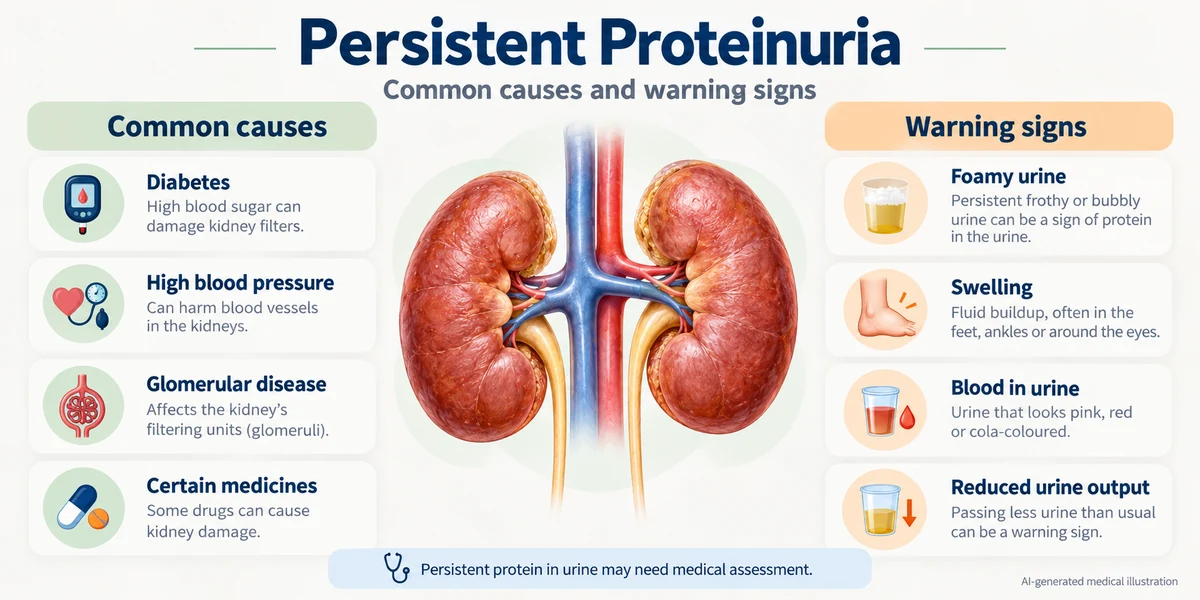
Persistent proteinuria means that increased amounts of protein continue to be detected in urine on repeated testing. It may indicate an underlying kidney disorder, but it does not automatically mean that the kidneys have failed. Protein may appear temporarily in urine during fever, acute illness, strenuous exercise or other physiological changes. When proteinuria remains present, further evaluation helps determine the amount of protein, its possible cause and whether kidney function is affected. Common investigations include urine albumin-to-creatinine ratio (uACR), urine protein-to-creatinine ratio (UPCR), urinalysis, serum creatinine and estimated glomerular filtration rate (eGFR). Depending on clinical findings, additional tests such as kidney ultrasound, immune-related blood investigations or kidney biopsy may be considered. A single abnormal urine test does not establish chronic kidney disease. Repeat results, the duration of abnormalities and the patient’s medical history are important for interpretation. What Is Persistent Proteinuria? Proteinuria refers to the presence of more protein in urine than normally expected. Healthy kidneys contain microscopic filtering structures called glomeruli. These structures help filter waste products and excess fluid from the blood while retaining most essential proteins. The kidney tubules also help reabsorb certain filtered proteins. Proteinuria may develop when:  – The glomerular filtration barrier is affected.  – Kidney tubules cannot adequately reabsorb filtered proteins.  – The body produces increased amounts of certain proteins.  – Temporary physiological or medical factors influence urine protein excretion. Persistent proteinuria is identified when abnormal urinary protein excretion remains present on repeat assessment. The clinical significance depends on the amount and type of protein, accompanying findings and underlying medical condition. What Is the Difference Between Temporary and Persistent Proteinuria? Proteinuria may be temporary or ongoing. Feature Temporary proteinuria Persistent proteinuria Duration Resolves after the contributing factor improves Remains present on repeated testing Possible causes Fever, exercise, acute illness or dehydration-related influences Diabetes, hypertension, glomerular disease or other disorders Symptoms Often absent May be absent or accompanied by other findings Testing Repeat urine examination may confirm resolution Quantitative urine tests and further evaluation may be appropriate Management Depends on the temporary cause Depends on the underlying condition and kidney findings An isolated abnormal dipstick is not sufficient to determine which category applies. Does Persistent Proteinuria Always Mean Chronic Kidney Disease? No. Persistent proteinuria may be a marker of kidney damage, but chronic kidney disease (CKD) generally requires an abnormality of kidney structure or function lasting at least three months and having implications for health. The duration of abnormal findings may be established through previous test reports, medical history, repeat investigations or other evidence. A newly detected abnormal result may also represent an acute kidney condition that requires earlier assessment. What Are the Common Causes of Persistent Proteinuria? There are several possible causes. 1. Diabetes Long-term elevated blood glucose can affect the kidneys’ small blood vessels and filtering structures. This may lead to increased urinary albumin excretion, sometimes before eGFR declines substantially. However, not everyone with diabetes develops albuminuria, and an abnormal urine protein result does not automatically mean diabetes is the underlying cause. Read more about Diabetic Kidney Disease Symptoms. 2. High Blood Pressure Persistently elevated blood pressure can damage small blood vessels in the kidneys. Hypertension may contribute to albuminuria and declining kidney function. Kidney disease can also make blood pressure more difficult to manage. 3. Glomerular Diseases Glomerular disorders affect the kidneys’ filtering structures. Examples include: IgA nephropathy. Membranous nephropathy. Focal segmental glomerulosclerosis (FSGS). Minimal change disease. Lupus nephritis. These conditions may cause proteinuria, blood in urine, swelling or reduced kidney filtration. Their diagnosis and treatment depend on the particular disorder. 4. Chronic Kidney Disease Persistent proteinuria can occur in several forms of chronic kidney disease. However, CKD may also develop without increased urinary albumin. eGFR, urine findings and the underlying cause should be evaluated together. 5. Certain Inherited Kidney Disorders Some inherited conditions can cause persistent proteinuria. A relevant family history, hearing abnormalities, kidney structural findings or other clinical features may prompt additional investigation. Genetic testing is considered only in appropriate circumstances. 6. Kidney Tubular Disorders Some diseases affect the kidney tubules rather than primarily damaging the glomeruli. These conditions can produce increased urinary excretion of proteins that are not adequately detected by an albumin-specific test alone. 7. Certain Medicines and Medical Conditions Some medicines, including certain non-steroidal anti-inflammatory drugs (NSAIDs), may contribute to kidney injury. Other inflammatory, infectious or systemic conditions may also be associated with proteinuria. Medication history is therefore an important part of evaluation. Do not stop prescribed medicines independently because proteinuria is detected. A healthcare professional should assess the possible contribution of treatment. Can Protein in Urine Be Temporary? Yes. Temporary proteinuria may occur during:  – Fever.  – Acute infections or other illnesses.  – Strenuous physical exercise.  – Significant physiological stress.  – Dehydration or concentrated urine. In some younger individuals, orthostatic proteinuria may occur, meaning urinary protein increases during upright activity but is absent or within the expected range after lying down overnight. A first-morning urine sample may help identify this pattern. When an abnormal result is detected, a clinician may recommend repeating the test after relevant temporary factors have resolved. What Are the Symptoms of Persistent Proteinuria? Mild proteinuria frequently causes no noticeable symptoms. Some people with significant protein loss or underlying kidney disease may experience: 1. Foamy or Frothy Urine Persistent foam may sometimes be associated with increased urinary protein. However, rapid urine flow and other non-disease factors can also cause foam. A urine test is required to confirm proteinuria. 2. Swelling Around the Eyes Substantial protein loss may be associated with low blood albumin and fluid accumulation. This can contribute to puffiness around the eyes. 3. Swelling of the Feet or Ankles Fluid retention can occur with certain kidney conditions. However, swelling also has possible cardiac, liver-related, medication-related and other causes. 4. Unexplained Fatigue Fatigue may occur in people with associated kidney dysfunction or other underlying conditions. It is not specific to proteinuria. 5. Blood in Urine Proteinuria may occur together with hematuria, meaning blood in urine. This combination may require evaluation for

Diabetic Nephropathy vs CKD: Key Differences Explained

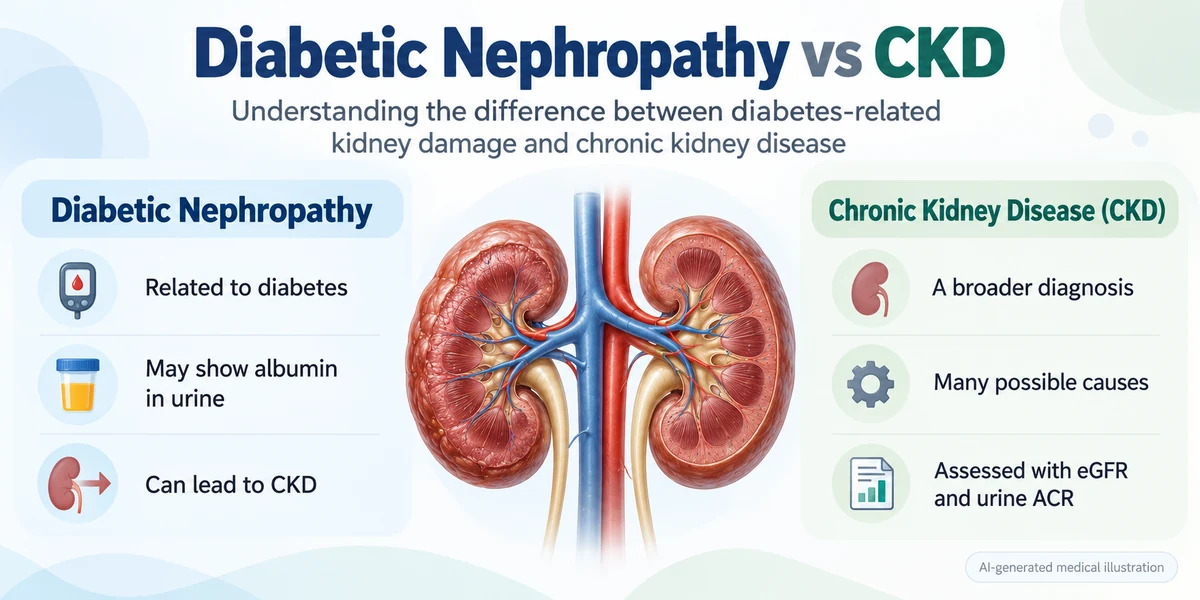
Diabetic nephropathy is kidney damage attributed to diabetes, while chronic kidney disease (CKD) is a broader medical diagnosis describing abnormalities of kidney structure or function that persist for at least three months and have implications for health. Diabetes is one of the possible causes of CKD, but CKD can also result from high blood pressure, glomerular diseases, inherited conditions and other kidney disorders. A person with diabetes may develop CKD because of diabetes, an unrelated kidney disease or a combination of conditions. The distinction is important because the underlying cause, urine findings, kidney filtration and other clinical factors help determine appropriate investigations and treatment. This article explains the differences between diabetic nephropathy and CKD, their symptoms, diagnostic tests, stages, treatment considerations and warning signs. What Is Diabetic Nephropathy? Diabetic nephropathy refers to kidney damage associated with diabetes. The term is often used alongside diabetic kidney disease (DKD), although diabetic nephropathy can also refer more specifically to characteristic structural changes caused by diabetes. The kidneys contain microscopic filtering structures called glomeruli. Over time, elevated blood glucose can affect the small blood vessels and filtering barrier within these structures. Possible changes include: Thickening of the glomerular basement membrane. Changes in the supporting tissue within the glomeruli. Increased albumin leakage into urine. Injury to kidney blood vessels. Progressive reduction in kidney filtration in some individuals. High blood pressure may contribute to further kidney damage. However, diabetic kidney disease does not follow the same pattern in everyone. Some people develop increased urinary albumin before eGFR declines, while others develop reduced eGFR without significant albuminuria. Not every person with diabetes develops diabetic nephropathy. What Is Chronic Kidney Disease (CKD)? Chronic kidney disease is a condition involving abnormalities of kidney structure or function that persist for at least three months and have implications for health. CKD may be present when there is: Persistently reduced eGFR. Persistent albuminuria. Certain abnormalities in urine sediment. Structural kidney abnormalities. Other recognised evidence of chronic kidney damage. An eGFR below 60 mL/min/1.73 m² persisting for at least three months is one criterion for CKD. CKD may also be present with an eGFR of 60 or above when other evidence of persistent kidney damage exists. What Causes Chronic Kidney Disease? Possible causes include: Diabetes. High blood pressure. Glomerulonephritis and other glomerular disorders. Polycystic kidney disease and other inherited conditions. Certain autoimmune disorders. Chronic urinary obstruction. Other vascular, inflammatory or structural kidney conditions. Determining the underlying cause is an important part of kidney disease evaluation. Diabetic Nephropathy vs CKD: Key Differences Although the conditions are closely related, they are not interchangeable. Feature Diabetic nephropathy Chronic kidney disease (CKD) Meaning Kidney damage attributed to diabetes Persistent kidney abnormalities lasting at least three months Underlying cause Diabetes-associated kidney injury Diabetes or various other causes Relationship May be a cause of CKD Includes diabetic and non-diabetic kidney diseases Urine albumin May be increased or normal May be increased or normal eGFR May be preserved or reduced May be preserved when other kidney-damage markers exist, or reduced Symptoms Often absent early Often absent early Diagnosis Based on diabetes history, kidney findings and assessment of other causes Based on persistent kidney structure or function abnormalities Management Diabetes care plus kidney and cardiovascular risk management Depends on underlying cause, kidney function and complications Progression Variable Variable Key point: Diabetic nephropathy can fall within the broader category of CKD, but CKD is not always caused by diabetes. How Can Diabetes Lead to Chronic Kidney Disease? Long-term diabetes may affect kidney blood vessels, glomeruli and other kidney structures. In some people, the earliest detected abnormality is increased urine albumin. Over time, ongoing injury may contribute to reduced kidney filtration. However, this sequence is not inevitable. Some people experience: Persistent albuminuria with preserved eGFR. Reduced eGFR without increased albuminuria. Both increased albuminuria and reduced filtration. Stable kidney function over prolonged periods. Improvement in certain laboratory abnormalities after appropriate treatment. An abnormal test result should be interpreted alongside previous results, diabetes duration, blood pressure and other clinical findings. Can Someone Have CKD Without Diabetes? Yes. Diabetes is not required for a diagnosis of chronic kidney disease. CKD may result from hypertension, inherited kidney conditions, autoimmune disorders, glomerulonephritis or other causes. A person without diabetes may have persistent albuminuria, reduced eGFR or structural kidney abnormalities. The clinical evaluation focuses on identifying the underlying cause and determining the degree of kidney dysfunction. Does Everyone With Diabetes and CKD Have Diabetic Nephropathy? No. Kidney disease in someone with diabetes may have another underlying cause. Examples include: IgA nephropathy. Lupus nephritis. Other glomerular diseases. Urinary obstruction. Certain medication-associated kidney disorders. Inherited kidney conditions. Sometimes more than one cause contributes to kidney dysfunction. What Findings May Suggest Another Kidney Disease? An alternative or additional diagnosis may be considered when there is: Rapidly declining eGFR. Rapidly increasing or substantial proteinuria. Blood in urine with concerning microscopic findings. Active urinary sediment or cellular casts. Sudden changes in kidney function. Nephrotic syndrome. A clinical pattern that does not fit the expected course of diabetic kidney disease. The absence of diabetic retinopathy may also contribute to diagnostic assessment, particularly in certain people with type 1 diabetes, but it does not independently determine the cause. Additional investigations or kidney biopsy may be considered when findings are atypical. What Symptoms Can Occur With Diabetic Nephropathy and CKD? Both conditions may develop without symptoms in the early stages. As kidney dysfunction progresses, possible findings include: 1. Foamy Urine Persistent foamy urine may sometimes be associated with increased urinary protein. However, foam alone does not confirm kidney disease. 2. Swelling of the Feet or Ankles Fluid retention or substantial urinary protein loss may contribute to swelling. Swelling can also result from heart, liver, vascular or other medical conditions. 3. Persistent Fatigue Fatigue may occur with reduced kidney function, anaemia or other associated conditions. It is not specific to CKD. 4. High Blood Pressure Hypertension can contribute to kidney damage, while kidney dysfunction may make blood pressure more difficult to control. 5. Changes in Urination Some

Diabetic Kidney Care: Essential Tests, Reports & Kidney Health Checklist

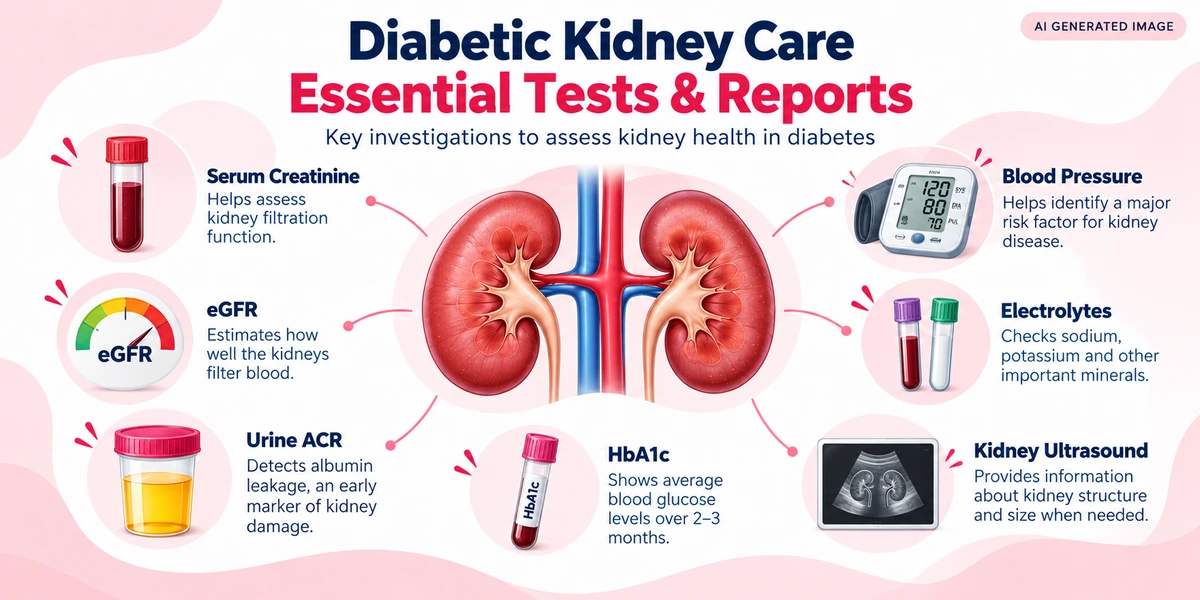
People with diabetes may develop kidney abnormalities even when they have no noticeable symptoms. Blood and urine investigations, particularly serum creatinine, estimated glomerular filtration rate (eGFR) and urine albumin-to-creatinine ratio (ACR), help assess kidney function and identify possible kidney damage. Keeping previous kidney test reports, HbA1c results, blood pressure records and medication details can help healthcare professionals understand changes in kidney health over time. Not everyone needs every investigation before a kidney consultation. Test selection depends on individual medical history, symptoms and clinical findings. What Is Diabetic Kidney Disease? Diabetic kidney disease (DKD) refers to kidney damage associated with diabetes. Over time, persistently elevated blood glucose can affect the small blood vessels and filtering structures inside the kidneys, known as glomeruli. These changes may lead to increased albumin in urine, reduced kidney filtration or both. Diabetic kidney disease is one of the important causes of chronic kidney disease (CKD). However, kidney abnormalities in a person with diabetes are not always caused by diabetes itself. Other kidney conditions, medicines, infections or medical problems may also affect kidney function. Related Reading: Diabetes and Kidney Diseases Why Are Regular Kidney Tests Important in Diabetes? Early diabetic kidney disease often develops without obvious symptoms. A person may feel well while urine tests show increased albumin or blood tests reveal changes in kidney filtration. Regular kidney assessment can help healthcare professionals: Identify albumin leakage into urine. Monitor kidney filtration. Assess changes in kidney function over time. Evaluate complications associated with diabetes and hypertension. Review the suitability and safety of certain medicines. Determine whether further investigations are necessary. Kidney tests help guide medical decisions, but no single result provides a complete picture of kidney health. What Reports Are Important for Diabetic Kidney Care? The following reports may be useful when assessing kidney health in someone with diabetes. 1. Serum Creatinine Serum creatinine is a blood test measuring creatinine, a waste product produced during normal muscle metabolism. The kidneys normally remove creatinine from the bloodstream. Higher-than-expected creatinine may suggest reduced kidney filtration, but results can also be affected by muscle mass, diet, certain medicines and other factors. A single creatinine result does not automatically establish chronic kidney disease. Previous reports may help determine whether creatinine is stable, rising or improving. Related Reading: What Causes High Creatinine? 2. Estimated Glomerular Filtration Rate (eGFR) Estimated glomerular filtration rate helps estimate how well the kidneys filter blood. It is commonly calculated using serum creatinine, age and sex. Some clinical situations may require additional testing, such as cystatin C, to improve estimation accuracy. eGFR values are generally reported in mL/min/1.73 m². A persistently reduced eGFR may indicate chronic kidney disease, but temporary illness, acute kidney injury and other factors can affect the result. Doctors consider eGFR together with urine findings and previous reports. 3. Urine Albumin-to-Creatinine Ratio (ACR) Urine ACR measures the amount of albumin relative to creatinine in a urine sample. Albumin is a protein normally retained mainly in the bloodstream. Increased albumin in urine may indicate damage to the kidneys’ filtering structures. Urine ACR is particularly useful in diabetes because albumin leakage can appear before a significant decrease in kidney filtration. However, not everyone with diabetic kidney disease develops increased albuminuria. Related Reading: Urine ACR Test Explained 4. HbA1c Test HbA1c reflects average blood glucose levels over approximately the previous two to three months. It helps assess longer-term diabetes management. Persistently elevated blood glucose can contribute to kidney damage over time. However, HbA1c may be less reliable in certain circumstances, including advanced chronic kidney disease, anaemia, altered red blood cell turnover and some medical treatments. Doctors may use additional glucose measurements when appropriate. Blood glucose targets should be individualised. 5. Blood Pressure Records Blood pressure monitoring is important because diabetes and hypertension can both contribute to kidney disease. High blood pressure may worsen existing kidney damage, while kidney disease can also make blood pressure more difficult to control. Available home and clinic blood pressure readings can provide useful information. The frequency of home monitoring and appropriate blood pressure targets depend on the individual’s medical condition. 6. Blood Electrolyte Tests The kidneys help regulate electrolytes and maintain fluid and acid-base balance. Blood tests may assess:  – Potassium  – Sodium  – Bicarbonate  – Calcium  – Phosphate, when indicated Electrolyte abnormalities may occur in kidney disease or as a result of certain medicines. Not every person requires every electrolyte test at each assessment. 7. Lipid Profile A lipid profile measures substances such as LDL cholesterol, HDL cholesterol and triglycerides. People with diabetes and kidney disease may have an increased risk of cardiovascular complications. Lipid testing may form part of broader cardiovascular risk assessment. It is not a direct measure of kidney filtration. 8. Urinalysis A routine urine examination may help detect:  – Protein  – Blood  – Infection-related changes  – Glucose  – Other urine abnormalities Urinalysis complements, but does not replace, quantitative urine ACR testing when assessing albuminuria. 9. Kidney Ultrasound and Imaging Kidney ultrasound may provide information about kidney structure, size and possible urinary obstruction. It may be considered when there are unexpected kidney abnormalities, suspected structural problems or other clinical indications. A kidney ultrasound is not routinely necessary before every diabetes-related kidney assessment. Quick Comparison of Essential Diabetic Kidney Tests Test What it measures Why it may be useful Serum Creatinine Creatinine concentration in blood Helps assess kidney filtration eGFR Estimated kidney filtering function Helps evaluate and monitor kidney function Urine ACR Albumin relative to creatinine in urine Helps identify albumin leakage HbA1c Average glucose over approximately 2–3 months Helps assess diabetes management Blood Pressure Pressure inside blood vessels Helps identify a major kidney disease risk factor Electrolytes Potassium, sodium and related substances Helps detect metabolic abnormalities Lipid Profile Cholesterol and triglycerides Supports cardiovascular risk assessment Urinalysis Blood, protein and other urine findings Helps investigate urinary abnormalities Important: These investigations provide different information. Their results must be interpreted together with medical history and clinical findings. What Is the Normal Urine ACR Range in Diabetes? Urine ACR results are generally classified

When Should a Person With Diabetes See a Kidney Specialist in Navi Mumbai?

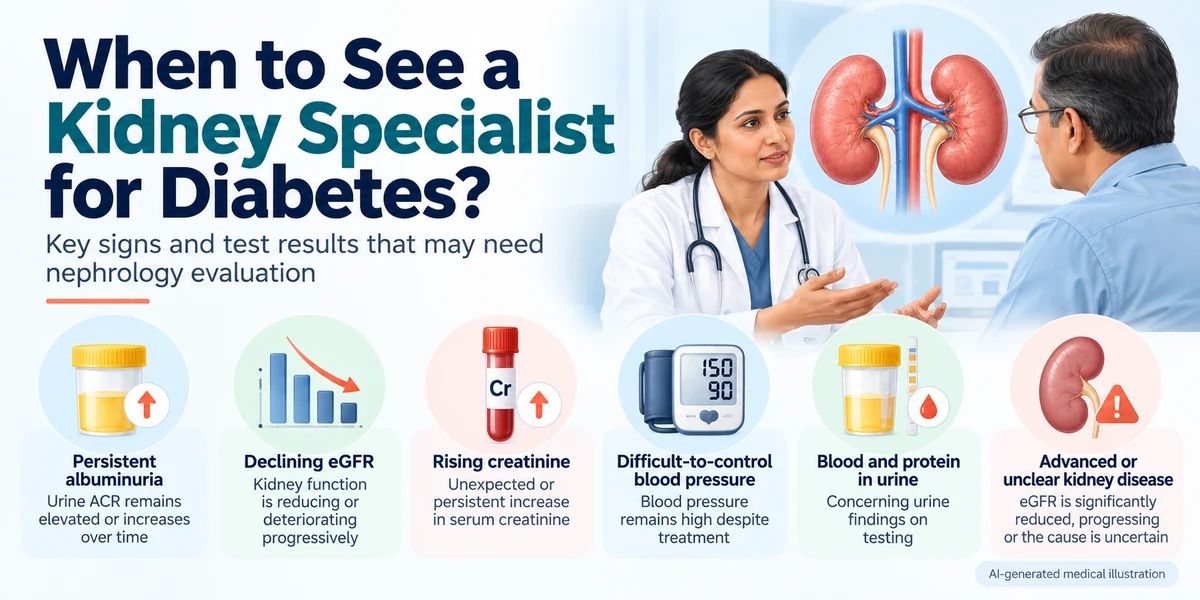
A person with diabetes may need evaluation by a kidney specialist (nephrologist) when urine albumin remains elevated, kidney filtration declines, creatinine changes unexpectedly, blood pressure is difficult to control or the cause of abnormal kidney tests is uncertain. Diabetes can damage the kidneys gradually, often without noticeable symptoms. However, not every abnormal kidney test requires immediate specialist referral, and not every kidney problem in someone with diabetes is caused by diabetes. Regular assessment using the urine albumin-to-creatinine ratio (uACR) and estimated glomerular filtration rate (eGFR) helps detect kidney abnormalities and identify individuals who may benefit from additional investigations. This article explains when nephrology assessment may be appropriate, which test results matter, how kidney disease is evaluated and what symptoms require urgent medical attention. How Does Diabetes Affect Kidney Function? The kidneys contain millions of microscopic filtering units called nephrons. Within each nephron, the glomerulus helps filter waste products and excess fluid from the bloodstream while retaining most essential proteins. Over time, elevated blood glucose can damage small blood vessels and affect these filtering structures. Possible consequences include: Increased albumin leakage into urine. Changes in the kidney’s filtering ability. Reduced eGFR in some individuals. Fluid and electrolyte disturbances as kidney dysfunction advances. Development or progression of chronic kidney disease (CKD). High blood pressure can further contribute to kidney damage. Kidney disease associated with diabetes is commonly called diabetic kidney disease (DKD). However, some people with diabetes develop kidney abnormalities from other causes, including glomerular diseases, urinary obstruction or medication-related kidney injury. For more information, read Diabetic Kidney Disease Symptoms. Why Is Regular Kidney Screening Important in Diabetes? Early diabetic kidney disease often has no noticeable symptoms. A person may have: Normal-looking urine. No swelling or pain. No obvious change in urination. Serum creatinine within the laboratory reference range. Relatively preserved eGFR. Despite this, urine testing may reveal increased albumin. Other people may develop reduced filtration without increased urine albumin. Therefore, urine ACR and eGFR provide complementary information about kidney health. Blood pressure, diabetes history, previous reports and other clinical findings also contribute to assessment. When Should a Person With Diabetes See a Nephrologist? Nephrology evaluation may be appropriate when kidney abnormalities are significant, progressive, difficult to explain or associated with complications. 1. Persistent or Rapidly Increasing Albuminuria Albumin is a protein normally retained in the bloodstream. An increased urine ACR indicates that more albumin than expected is being detected in urine. Persistent albuminuria may indicate kidney damage, even when eGFR remains relatively preserved. However, one elevated result does not automatically mean diabetic kidney disease is present. Repeat testing may be necessary because urinary albumin can temporarily increase during fever, infection, strenuous exercise or other medical conditions. Nephrology evaluation may be particularly relevant when albuminuria is severely increased, rises rapidly or remains unexplained. 2. Progressive Decline in eGFR eGFR estimates how effectively the kidneys filter blood. A sustained decline may indicate worsening kidney function. The rate of change, previous results, accompanying urine findings and other medical factors are important. A single slightly reduced eGFR does not automatically require immediate specialist referral. However, a progressive or unexplained decline may warrant nephrology assessment. 3. Unexpected Changes in Serum Creatinine Serum creatinine is a blood marker used to estimate kidney filtration. An elevated result may occur with acute kidney injury, chronic kidney disease, dehydration, certain medicines or other medical conditions. An unexpected rise should be assessed according to its degree, timing and associated symptoms. Rapid changes may require urgent clinical assessment rather than routine follow-up. 4. Difficult-to-Control High Blood Pressure Hypertension can contribute to kidney damage and may also develop or worsen because of kidney disease. Specialist evaluation may be appropriate when blood pressure remains difficult to control despite an appropriately assessed treatment plan, particularly when kidney abnormalities are present. Individual blood pressure targets depend on medical history, treatment tolerance and other clinical circumstances. 5. Blood and Protein Detected Together in Urine Proteinuria accompanied by hematuria (blood in urine) can sometimes suggest a glomerular disorder. Additional investigation may be needed, especially when urine microscopy shows concerning findings or kidney function is declining. Blood in urine may also have causes outside the kidneys, so evaluation should consider possible urinary tract conditions. 6. Significant Electrolyte Abnormalities Reduced kidney function can affect the balance of potassium, sodium and bicarbonate. Certain treatments can also influence these measurements. Significant abnormalities, especially elevated potassium or acid–base disturbances, may require specialist assessment. Severe electrolyte disturbances can be medical emergencies. 7. Suspected Advanced Chronic Kidney Disease People with advanced CKD may benefit from nephrology assessment for complications, medication review, disease monitoring and discussion of possible future treatment needs. An eGFR below 30 mL/min/1.73 m² is a commonly recognised reason to consider nephrology referral, although referral may be appropriate at higher eGFR levels depending on the clinical situation. 8. Uncertainty About the Cause of Kidney Disease Diabetes is an important cause of CKD, but it is not the only cause. Another diagnosis may be considered when there is: Sudden deterioration in kidney function. Rapidly increasing proteinuria. Blood in urine with concerning microscopic findings. Nephrotic syndrome. Other findings suggesting immune-mediated or structural kidney disease. Kidney abnormalities that do not fit the expected clinical pattern. Further blood tests, imaging or occasionally kidney biopsy may be considered when clinically indicated. Which Kidney Tests Matter in People With Diabetes? Kidney function evaluation commonly combines blood tests, urine investigations and blood pressure assessment. Test What it measures Why it matters Serum creatinine Creatinine concentration in blood Helps estimate kidney filtration eGFR Estimated kidney filtering function Helps identify reduced filtration Urine ACR Albumin relative to creatinine in urine Helps detect albumin leakage Urinalysis Blood, protein and other urine findings Helps identify additional abnormalities HbA1c Average blood glucose over approximately 2–3 months Supports diabetes management Blood pressure Pressure within the arteries Helps evaluate hypertension-related risks Electrolytes Potassium, sodium and bicarbonate concentrations May identify kidney-related complications Not every patient requires all these tests at the same frequency. Testing should be based on individual medical circumstances. Read more about Kidney Tests Explained.

How to Slow Diabetic Kidney Disease Progression Effectively

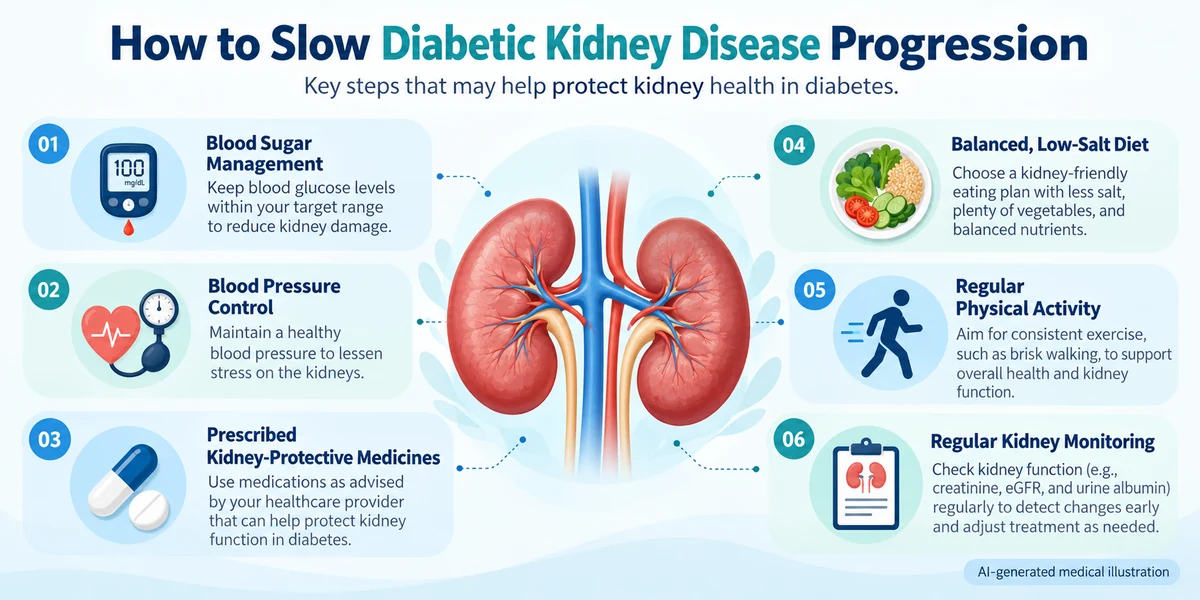
Diabetic kidney disease progression can often be slowed through appropriate blood glucose management, blood pressure control, kidney-protective medicines, dietary measures, physical activity and regular kidney monitoring. However, treatment outcomes vary, and no approach guarantees that kidney damage will stop or reverse completely. Diabetic kidney disease (DKD) can develop gradually, sometimes without noticeable symptoms. Early abnormalities may appear as increased albumin in urine, reduced estimated glomerular filtration rate (eGFR), or both. Monitoring urine albumin-to-creatinine ratio (uACR) and eGFR helps identify kidney abnormalities and track changes over time. This article explains ten evidence-based approaches to managing diabetic kidney disease, including treatment considerations, diet, kidney testing and warning signs. What Is Diabetic Kidney Disease? Diabetic kidney disease refers to kidney damage associated with diabetes. The kidneys contain microscopic filtering structures called glomeruli. These structures help remove waste products and excess fluid from the bloodstream while retaining most essential proteins. Long-term elevated blood glucose can affect the kidneys’ blood vessels and filtering structures. Possible changes include: Increased albumin leakage into urine. Injury to the glomerular filtration barrier. Gradual reduction in kidney filtration. Changes in fluid and electrolyte balance as dysfunction advances. Increased risk of cardiovascular complications. High blood pressure may contribute to further kidney injury. However, not everyone with diabetes develops kidney disease, and not every abnormal kidney result in someone with diabetes is caused by diabetes. For related information, read Diabetic Kidney Disease Symptoms. Can Diabetic Kidney Disease Progression Be Slowed? Yes. Appropriate medical management can reduce the risk of kidney disease progression in eligible patients. Treatment may help reduce albuminuria, slow the decline in eGFR and lower the risk of certain cardiovascular complications. However, the response depends on several factors: Existing kidney function. Urine albumin levels. Duration and type of diabetes. Blood pressure. Cardiovascular health. Other kidney disorders. Current medicines and treatment tolerance. Some people experience stable kidney function or improved urine albumin measurements. Others may continue to experience declining kidney function despite appropriate treatment. Slowing progression is not the same as curing established chronic kidney disease. What Increases the Risk of Diabetic Kidney Disease Progression? Several factors may contribute to kidney-related risk. Persistently Elevated Blood Glucose Long-term hyperglycaemia may contribute to blood vessel injury and changes in kidney filtration. High Blood Pressure Hypertension can worsen kidney damage and increase cardiovascular risk. Increased Urine Albumin Persistent albuminuria is associated with kidney damage and may indicate an increased risk of progression. Declining eGFR A sustained decline in eGFR may suggest worsening kidney filtration. Cardiovascular Disease Heart and blood vessel conditions frequently coexist with chronic kidney disease. Tobacco Use Smoking increases vascular and cardiovascular risks. Other medical conditions, certain medicines, acute kidney injury and urinary obstruction may also affect kidney function. The overall risk should be assessed using clinical findings and changes in laboratory results over time. 10 Evidence-Based Ways to Slow Diabetic Kidney Disease Progression 1. Manage Blood Glucose According to Individual Targets Appropriate blood glucose management is important for reducing diabetes-related complications. HbA1c reflects average blood glucose over approximately the previous two to three months. A target near 7% may be suitable for many non-pregnant adults with diabetes, but it is not appropriate for everyone. Individual HbA1c targets depend on: Age and general health. Risk of hypoglycaemia. Kidney function. Diabetes duration. Cardiovascular disease. Other medical conditions. Current treatment. In people with advanced kidney disease, HbA1c interpretation may sometimes be affected by anaemia and changes in red blood cell turnover. Home glucose monitoring or continuous glucose monitoring may provide additional information when appropriate. Patients should not adjust prescribed diabetes medicines independently to reach a particular HbA1c target. 2. Control Blood Pressure High blood pressure is an important contributor to kidney and cardiovascular complications. Blood pressure management may help reduce the risk of diabetic kidney disease progression. For many adults with diabetes, a blood pressure target below 130/80 mmHg may be considered when safely achievable. However, targets should be individualised according to clinical circumstances and treatment tolerance. Excessively aggressive treatment can cause problems such as dizziness, low blood pressure or reduced circulation in susceptible individuals. Management may include: Appropriate prescribed medicines. Reducing excessive dietary sodium. Physical activity. Weight management when indicated. Home blood pressure monitoring where appropriate. Not everyone needs the same monitoring frequency or medicine combination. 3. Use Kidney-Protective Medicines When Appropriate Certain medicines have demonstrated kidney or cardiovascular benefits in eligible patients. Their suitability depends on diabetes type, eGFR, urine albumin, blood pressure, associated conditions and potential adverse effects. ACE Inhibitors and ARBs Angiotensin-converting enzyme inhibitors (ACE inhibitors) and angiotensin receptor blockers (ARBs) may reduce albuminuria and kidney-related risk in selected people, particularly when hypertension and albuminuria are present. They can affect serum creatinine, potassium and blood pressure. Monitoring may be needed after starting treatment or adjusting the dose. ACE inhibitors and ARBs should not routinely be combined. SGLT2 Inhibitors Certain sodium-glucose cotransporter-2 (SGLT2) inhibitors have demonstrated benefits in reducing kidney disease progression and cardiovascular events. They are recommended for many eligible people with type 2 diabetes and CKD. Potential adverse effects include genital infections, volume depletion and, rarely, ketoacidosis. Medication management during acute illness or around certain procedures may require specific medical guidance. GLP-1 Receptor Agonists Selected glucagon-like peptide-1 receptor agonists may offer kidney and cardiovascular benefits in people with type 2 diabetes and CKD. Potential adverse effects and contraindications must be considered. Nonsteroidal Mineralocorticoid Receptor Antagonists Finerenone may benefit selected people with type 2 diabetes, CKD and persistent albuminuria. It can increase potassium and requires appropriate clinical and laboratory monitoring. Important: Not everyone requires every kidney-protective medicine. Prescribing decisions should be made by a qualified healthcare professional. 4. Reduce Excessive Salt Intake Excess dietary sodium can contribute to high blood pressure and fluid retention. Reducing excessive salt intake may support blood pressure and kidney management. KDIGO guidance suggests sodium intake below approximately 2 grams per day, equivalent to about 5 grams of salt, for many adults with CKD. However, dietary advice should be individualised. Certain medical conditions may require a different approach. Practical measures include: Reducing added salt during

Protein in Urine Causes: What’s Normal, What’s Worrisome?

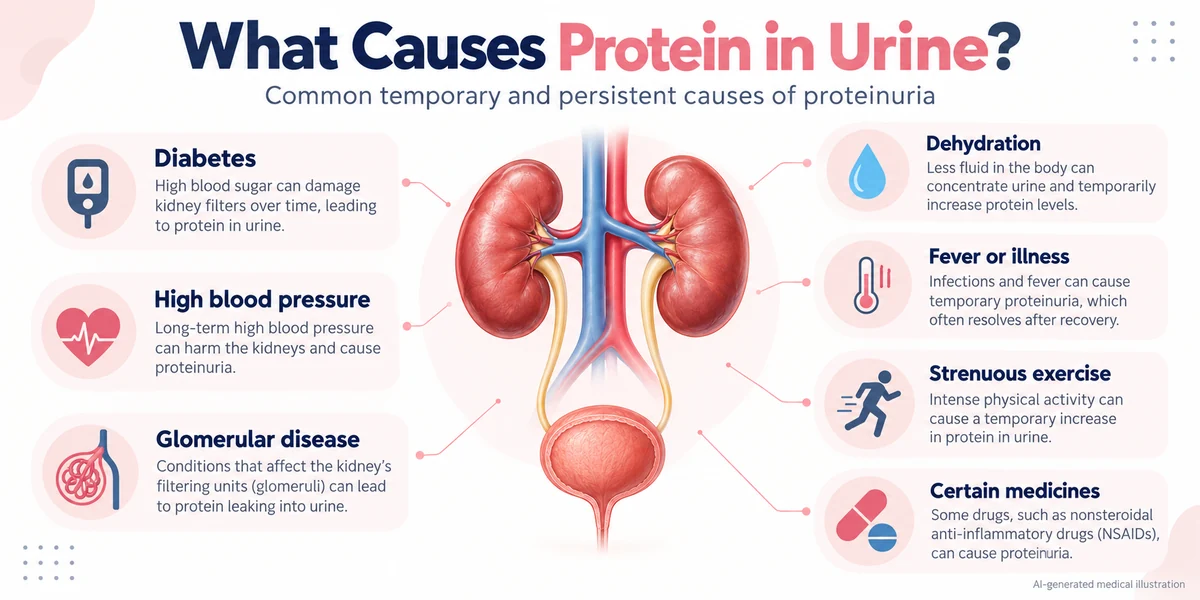
Short Answer: Protein in urine, medically called proteinuria, may occur temporarily during fever, acute illness, strenuous exercise or dehydration. However, persistent proteinuria may indicate an underlying kidney condition and should be evaluated alongside other medical findings. Proteinuria is often discovered during a routine urine examination and may occur without noticeable symptoms. A single abnormal test does not automatically indicate chronic kidney disease or kidney failure. Repeat urine testing, urine ACR or protein-to-creatinine ratio testing, serum creatinine and eGFR may help determine the significance and possible cause. What Is Proteinuria? Proteinuria refers to increased amounts of protein in urine. Healthy kidneys contain microscopic filtering structures called glomeruli. These structures help remove waste products and excess fluid while retaining most blood proteins. The kidney tubules also help reabsorb certain filtered proteins. Proteinuria may occur when the kidney’s filtering barrier is affected, when the tubules cannot adequately reclaim filtered proteins or because of certain other medical conditions. The clinical significance depends on the amount and type of protein, whether the finding persists and the patient’s overall kidney function. How the kidneys normally work  – Blood enters the glomerulus at high pressure.  – Small molecules (water, electrolytes, waste) filter out. – Large proteins are retained and re‑absorbed in the tubules. When the glomerular barrier is compromised, albumin and other proteins are lost, leading to a measurable proteinuria. Common Causes of Protein in Urine (Persistent) These conditions often produce ongoing protein leakage and merit a thorough work‑up:  – Diabetes mellitus – high blood sugar damages glomerular capillaries.  – Hypertension (high blood pressure) – pressure overload injures the filtration barrier.  – Glomerular diseases – e.g., IgA nephropathy, membranous nephropathy, focal segmental glomerulosclerosis.  – Chronic infections – hepatitis C, HIV, or recurrent urinary‑tract infections.  – Cardiovascular conditions – heart failure can raise kidney venous pressure.  – Medications – non‑steroidal anti‑inflammatory drugs (NSAIDs), certain antibiotics, and some chemotherapy agents.  – Other kidney disorders – polycystic kidney disease, obstructive uropathy. Diabetes and hypertension are important causes of persistent albuminuria. Learn more about Diabetic Kidney Disease Symptoms and High Blood Pressure and Kidney Damage to understand how these conditions may affect kidney function. Temporary Causes of Protein in Urine Not every positive protein test indicates chronic kidney damage. Temporary changes may occur with: Fever or acute illness. Strenuous physical exercise. Dehydration or concentrated urine. Certain acute infections. Orthostatic proteinuria, particularly in adolescents and younger people. A first-morning urine sample may help distinguish orthostatic proteinuria from persistent proteinuria. Depending on the clinical circumstances, healthcare professionals may recommend repeating urine testing after temporary contributing factors have resolved. Symptoms and Warning Signs Mild proteinuria frequently causes no noticeable symptoms. Foamy urine, swelling, fatigue or changes in urination may occur in some people, but these symptoms have several possible causes. The presence or absence of symptoms cannot reliably determine the amount of protein in urine. Laboratory testing is necessary for assessment. Does foamy urine always mean protein in urine? No. Foam can result from rapid urine flow, concentrated urine, or even certain detergents in the toilet bowl. Only a laboratory test (dipstick or ACR) can confirm proteinuria. Protein in Urine vs. Blood in Urine Protein and blood in urine are distinct findings. When they occur together, additional investigations may help determine whether a kidney filtering disorder or another urinary condition is present. For related information, read about Nephrologist vs Urologist and how different kidney and urinary conditions are assessed.How Proteinuria Is Measured The most common tests include: – Urine dipstick – quick screening, semi‑quantitative.  – Urine albumin‑to‑creatinine ratio (UACR) – expresses albumin in mg per gram of creatinine; preferred for diabetes monitoring.  – Urine protein‑to‑creatinine ratio (PCR) – measures total protein.  – Comprehensive urinalysis – evaluates sediment, cells, and casts.  – Serum creatinine & eGFR – assess overall kidney filtration function. Interpretation of UACR:Range (mg/g)Interpretation<30Normal or low‑grade30–300Micro‑albuminuria (early kidney damage)>300Macro‑albuminuria (significant kidney disease) Urine ACR (UACR) Result Interpretation UACR Result Interpretation Below 30 mg/g Normal to mildly increased 30–300 mg/g Moderately increased albuminuria Above 300 mg/g Severely increased albuminuria Urine ACR measures albumin relative to creatinine, while urine PCR measures total protein relative to creatinine. An increased urine ACR may indicate kidney damage, but a single abnormal result does not establish chronic kidney disease. Repeat testing and interpretation alongside eGFR, medical history and other clinical findings may be required. Can You Have Protein in Urine with Normal Creatinine? Yes. Protein leakage can precede a rise in serum creatinine because creatinine reflects overall filtration, not the selective loss of albumin. Early glomerular injury may show a high UACR while eGFR remains >90 mL/min/1.73 m². Glomerular Disease: When to Be Concerned Glomerular diseases affect the microscopic filtering structures of the kidneys. Some glomerular disorders cause proteinuria, blood in urine, swelling, hypertension or reduced kidney function. Further evaluation may be appropriate when: Proteinuria is persistent or increasing. Significant proteinuria occurs with blood in urine. Urine microscopy shows findings suggesting glomerular injury. Serum creatinine rises or eGFR declines. Swelling or hypertension develops. An immune-mediated kidney disorder is suspected. A urine ACR of 300 mg/g or above indicates severely increased albuminuria, but it does not independently establish a specific glomerular disease. Additional investigations depend on the patient’s medical history, examination findings and laboratory results. When Might a Kidney Biopsy Be Needed? A kidney biopsy involves obtaining a small sample of kidney tissue for microscopic examination. It may be considered when the underlying cause of proteinuria is uncertain or when tissue findings could help guide treatment. Possible indications include: Suspected glomerular disease. Significant proteinuria with unexplained abnormalities. Proteinuria accompanied by certain concerning urine findings. Unexplained deterioration in kidney function. Suspected immune-mediated kidney disease. A kidney biopsy is not automatically necessary because urinary protein exceeds a particular threshold. The decision depends on the potential diagnostic benefit, the patient’s clinical condition and procedural risks, including bleeding. For more information, read Kidney Biopsy Preparation and Recovery.Patient Checklist After an Abnormal Urine Protein Test Ask which test was performed (dipstick, UACR, PCR). Confirm the exact protein value and its units. Request your serum creatinine and

Kidney Tests Explained: Creatinine, eGFR, Urine ACR & Electrolytes

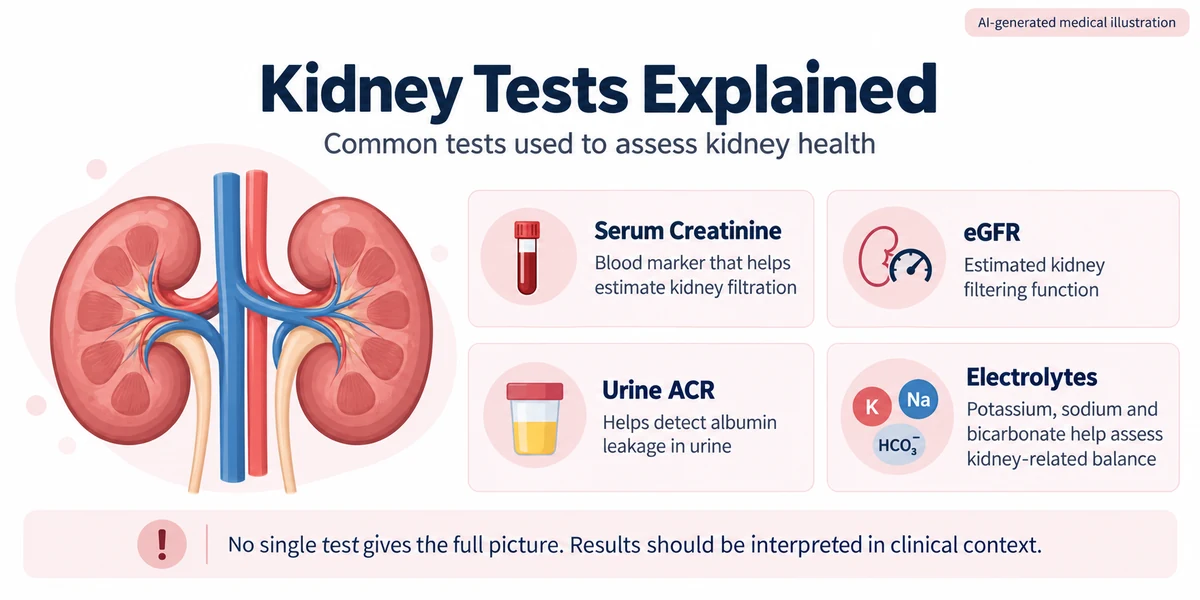
Kidney function tests help assess how effectively the kidneys filter waste products, regulate fluid balance and maintain essential electrolytes in the body. Common investigations include serum creatinine, estimated glomerular filtration rate (eGFR), urine albumin-to-creatinine ratio (uACR), blood urea nitrogen (BUN) and electrolyte measurements. These tests provide different types of information. Some measure substances in the blood, while others detect abnormalities in urine. The two key tests used to detect and monitor chronic kidney disease are eGFR and urine ACR. Additional investigations may help evaluate electrolyte disturbances, the possible cause of kidney dysfunction and associated complications. Understanding what each test measures can help patients interpret their reports more accurately, although laboratory results must always be considered alongside medical history and clinical findings. Why Are Kidney Function Tests Important? According to the National Institute of Diabetes and Digestive and Kidney Diseases (NIDDK), blood and urine tests can help identify kidney abnormalities even when noticeable symptoms are absent. The kidneys perform several essential functions, including: Removing waste products from the bloodstream. Regulating fluid and electrolyte balance. Helping maintain the body’s acid–base balance. Contributing to blood pressure regulation. Supporting red blood cell production through hormone activity. Helping regulate bone and mineral metabolism. When kidney function becomes impaired, waste products or electrolytes may accumulate or fall outside expected ranges. Kidney disease often develops without noticeable symptoms, particularly in its early stages. Blood and urine tests can identify abnormalities before symptoms become apparent. However, abnormal results do not always indicate permanent kidney damage. Temporary illness, dehydration, medicines and other factors may influence laboratory measurements. What Are the Main Tests Used to Check Kidney Health? Kidney investigations can be divided into tests of filtration, urine abnormalities and complications. Kidney Test What It Measures Why It Matters Serum Creatinine Creatinine concentration in blood Helps estimate kidney filtration eGFR Estimated kidney filtering function Helps assess and classify reduced filtration Urine ACR Albumin relative to creatinine in urine Helps detect albumin leakage Urinalysis Protein, blood and other urine findings Helps identify urinary or kidney abnormalities Blood Urea Nitrogen (BUN) Urea nitrogen concentration in blood Provides additional information alongside other findings Potassium Blood potassium concentration Identifies potentially important electrolyte disturbances Sodium Blood sodium concentration Helps assess water and electrolyte balance Bicarbonate Blood bicarbonate concentration Helps evaluate acid–base balance Calcium and Phosphorus Mineral concentrations May help assess complications of kidney disease Important: Not every person requires every test. The appropriate investigations depend on individual risk factors, symptoms and clinical findings. 1. Serum Creatinine Test: What Does It Measure? Creatinine is a waste product formed during normal muscle metabolism. The kidneys remove creatinine from the bloodstream, mainly through filtration. Serum creatinine may increase because of reduced kidney filtration, dehydration, certain medicines or other factors. Read more about What Causes High Creatinine and how abnormal results are evaluated. measures its concentration in blood. When kidney filtration declines, creatinine often increases. However, serum creatinine is not a direct measurement of kidney damage. What Is a Normal Creatinine Level? Reference ranges vary according to laboratory methods and individual characteristics. Illustrative adult ranges used by some laboratories include: Group Approximate Creatinine Range Adult Men 0.7–1.3 mg/dL Adult Women 0.6–1.1 mg/dL Important: These values are general examples. The reference range on the laboratory report should be used for interpretation. A creatinine result can be affected by:  – Muscle mass.  – Age.  – Recent intense physical activity.  – Cooked meat consumption.  – Creatine supplementation.  – Certain medicines.  – Kidney filtration and hydration status. Someone with relatively low muscle mass may have reduced kidney function without a markedly elevated creatinine result. Similarly, a person with high muscle mass may have a higher creatinine level without necessarily having kidney disease. What Does High Creatinine Mean? High creatinine may result from reduced kidney filtration associated with:  – Acute kidney injury.  – Chronic kidney disease.  – Significant dehydration.  – Urinary tract obstruction.  – Other medical conditions affecting kidney function. It may also be influenced by non-kidney factors. Read more about What Causes High Creatinine. Important: A single high creatinine reading does not establish kidney failure or determine the need for dialysis. 2. eGFR Test: How Well Are the Kidneys Filtering Blood? The eGFR Kidney Function Test helps estimate kidney filtration and provides useful information when evaluating chronic kidney disease. In adults, eGFR is commonly calculated using serum creatinine, age and sex through a validated estimating equation. The result is usually reported in mL/min/1.73 m². eGFR provides a more useful estimate of kidney filtration than serum creatinine alone in many clinical situations. However, it remains an estimate and has limitations. Understanding eGFR Results eGFR (mL/min/1.73 m²) Category General interpretation 90 or above G1 Normal or high 60–89 G2 Mildly decreased 45–59 G3a Mildly to moderately decreased 30–44 G3b Moderately to severely decreased 15–29 G4 Severely decreased Below 15 G5 Kidney failure range An eGFR below 60 that persists for at least three months meets one criterion for chronic kidney disease. However, an eGFR of 60 or above does not establish CKD unless there is other evidence of kidney damage. Can eGFR Change Between Tests? Yes. eGFR may change because of:  – Acute illness.  – Changes in kidney function.  – Laboratory variation.  – Medicines.  – Changes in creatinine production.  – Hydration-related effects. Small differences between test results do not always mean kidney disease is progressing. Clinicians consider trends over time rather than interpreting every change in isolation. What Are the Limitations of eGFR? Creatinine-based eGFR may be less accurate in certain situations, including:  – Unusually high or low muscle mass.  – Rapidly changing kidney function.  – Certain changes in diet or nutritional status.  – Selected medical conditions affecting creatinine production. In some cases, clinicians may use cystatin C, another blood marker, to obtain an additional estimate of kidney filtration. Combined creatinine and cystatin C equations can improve estimation accuracy in appropriate clinical circumstances. Read more about the eGFR Kidney Function Test. 3. Urine ACR Test: How Is Albumin Leakage Detected? The urine albumin-to-creatinine ratio (uACR) measures the amount of albumin relative to creatinine in urine.

How to Prevent Kidney Stones Recurrence: Diet & Tips

Kidney stones can return after a previous episode, but appropriate hydration, dietary changes and medical evaluation may help reduce the risk of recurrence. Prevention depends on factors such as stone composition, urine chemistry, fluid intake, medical conditions and family history. Common preventive measures include maintaining adequate hydration, reducing excessive sodium intake, consuming appropriate amounts of dietary calcium and avoiding unnecessarily high animal protein intake. People who experience repeated kidney stones may benefit from stone analysis and metabolic testing to identify factors contributing to stone formation. What Are Kidney Stones? Kidney stones are solid deposits formed when certain minerals and substances become concentrated in urine and crystallise. Stones may develop in one or both kidneys and vary in size, composition and clinical significance. Some small stones cause no symptoms, while others can produce pain, bleeding, urinary obstruction or infection. A previous kidney stone increases the likelihood of developing another stone, although recurrence risk varies considerably between individuals.For additional information about stone formation, types and general preventive measures, read Kidney Stone Prevention. Why Do Kidney Stones Come Back? Kidney stones may recur when conditions that favour crystal formation remain present. These include concentrated urine, high urinary calcium or oxalate levels, low urinary citrate, increased uric acid, certain medical conditions and inherited risk factors. Common contributors include: – Inadequate fluid intake or excessive fluid loss – High dietary sodium intake – Excessive animal protein consumption – Certain metabolic abnormalities – A family history of kidney stones – Obesity and some associated medical conditions – Recurrent urinary tract infections in selected stone types – Certain medicines or supplements The cause of recurrence cannot always be determined from symptoms alone. What Are the Different Types of Kidney Stones? Identifying the stone type can help guide prevention. 1. Calcium Oxalate Stones Calcium oxalate stones are among the most common kidney stone types. They may be associated with increased urinary calcium or oxalate, low urine volume or reduced urinary citrate. Dietary recommendations depend on individual risk factors. 2. Calcium Phosphate Stones Calcium phosphate stones may occur in association with certain metabolic conditions and changes in urine chemistry. Evaluation may include assessment of urine pH, calcium excretion and relevant medical conditions. 3. Uric Acid Stones Uric acid stones are more likely to form in persistently acidic urine. They may be associated with metabolic factors, gout and certain dietary patterns. Management may involve changes in urine chemistry under medical supervision. 4. Struvite Stones Struvite stones may form in association with urinary tract infections caused by particular bacteria. Prevention generally requires attention to the underlying infection and any remaining stone material. 5. Cystine Stones Cystine stones occur in people with cystinuria, an inherited condition that causes increased cystine excretion in urine. They may require specialist evaluation and a targeted prevention plan. Important: Not every dietary recommendation applies to every kidney stone type. How Can You Reduce the Risk of Kidney Stone Recurrence? 1. Maintain Adequate Hydration Drinking sufficient fluid helps dilute substances in urine that may contribute to stone formation. For many adults with recurrent kidney stones who do not require fluid restriction, guidelines commonly recommend fluid intake sufficient to produce approximately 2.5 litres or more of urine per day. The amount of fluid required varies according to climate, sweating, physical activity and medical conditions. Water is generally the preferred beverage. People with heart failure, advanced kidney disease or prescribed fluid restrictions should not increase fluid intake without medical advice. 2. Reduce Excess Sodium Intake A high-sodium diet can increase urinary calcium excretion and contribute to calcium stone formation in susceptible individuals. Dietary sodium comes from table salt as well as packaged foods, processed snacks, pickles, sauces and restaurant meals. For many adults, limiting sodium to approximately 2,300 mg per day or less may be appropriate, although individual targets vary. Practical approaches include choosing less processed food, checking food labels and reducing added salt. 3. Consume Appropriate Amounts of Dietary Calcium A common misconception is that people with calcium kidney stones should avoid calcium-rich foods. In fact, very low dietary calcium intake may increase calcium oxalate stone risk because calcium in the digestive tract helps bind dietary oxalate. Many adults require approximately 1,000–1,200 mg of calcium daily, depending on age and other health factors. Calcium is preferably obtained through a balanced diet when possible. Calcium supplements should be discussed with a healthcare professional because their appropriateness depends on individual circumstances. 4. Avoid Excessive Animal Protein Intake Excessive animal protein consumption may increase the likelihood of certain kidney stones by affecting urinary calcium, uric acid, citrate or acidity. Animal protein sources include meat, poultry, fish and eggs. The appropriate amount depends on overall nutritional needs, stone type and existing medical conditions. A balanced eating pattern with suitable plant-based protein sources may be helpful for some individuals. Do not start a severely protein-restricted diet without medical guidance. 5. Consider Oxalate Intake When Relevant Oxalate is a naturally occurring substance found in many foods. For people with calcium oxalate stones and increased urinary oxalate, a clinician may recommend moderating certain high-oxalate foods. Examples include: – Spinach – Rhubarb – Certain nuts – Wheat bran – Some other concentrated oxalate sources However, not everyone with kidney stones needs a low-oxalate diet. Combining oxalate-containing foods with an appropriate amount of dietary calcium can help reduce oxalate absorption. 6. Maintain a Balanced Eating Pattern A varied diet containing suitable portions of vegetables, fruits, whole grains and other nutritious foods may support general health and kidney stone prevention. A DASH-style dietary pattern has been associated with reduced kidney stone risk in research. Dietary modifications may be necessary for people with chronic kidney disease, high potassium levels or other medical conditions. 7. Review Sugary Drinks and Supplements Frequent consumption of sugar-sweetened beverages may contribute to stone risk in some individuals. High-dose vitamin C supplementation can increase urinary oxalate in susceptible individuals. Certain other supplements may also influence urine chemistry. Discuss supplements with a qualified healthcare professional rather than assuming that a product labelled natural is harmless. 8.